


In 2026, the China-ASEAN Free Trade Area (CAFTA) marks its 16th anniversary, reflecting a period of sustained growth and deepening integration. Over the years, CAFTA has benefited more than two billion people, with China remaining ASEAN’s largest trading partner for 16 consecutive years, while ASEAN has been China’s top trade partner for five straight years. The partnership has evolved beyond traditional goods trade, moving toward a deeper embedding in industrial and value chains, creating what officials describe as a “community of shared destiny.”
The signing of the CAFTA 3.0 Upgrade Protocol on October 28, 2025, represents a strategic leap in this long-standing cooperation. Building on the foundations laid by CAFTA 1.0 and 2.0, the 3.0 version emphasizes trade facilitation, integration of emerging sectors, and regulatory alignment to enhance the efficiency and predictability of cross-border commerce. It reflects China and ASEAN’s shared vision of adapting to evolving global and regional economic trends, while also preparing for future challenges in trade and investment.
The impact of these agreements can be seen in practical terms at the Guangxi Youyiguan border crossing between China and Vietnam. The port has been upgraded into a smart logistics hub, integrating artificial intelligence, biometric verification, and data-sharing platforms. Automated container trucks, or “driverless trucks,” now transport goods efficiently, with customs clearance processes streamlined by digital systems that allow goods to pass in seconds.

China’s authorities report that these upgrades have increased operational efficiency by approximately 75%, with customs officers merely needing to submit orders through the smart port system, while the platform handles the rest. This modernization reflects the accelerated implementation of the CAFTA 3.0 protocol and its focus on trade facilitation.
The 3.0 protocol introduces several forward-looking measures. Digital economy and green economy sectors are included for the first time, allowing businesses in these emerging areas to benefit from harmonized technical standards and mutual recognition of certifications.
Companies previously constrained by divergent regulations, such as a Zhejiang-based renewable energy firm exporting storage batteries to ASEAN countries, can now navigate cross-border trade more smoothly. By aligning standards, CAFTA 3.0 reduces compliance costs and expands market opportunities for enterprises operating in these new growth sectors.
Support for small and medium-sized enterprises (SMEs) is another key feature of CAFTA 3.0. Measures include enhanced information-sharing, guidance on sustainable business practices, and policies to ensure SMEs can access digital trade platforms and simplified customs procedures.
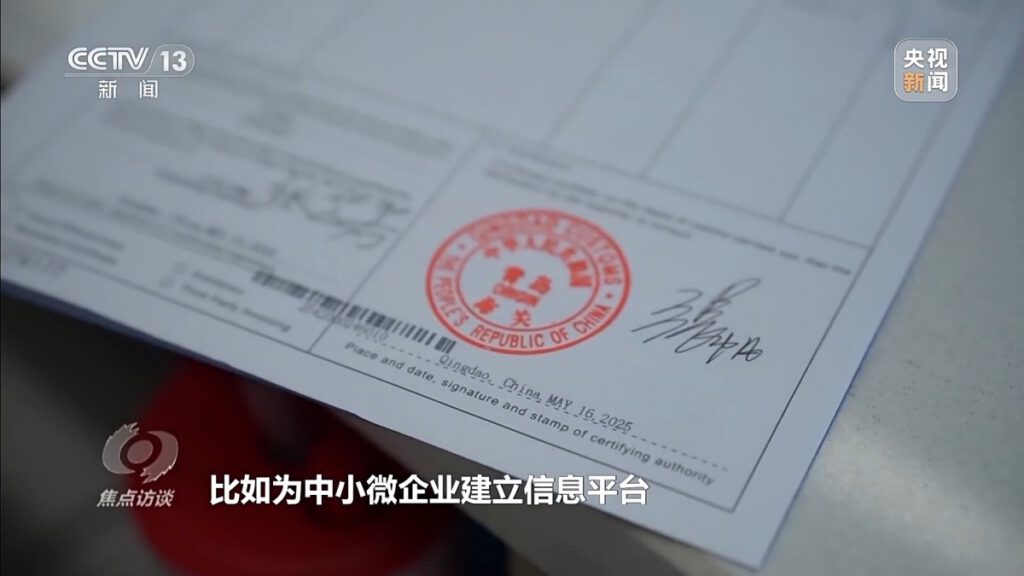
Practical examples demonstrate the protocol’s benefits: a Qingdao-based importer of black and green beans from Myanmar was able to access zero tariffs despite minor discrepancies in documentation, thanks to flexible application of customs rules under the new framework. These steps aim to integrate SMEs more fully into regional value chains and provide equitable opportunities to participate in global trade.
Since the launch of the CAFTA framework in 2002, China and ASEAN have consistently expanded trade and investment agreements, culminating in the full establishment of the free trade area in 2010. Trade volume has grown exponentially, reaching 6.82 trillion RMB and covering over two billion people. The successive upgrades—from CAFTA 1.0’s market access focus, through 2.0’s expanded openness, to 3.0’s forward-looking regulatory and sectoral enhancements—reflect an ongoing effort to keep pace with global economic shifts and deepen bilateral integration.
Experts highlight that CAFTA 3.0 represents not just quantitative growth but qualitative transformation. By addressing the diverse economic development levels among ASEAN countries, the protocol facilitates smoother trade for traditional sectors while creating new cooperation spaces in digital services, renewable energy, and smart city initiatives. China’s advanced manufacturing and technological expertise synergize with ASEAN’s intermediate goods processing, urban development, and regional market demands, forming an integrated, multi-layered collaboration model.
Future-oriented measures under CAFTA 3.0 aim to stimulate regional economic dynamics through innovative modes of cooperation. Standard-setting and co-development in digital economy sectors, cross-border industrial parks with integrated production and logistics functions, and regional digital trade platforms that allow SMEs to benefit alongside larger enterprises, are all designed to create a more inclusive, resilient, and sustainable economic ecosystem. Analysts suggest that these initiatives not only strengthen China-ASEAN relations but also provide replicable models for global trade governance, particularly for developing countries seeking deeper integration into global value chains.
The transformative impact of CAFTA 3.0 is evident. By incorporating digital and green economies, fostering SME development, and enhancing supply chain connectivity, it moves beyond a simple tariff reduction framework toward a rules-based, institutionally robust trade and investment ecosystem. At a time of global uncertainty, rising protectionism, and regional competition, the upgraded agreement offers both businesses and consumers improved efficiency, transparency, and access to diversified markets.
The evolution from CAFTA 1.0 to 3.0 reflects a trajectory of continuous improvement, strategic foresight, and adaptive governance. With trade between China and ASEAN reaching $982.3 billion in 2024—a 17-fold increase since 2002—the upgraded protocol is poised to elevate bilateral economic cooperation to new levels, underpinning broader regional development strategies and contributing to the long-term vision of a shared, prosperous future for Asia.
Source: gxzf gov cn, CCTV 13, thoidai, xinhua, cgtn