


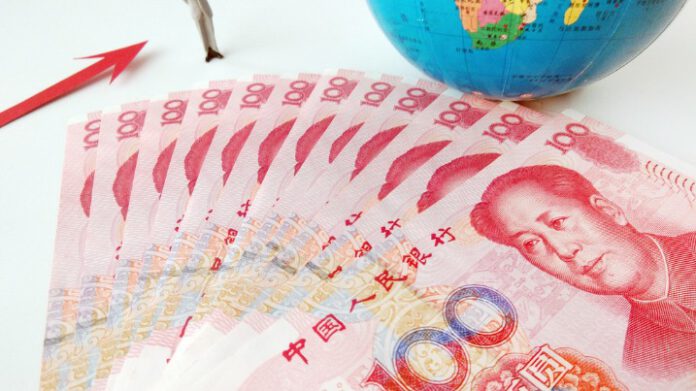
In 2026, following a breakthrough past the key 7.0 mark against the U.S. dollar, the RMB has continued to strengthen. The last time the currency appreciated from 7.3 past 7.0 was in early 2008. What underlies this current wave of RMB appreciation, and how sustainable is it? Since the outbreak of the Russia-Ukraine crisis, the internationalization of the RMB has made remarkable progress.
Looking ahead to China’s 15th Five-Year Plan, how will the country continue to advance its uniquely Chinese approach to RMB internationalization? In the midst of a rapidly expanding digital currency landscape, what opportunities and challenges lie ahead for China as it seeks to build a strong and globally influential financial system?
Professor Zhang Chun of Shanghai Jiao Tong University’s Antai College of Economics and Management shares his insights.
The RMB recently crossed 7 against the U.S. dollar. Is this a short-term move or a long-term trend? How sustainable?
Over the past 20 years, the RMB has generally appreciated. By purchasing power parity, Chinese goods have long been cheaper than U.S. goods, creating upward pressure on the currency. In contrast, high asset prices, especially in real estate, have at times created downward pressure.
Today, with real estate down and exports still competitive, trade goods dominate again, giving the RMB room to strengthen. Long-term, China’s manufacturing edge and ongoing internationalization support appreciation. Short-term swings will depend on asset prices, if stocks or real estate rise sharply, the currency could face temporary depreciation.
In short, the RMB has a long-term upward trend, but short-term fluctuations are inevitable.
If the RMB keeps rising, how will exporters, jobs, and consumers be affected?
In the short term, any RMB appreciation has both benefits and costs, affecting different groups differently.
The main benefit now is increased purchasing power. A stronger RMB lets China and its citizens buy more goods and services, supporting the shift to a consumption-driven economy. It also helps reduce the pressure from China’s historically large trade surplus, easing international tensions.
The main downside is that higher currency value can hurt exporters and reduce related employment. However, long-term, the impact of technology and automation is likely a bigger factor than the exchange rate.
Overall, the advantages of gradually appreciating RMB outweigh the drawbacks. A steady, moderate rise is preferable to a rapid jump, which could harm the real economy.
RMB internationalization has fluctuated over the past decade. What drives these changes?
China first proposed RMB internationalization over 20 years ago, along with opening the capital account for free capital flows. Early on, the focus was efficiency, allowing the RMB to be freely exchanged for foreign currency and used in global payment and investment systems.
But after the U.S. financial crisis, rising geopolitical tensions, and events like the 2015 stock market crash, China slowed the pace to manage risks. Unrestricted capital flows could destabilize the domestic economy, as seen when Russia was cut off from SWIFT in 2022.
In recent years, amid trade tensions, China has revisited internationalization, now pursuing multiple paths, including building an offshore RMB system. The goal is to gradually expand international use while keeping onshore markets stable.
RMB internationalization will be a long process, similar to how the dollar took decades to become the dominant global currency after the U.S. surpassed the U.K. Economists estimate China’s GDP could surpass the U.S. in 10–20 years, but creating a truly “strong” international currency requires decades to build a full system.
China aims to develop six financial systems: monetary policy, market structure, financial institutions, regulation, products and services, and financial infrastructure. Offshore centers, like Hong Kong, Shanghai’s Lingang district, Hainan, and Qianhai, are being used as experimental zones to develop these systems.
Offshore RMB markets can freely attract global capital and offer investment products, which will gradually integrate with onshore markets. Over time, possibly 20 to 30 years, this approach could establish a robust, internationally influential RMB, following a unique Chinese path that balances openness with financial stability.
Will China maintain cautious onshore capital liberalization while using offshore markets to expand the RMB’s financial functions?
In the near term, RMB internationalization is likely to rely on cautious onshore capital controls while developing offshore markets to handle settlement, reserves, pricing, and investment. Full onshore capital account liberalization remains risky due to geopolitical tensions, if China had fully opened a decade ago, crises like the trade war, Russia-Ukraine conflict, and COVID-19 could have triggered massive capital flight.
Economic theory also supports caution. Research on the “trilemma” shows that a country cannot simultaneously maintain monetary independence, exchange rate stability, and fully open capital accounts. China has chosen to prioritize financial stability and sovereignty.
As a result, offshore markets are key. Regions like Hong Kong, Shanghai’s Lingang district, Hainan, and Qianhai are developing freely convertible RMB zones, serving global investors and overseas Chinese companies. Offshore markets are insulated from onshore risks, allowing experimentation with products like “offshore trade bonds” and potentially a RMB-denominated stock market in Hong Kong.
This approach mirrors China’s early special economic zones: test innovations offshore first, then integrate successes into the domestic market. Gradually, these offshore systems will support a broader, internationally influential RMB while keeping onshore risks manageable.
BRICS initiatives like BricsPay and mBridge are aimed at bypassing SWIFT. Are they still conceptual, and what role could the RMB play?
The BRICS group has expanded to 11 members, but differences in politics, economics, and institutions make a unified financial system difficult. While issuing a joint BRICS currency or digital currency is theoretically possible, consensus among diverse members, like China and India, would be very hard to achieve.
A more feasible approach is the mBridge project, a “central bank digital currency bridge” that allows different CBDCs to be exchanged via blockchain. Pilot transactions have already taken place between China, Thailand, and the UAE, coordinated by the BIS Innovation Hub in Hong Kong.
However, mBridge is still a trial. Its long-term scalability and adoption by other countries, especially in Europe, remain uncertain. For now, digital currency bridges are just one of several potential paths for advancing RMB internationalization.
Should digital RMB internationalization also follow cautious onshore liberalization? What are the biggest challenges?
The biggest challenge for digital currency is the existing global financial system. The U.S. dollar system has been established for over a century, and blockchain and AI technologies are now reshaping the foundation of money and payments. The U.S. is adapting through stablecoins, blockchain-backed, dollar-pegged digital currencies used for payments and settlement.
China faces a dual challenge: building a full RMB financial system on blockchain, and ensuring it is fully internationalized. The digital RMB, built directly on blockchain, could allow China to “leapfrog” by creating an offshore system first, then integrating onshore. Unlike many other digital currencies, China’s system is designed to support the real economy, not speculation.
Shanghai’s offshore RMB framework is aimed at serving overseas Chinese companies, enabling them to conduct financing and investment in RMB without relying on foreign currencies. Domestic caution, such as limits on stablecoins or tokenized assets, is deliberate, protecting investors while building a robust, internationally compatible system.
If implemented well, China could establish a high-standard, blockchain-based RMB system, turning challenges into an opportunity to advance currency internationalization.
The 15th Five-Year Plan removed “cautious” from its call to internationalize the RMB. Does this signal acceleration? What are the main bottlenecks?
RMB internationalization is inevitable but will be a long journey. Onshore markets cannot fully open yet, so China is first building offshore financial zones, a proven strategy from past reforms. Recent developments, including growing national strength and global recognition of China’s role, have renewed momentum for internationalization.
Overseas Chinese companies now need more than trade settlement, they require financing in RMB for investment projects abroad. Currently, offshore RMB products for equity, bonds, and derivatives are limited, so many firms still rely on dollars or euros. Expanding these offshore financial tools is key to boosting RMB usage globally.
Looking ahead, in the next five to ten years, China could move the RMB into the top three global currencies for payments and reserves. The U.S. dollar will remain first, and the euro is also strong, but China may surpass the euro in some areas, marking a major step in internationalizing its currency.
With de-dollarization hopes after 2022 not fully materializing, how can the RMB catch up in global payments and reserves, and when might it become a “strong currency”?
Some people predict the RMB could one day replace the U.S. dollar, like the dollar replaced the pound. I think this is overly optimistic. Both the U.S. and China face economic challenges, and China’s onshore financial system is not yet ready for full internationalization. That’s why RMB internationalization is currently focused offshore.
Catching up to the dollar could take 30 to 50 years, and even then, China may not aim to fully replace it. History shows that currency dominance carries costs: the U.S. dollar’s strength contributed to industrial hollowing. Rapidly pushing the RMB into global dominance could similarly harm China’s export competitiveness.
Instead, China is likely to focus on a high-level offshore RMB market. Within five to ten years, the RMB could reach the second tier of global currencies, potentially capturing around 20% of global currency usage—a realistic and beneficial pace that supports the real economy without pursuing currency hegemony.
Source: Guancha, China Daily, Xinhua, CGTN