


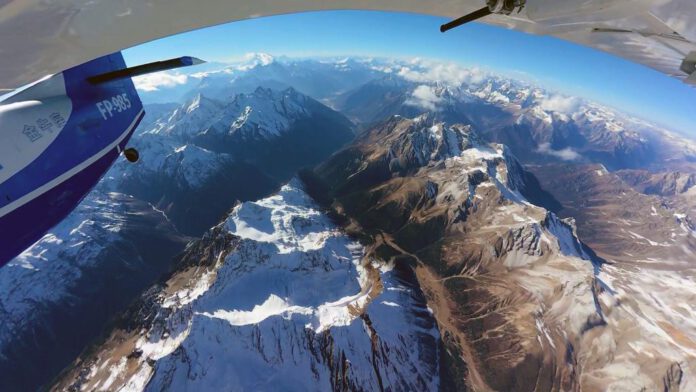
China is moving to further expand and upgrade Nyingchi Mainling Airport in southeastern Tibet, underscoring the facility’s growing role in both regional development and strategic planning along the country’s southwestern frontier.
On January 10, China’s National Public Resources Trading Platform announced a tender for the preliminary and construction design of a project to enhance the airport’s emergency support capacity, including the expansion of its T2 terminal. The new plans follow a series of infrastructure upgrades in recent years that have steadily increased the airport’s operational capabilities.
Located in the Yarlung Tsangpo River valley in Mainling, Nyingchi, the airport sits at an elevation of 2,948.9 meters above sea level. It lies approximately 19 kilometers southwest of Mainling’s county seat and 50 kilometers north of downtown Nyingchi. Classified as a 4D-level dual-use (civil-military) regional airport, it is considered a “high plateau” airport due to its altitude and complex terrain.
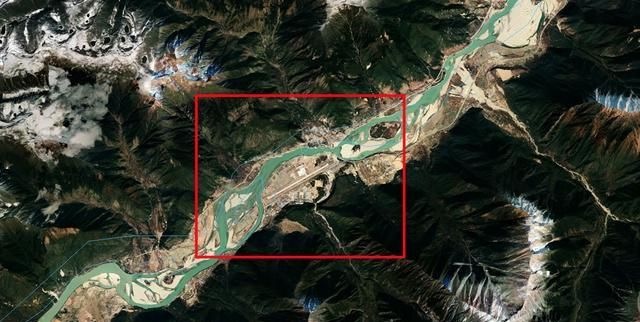
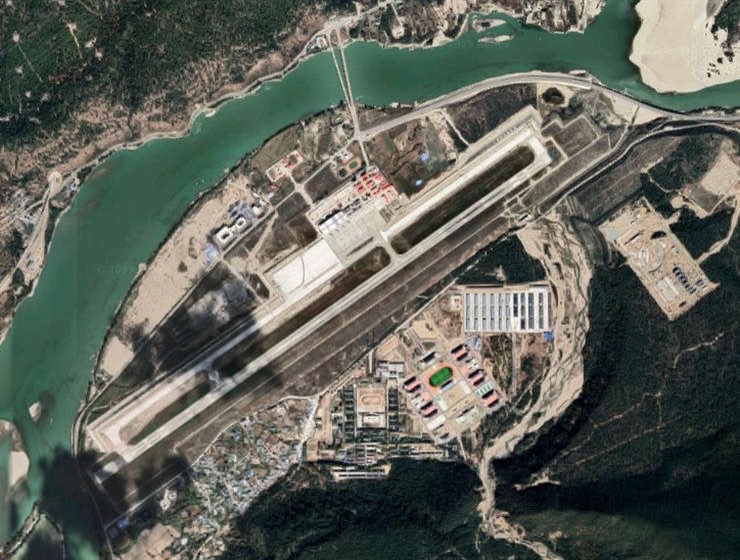
The idea of building a civilian airport in Nyingchi was formally proposed in April 2001, when the Tibet Autonomous Region government submitted plans to the State Council and the Central Military Commission. Construction began in October 2004, and the airport opened to commercial traffic in September 2006. In 2019, work started on a parallel taxiway project, which entered service in March 2021. That expansion included a new parallel taxiway north of the existing runway, two end-connecting taxiways, one vertical connector, additional apron space with six new Code C aircraft stands to the west and two general aviation stands to the east, as well as new support and auxiliary facilities. Military facilities in the vicinity have also undergone upgrades, and a new surface-to-air missile site has reportedly been built to the east.
The airport’s evolution has drawn international attention. The Washington-based Center for Strategic and International Studies (CSIS), through its tracking China’s western airpower expansion project, analyzed developments at Mainling in 2021. In 2023, Indian satellite imagery analyst Damien Simon reported the presence of a WZ-7 high-altitude long-endurance drone parked at the airport, highlighting its growing military relevance near the China-India border.
Beyond its strategic location, Mainling is widely regarded as one of the most challenging airports in the world for pilots. Tibet was once considered by the international civil aviation community to be an “airspace forbidden zone,” known for extreme flying conditions marked by sandstorms, hail, thunderstorms, high-altitude winds and severe turbulence. Among the region’s airports, Nyingchi stands out for its particularly complex meteorological and geographic conditions.
Although its elevation is lower than many other Tibetan airports—ranking 12th in altitude among China’s civil airports—the operational difficulty is often described as the highest in the country and among the most demanding globally. During World War II, the area lay along the infamous “Hump” air route used by Allied forces to supply China over the Himalayas; dozens of transport aircraft were lost in the surrounding mountains.
The airport sits in a narrow river valley frequently covered by low clouds and dense fog, with highly variable wind directions and frequent wind shear. These conditions significantly affect visibility and flight safety. Wind instability is especially dangerous during takeoff and landing, when sudden shifts can cause aircraft to deviate from their flight paths. Pilots must make rapid and precise judgments; errors can have catastrophic consequences.
Wind speeds typically intensify between 2 p.m. and 6 p.m., often exceeding safe limits for aircraft operations. As a result, most flights are scheduled in the morning. According to meteorological data, the airport’s cumulative annual flyable days total only about 100. The distinctive plateau terrain and harsh weather make it China’s most technically demanding airport for flight operations.
To ensure safety within the narrow valley corridors, navigation beacons have been installed at every turning point along flight routes. Wind profile radar systems monitor surrounding wind speed and direction. Because flight paths pass through tight, winding gorges that exceed normal operational standards, aircraft ground proximity warning systems may be triggered during descent. Complex terrain also interferes with navigation signals, limiting available airspace. Notably, the Milin navigation station lies just 11.2 kilometers from the Line of Actual Control between China and India.
Flight crews operating at Mainling must demonstrate exceptional technical proficiency and psychological resilience. Captains are typically veteran pilots with more than a decade of flying experience. The region is also among China’s most lightning-prone areas, with an annual average of more than 47 thunderstorm days. The airport’s exposed valley location, surrounded by open terrain without tall structures, increases the risk of lightning strikes, necessitating comprehensive lightning protection systems across all facilities.
Despite these challenges, the Tibet Airport Group has worked to optimize airspace coordination and strengthen ground service capacity. By assisting airlines in securing overnight slots at out-of-region airports and allocating aircraft to remain overnight, the group has effectively increased route density. During the winter flight season, weekly flight slots reached 262, a year-on-year increase of 26.6%, marking a historic high and providing logistical support for the hydropower project in the lower reaches of the Yarlung Zangbo River, a major regional engineering initiative.
In December 2025, China Civil Aviation Network reported that the Tibet Airport Group had built an aviation express network centered on Nyingchi to serve the Yaxia Project. Key trunk routes linking Nyingchi with Beijing, Chengdu, Chongqing, Guangzhou and Shenzhen have been prioritized. Airlines such as Lucky Air and China Eastern have coordinated capacity adjustments and revenue assessments to launch connecting routes, including services such as Wuhan–Mianyang–Nyingchi. In April 2025, Sichuan Airlines opened a Nyingchi–Chongqing–Hangzhou route, while during July and August, flights between Nyingchi and Chengdu’s Shuangliu and Tianfu airports were increased to nine or ten per day. After the winter schedule change, additional routes linking Nyingchi with Beijing Daxing, Wuhan via Xichang, and Xi’an via Xichang are planned.
To meet the transfer needs of project personnel, airport authorities have focused on improving connection efficiency, reducing minimum transfer times to under 70 minutes. Between January and November 2025, four major hubs—Chengdu, Chongqing, Xi’an and Tianfu—accounted for 315,200 transfer passengers, representing 35.5% of Mainling’s total throughput.
The airport has become a critical logistics node. For travelers, it reduces the physical strain associated with long overland journeys at high altitude. For high-value cargo, air transport overcomes the constraints posed by mountainous terrain. Personnel and materials arriving via the airport highway are dispatched from Nyingchi to dispersed project sites, lowering the logistical threshold for entering the Qinghai-Tibet Plateau.
As infrastructure expands, Mainling Airport is emerging not only as a driver of development for Nyingchi and nearby Medog County, but also as a strategic aviation hub along China’s eastern sector of the border with India. Continued upgrades to its emergency support capacity are expected to further strengthen its role in regional growth and frontier security in the years ahead.
Source: linzhi gov, carnoc, sina, xinhua, ufsoo