


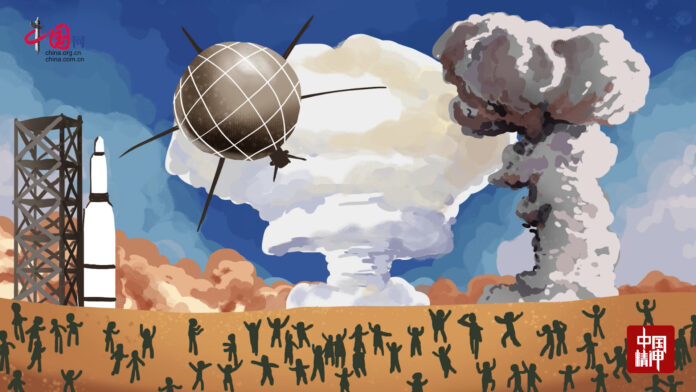
On March 11, 1965, Qian Xuesen proposed the ‘Four Missiles in Eight Years’ plan, outlining that between 1965 and 1972, China would develop short- and medium-range ballistic missiles, intermediate-range missiles, medium-to-long-range missiles, and intercontinental ballistic missiles.
On November 5, 1960, 85 days after Soviet experts withdrew from China, China successfully launched a missile based on Soviet models, later named the Dongfeng-1. Following this success, Qian Xuesen emphasized that China could not rely on Soviet assistance and needed to explore its own technological path. In February 1962, he suggested to Marshal Nie Rongzhen the creation of the Scientific and Technical Committee of the Fifth Academy of the Ministry of Defense. Qian proposed that each branch focus on studying the development paths and planning for different types of missiles, especially ballistic ground-to-ground missiles.
On March 14, 1963, the Chinese Communist Party issued directives on national defense technology, emphasizing “missiles first, focus on the atomic and hydrogen bombs, and develop electronics.” This became the guiding principle for missile and nuclear weapons development. From April 2 to May 16 of the same year, under Qian Xuesen’s leadership, the Fifth Academy convened its first annual conference, discussing technical approaches and steps for the development of ground-to-ground, ground-to-air, and coastal defense missiles, and identifying urgent research projects.
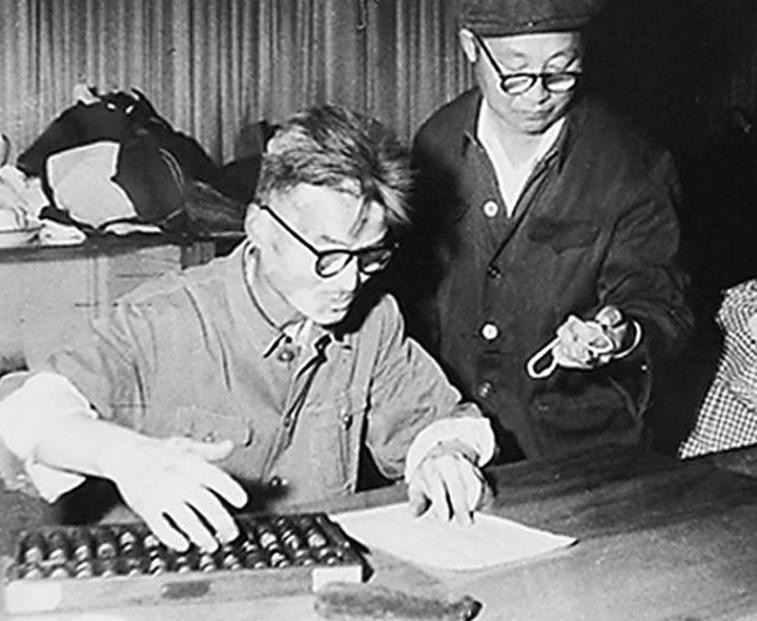
In November 1964, the Fifth Academy underwent its largest reorganization since its establishment, incorporating several factories and research institutes to form the Seventh Ministry of Machine Building, which unified management of China’s space industry research, design, production, and construction. The original branches of the Fifth Academy were reorganized into four missile research institutes, each responsible for a specific type of missile. The First Research Institute became the China Academy of Launch Vehicle Technology.
Prior to this, the Fifth Academy had engaged in extensive discussions with engineers and scientists about missile development plans. Two major rounds of discussion took place: from 1962 to 1963, and from 1964 to 1965. Qian Xuesen explained that China’s missile strategy needed both advancement and continuity, aiming to produce a series of high-performance missiles in a relatively short time with limited resources.
At the time, the Soviet Union and the United States already had intercontinental missiles, while China’s program was in its infancy. The Soviet Union developed missiles in parallel, while the United States used a sequential approach. Qian Xuesen adapted China’s approach to national conditions, advancing gradually from short-range to long-range missiles, sequentially before parallel, ensuring each new model incorporated further technological innovation.
From May 1962 to May 1964, research, design, testing, and production work on the Dongfeng-2 missile was carried out. On June 29, 1964, an improved Dongfeng-2 was successfully launched. In September 1964, a Central Special Committee meeting approved Qian’s dual-use missile-nuclear integration plan. On October 16, 1964, China successfully detonated its first atomic bomb.
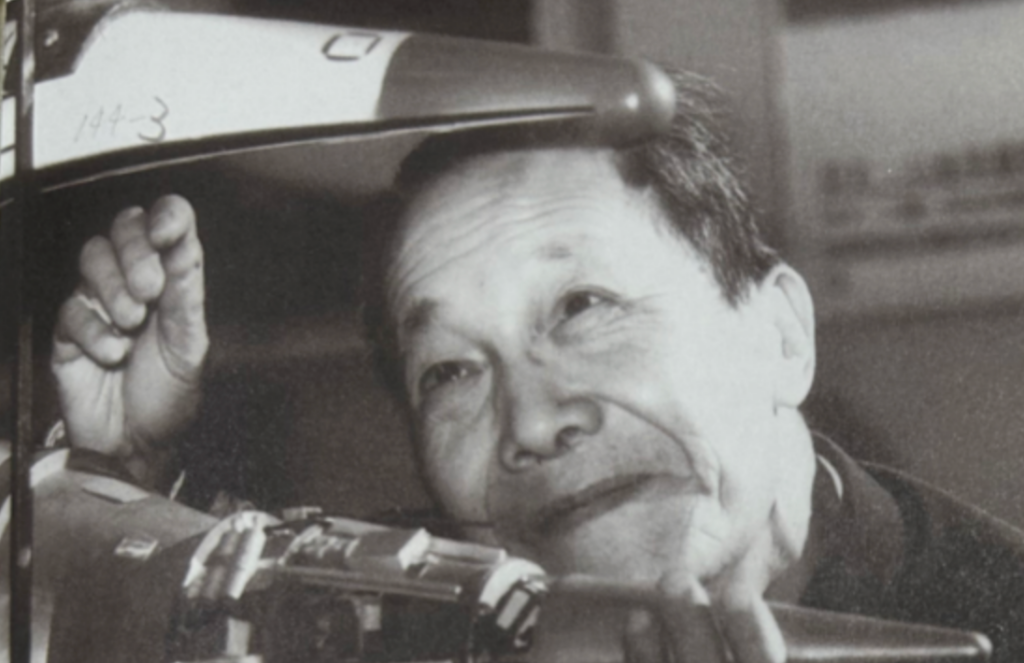
On December 21, 1964, Qian’s missile-nuclear integration planning team submitted a comprehensive test plan. Following the successful launch of the Dongfeng-2, Qian immediately led the development of the Dongfeng-2A, an upgraded short-range missile designed for nuclear delivery. This missile had a 1,200 km range and was developed in only ten months, benefiting from the research foundation laid by the Dongfeng-2. On June 30, 1966, the Dongfeng-2A was successfully launched at the Northwest Missile Test Base under Qian’s direct supervision.
The following day, on July 1, 1966, China formally established the Second Artillery Corps, whose missile bases were strategically located in remote mountainous areas. Unlike the flat terrain used by the Soviets, China designed its own missile control system to overcome terrain interference and improve guidance accuracy and countermeasures. On October 27, 1966, the Dongfeng-2A successfully carried a nuclear warhead in a full-scale test.
In 1963, the Fifth Academy proposed the development of the Dongfeng-3, a fully indigenous intermediate-range missile with a 2,000–2,500 km range, incorporating a series of technologies prearranged by Qian Xuesen. The Dongfeng-4, with a range of 4,000–5,000 km, was initially developed as a weapon but later became the basis for China’s first satellite launch vehicle. By applying existing missile and sounding rocket technology, Qian implemented a dual-use approach, enabling the Dongfeng-4 missile and Long March-1 rocket to be developed simultaneously. The Dongfeng-5 intercontinental missile later served as the prototype for the Long March-2 rocket.
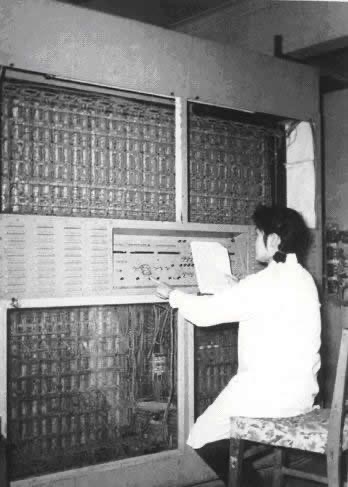
In February 1968, the State Council and Central Military Commission approved the establishment of the China Academy of Space Technology, with Qian Xuesen as director, overseeing both launch vehicles and the Dongfanghong-1 satellite. Despite disruptions during the Cultural Revolution, support from Mao Zedong and Zhou Enlai allowed Qian to continue his work.
On January 30, 1970, the Dongfeng-4 successfully achieved high-altitude ignition and two-stage separation, critical technologies for satellite launch vehicles. On April 24, 1970, China launched its first satellite.
In January 1964, planning documents proposed developing an intercontinental missile by the 1970s, with preliminary work starting in research institutes. In 1970, the government mobilized 178 units across factories, research institutes, and universities to collaborate on the intercontinental missile. By the end of the year, key subsystems were largely completed, and Wang Yongzhi was assigned as deputy chief designer.
The first intercontinental missile was scheduled for launch on September 10, 1971. Its success had a profound impact on China’s space program and led to the development of the Long March-2 rocket. On November 26, 1975, Long March-2 successfully placed China’s first returnable satellite into orbit, marking a major breakthrough in reentry technology and laying the foundation for later launch vehicles, including the Long March-2F and Long March-3 series.
In March 1975, Qian Xuesen assisted in planning missile and nuclear weapons development, with the goal of completing the intercontinental missile’s full-range test by 1980. By the end of 1979, the Dongfeng-5 had completed six test flights under Qian’s guidance. On May 18, 1980, the Dongfeng-5 successfully completed a full-range flight with an error of only 250 meters, far exceeding expectations.
With this achievement, China became the third country, after the United States and the Soviet Union, to possess intercontinental missiles, completing the ”Four Missiles in Eight Years“ plan.
Source: sina, china daily, kxcb las, xitheory