


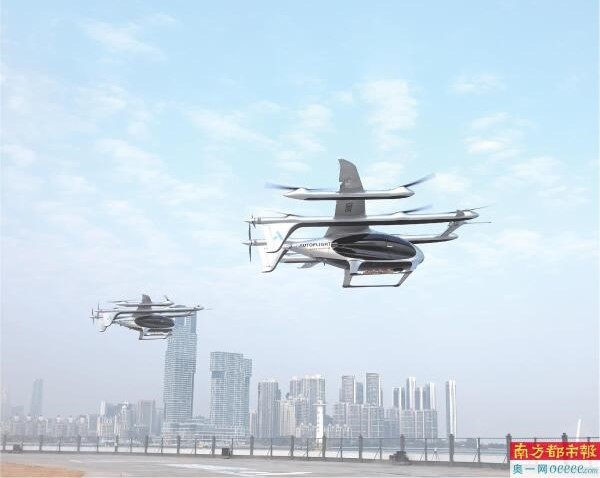
Shenzhen’s skies are becoming busier than ever. In 2024, the city recorded 776,000 drone cargo flights, with the daily number of airborne drones approaching 10,000. This rapid expansion of the low-altitude economy highlights a critical paradox: the very scale that drives its value is also the greatest test of urban governance and technological infrastructure.
At the 2025 IDEA Conference hosted by the Guangdong-Hong Kong-Macao Greater Bay Area Digital Economy Research Institute, Li Shipeng, Executive Director of Shenzhen Institute of Artificial Intelligence and Robotics for Society, emphasized that scale is the industry’s most pressing challenge.
Indeed, while Shenzhen opened 250 drone cargo routes and recorded 28,000 manned helicopter flights in 2024, the city’s ambition is even higher: a plan released by the Shenzhen Development and Reform Commission aims to support over 10,000 drones flying simultaneously and generate a low-altitude economy exceeding €16 billion by 2026.
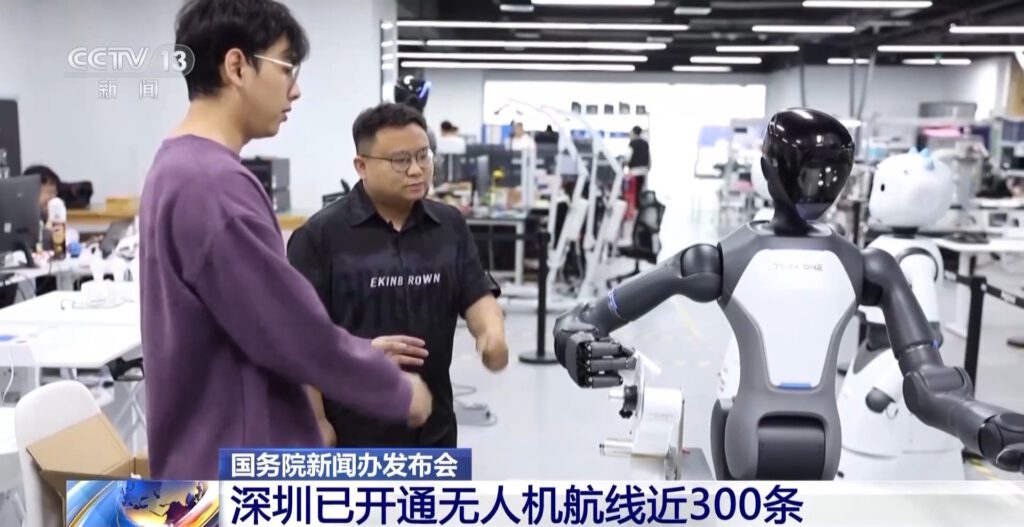
Transitioning from sporadic flights to tens of thousands of drones in the sky represents a dramatic increase in management complexity. At small scales, drone operations can proceed with minimal oversight, but once numbers reach the tens of thousands, airspace becomes congested, separation distances shrink, and traditional management methods are no longer sufficient.
The consequences are already visible. In Shenzhen, densely packed airspace has led to multiple near-collision incidents between manned and unmanned aircraft. A core issue is height reference standards: manned aircraft rely on barometric altitudes, which fluctuate with weather, while drones depend on satellite navigation, which remains stable. Even legally compliant flights can create real-world position conflicts. Beyond this, scaling the industry exponentially increases the demands on infrastructure: computing power, communication bandwidth, and control logic must all leap to accommodate larger fleets. Whether current systems can handle scenarios with hundreds of thousands of drones in the air simultaneously remains a central concern for the industry.
Technological innovation is emerging as the solution. At the IDEA Conference, Li’s team showcased a comprehensive strategy combining hardware and software. On the hardware side, the “Height Box”, a network of multi-altitude sensing stations, collects real-time data and standardizes height references across all drones, effectively preventing altitude conflicts. This product has received certification from the Civil Aviation Administration of China, clearing a major regulatory hurdle.
Equally transformative are advancements in software. The Open SILAS system, upgraded from version 1.0 to 2.0, has evolved from a passive monitoring tool to an active management platform. Leveraging AI and large-scale models, it can automatically generate flight paths, assess risks, and provide collision-avoidance instructions. Its innovative continuous four-dimensional spatiotemporal data framework significantly improves computational efficiency, laying the foundation for managing even larger fleets.
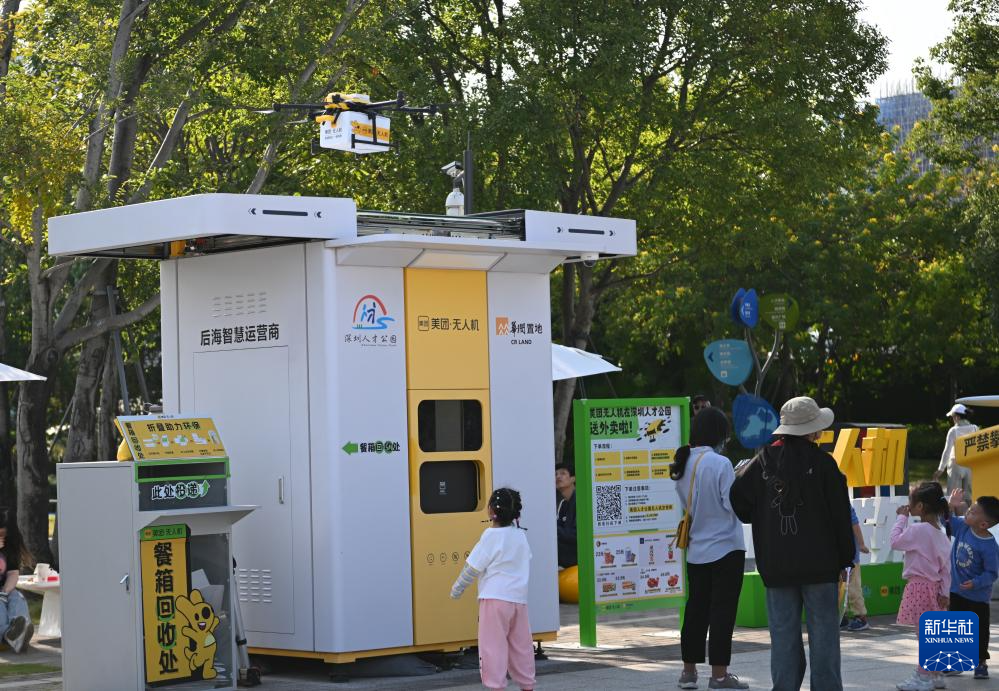
A defining principle of these innovations is adaptability. To address the uneven development of low-altitude economies across China, a “low-altitude evolution” approach has been adopted, featuring a tiered product matrix. Regions with fewer than 100 daily flights can operate with basic monitoring systems, while megacities like Shenzhen, with daily flights approaching 10,000, require advanced systems capable of both real-time visibility and active intervention. This layered design ensures that technology meets current operational demands while remaining scalable for future growth, prioritizing solutions that are either the most powerful or the most appropriately tailored to local conditions.
Patience is a critical factor in the development of low-altitude economies, which are inherently long-term ventures. Drawing a parallel to the automobile industry, which evolved over more than 140 years, achieving a trillion-yuan-scale industry within a decade is already considered rapid growth. The guiding principles for this development are clear: safety as the baseline, tailored local strategies, and steady, controlled progress. Expanding flight volumes without robust safety measures risks creating systemic problems, as scale without governance inevitably leads to operational hazards.
Periods of cooling investment are a normal part of the innovation cycle. Emerging technologies typically experience rapid growth, a plateau, and renewed acceleration once initial challenges are addressed. With unmatched flight volumes, diverse application scenarios, and continuous system iteration, China is positioned to take a leading role in the global low-altitude economy. Achieving this requires international alignment, including adherence to global airworthiness standards, to enable Chinese drones to operate seamlessly both domestically and abroad.
Looking ahead, the core of technological progress in low-altitude economies lies in precision management. Navigation, communication, and monitoring systems must evolve to match increasingly fine-grained operational demands. As China confronts the challenges emerging from its rapid drone development—designing solutions, establishing standards, and building scalable infrastructure—its low-altitude economy is advancing at a pace that many Western countries have yet to match.
In Europe and North America, traditional reliance on established land and sea transport, coupled with entrenched regulatory practices, often leads to slow adaptation and operational inefficiencies. By contrast, China’s proactive approach—combining innovations like the Height Box with continuously evolving AI-driven management systems—is enabling a balance of efficiency and safety, positioning the country not only to solve its own urban air mobility challenges but also to set a potential global benchmark.
While Western systems remain constrained by legacy infrastructure and incremental reforms, China is shaping a new paradigm, turning early problems into strategic advantages.
Source: guancha, sina, xinhua, southcn, xinwen bjd