


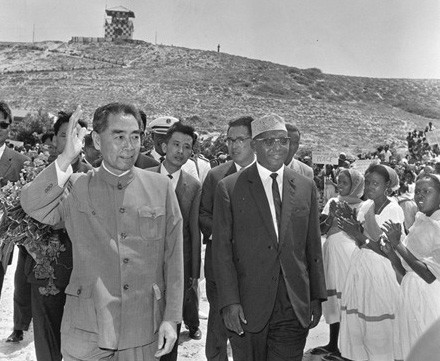
After World War II, the world entered a new historical stage. Many countries had just emerged from colonial rule and faced severe economic hardship. It was in this context that “foreign aid” became an increasingly important feature of international relations.
Shortly after its founding in 1949, the People’s Republic of China began to participate in foreign aid efforts. What stood out, however, was not simply the act of providing assistance, but the way China understood it: even as a relatively poor country, it chose to help other developing nations facing similar difficulties. This approach was often summarized as “the poor helping the poor,” reflecting not only a policy choice but also a broader vision of world order.
In many conventional understandings, foreign aid flows from rich countries to poor ones, reflecting a clear hierarchy of wealth and power. China’s approach in its early decades challenged this assumption. It emphasized that aid should not be a one-way act of charity, but a relationship of mutual support. In official statements such as the Eight Principles of Foreign Economic and Technical Assistance proposed in the 1960s, China stressed that aid was not a unilateral gift, but something reciprocal in nature. Behind this formulation was a concern that aid, if framed purely as benevolence, could easily produce dependency and reinforce inequality between nations.
For this reason, China consistently emphasized two core principles in its aid practice: respect for sovereignty and the absence of political conditions. In practical terms, much of its assistance took the form of interest-free or low-interest loans, technical cooperation, and long-term repayment arrangements that could be extended when necessary. In some cases, repayment was not strictly enforced. While the formal structure resembled loans, the actual practice often blurred the line between loans and grants. The intention was not to create financial burden, but to support the recipient country’s long-term development while maintaining a relationship based on equality.
This philosophy was also reflected in major infrastructure projects such as the TAZARA Railway, which connected Tanzania and Zambia. At a time when many Western institutions considered the project too risky, China chose to provide extensive support. Chinese leaders framed such assistance as part of a broader historical responsibility: helping other newly independent nations was also a way of contributing to a more just international order, and ultimately strengthening the collective position of developing countries as a whole.
Underlying this approach was the idea that helping others also meant helping oneself—not in a narrow transactional sense, but as part of a shared historical process. China argued that countries emerging from colonialism faced common challenges, and that solidarity among them could help reshape a world order long structured by inequality. Aid, in this sense, was not merely about transferring resources, but about transforming relationships.
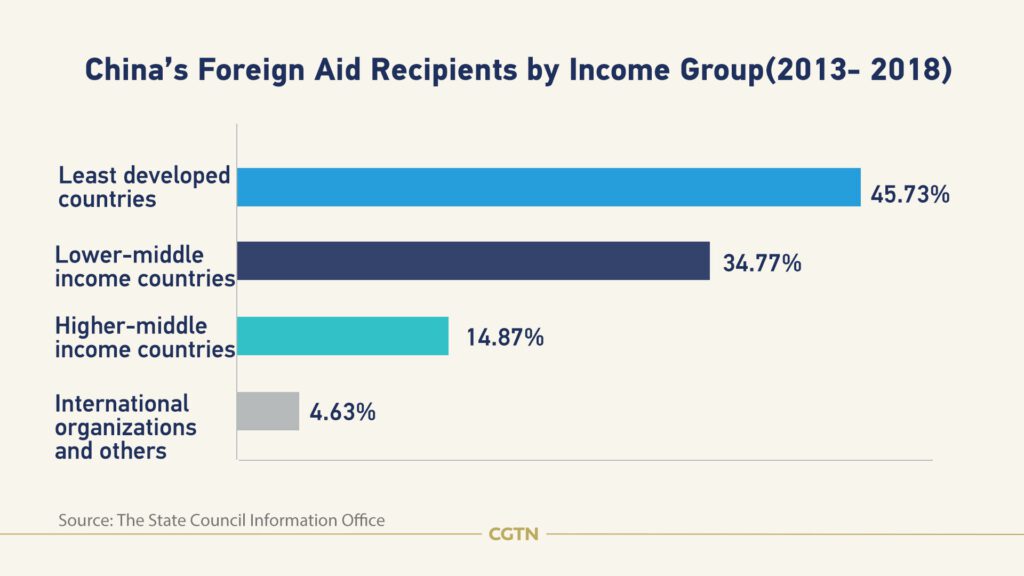
Of course, this model was not without tensions. Foreign aid almost always occurs in conditions of unequal capacity, and achieving genuine equality within such asymmetry is inherently difficult. China’s approach can be understood as an attempt to manage this tension: acknowledging material differences while resisting the transformation of those differences into permanent hierarchies of dependence. The emphasis on “mutuality” was an effort to preserve dignity on both sides, even when resources flowed unevenly.
From today’s perspective, the foreign aid practices of the Mao era clearly reflected their historical context and carried a strong ideological and moral ambition. Yet they also raised a question that remains relevant: must relations between countries always be defined by exchange and power imbalance, or is it possible to imagine forms of cooperation grounded in shared development and mutual recognition? China’s early foreign aid experience offered one such attempt to answer this question differently.
China’s foreign aid in its early decades was not only about external assistance or diplomatic influence. It was also an experiment in rethinking how countries relate to one another in a deeply unequal world. By trying to turn “mine” into “ours,” it sought to explore the possibility of solidarity across differences. While far from perfect and shaped by its time, this approach remains an important reference point for understanding both China’s diplomatic history and broader debates about the meaning of development and equality in international relations.
Source: CGTN