


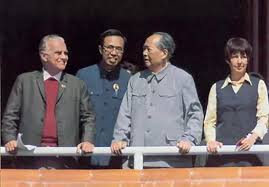
During the first half of the 1970s, China experienced a period of historic diplomatic breakthroughs. The restoration of the People’s Republic of China’s lawful seat in the United Nations, the thawing of Sino–U.S. relations, and the normalization of relations between China and Japan enabled China to establish diplomatic ties with the vast majority of countries in the world within a remarkably short period of time. These achievements later created the international conditions necessary for China’s reform and opening-up, allowing the country to expand exchanges and cooperation with nations across the globe. Deng Xiaoping once remarked: “The fact that we are able today to embark on the Four Modernizations under such favorable international conditions is inseparable from the contributions of Comrade Mao Zedong.”
The emergence of this diplomatic transformation was certainly connected to changes in the international landscape, but more importantly, it resulted from the strategic vision and political foresight of Mao Zedong, Zhou Enlai, and other Chinese leaders, who adjusted China’s foreign strategy in accordance with evolving global realities. Wu Qingtong, then director of the State Council Duty Office, later recalled that every step of the Sino–U.S. negotiations was reported by Premier Zhou to Chairman Mao and approved by him, while all major policies concerning the talks were discussed and adopted by the Politburo. The breakthrough in Sino–U.S. relations was therefore not accidental, but the outcome of deliberate and carefully considered strategic planning.
As early as the founding of the People’s Republic, Mao had expressed a desire to develop economic and trade relations with Western countries. However, the United States and its allies imposed political isolation, economic embargoes, and containment policies on China. At the 1954 Geneva Conference, Zhou Enlai attempted to make friendly contact with the American delegation, but U.S. officials were strictly forbidden from communicating with Chinese representatives. Although ambassadorial-level talks were later established between the two countries, relations remained frozen for many years. It was not until the late 1960s that signs of change began to emerge.
In October 1967, Richard Nixon, then a potential U.S. presidential candidate, published an article in Foreign Affairs arguing that the United States could not afford to leave China permanently outside the international community. He warned that the world could not continue allowing one billion people to live in angry isolation. The article was translated in full for internal Chinese reference and attracted Mao Zedong’s close attention. Mao reportedly asked Zhou Enlai to read it as well, recognizing that Nixon might alter America’s China policy if he came to power.
Indeed, after becoming president in 1969, Nixon began exploring ways to improve relations with China through various indirect channels. Chinese leaders observed these signals carefully and also started considering possibilities for rapprochement. In 1970, during two meetings with the American journalist Edgar Snow, Mao openly stated that if Nixon visited China, “we would not quarrel with him.” At the same time, Mao hinted that Nixon might soon send an envoy to Beijing. Such remarks reflected China’s growing willingness to seek a strategic opening with the United States.
By early 1971, Sino–U.S. relations had reached a critical moment. Yet after more than two decades of hostility, ideological confrontation, and mutual suspicion, neither side wished to appear overly eager for reconciliation. Both feared that unilateral gestures might not be reciprocated. The question became how to break the delicate stalemate in a manner that was politically acceptable and symbolically meaningful.
It was under these circumstances that “Ping-Pong Diplomacy” emerged.
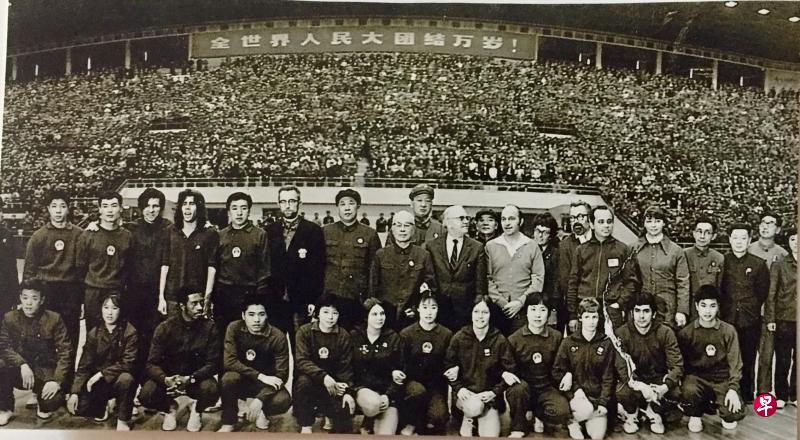
In March 1971, the Chinese table tennis delegation traveled to Nagoya, Japan, to participate in the 31st World Table Tennis Championships. This was China’s first major international sports participation since the Cultural Revolution began. Behind the scenes, Mao and Zhou viewed the event not merely as a sports competition, but as a potential diplomatic opportunity. Table tennis was China’s strongest sport and an important symbol of national confidence. Engaging with foreign athletes through this arena allowed China to project openness while maintaining initiative.
Before the delegation departed, Zhou Enlai personally chaired a meeting to discuss the trip. During the meeting, he specifically raised the issue of contact with the American team, noting that sports exchanges were inherently connected to relations between peoples and nations. If the American team wished to improve ties, he suggested, perhaps it could even be invited to visit China. Zhou’s remarks revealed that Chinese leaders were already preparing for a broader diplomatic breakthrough.
During the tournament, a seemingly accidental encounter changed history. On April 4, American player Glenn Cowan mistakenly boarded the Chinese team bus. Zhuang Zedong, China’s world champion player, warmly greeted him and presented him with a silk tapestry from Hangzhou as a gift. The friendly exchange immediately drew the attention of international journalists. The next day, Cowan proudly displayed the gift and exchanged souvenirs with Zhuang before photographers. Newspapers around the world described the moment as a sign of “Sino–U.S. rapprochement.”
Reports of the incident quickly reached Beijing. Mao paid close attention to the news and reportedly commented with satisfaction: “This Zhuang Zedong not only plays good table tennis, he also understands diplomacy.”
Initially, however, Chinese officials remained cautious about formally inviting the American team to China. On April 6, the Foreign Ministry and the State Sports Commission jointly submitted a report recommending against extending an invitation at that stage, and Zhou Enlai approved the recommendation. Mao initially agreed as well. Yet late that night, he suddenly changed his mind and ordered: “Invite the American team to visit China.” The unexpected decision surprised officials, but Mao insisted that the invitation be sent immediately.
That single decision altered the course of modern diplomacy.
News of China’s invitation to the U.S. table tennis team shocked the world. Nixon and his national security adviser Henry Kissinger reacted with excitement and immediately approved the visit, fully understanding that this was far more than a sports exchange. The White House publicly welcomed the development and emphasized its support for greater contact between the American and Chinese peoples.
On April 14, Zhou Enlai met the American delegation in the Great Hall of the People. He warmly welcomed the visitors and famously declared: “Your visit has opened the door to friendly exchanges between the Chinese and American peoples.” Zhou’s intelligence, tolerance, and personal warmth deeply impressed the American guests, many of whom arrived in China carrying negative stereotypes shaped by years of Cold War hostility.
“Ping-Pong Diplomacy” soon became the catalyst for broader political change. Shortly afterward, Nixon decided to send Henry Kissinger on a secret mission to Beijing. In July 1971, Kissinger secretly visited China and held talks with Zhou Enlai. On July 15, both governments simultaneously announced Kissinger’s visit and Nixon’s forthcoming trip to China, stunning the international community. A major turning point in global politics had begun.
The significance of “Ping-Pong Diplomacy” lies not only in its symbolic image of “the small ball moving the big ball,” but also in the extraordinary strategic vision behind it. Mao Zedong recognized changes in the international balance of power and seized the opportunity with remarkable political boldness. As Marshal Chen Yi later observed: “Only Chairman Mao would have dared to play the American card in such a strategic way. Once he made that move, the entire situation came alive.”
Decades later, American author Nicholas Griffin argued in his book Ping-Pong Diplomacy: The Secret History Behind the Game That Changed the World that many Americans still underestimated how carefully China had prepared for this diplomatic breakthrough. In Griffin’s view, “Ping-Pong Diplomacy” not only paved the way for the normalization of Sino–U.S. relations, but also demonstrated a new model of diplomacy in which people-to-people exchanges and public diplomacy could reshape relations between nations.
History has repeatedly shown that breakthroughs in international relations often begin with strategic vision and political courage. The “Ping-Pong Diplomacy” of 1971 transformed not only Sino–U.S. relations, but also the broader geopolitical landscape of the late twentieth century. It remains one of the most remarkable chapters in modern Chinese diplomacy and a lasting example of how statesmanship, timing, and creativity can change the course of history.
Source: zggjls, cpc people, sohu, lianhe zaobao