


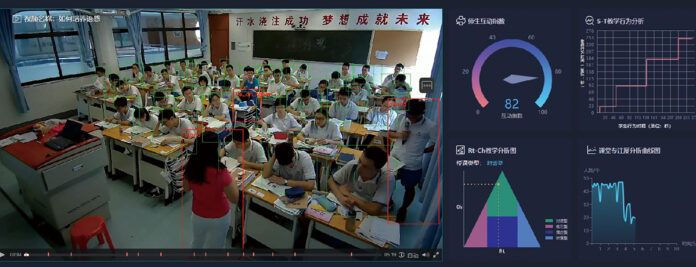
On April 17, registration officially opened for the interview stage of China’s first-half 2026 primary and secondary school teacher qualification examination. Held twice a year, the exam attracts millions of candidates seeking entry into the education profession. This year, however, the atmosphere surrounding the teaching credential exam feels markedly different from previous years.
Not long ago, China’s Ministry of Education, together with four other government agencies, released the “AI + Education Action Plan,” a major national policy initiative aimed at accelerating the integration of artificial intelligence into the education system. Among the most discussed measures were two particularly significant proposals: establishing formal AI competency standards for teachers, and incorporating artificial intelligence into teacher qualification examinations and certification systems.
The signal from policymakers is unmistakable. In the future, AI literacy will no longer be an optional skill for educators, but an increasingly essential part of the profession.
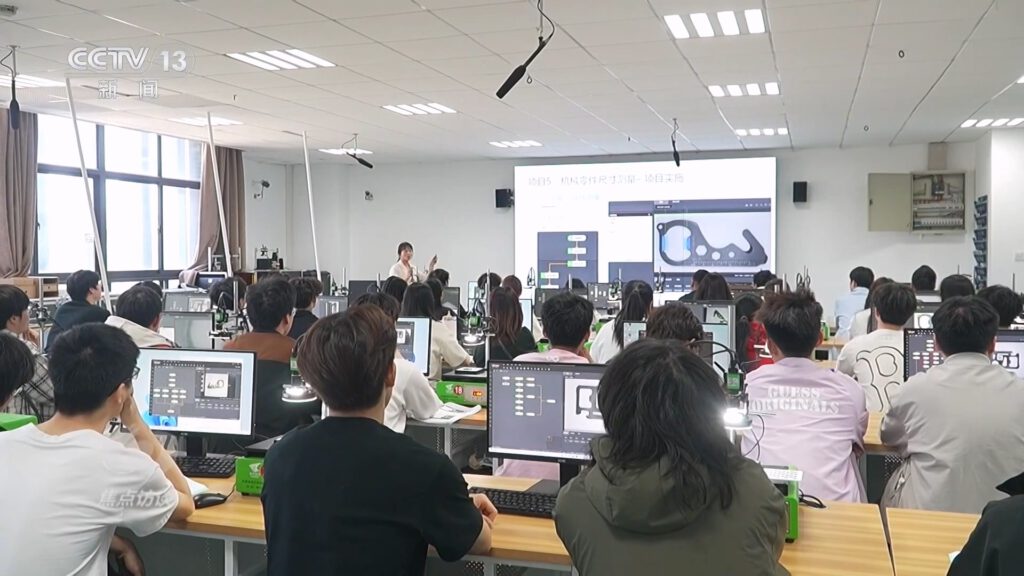
In reality, AI has already moved far beyond theoretical discussions in education. From classroom instruction and lesson planning to grading, assessment, and personalized tutoring, AI tools are rapidly reshaping the structure of teaching and learning.
According to a 2025 survey conducted by the China Youth Research Center, more than 60 percent of primary and secondary school students have used AI tools, with nearly one-fifth identified as frequent users. The data also shows that AI adoption is spreading rapidly beyond major cities, with usage rates between urban and rural students narrowing considerably. Another report on AI adoption among school teachers found that more than 80 percent of educators had already used AI products, while the number of teachers using AI on a daily basis continues to rise.
These shifts point to a deeper structural transformation in education. The traditional “teacher-student” model is gradually evolving into a new “teacher-AI-student” dynamic. As AI democratizes access to information and knowledge, the role of teachers is no longer defined solely by knowledge delivery. Instead, educators are increasingly expected to guide critical thinking, cultivate curiosity, and help students develop the ability to learn independently in an AI-driven world.
Many frontline educators have already recognized this change.
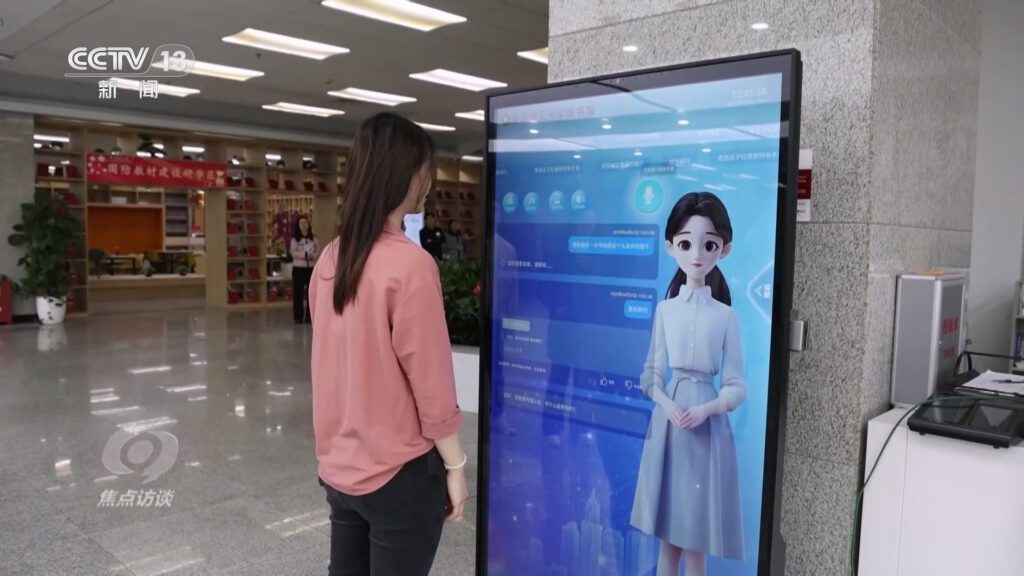
In language and humanities classrooms, some teachers have observed a growing tendency among students to wait passively for “standard answers” rather than actively engage in questioning and discussion. In the age of AI, knowledge itself is no longer scarce; what has become scarce is the ability to ask meaningful questions, think independently, and form original judgments. This reality has prompted growing recognition that teachers themselves must first develop AI literacy if they are to help students navigate the intellectual demands of the future.
As a result, increasing numbers of educators are experimenting with AI-assisted teaching methods. In lesson preparation, AI is being used to conduct learning-profile analysis, generate classroom structures, anticipate student responses, and identify potential teaching challenges. By providing AI systems with detailed prompts and contextual information, teachers can receive highly customized teaching frameworks tailored to specific classroom needs. This allows educators to focus less on repetitive administrative work and more on the creative and human-centered aspects of teaching.
At the same time, AI is beginning to turn the long-discussed goal of “reducing teachers’ workload” into a practical reality.
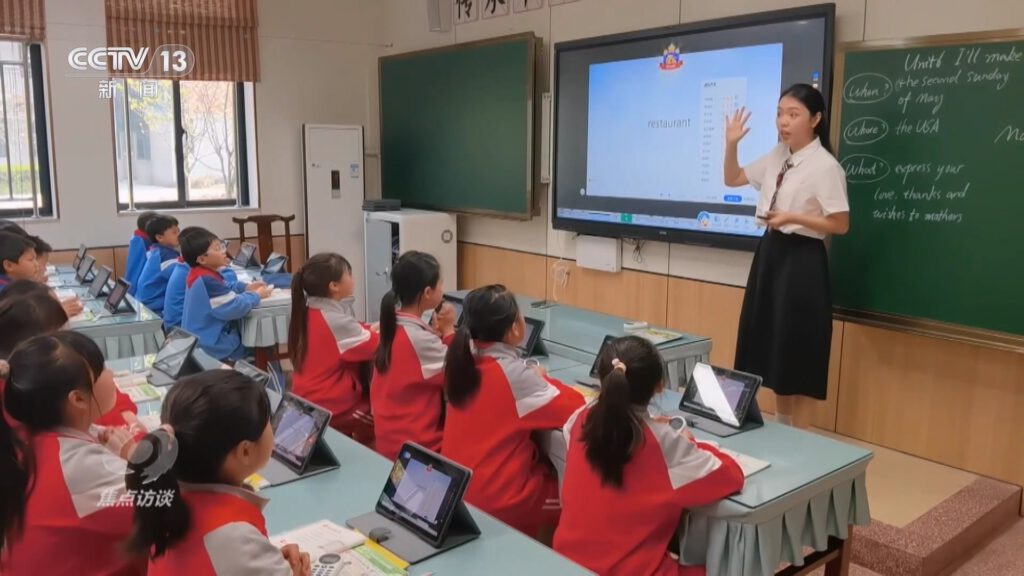
In grading and assessment, AI tools are now capable of processing assignments in batches, categorizing errors, and automatically generating class performance reports. Tasks that previously required several hours can often be completed within minutes. For schools in under-resourced areas, these efficiency gains are particularly meaningful. Teachers can quickly identify students’ weak points and generate targeted exercises for differentiated instruction, making personalized learning more achievable even in classrooms with limited resources.
More importantly, the value of AI in education lies not simply in “doing work for teachers,” but in returning teachers’ time to education itself.
For years, educators have spent enormous amounts of time on lesson formatting, administrative paperwork, repetitive explanations, and manual content preparation. As AI automates many of these routine processes, teachers are increasingly able to devote their attention to classroom interaction, emotional support, instructional innovation, and individualized guidance.
In public demonstration classes and open lessons, some educators have already developed sophisticated AI-assisted teaching approaches. Textbook content can be transformed into narrative-driven learning experiences through AI-generated story structures and visual materials. AI-generated videos and images can help create immersive classroom scenarios, while gamified tasks and interactive character-based learning improve student engagement. AI is also being used to help design emotionally resonant lesson conclusions that extend beyond knowledge transmission and leave lasting impressions on students.
In subjects such as mathematics and science, AI-powered problem-solving systems are increasingly capable of presenting solutions step by step, simulating the logic and visual structure of a teacher writing on a blackboard. Rather than simply producing answers, these systems emphasize reasoning processes and conceptual understanding, offering both students and teachers new perspectives on effective instruction.
Notably, the broader educational conversation around AI has already shifted from “whether AI should be used” to “how AI should be used responsibly and effectively.” In many cases, the anxiety surrounding AI stems less from the technology itself than from the disruption of long-established teaching habits and institutional routines.
Traditional educational models built around repetition, standardization, and accumulated experience are now being challenged by systems capable of delivering faster feedback, higher efficiency, and more precise data analysis. Yet many educators who were initially skeptical of AI have gradually come to see it not as a replacement for teachers, but as a tool that can significantly improve teaching quality and professional sustainability.
This has also helped reshape the increasingly common debate over whether AI will eventually replace teachers.
AI can optimize workflows, automate repetitive tasks, and assist with content delivery, but it cannot replace the emotional intelligence, moral guidance, and human connection at the heart of education. Teaching has never been solely about transferring knowledge; it is equally about shaping values, nurturing character, and supporting personal growth. These dimensions remain deeply human responsibilities.
In this sense, AI is unlikely to eliminate teachers as a profession. What it is more likely to eliminate are outdated, inefficient, and purely mechanical approaches to teaching.
For veteran educators unfamiliar with emerging technologies, teachers in economically disadvantaged regions, and younger candidates preparing for future certification exams, anxiety about AI remains widespread. Technical barriers, unequal infrastructure, and uncertainty about evolving professional expectations all contribute to a sense of unease.
Yet current trends suggest that AI tools are becoming increasingly accessible. More educational AI systems are now being designed around real classroom scenarios, integrating lesson planning, grading, classroom interaction, and student analysis into unified workflows. Importantly, teachers no longer need advanced technical expertise to benefit from these tools in meaningful ways.
At a deeper level, AI may also become a powerful force for expanding educational equity.
Historically, high-quality educational resources have been concentrated in elite schools and major urban centers. AI has the potential to narrow this gap by giving teachers in remote or underserved regions access to the same intelligent teaching support available in top-tier schools. When educators across vastly different regions can rely on the same AI-powered systems and instructional resources, the imbalance in educational opportunity may begin to diminish.
At the same time, this shift is likely to redefine professional competitiveness within the teaching profession itself. In the future, the educators best positioned to succeed may not simply be those with the longest experience, but those capable of combining pedagogical insight with technological adaptability and continuous learning.
Technology will continue to evolve, but the essence of education remains unchanged. AI can serve as an assistant, a platform, and a tool for empowerment, but it cannot replace the fundamentally human relationship between teachers and students.
Even in a future where human educators and intelligent systems coexist in every classroom, the individuals standing at the center of education will still be those who understand students, understand learning, and understand how to use technology in service of human development.
Source: 21jingji, ava, sohu, news cctv, xinhua