


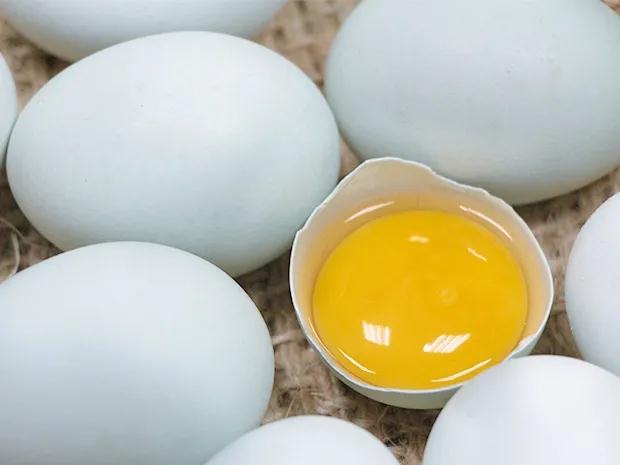
China’s eggs have quietly become a symbol of agricultural mastery. The country produces around 30 million tons annually, accounting for a third of global poultry egg production, with roughly 82,000 tons laid daily. If these eggs were lined up end to end, they could circle the Earth three times; if used to fill a standard swimming pool, they would fill 4,000 pools.
Remarkably, China achieves near-total self-sufficiency in eggs, with a domestic production rate of 100.4%. Average per capita consumption has reached 21.7 kilograms, double the global average, making China both the world’s largest producer and consumer of eggs.
This dominance is not a coincidence but the result of decades of industrial-scale innovation. The national population of laying hens exceeds 1.1 billion, with more than 70% of farms housing over 5,000 hens. Automated feeding and intelligent environmental controls are now adopted on 60% of farms, and average annual production per farm has increased by 40% since 2000. Leading enterprises such as Beijing Yukou and Hebei Huayu have achieved per-hen yields of up to 330 eggs per year, surpassing the 300-egg average in Europe and the United States.
Yet, China’s large-scale production relies not on backyard flocks, but on specially bred commercial laying hens. While local free-range chickens produce flavorsome eggs, their output rarely exceeds 180 eggs annually and fluctuates with the seasons. Commercial breeds, by contrast, are scientifically optimized to lay more than 330 eggs per year while consuming less feed and resisting disease, making them indispensable for large-scale operations. Without these high-performance hens, the stable, affordable, and abundant egg supply enjoyed nationwide would be impossible.
Despite China’s enormous consumption—nearly 400 billion eggs annually—over 80% of commercial breeding stock was once imported. In the early 2000s, domestic producers were at the mercy of foreign suppliers, with no control over quantity, price, delivery schedules, or technology. Imported breeding chickens were often unsuitable for further breeding, leaving Chinese enterprises vulnerable to market disruptions. Researchers recognized that without independent breeding capabilities, the nation’s egg supply—and the public’s ability to afford them—was perpetually at risk.
Developing independent breeding systems, however, proved to be a scientific marathon. In the early days, researchers stationed themselves on remote farms, manually tracking tens of thousands of breeder chickens, recording egg production, shell color, weight, and even feather condition daily. Pathogen control required immediate testing of every chick for diseases such as avian leukosis and pullorum; a single positive test meant culling entire lineages. These painstaking efforts, repeated for over a decade, laid the foundation for China’s modern egg-laying hen industry.
The breakthrough came with genomic technology. Traditional breeding relied on selecting chickens based on appearance and production records, a process taking more than ten years per new breed. Globally, gene chips were accelerating breeding by identifying high-yield and disease-resistant genes, but foreign monopolies controlled both the technology and cost. Chips were designed for Western breeds and largely incompatible with Chinese chickens, expensive to purchase, and prone to delays in importation.
China’s scientists responded with ingenuity. By 2017, the first domestically developed egg-laying hen gene chip, Fengxin No. 1, was created. Acting like a “genetic QR code,” it identified tens of thousands of genes associated with egg production, quality, and disease resistance, reducing testing costs to one-sixth of foreign alternatives. By 2018, a “liquid-phase chip” was developed, granting full control over design, production, and testing while reducing costs by 42.6% and cutting the testing cycle from three months to 15 days. This allowed researchers to assess a chick’s genetic potential for high production in just 30 days using a single drop of blood.
These technological leaps ushered in a new era. The Jingfen No. 6, released in 2019, represents the culmination of more than 20 years of independent breeding efforts. Today, the Beijing-style laying hen series dominates the domestic market, with 7.8 billion birds accounting for 60% of eggs consumed in China. In 2023, the Jinghong No. 1 hens traveled 8,000 kilometers to Tanzania, marking the first successful export of Chinese-bred laying hens and signaling the country’s arrival as a global competitor in poultry genetics. By 2024, exports of Chinese breeding chickens had surged 200% year-on-year, breaking decades-long European and American dominance.
China’s egg industry has not only prioritized quantity but also quality. Brands such as Huangtian’e and Deqingyuan have introduced Salmonella-free eggs safe for raw consumption, with higher yolk indices and stronger shells. High-end retail channels report annual sales growth of 35%, and the premium egg market exceeded RMB 20 billion in 2024, demonstrating growing consumer willingness to pay for superior products. Smart farming technologies further enhance efficiency and safety: at Muyuan’s Henan farms, blockchain tracks every egg’s lineage, feed, and laying date, while Qingdao New Hope Liuhe employs AI cameras to maintain flock mortality below 5%, three points lower than conventional methods. These innovations have boosted production efficiency by 25% and reduced costs by 12%.
Nevertheless, challenges remain. Overcapacity led to a 30% fluctuation in market prices in 2024, requiring dynamic management systems. Rising demand for specialty eggs, including DHA-enriched and low-cholesterol varieties, is pushing the industry toward market segmentation. Global competitors, particularly the U.S. and the Netherlands, are exploring gene-edited, avian influenza-resistant hens, pressuring China to maintain continuous innovation in breeding and biosafety.
At the same time, opportunities abound. The Belt and Road Initiative has expanded China’s egg market internationally. In 2024, exports of egg products totaled $1.2 billion, with processed items such as egg powder and yolk antibodies yielding gross margins above 30%, providing a new source of economic growth.
The humble egg, once a simple source of daily nutrition, now carries strategic weight. China’s independent breeding programs ensure food security for 1.4 billion people while supporting rural revitalization. Laboratory breakthroughs and intelligent farming systems enhance both efficiency and income for millions of farmers.
Each egg represents a fusion of tradition, science, and innovation—a testament to China’s capacity to harness technology, transform agriculture, and meet the demands of a growing and discerning population. From securing the domestic market to expanding globally, China’s laying hen industry is a vivid illustration of how strategic innovation can turn a staple of daily life into a cornerstone of national resilience.
Source: jbzyw, finance sina, news cau, moa gov, xinhua