


In recent years, Chinese enterprises going global have faced profound changes. In today’s highly uncertain trade environment, companies must not only navigate market fluctuations but also operate under rising compliance standards, pressures to “de-risk” supply chains, and increasing localization requirements.
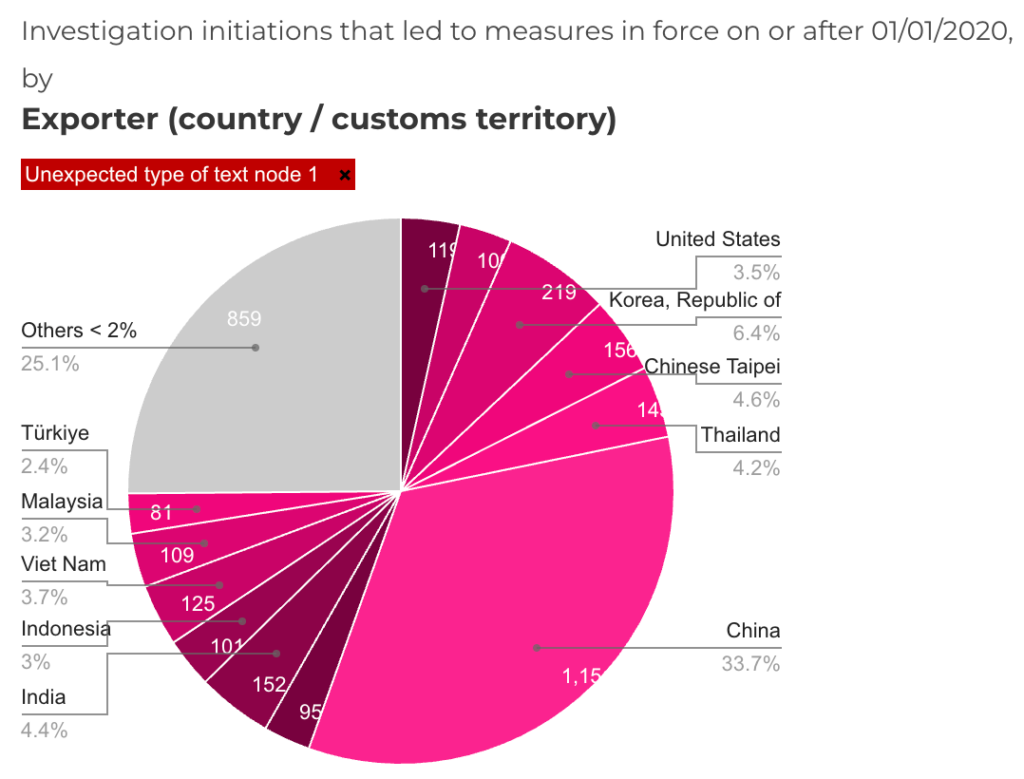
Meanwhile, the focus of international trade friction has shifted. Increasingly, the challenges come from anti-dumping and countervailing investigations, where a single ruling can transform a market from “accessible” to “closed.” Behind these shifts lies a broader turn in the global economic landscape.
Since the advent of the so-called “Trump 2.0” era, the United States has deeply instrumentalized tariffs and industrial policy, creating external volatility through cycles of negotiation, pressure, and escalation, thereby reducing the predictability of global trade.
At the same time, many economies, under the pressures of industrial competition and domestic demand, have strengthened trade defense mechanisms, combining import reviews, trade remedy measures, and subsidy investigations.
This has accelerated a global shift from “efficiency-first” to “security- and industry-first” trade logic. Against this backdrop, China’s cost advantages are increasingly interpreted as “distortion,” “dumping,” or “subsidy,” making the ability to build strong evidentiary chains and procedural defenses a decisive factor in international trade outcomes.
Amid this challenging context, a two-year-long Israeli anti-dumping investigation into Chinese aluminum extrusions concluded with a full victory for China in January 2026. During the preliminary phase, extremely high anti-dumping duties were considered, but after persistent legal argumentation and evidence submission, Israeli authorities ultimately decided not to impose any duties, resulting in an industry-wide no-measures outcome.
The case illustrates the deeper dynamics in trade remedy practice surrounding methodology, evidentiary rules, and the limits of public interest, and offers a clear roadmap for Chinese enterprises navigating high-volatility, high-barrier markets.
Anti-dumping investigations fundamentally compare export prices with a “normal value” to calculate dumping margins and determine applicable duties. Under market economy conditions, the normal value is usually determined either based on domestic sales in the exporting country or constructed from the enterprise’s own production costs, including reasonable overhead and profit.
However, in practice involving Chinese exporters, a controversial method known as the “surrogate country” approach has long been applied. In such cases, foreign authorities often exclude or ignore verifiable Chinese cost data, instead using third-country data as a basis. Objectively, this inflates the normal value and systematically disadvantages Chinese companies. In the Israeli aluminum extrusions case, this became the central point of contention.
In the preliminary ruling, Israeli authorities deemed the Chinese aluminum extrusion industry “seriously distorted” and selected Turkey as the surrogate country, resulting in an average duty of 110%, with a maximum of 146%. Full enforcement would have effectively closed the Israeli market and imposed massive liabilities on shipments already in transit.
In response, Chinese lawyers represented the Chinese aluminum extrusion industry, working closely with government agencies and industry associations to coordinate over ten companies in responding to questionnaires, fact verification, legal submissions, and procedural communication, ensuring consistent information and coherent advocacy across the sector.
Through multiple written submissions and hearings, Chinese lawyers demonstrated that the surrogate country methodology violated both WTO Anti-Dumping Agreement rules and Israeli domestic law, lacked transparency and verifiability, and relied on cost parameters significantly higher than actual Chinese production costs, failing to reflect market-based calculations.
During the defense process, Chinese lawyers emphasized the market-oriented nature of Chinese cost data while integrating public interest and substantive rules into their arguments. Israeli domestic production capacity for aluminum extrusions is limited and cannot meet market demand, whereas China’s comprehensive and flexible industry system can supply the necessary products, particularly critical given supply disruptions due to regional conflict.
Additionally, high anti-dumping duties would ultimately be borne by importers and end consumers, increasing construction costs and inflation while harming public welfare. On causation and injury, Chinese lawyers highlighted that difficulties faced by Israeli enterprises stemmed primarily from war and macroeconomic fluctuations rather than Chinese imports, showing that preliminary high duty rates were inconsistent with public interest.
In the final ruling, Israeli authorities acknowledged that Turkey’s data was not viable and instead used Chinese enterprise data to construct the normal value. Average duty rates for cooperating companies fell to 37%. Following this, through continued coordination with the Ministry of Commerce and China’s embassy in Israel, and sustained participation in procedural hearings and written submissions, the Israeli Ministry of Finance officially decided not to impose anti-dumping measures, resulting in a no-measures outcome. The Ministry’s report noted that imposing duties would have added approximately 600 million new shekels in economic burden, increased construction costs, and negatively affected housing and infrastructure reconstruction, confirming the decision to cancel duties.
This case highlights several key lessons for enterprises facing trade remedies in today’s complex international environment. First, public interest provisions serve as a crucial safety valve, especially in sectors related to essential goods or infrastructure. Second, maintaining control over data and methodology is critical; ensuring that a company’s own cost data is recognized is fundamental to reducing duty rates. Third, injury and causation assessments must be carefully delineated to prevent authorities from attributing macroeconomic, war-related, or business-management impacts to dumping. Most importantly, enterprises must respond proactively, rather than avoid participation, and establish a coordinated mechanism across enterprise, government, and industry associations, integrating data support, policy communication, legal advocacy, and diplomatic channels.
Overall, trade remedy systems have evolved from technical calculation tools into arenas of institutional boundary negotiation, policy choice, and public interest considerations. In today’s unprecedented global shifts, rules do not automatically favor any party, but rigorous, continuous efforts ensure they respond.
Source: WTO, cnal, zqb, diple, jingtian, regtechtimes, shidai