


In 2025, China’s new energy vehicle (NEV) market reached a historic milestone as the penetration rate of NEVs surpassed 50%. Amid the rapid rise of domestic brands, the industry’s head effect has become increasingly pronounced. Among the standout players is Geely Galaxy, which entered the “Million Galaxy” era with annual sales exceeding 1.23 million units, becoming one of the fastest new energy brands in the industry to reach the one-million annual sales mark. This momentum continued into 2026. In January, despite broader market pressure, Geely Galaxy achieved monthly sales of 82,000 units, helping Geely Auto reach total sales of 270,200 vehicles and secure the top position in China’s automotive market at the start of the year.
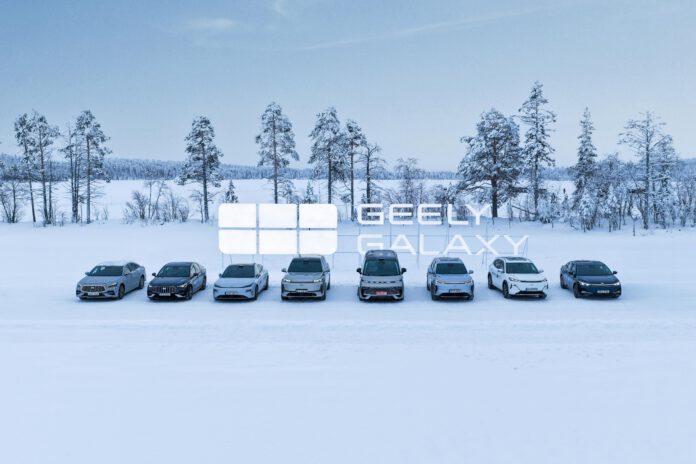
While sales growth has been strong, Geely Galaxy has continued to place equal emphasis on product validation and technological development. From late January to mid-February 2026, the brand launched a large-scale winter testing expedition in Northern Europe, conducting an extreme cold endurance test covering more than 1,000 kilometers within the Arctic Circle. A total of 25 vehicles representing 11 models, including the Galaxy V900, M9, E5, Xingjian 7 EM-i, Xingyao 8, A7, Xingyao 6 and Xingyuan, participated in the expedition, covering multiple powertrain technologies such as pure electric, hybrid and methanol-based power systems.

On February 9, as the testing convoy reached the Arctic interior under conditions of polar night and severe cold, Geely Galaxy completed a milestone challenge: a more than 1,000-kilometer cross-border winter test from Sweden to Norway without recharging or refueling, ultimately reaching the Arctic Ocean. Several hybrid models, including the V900, M9, Xingjian 7 EM-i, Xingyao 8, A7 and Xingyao 6, successfully completed the journey without energy replenishment. This marked the first time a Chinese new energy vehicle brand had carried out a cross-continental winter expedition to the Arctic Ocean.
In addition to the long-distance endurance test, Geely Galaxy vehicles also conducted specialized verification at the Colmis testing ground in northern Sweden, near the Arctic Circle. The site is located in an extremely cold region where winter temperatures can drop to as low as −40°C and where thick natural snow and high-quality ice surfaces can last for up to 150 days each year. These conditions make it one of the most recognized winter testing environments in the global automotive industry. Compared with conventional winter testing environments in China, Northern Europe presents even more demanding conditions. Extremely low temperatures are combined with consistently high humidity levels, often exceeding 90 percent, creating an environment that places greater demands on vehicle sealing, anti-fog capability, thermal management efficiency and the environmental perception abilities of intelligent driving sensors. In addition, the prolonged polar night brings extended periods of low-light conditions, posing further challenges for vehicle perception and safety systems.
During the winter tests, Geely Galaxy carried out systematic validation based on real-world extreme-cold usage scenarios. The tests focused on areas such as winter ADAS performance, adaptability to high-humidity and low-temperature environments, traction and load performance on icy roads, and overall thermal management efficiency. Engineers also evaluated vehicle stability on low-friction surfaces, overall sealing reliability and durability under freeze-thaw cycles. Through these high-intensity tests, the vehicles’ reliability and performance under severe winter conditions were thoroughly assessed.
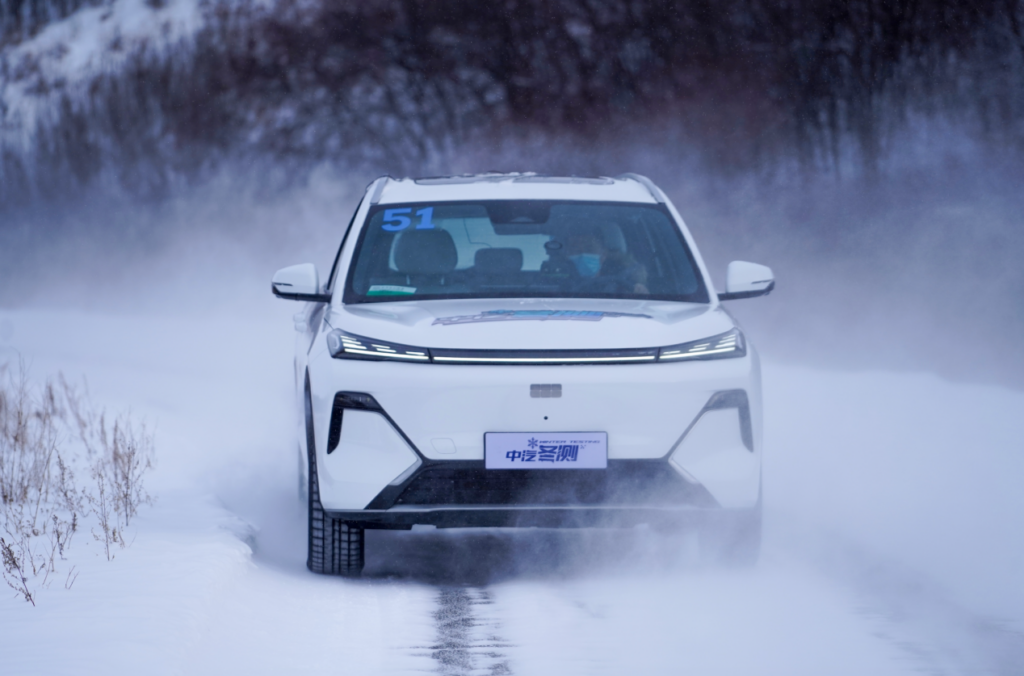
Behind these results lies a series of targeted technological optimizations. To address traction challenges on snow and ice, engineers conducted in-depth calibration of the torque management systems in all-wheel-drive models, enabling millisecond-level torque distribution and improving stability on slippery surfaces. The vehicles’ thermal management and defrosting systems were also optimized to ensure clear visibility and efficient cabin heating in extremely cold and humid conditions, while compliance solutions for upcoming Euro 7 emission standards were tested in advance. At the same time, engineers addressed typical cold-weather issues such as frozen door handles and fogging cameras through dedicated design improvements. In terms of powertrain innovation, methanol-powered vehicles successfully achieved ultra-low-temperature cold starts during the tests, overcoming a long-standing challenge associated with extreme cold engine ignition.
The Northern European winter expedition also highlights Geely Galaxy’s broader “global R&D and global validation” capability. The company has established a comprehensive testing network covering a wide range of environmental conditions, including extreme cold, high heat, humidity and high altitude. Major facilities include the Hangzhou Bay Comprehensive Test Center, the Hainan humid-heat testing base, the Heihe cold-weather testing base, the Turpan high-temperature testing base, the European testing center and the Yunnan high-altitude testing base. Together these facilities form a global development cycle integrating research, validation and iterative improvement. Through this network, Geely’s testing activities now span five major testing regions, more than 70 countries and over 100,000 testing scenarios, recreating around 90 percent of real-world driving environments. Each year the company tests more than 8,000 vehicles and accumulates over 100 million kilometers of testing mileage. Looking ahead, Geely plans to establish 16 testing bases worldwide to further strengthen its all-weather, all-terrain and full-scenario development capabilities.
The significance of these efforts also reflects broader trends within China’s rapidly expanding new energy vehicle industry. In 2025, China’s NEV production and sales both exceeded 16 million units, while Chinese new energy passenger vehicles accounted for 68.4 percent of the global market, rising to 71.9 percent in the fourth quarter. As the industry moves from rapid expansion toward a new phase focused on quality and reliability, regulatory requirements are also becoming stricter. In 2026, China’s Ministry of Industry and Information Technology introduced updated regulations for automotive production and product approval, elevating reliability testing from an internal company standard to a mandatory regulatory requirement. Under the new rules, new energy vehicles must complete at least 15,000 kilometers of reliability testing before approval. Geely Galaxy’s intensive winter testing in Northern Europe represents an active response to these evolving standards and demonstrates the brand’s commitment to pushing the industry from volume leadership toward standard leadership.
For Geely Galaxy, the Arctic expedition is not only a demonstration of technological capability but also an important step in its global expansion strategy. Europe remains one of the most technologically demanding automotive markets in the world, and the extreme conditions of Northern Europe can expose potential issues that might remain hidden in conventional testing environments. Challenges such as frozen door locks, fogging sensors and reduced perception capability in low-light conditions are far more likely to appear in such climates. By conducting localized validation under these conditions, Geely Galaxy ensures that its vehicles are designed from the outset to meet global regulations and real-world usage scenarios in different markets.
Source: sohu, the paper, shenxuanche, sina, autohome, xueqiu