


In November 1979, the Central Committee of the Communist Party of China decided to draft the Resolution on certain questions in the history of our party since the founding of the People’s Republic of China. Deng Xiaoping, who presided over the drafting process, attached great importance to the work.
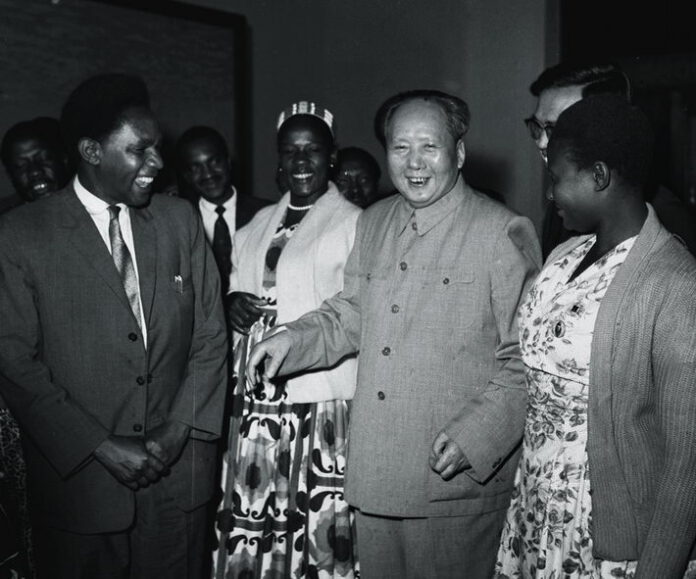
During discussions, when some senior cadres raised differing views regarding Mao Zedong, Deng repeatedly stressed the need for a comprehensive and historical evaluation of Mao’s contributions. He also emphasized the importance of upholding Mao’s banner in international affairs, noting that leaders from developing countries, including Julius Nyerere of Tanzania, had stressed that Mao Zedong was not only a Chinese leader but also a figure of global significance.
Mao Zedong’s influence in Africa extended throughout his lifetime and continued after his death. Chinese diplomats who had long worked in developing countries have observed that in much of the Third World, evaluations of Mao remained relatively stable, with limited negative impact. This was largely because many African and other developing countries interpreted China’s revolutionary experience through their own histories of anti-colonial struggle rather than through ideological disputes within China. Even when domestic Chinese discourse included critical reassessments, these had little effect on Mao’s standing in the Third World.
In the early 1970s, as the United States and China moved toward normalization of relations, the global structure began to shift toward a more multipolar configuration. Although China’s overall national strength still lagged significantly behind the United States and the Soviet Union, Mao Zedong proposed the strategic concept of the “Three Worlds Theory,” which placed China alongside developing countries in the Third World. This formulation strengthened China’s diplomatic position by aligning it more closely with the majority of nations in Asia, Africa, and Latin America. African countries, in particular, played an important role in this emerging international alignment.
Despite declining health in his later years, Mao continued to attach great importance to diplomatic engagement with African leaders. Zhou Enlai, even while seriously ill, worked diligently to manage foreign affairs and often accompanied visiting leaders to meet Mao. In 1973, during the visit of Zaire’s President Mobutu Sese Seko, Zhou held multiple rounds of talks with him before arranging a meeting with Mao in Zhongnanhai. Their discussions focused on national development paths and opposition to external interference. Mao emphasized that each country should choose its own development model and avoid imposing its system on others.
In the same year, President Ahmadou Ahidjo of Cameroon visited China and met Mao. Mao expressed appreciation for African countries’ efforts to strengthen mutual trust and noted the importance of respecting sovereignty and independence. He also expressed regret on several occasions when illness prevented him from meeting visiting African leaders personally. This sense of respect and personal regard was also reflected in later years. In 1975, when President Omar Bongo of Gabon visited China, Mao was unable to meet him due to illness and instead wrote a heartfelt letter of apology from his sickbed, expressing respect and goodwill toward the visiting leader.
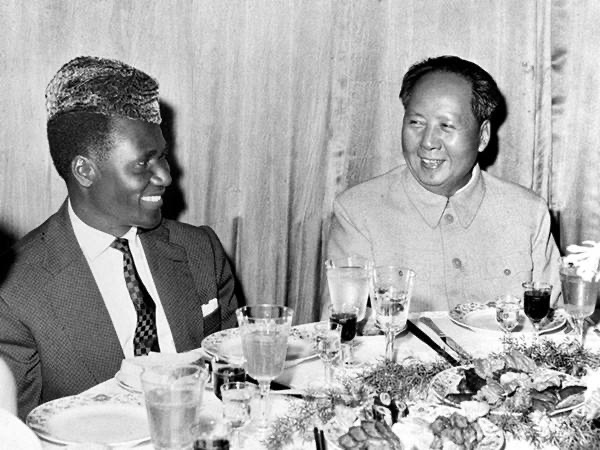
Across his meetings with leaders from Mali, Tanzania, the Congo, and other African countries, Mao consistently emphasized that developing countries should combine their own realities with useful international experience while firmly maintaining independence and sovereignty. He stressed opposition to all forms of hegemonism, regardless of whether it came from large or small powers. In his view, all countries, regardless of size or strength, should be treated as equals in international relations. This principle later became an important aspect of China’s diplomatic doctrine of opposing hegemony.
In discussions with Tanzanian President Julius Nyerere, Mao highlighted that China’s assistance to Africa was not limited to material aid but also included the transfer of technology and experience to enable self-reliant development. The Tanzania–Zambia Railway, a major infrastructure project jointly built by China and African countries, became a symbol of Sino-African friendship and solidarity. It was widely regarded as one of China’s most significant foreign aid projects in Africa and an emblem of shared struggle and cooperation.
In his meetings with Zambian President Kenneth Kaunda, Mao articulated what would later be known as the “Three Worlds Theory.” He described the United States and the Soviet Union as the First World, developed countries such as Japan, Europe, Canada, and Australia as the Second World, and developing countries in Asia (excluding Japan), Africa, and Latin America as the Third World. He emphasized that Third World countries should unite, strengthen cooperation, and pursue self-reliant development. This framework had a lasting influence on China’s foreign policy orientation toward developing countries.
Mao also repeatedly stressed the importance of opposing “great-power chauvinism.” He warned against any country attempting to dominate others or impose its will internationally. In his view, even within China’s own foreign relations, vigilance was necessary to prevent arrogance or domination. This idea became encapsulated in China’s later diplomatic principle of “never seeking hegemony,” which remains a cornerstone of its foreign policy narrative.
In meetings with leaders such as those from Sierra Leone, Algeria, Nigeria, and other African states, Mao often encouraged unity within their countries and warned against internal divisions and external manipulation. He also openly acknowledged China’s own shortcomings and mistakes in development, cautioning against excessive praise or one-sided portrayals of China’s achievements. He believed that all countries, including China, had both strengths and weaknesses, and that honest self-reflection was essential for progress.

Mao consistently expressed humility when foreign leaders praised his writings or ideological contributions. For example, when Senegalese President Léopold Sédar Senghor praised Mao’s works, Mao modestly downplayed his own role, attributing achievements to collective experience rather than individual brilliance. He often referred to himself as a “primary school teacher,” emphasizing that knowledge came from the people rather than from personal genius.
In 1974, Mao met several African leaders including Gabon’s Omar Bongo, continuing his practice of candid and humble dialogue. When Bongo praised him as a historic figure, Mao responded by emphasizing the long and difficult struggle of the Chinese revolution, including wars against Japanese invasion and civil conflict. He also highlighted the role of other Chinese leaders, such as Deng Xiaoping, in military and political affairs.
During this period, Mao formally recommended Deng Xiaoping as head of the Chinese delegation to the United Nations Special Session. Deng later elaborated on the Three Worlds Theory in his international speeches, emphasizing the importance of solidarity with developing countries. In subsequent decades, Deng continued to affirm the relevance of this framework in China’s foreign policy.
Mao’s final meeting with an African head of state occurred in December 1975 with President Manuel Pinto da Costa of São Tomé and Príncipe, a newly independent and very small African nation. Despite his severe illness, Mao received him, reflecting his consistent principle that all countries, regardless of size, should be treated equally. This attitude was also evident when he wrote a personal apology to President Bongo earlier that year, underscoring his respect for African leaders and peoples.
Throughout his life, Mao Zedong never visited Africa, but his influence across the continent was extensive. His ideas on anti-colonial struggle, national independence, and opposition to hegemonism resonated strongly with African liberation movements and newly independent states. For many African leaders, China under Mao represented a partner in resistance against colonialism and a supporter of sovereign development paths.
In retrospect, China’s relations with African countries in the Mao era laid a foundational framework for long-term cooperation. The restoration of China’s lawful seat in the United Nations in 1971 was significantly supported by African and other developing countries, marking a turning point in China’s international reintegration. The diplomatic legacy of this period continued to shape China’s foreign policy approach toward Africa in later decades.
Ultimately, Mao Zedong’s engagement with Africa was not merely diplomatic but also ideological and symbolic. It reflected a broader historical moment in which newly independent nations sought solidarity and alternative development paths outside traditional power structures. His emphasis on equality among nations, opposition to domination, and support for self-determination contributed to a lasting foundation for Sino-African relations, which continues to influence international discourse today.
Source: medium, siis org cn, dswxyjy, hprc, mfa gov cn, xinhua