


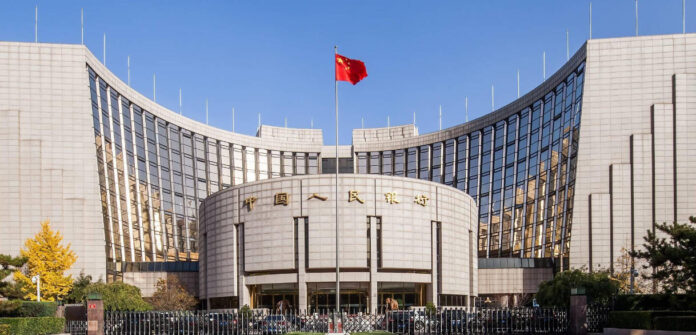
On March 26, the Monetary Policy Committee of the People’s Bank of China held its first quarterly meeting of 2026. As an important reference for assessing the direction of monetary policy in the coming period, the meeting sent a series of key policy signals that drew close market attention.
In its assessment of domestic and international economic and financial conditions, the Committee noted that external environmental changes are exerting a deepening impact. Global economic momentum remains weak, while geopolitical conflicts and trade frictions have become more frequent. Economic performance among major economies continues to diverge, and uncertainty surrounding inflation trends and monetary policy adjustments has increased. Domestically, China’s economy is generally stable and progressing, with continued gains in high-quality development. However, the economy still faces challenges, including relatively strong supply and weaker demand, as well as external shocks. Compared with the fourth-quarter 2025 meeting, this session introduced new wording emphasizing the “frequent occurrence of geopolitical and trade conflicts” and the “impact of external shocks,” indicating that external uncertainties are playing a more prominent role in policy considerations.
In February 2026, the escalation of the US–Iran conflict further complicated the global situation. Shipping through the Strait of Hormuz was significantly disrupted, causing turbulence in global energy transportation. International oil prices surged sharply, raising imported inflation pressures in some economies. Against this backdrop, the transmission effects of external shocks on China’s economy have attracted considerable attention. Some economists note that weakening external demand, driven by rising recession expectations abroad, may weigh on China’s exports, while volatility in commodity prices, particularly crude oil, could complicate domestic price management. From a policy perspective, the objective of “promoting stable economic growth and a reasonable rebound in prices” remains unchanged. However, greater emphasis may be placed on offsetting imported risks stemming from geopolitical tensions and trade disruptions.
Regarding monetary policy implementation, the meeting called for better coordination between incremental and existing policy tools, more comprehensive use of a range of instruments, and enhanced policy adjustment in terms of intensity, timing, and pace, based on domestic and international financial conditions and market developments. This formulation remains broadly consistent with the previous quarter, signaling policy continuity.
Industry observers believe that China’s monetary policy still has room for maneuver, supported by the conditions to maintain an appropriate liquidity environment and promote stable growth. However, given rising uncertainty in the external environment, maintaining policy flexibility has become increasingly important. Over the course of the “15th Five-Year Plan” period, China is expected to further develop a more systematic and prudent monetary policy framework, balancing short-term growth stabilization with long-term risk prevention, internal equilibrium with external stability, and strengthening both counter-cyclical and cross-cyclical adjustments to avoid excessive monetary expansion or contraction.
A notable feature of this meeting was the introduction of language calling for “standardizing credit market practices and reducing intermediary financing costs,” while maintaining low overall social financing costs. This aligns with recent government work report guidance and has drawn significant attention from the market. Regulators have previously emphasized strengthening interest rate policy implementation and supervision, curbing unreasonable fees, and requiring banks to clearly disclose the all-in financing costs of loans to corporate borrowers.
Intermediary financing costs refer to various additional fees incurred during financing beyond principal and interest payments, such as service fees, guarantee fees, and appraisal charges. These hidden costs have long contributed to higher effective financing burdens for borrowers. Analysts point out that with loan interest rates already at historically low levels, further reductions in financing costs will increasingly depend on addressing these non-interest charges, improving transparency, and enhancing the overall borrowing experience for firms and individuals.
In recent years, regulators have advanced pilot programs requiring the disclosure of comprehensive corporate loan financing costs, encouraging banks and enterprises to jointly calculate and present the full cost of borrowing. In the retail lending sector, similar reforms are being implemented to ensure that all interest and fee components are transparently disclosed in annualized terms, limiting the scope for hidden or undisclosed charges.
In terms of structural monetary policy tools, the meeting emphasized making better use of existing instruments, optimizing their management, and strengthening financial support for key areas such as expanding domestic demand, technological innovation, and small and micro enterprises. This represents a reinforcement of previous policy directions, highlighting the growing role of structural tools in supporting economic rebalancing.
Experts note that China’s structural monetary policy toolkit has become increasingly diversified, with broader coverage and improved efficiency through adjustments in relending rates and tool expansion. Further optimization is expected, including potential interest rate reductions on relending facilities, improved quota management, and innovation in instrument design to better support industrial upgrading, consumption expansion, and inclusive growth.
More broadly, coordination between structural monetary policy and fiscal policy continues to strengthen. By improving the allocation of financial resources toward strategic sectors such as technology, green development, inclusive finance, pension services, and the digital economy, policymakers aim to enhance overall macroeconomic effectiveness and support sustainable growth.
Source: 21jingji, sina finance, eastmoney, stcn, nbd