


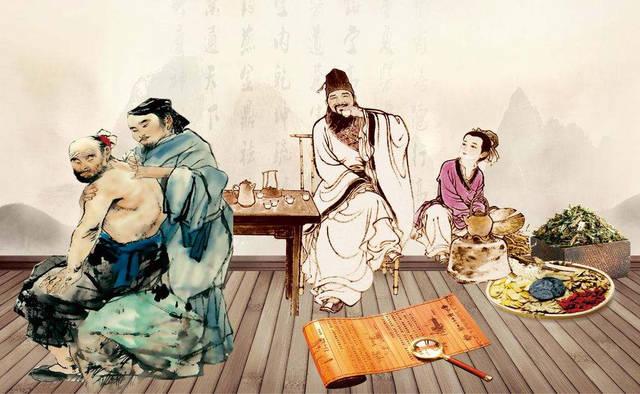
China has a history of fighting epidemics that stretches back thousands of years. Even in ancient oracle bone inscriptions, the Chinese character for “illness” already existed as “病”. Its shape resembled a person lying sick in bed and sweating heavily, showing that the condition was serious. Another ancient character for disease, “疾,” looked like a person struck by an arrow, symbolizing bodily harm and sickness. Compared with ordinary illnesses, epidemics were understood as diseases that spread widely, lasted for long periods, and caused severe social damage. Historical records show that China experienced epidemic disasters frequently over the past three millennia.
In ancient China, epidemics were called by many different names, such as “yi,” “li,” “miasma,” “seasonal illness,” and “warm disease.” Over time, traditional Chinese medicine grouped these illnesses together under the broader idea of plague or epidemic disease. The word “yi” emphasized contagiousness. An Eastern Han scholar once explained it as “a disease that affects many people at the same time.” Another term, “li,” stressed the danger and destructive power of the illness.
Because medical knowledge in early times was limited, people often connected epidemics with ghosts and supernatural forces. Some believed that evil spirits wandered among humans spreading disease. Ancient literature even described demons that were said to bring plague and disaster. These beliefs reflected how difficult it was for people to explain sudden outbreaks before scientific medicine existed.
The ancient idea of “miasma” is another example. In traditional Chinese thought, “miasma” referred not to a real gas, but to the dangerous environment of southern China, where hot and humid weather, insects, and unfamiliar diseases often caused outsiders to become ill. Northern officials or exiled prisoners sent to the far south frequently became sick, so the region gained a fearful reputation. The famous writer Su Shi, when banished to Hainan, described the experience as entering a place where survival was uncertain.
As astronomy, calendars, and medical theories developed, people gradually began linking epidemics to seasonal changes and climate conditions rather than only to spirits. Ancient texts noted that abnormal weather or disorder in the natural cycle could lead to widespread disease. Traditional Chinese medicine described six climatic influences such as wind, cold, heat, dampness, dryness, and fire. When balanced, these forces maintained health; when unbalanced, they could cause illness. Although this explanation was not scientifically accurate by modern standards, it represented an important step toward understanding disease as part of the natural environment.
A major breakthrough came during the severe plague outbreaks of the late Ming dynasty. The physician Wu Youxing argued that epidemics were not simply caused by seasonal imbalance. Instead, he believed there existed a special harmful substance, which he called “li qi,” or toxic infectious vapor. He also proposed that disease could spread through the mouth and nose, an idea remarkably close to the modern understanding of respiratory infection. This marked a significant shift from supernatural explanations toward a more observational and practical understanding of contagion.
In ancient times, people also experimented with many ways to prevent and control epidemics. Early methods were deeply influenced by religion and ritual. During the Shang and Zhou dynasties, ceremonies called “Nuo rituals” were performed to drive away disease-causing spirits. Participants wore frightening masks and costumes, beat drums, waved weapons, and symbolically expelled evil forces from homes and cities. These rituals reflected both fear of disease and the human desire to regain control during times of crisis.
By the Song dynasty, these rituals became less terrifying and more theatrical, sometimes even entertaining. This change was partly connected to the growth of urban culture and commercial life.
Both Buddhism and Daoism developed their own responses to epidemics. Daoism often linked illness to moral wrongdoing, while Buddhism explained suffering through the idea of karma. Buddhist healing practices included chanting scriptures and prayers, though medicine itself was not rejected. Daoist healers used charms, rituals, and symbolic petitions to heavenly powers in hopes of removing illness. During periods of widespread epidemic in the late Eastern Han dynasty, such practices became extremely popular because frightened people sought comfort and protection wherever they could find it.
At the same time, Confucian thinkers began showing signs of a more practical approach to disease prevention. One story from the Analects describes Confucius visiting a disciple suffering from a serious contagious illness, but speaking to him from outside the window rather than entering directly. This suggests that some awareness of quarantine and infection prevention already existed.
Ancient China also practiced a healing tradition known as “Zhuyou,” which combined prayer, incantation, and ritual healing. Since many people believed disease came from spirits or curses, specially trained ritual specialists attempted to cure illness through spoken formulas and ceremonies. Although these practices may seem unscientific today, they demonstrate that ancient people actively searched for ways to respond to disease rather than simply surrendering to it.
More importantly, China gradually developed some measures that resemble modern public health practices. Legal texts from the Qin dynasty recorded that people with leprosy should be sent to special isolated locations. This is considered one of the earliest known quarantine policies in legal history. Some patients even isolated themselves voluntarily to avoid infecting family members.
Another terrifying disease in Chinese history was smallpox. It likely entered China around the Wei and Jin period and became one of the deadliest epidemic diseases. Even emperors were not safe from it. The Shunzhi Emperor of the Qing dynasty died from smallpox, while the Kangxi Emperor was partly chosen as successor because he had already survived the disease and therefore possessed immunity. Fear of smallpox also influenced political and diplomatic practices. Qing emperors often met Mongolian nobles outside Beijing because many feared entering the capital during outbreaks.
Ancient Chinese society also developed surprisingly practical sanitation habits. Since agriculture depended heavily on fertilizer, human waste was collected and reused in farming rather than discarded randomly. This unintentionally improved urban sanitation and reduced the spread of disease. In contrast, many medieval European cities lacked effective waste management, and poor sanitation contributed to repeated epidemic outbreaks.
Over centuries of fighting epidemics, Chinese physicians accumulated large numbers of medical formulas and treatment methods. Many were developed by scholar-physicians known as “Confucian doctors.” These men combined education, moral philosophy, and medical study. Famous examples include Zhang Zhongjing of the Eastern Han dynasty and Li Shizhen of the Ming dynasty.
From the Song dynasty onward, many scholars studied medicine as part of a broader effort to understand the natural world. Intellectuals such as Sima Guang, Shen Kuo, Su Shi, and Lu You all participated in collecting remedies and writing medical texts. Ancient Chinese medical ethics also strongly emphasized compassion. The Tang physician Sun Simiao argued that doctors should treat all patients equally, regardless of wealth or social status, and should approach medicine with kindness and humanity.
One of China’s greatest contributions to world medicine was the invention of variolation, an early method of smallpox inoculation. The basic idea was to deliberately expose a healthy person to a mild form of smallpox so that immunity could develop afterward. Methods included giving children clothes worn by infected patients or blowing powdered scabs into the nose.
The technique later spread from China to Russia, the Ottoman Empire, and eventually Britain. There it inspired the English doctor Edward Jenner, who noticed that milkmaids infected with the milder cowpox rarely contracted deadly smallpox. Jenner’s later development of vaccination became one of the foundations of modern immunology. In this sense, the modern vaccine tradition was built partly upon knowledge that first emerged in ancient China.
Source: zggjls, jdn ucas, qstheory, kknews