



In recent years, amid the restructuring of global supply chains and the deepening of regional economic cooperation in Southeast Asia, Cambodia has gradually emerged as a key destination for Chinese overseas investment. From manufacturing relocation and industrial park development to infrastructure construction, healthcare, transportation, and tourism, cooperation between China and Cambodia has continued to expand in both scale and scope.
Benefiting from relatively low land and labor costs, preferential trade policies toward Western markets, and an open financial environment, Cambodia is becoming a new strategic hub for Chinese enterprises seeking to expand abroad and an important gateway for China-ASEAN industrial cooperation.
Against the backdrop of accelerated industrial transfer to Southeast Asia, an increasing number of Chinese companies are choosing Cambodia as a new manufacturing base. As early as 2006, HOdo Group established a textile production base in the Sihanoukville Special Economic Zone, marking one of the earliest large-scale Chinese industrial investments in the country. In the years that followed, companies such as Yanjin Shop Food and Peidi Group invested in food processing and pet product manufacturing facilities in Cambodia. More recently, major Chinese tire manufacturers including Sailun Group, Doublestar, Wanli Tires, and SNCTIRE have successively built production bases in Cambodia, contributing to the rapid formation of local industrial clusters.
The growing interest from Chinese companies is closely tied to Cambodia’s unique competitive advantages. Compared with neighboring countries such as Vietnam and Thailand, Cambodia offers significantly lower land and labor costs. Industrial land prices are estimated to be only one-third of those in Vietnam, while the country’s manufacturing minimum wage remains less than half of Thailand’s.
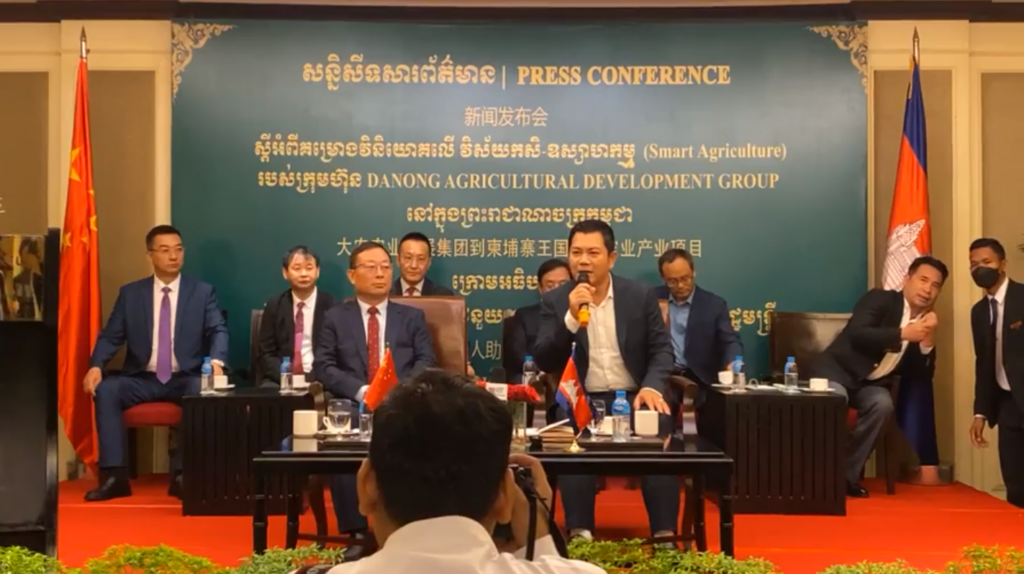
At the same time, Cambodia enjoys preferential tariff treatment from major export markets including the European Union, the United States, and Japan, with some products even qualifying for zero-tariff access. In addition, the country’s highly dollarized economy and lack of foreign exchange controls provide considerable convenience for international trade and cross-border capital flows. For many Chinese manufacturers, Cambodia has become not only a cost-efficient production base but also an increasingly important trade transit hub connecting global markets.
Statistics further demonstrate the deepening economic ties between the two countries. According to the Council for the Development of Cambodia, the country approved 630 investment projects in 2025, with total registered investment reaching 10 billion US dollars, representing a 45 percent year-on-year increase. These projects are expected to create more than 430,000 jobs. China remained Cambodia’s largest source of foreign investment, accounting for approximately 54.2 billion dollars, or more than 54 percent of total foreign direct investment into the country. Chinese investment has mainly focused on manufacturing, agricultural processing, infrastructure, and tourism, with projects concentrated in Phnom Penh, Sihanoukville Province, and border regions adjacent to Vietnam.
As Chinese investment continues to expand, Cambodia’s industrial structure and economic landscape are undergoing visible transformation. New industrial parks and economic zones, such as the Borg Special Economic Zone, are gradually forming diversified industrial ecosystems involving textiles, furniture, hardware, pet food, and light manufacturing.
These industrial parks provide standardized infrastructure and integrated support services for foreign investors, helping Chinese enterprises accelerate localization and reduce operational risks. Compared with increasingly competitive and costly markets such as Vietnam and Thailand, Cambodia is still widely regarded as a relatively untapped “blue ocean” market with significant growth potential.
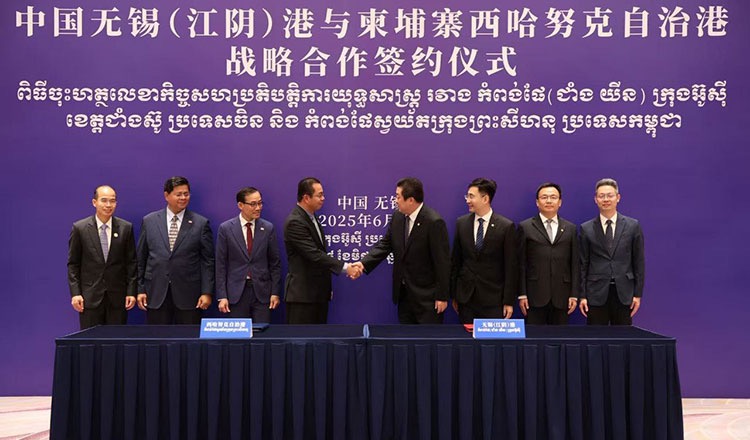
Institutional cooperation has also strengthened the foundation for bilateral economic development. The implementation of the China-Cambodia Free Trade Agreement and the Regional Comprehensive Economic Partnership (RCEP) has created a more stable and favorable policy environment for trade and investment. Meanwhile, financial institutions such as China Export & Credit Insurance Corporation have expanded support for Chinese companies investing overseas by offering overseas investment insurance, export credit insurance, and financing services designed to mitigate international business risks and improve investment confidence.
Beyond industrial investment, Chinese enterprises have also played a major role in improving Cambodia’s infrastructure and public services. In recent years, a large number of Chinese companies, represented by China State Construction Engineering Corporation, have participated in key national projects across Cambodia, significantly contributing to the country’s modernization and long-term development.
One of the most prominent examples is the Cambodia National Stadium in Phnom Penh, which was built with Chinese assistance and constructed by Chinese companies. As the main venue for the 2023 Southeast Asian Games, the stadium became a landmark symbol of Cambodia’s modernization and national pride.
Covering more than 80,000 square meters and accommodating around 60,000 spectators, it is the largest and highest-level stadium China has ever provided as foreign aid. Since its completion, the stadium has hosted major sporting events, concerts, and cultural activities, helping stimulate urban development and economic activity in surrounding areas.
Another milestone project is the Techo International Airport, currently Cambodia’s largest infrastructure undertaking. Built by Chinese companies, the airport is expected to become a 4F-class international airport capable of handling 50 million passengers annually, six times the capacity of the current Phnom Penh International Airport. Once operational, the new airport is expected to significantly improve Cambodia’s connectivity with global markets, support tourism growth, and attract additional foreign investment. Cambodian leaders have repeatedly emphasized the strategic importance of the project and highlighted it as a major achievement of Cambodia-China cooperation.
Healthcare cooperation has also become an important reflection of the close relationship between the two countries. The new comprehensive medical building of the Preah Kossamak China-Cambodia Friendship Hospital, constructed with Chinese assistance, officially opened in 2022 and has become one of Cambodia’s most advanced hospitals.
Equipped with modern medical facilities and a more efficient healthcare system, the hospital has substantially improved healthcare services for local residents. In addition, Chinese medical teams stationed at the hospital have provided traditional Chinese medicine services, professional training, and long-term medical support. To date, Chinese medical teams have treated more than 50,000 Cambodian and Chinese patients and helped train local healthcare workers, creating what Cambodian officials have described as a “medical team that will never leave.”
From industrial investment and infrastructure construction to healthcare cooperation and people-to-people exchanges, China-Cambodia cooperation continues to generate tangible economic and social benefits. For Chinese enterprises, Cambodia represents not only a strategic base for Southeast Asian expansion but also an important platform for participating in the Belt and Road Initiative and integrating into global markets. For Cambodia, Chinese investment has brought capital, technology, employment opportunities, and accelerated industrialization, while also improving public services and living standards.
At a time of profound changes in the global economic landscape, the partnership between China and Cambodia has demonstrated remarkable resilience and broad potential. As regional cooperation mechanisms continue to deepen and the Belt and Road Initiative advances further, the “ironclad friendship” between the two countries is increasingly translating into concrete development achievements.
Looking ahead, Chinese investment in Cambodia is expected to expand further into areas such as digital economy, green energy, logistics, and advanced manufacturing, opening a new chapter of mutual benefit and shared prosperity for both nations.
Source: scio gov cn, sina, china daily, 21jingji, cgtn, harbor property, cfr, khmer times