


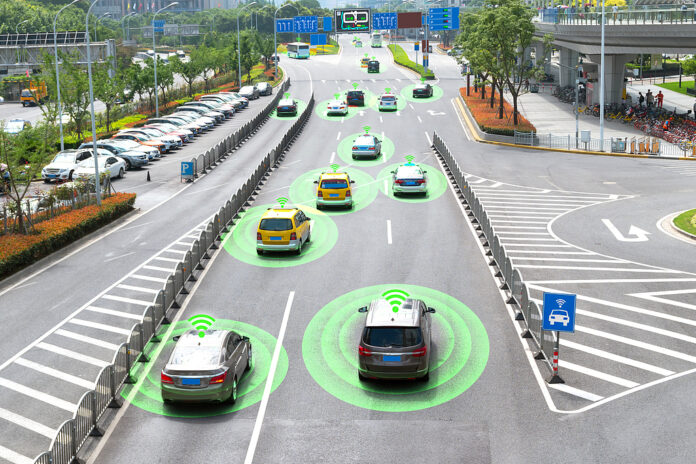
On December 15, 2025, China’s Ministry of Industry and Information Technology officially announced the first batch of L3 conditional autonomous driving vehicle licenses, marking the transition of China’s L3 autonomous driving from testing into commercial application.
L3, or conditional automation, refers to vehicles that can independently handle acceleration, steering, and braking under specific scenarios, including complex situations like lane merging, overtaking, and road construction, only requesting human intervention when the system reaches its limits.
Unlike L2 systems, where drivers remain fully responsible, once activated, L3 shifts the responsibility to the vehicle manufacturer or system provider, addressing the “ambiguous responsibility” issue of L2 systems.
The first approved models are the Changan Deep Blue SL03 and the Arcfox Alpha S5, which will operate on designated roads in Chongqing and Beijing, respectively. The Deep Blue SL03 can achieve single-lane autonomous driving at up to 50 km/h on Chongqing’s Inner Ring Expressway, New Inner Ring Expressway, and Yudu Avenue, primarily targeting urban traffic congestion scenarios.
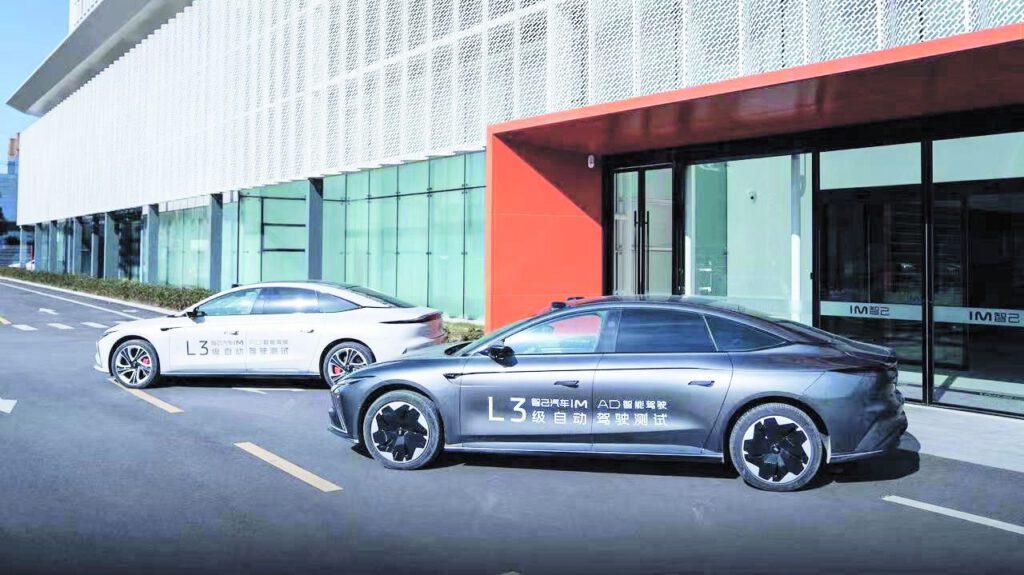
The Arcfox Alpha S5 can reach up to 80 km/h on Beijing’s Jing-Tai Expressway, Airport North Line, and Daxing Airport Expressway, suited for highways and fast roads. Both models are limited to specific operator units and are not sold to individuals, ensuring the technology is deployed in a safe, controlled environment.
The development of L3 not only represents a technical milestone but also drives upgrading of the automotive industry chain. Within defined operational design domains and speed limits, L3 can be replicated first in highways and semi-closed environments, accumulating legal, data, and operational experience for urban NOA (Navigation on Autopilot) and higher-level autonomous driving. This requires significant advancements in perception, computing power, and system integration, boosting the value of sensors, LiDAR, high-speed connectors, and high-performance autonomous driving chips.
Globally, the development of L3 shows diverse paths. Germany’s 2021 Autonomous Driving Act stipulates that manufacturers assume responsibility during L3 operation and require data recorders; Mercedes’ DRIVE PILOT has increased its operational speed to 95 km/h. The U.S. focuses more on commercializing L4 Robotaxis, with L3 not widely adopted as a transitional solution. Japan’s Honda once launched the L3 Legend, but due to high cost and limited scenarios, it was discontinued. In this context, China’s approval for L3 mass-produced vehicles represents a cautious and steady global approach.
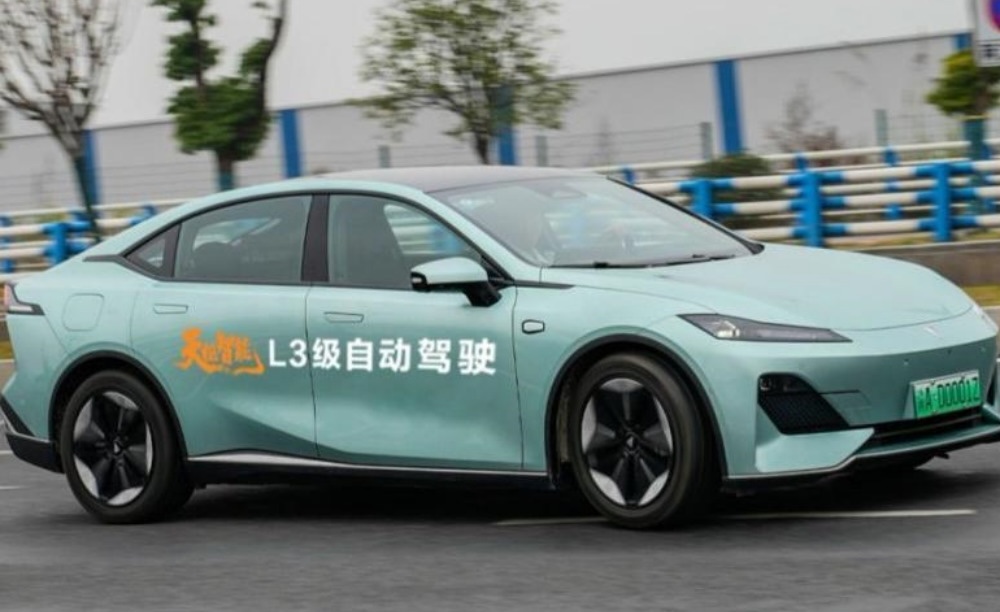
In China, L3 commercialization signals a shift in smart driving from feature penetration to reliability verification. Previously, companies relied on test licenses for research, limited to certain roads. The “conditional product access license” now allows L3 vehicles to be sold, operated on public roads, and continuously regulated. Before the license, Changan Deep Blue SL03 had completed over 5 million kilometers of on-road validation, covering 191 scenario types and 400,000 simulated scenarios, passed 182 cybersecurity and data safety tests, over 1,000 functional safety checks, and established a database of more than 300 critical extreme scenarios, optimizing safety through a data-driven loop. Similarly, BAIC BluePark combines self-developed systems with Huawei’s ADS2.0 platform, building end-to-end data loops and multimodal large models to support L3 commercial operations.
The commercialization of L3 also brings legal and responsibility updates. In China, L0-L2 drivers bear accident responsibility, whereas L3 shifts it to manufacturers. In the event of an accident, the company must prove the system was defect-free. This requires stricter technical, data, and operational management, laying the groundwork for higher-level autonomous driving regulation.
Building trust between humans and machines remains a key challenge: research shows that drivers over 50 need an average of six seconds to regain control after distraction, while the system’s takeover window is often less than ten seconds, making response time, driver monitoring, and interface alerts crucial for future traffic governance.
Technically, L3 relies on upgrades across cameras, LiDAR, high-speed connectors, and high-performance autonomous driving chips. Compared to L2 ADAS, highways and urban NOA vehicles double their camera count, with pixel resolution increasing from 2–3MP to 5–8MP. High-frequency, high-speed connectors and chip computing power requirements also rise, supporting L3 and Robotaxi deployment. According to the Ministry of Industry and Information Technology, 2025 saw 7.76 million L2-assisted vehicles sold in China with a penetration rate of 62.6%, while highway NOA installations grew over 250% year-on-year, entering large-scale adoption.
Chinese automakers are following three paths for L3 deployment: self-development, as in Changan’s Beidou Tianshu plan and XPeng’s hardware-software integrated strategy aiming for L4 mass production in 2026; ecosystem collaboration, like Lantu with Huawei ADS 4.0 to commercialize highway L3; and hardware pre-embedding, with BYD and Zeekr preparing LiDAR and high-power chips for OTA upgrades.
By the end of 2025, Changan and BAIC BluePark were the first to obtain L3 production licenses, signaling that China’s smart driving is entering a new stage of engineering implementation and regulated operation.
Source: Aijian securities, CCTV, cls, our china story, sh auto news