


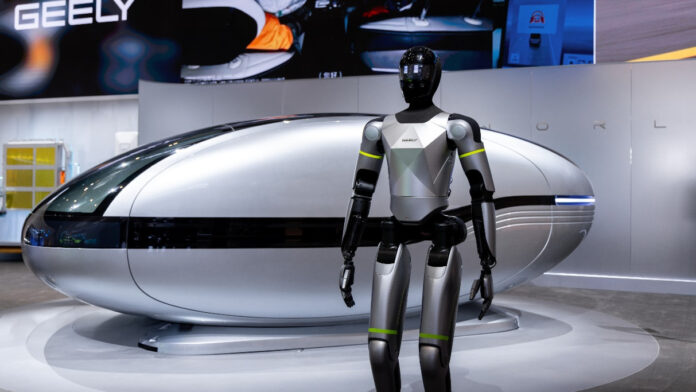
In 2026, Robotaxi has once again become the focal point of the global automotive and technology industries. As several companies announce profitability in specific regions or operational segments, and some Robotaxi fleets reportedly generate higher daily net revenue than traditional ride-hailing drivers, the industry is entering a new phase.
At the same time, Tesla is accelerating the mass production of its autonomous CyberCab, with commercial deployment expected within the year. The center of gravity in the sector is clearly shifting from proving technological feasibility to pursuing large-scale commercialization.
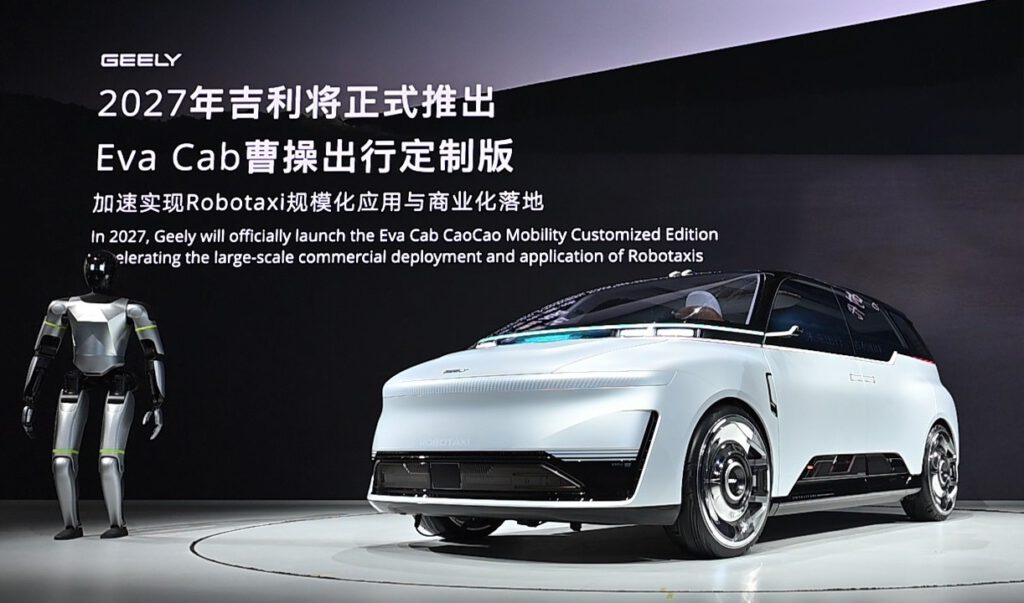
Against this backdrop, the unveiling of Eva Cab, China’s first deeply customized native Robotaxi developed by CaoCao Mobility at the 2026 Beijing Auto Show, has drawn widespread industry attention. More than the launch of a new vehicle, it represents a broader transformation in the way the industry understands Robotaxi competition. The battle is no longer defined solely by algorithms and autonomous driving stacks; it is increasingly determined by ecosystem integration, operational efficiency, and the ability to scale sustainably.
For years, most Robotaxi solutions followed one of two approaches: retrofitting traditional passenger vehicles with bulky rooftop sensors, or modifying mass-market production models through partnerships with automakers. While these methods enabled rapid road testing and technical validation, they fundamentally remained rooted in a “human-driver-first” vehicle architecture. Cabin layouts, safety systems, and vehicle lifecycles were all designed around the assumption that a human driver would remain the ultimate fallback.
As Robotaxi moves toward fully unmanned operations, however, the limitations of these approaches become increasingly apparent. Inadequate redundancy, limited system reliability, high maintenance costs, and inefficient operational structures all threaten to become major bottlenecks to scale.
CaoCao Mobility’s answer is what it calls a “native Robotaxi” approach. Eva Cab was developed from the ground up specifically for L4 autonomous operations, integrating Geely’s expertise in intelligent electric vehicle manufacturing, the Qianli Haohan G-ASD L4 autonomous driving solution, and CaoCao Mobility’s decade of operational experience in shared mobility. Rather than adapting an existing passenger vehicle, the company redesigned the entire vehicle architecture around unmanned mobility scenarios and passenger needs.
Inside the vehicle, the traditional driver-centric layout has been completely abandoned. Eva Cab removes both the steering wheel and front passenger seat, reimagining the cabin as a passenger-focused mobility space. Its opposing-seat configuration and dual sliding doors maximize interior openness while reinforcing a premium spatial experience. More importantly, the vehicle is equipped with China’s first integrated cockpit-driving AI agent, “Super Eva,” powered by end-to-end voice interaction and VLM visual models. The system enables advanced contextual understanding, multi-domain task coordination, and seamless interaction between the vehicle and external ecosystems, transforming the Robotaxi from a self-driving car into an intelligent mobile service platform.
Yet the true significance of a native Robotaxi lies less in what passengers immediately see than in the invisible systems beneath the surface. In a fully autonomous environment, there is no human driver to provide a final layer of intervention. As a result, safety standards and system reliability requirements become dramatically higher than those of conventional passenger vehicles.
Eva Cab addresses this challenge through comprehensive redundancy design across steering, braking, power supply, and computing platforms. It also incorporates sensor self-cleaning systems and dual-redundant steer-by-wire technologies to eliminate many of the hidden failure risks associated with retrofitted solutions.
Perhaps most notably, the vehicle adopts what Geely describes as the world’s first “quantum-level AI electronic and electrical architecture.” Through quantum encryption technology, the system provides end-to-end security protection between vehicle and cloud infrastructure, covering key scenarios such as Bluetooth access, remote control, OTA updates, and data privacy. Combined with the industry’s first SOVD cloud-integrated diagnostic technology, the vehicle is capable of proactive full-lifecycle monitoring and predictive maintenance. These capabilities are not technological embellishments; they are foundational requirements for large-scale autonomous fleet deployment.
Beyond technology, however, the defining issue for Robotaxi commercialization remains economics. The ultimate question is no longer whether autonomous vehicles can operate safely, but whether they can do so profitably and sustainably over the long term.
CaoCao Mobility appears acutely aware of this reality. Eva Cab was engineered around total cost of ownership optimization, with a vehicle lifespan estimated at two to three times that of conventional passenger cars. Key components are designed for significantly extended durability, maintenance cycles are longer, and the vehicle supports automated cleaning and around-the-clock operation. Together, these features substantially reduce labor and operational costs.
This low-TCO model may ultimately prove to be the decisive factor in the Robotaxi industry’s next stage of competition. In the long run, market leadership is unlikely to be determined purely by autonomous driving performance. Instead, success will belong to the companies capable of delivering safe, reliable, and highly efficient autonomous mobility services at scale.
The evolution of the Robotaxi industry has also reflected a broader shift in how companies perceive competitive advantage. Initially, the race centered on achieving L4 autonomy itself. Later, ride-hailing platforms argued that user traffic and market access were the key barriers to entry. More recently, automakers have entered the field, increasingly viewing mobility services as a more valuable long-term opportunity than traditional vehicle sales.
Yet each of these players faces structural limitations. Autonomous driving technology companies often lack expertise in vehicle manufacturing and large-scale fleet operations. Ride-hailing platforms typically do not control core autonomous technologies or vehicle architectures. Traditional automakers, meanwhile, frequently struggle with dispatching systems, operations, and mobility platform management.
The industry is gradually converging on a new consensus: Robotaxi is ultimately an operational business built on efficiency, reliability, and user experience. To succeed, companies must simultaneously possess three core capabilities: vehicle definition, autonomous driving technology, and large-scale mobility operations.
Globally, CaoCao Mobility is among the few companies attempting to integrate all three into a unified commercial system.
On the vehicle side, the company already operates more than 38,000 customized mobility vehicles and has validated low-TCO fleet operations in real-world scenarios. In autonomous driving, it benefits from Geely Holding Group’s extensive technology ecosystem and large-scale mobility data, accelerating both iteration and commercialization. Operationally, CaoCao Mobility has spent a decade building a nationwide ride-hailing network spanning 195 cities, completing over 1.9 billion orders, with more than 41 million monthly active users and over 630,000 active drivers. This experience has provided deep expertise in dispatching, compliance, and large-scale mobility resource management.
These accumulated capabilities are now translating directly into Robotaxi deployment advantages. In Hangzhou alone, CaoCao Mobility has already deployed 100 Robotaxis and established more than 3,600 virtual pickup and drop-off points, effectively covering key roads, commercial districts, and residential areas. Earlier this year, the company also became one of the first operators in Hangzhou to receive approval for fully unmanned Robotaxi road testing.
At the same time, CaoCao Mobility is investing heavily in the supporting infrastructure necessary for autonomous mobility at scale. Through integration with Geely’s battery-swapping network, operated under the YiYi Power ecosystem, Robotaxi fleets now have access to 448 battery swap stations, with each swap completed in approximately 60 seconds. This dramatically improves operational efficiency and vehicle uptime.
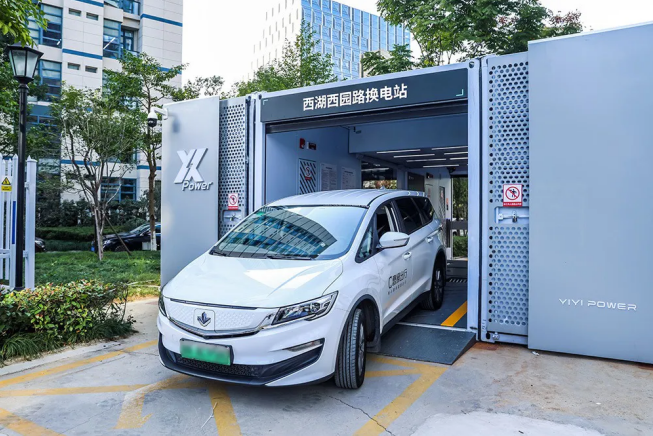
The company is also advancing the concept of “Green Intelligent Mobility Islands,” which support autonomous battery swapping, vehicle cleaning, cabin maintenance, and intelligent dispatching. These facilities additionally reserve infrastructure for future eVTOL takeoff and landing, hinting at CaoCao Mobility’s longer-term vision of an integrated ground-and-air transportation network.
From a broader industry perspective, Robotaxi is now transitioning from technological experimentation to commercial validation and, increasingly, to scale competition. The central question is no longer when Robotaxi technology will mature, but which companies can build sustainable, repeatable business models around it.
CaoCao Mobility appears determined to position itself at the forefront of that transition. From native Robotaxi development and intelligent driving systems to operational infrastructure and global expansion plans, the company’s strategy is no longer centered on proving technological possibilities. Instead, it is focused on building a commercially scalable mobility ecosystem.
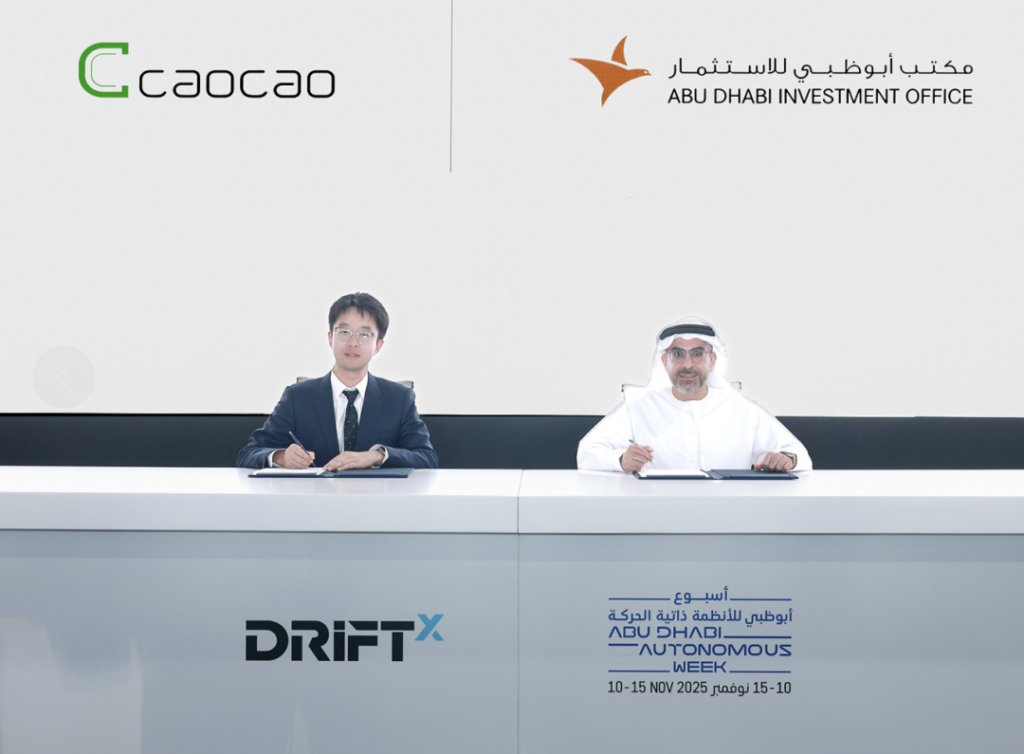
According to its roadmap, Eva Cab is expected to enter mass production in 2027, with cumulative deployment reaching 100,000 vehicles by 2030. Over the next decade, CaoCao Mobility plans to establish five global operational hubs and expand services to 100 cities worldwide, targeting transaction volumes in the hundreds of billions of yuan. International expansion is already underway, including cooperation with the Abu Dhabi Investment Office and exploration of markets such as Hong Kong and the broader Middle East.
As much of the industry continues searching for the long-anticipated Robotaxi inflection point, CaoCao Mobility has already shifted the conversation toward a more consequential issue: how autonomous mobility can become a truly sustainable business. After a decade of accumulation, the company is no longer merely participating in the Robotaxi race. It is attempting to define what the next stage of the industry will ultimately look like.
Source: yiyi power, cqnews, ofweek, 36kr, cnstock