


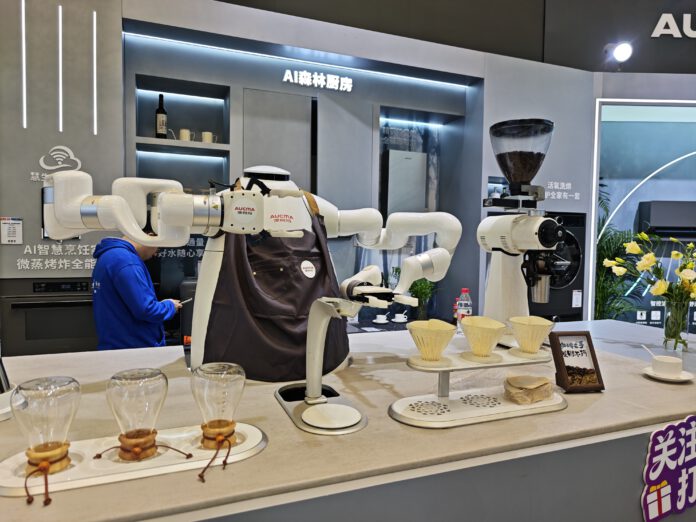
In the spring of 2026, a quiet shift unfolded inside China’s largest home appliance exhibition in Shanghai. At the AWE expo, the center of attention was no longer refrigerators, air conditioners, or washing machines. Instead, a new generation of embodied intelligent robots began to occupy the spotlight, machines that are no longer confined to screens or voice assistants, but are slowly stepping into physical household life.
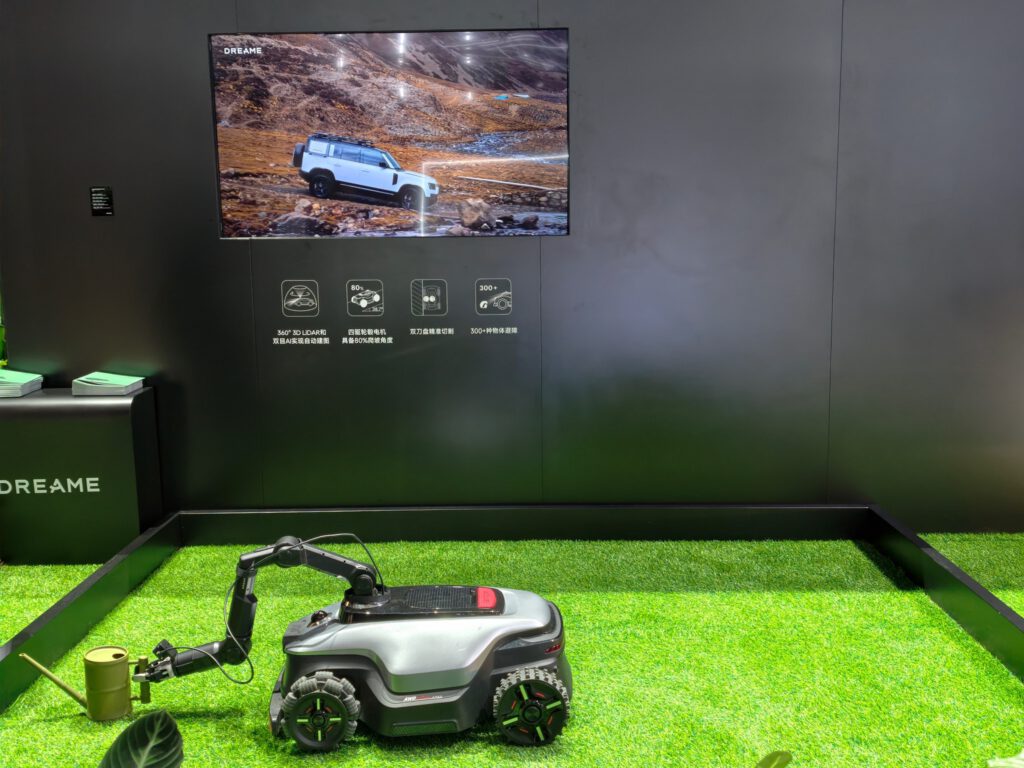
This transition is not accidental. Over decades, Chinese home appliance companies have built an unusually strong foundation: massive user networks, mature manufacturing systems, and deep access to household behavioral data. These assets now converge naturally in the era of embodied AI, where intelligence is no longer only about reasoning, but about acting in the physical world. As AI moves from “thinking” to “doing,” home appliance companies have become some of the earliest large-scale entrants into the robotics race.
What emerged at the exhibition was a strikingly practical vision of the future home. One company showcased a robotic wheelchair capable of moving smoothly between rooms while also supporting robotic arms that could, in the future, operate appliances such as washing machines or vacuum cleaners. Another presented a “home digital twin” concept, where a user can remotely instruct a household robot to tidy rooms, organize objects, or perform basic chores, albeit still slowly and with limited stability, but already capable of learning from repeated interaction.
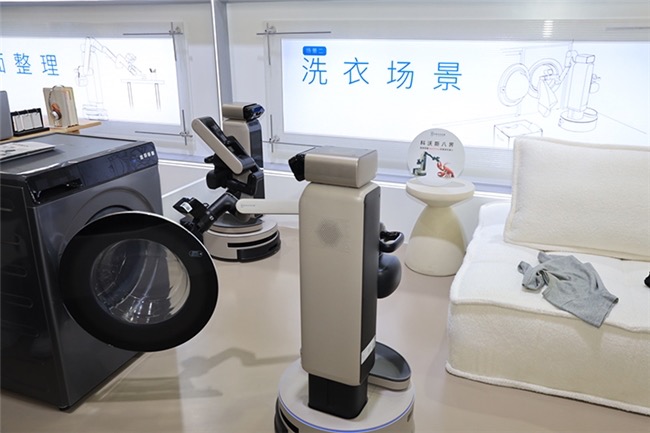
Several designs focused on care and companionship, reflecting China’s rapidly aging society. Robots were demonstrated detecting falls, reminding elderly users to take medication, engaging in simple conversations, and providing daily routines. In these systems, technology is not merely a convenience tool, but a potential response to a structural demographic shift. Others pushed further into integration, turning robots into household coordinators that connect directly with appliances, adjusting air conditioning based on human activity, retrieving drinks from smart refrigerators, or managing laundry cycles through voice commands.
More experimental systems hinted at even broader possibilities. Modular companion robots could move across rooms and reconnect with wearable devices, enabling continuous interaction. Smart home “butlers” attempted to unify fragmented appliances into a single control layer, effectively acting as the nervous system of the household. Cleaning robots evolved beyond ground navigation, with some prototypes even demonstrating aerial mobility between floors. Kitchens became another frontier, where robotic arms and humanoid systems worked together in a closed loop of perception, decision-making, and execution, from sensing ingredients to completing cooking tasks.
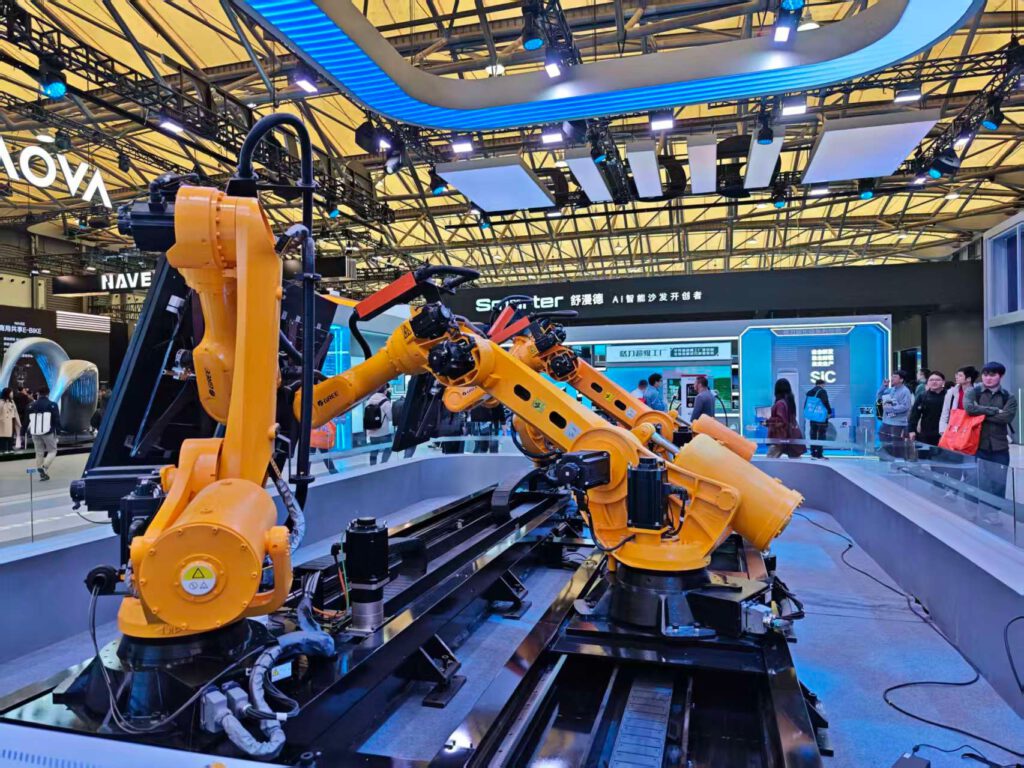
Despite these ambitious demonstrations, most systems remain at an early stage. Movements are still slow, responses occasionally unstable, and real-world reliability is far from mature. In many ways, these robots are not yet finished products but early sketches of a possible domestic future. Still, their trajectory is becoming increasingly clear: household robots are evolving from single-purpose tools into multi-functional agents with growing autonomy.
This evolution is closely tied to broader demographic and economic realities. China’s rapidly aging population is creating sustained demand for elderly care and home assistance, while traditional labor costs continue to rise. Against this backdrop, “home service robots” are increasingly viewed not as luxury gadgets, but as a future necessity. Industry forecasts suggest that as production scales and technology matures, the cost of basic home robots could fall significantly within the next few years, potentially reaching a level comparable to mid-range household appliances.
The development path of household robotics is expected to unfold in stages. The first phase focuses on basic mobility and structured tasks such as cleaning and simple retrieval. The second phase enables tool use, robots learning to operate washing machines, kitchen devices, and other household equipment. The final phase aims at embodied intelligence capable of safe, complex physical interaction, including assistance, caregiving, and even emotional support. Each stage represents not only a technical leap, but also a gradual negotiation between capability, safety, and social acceptance.
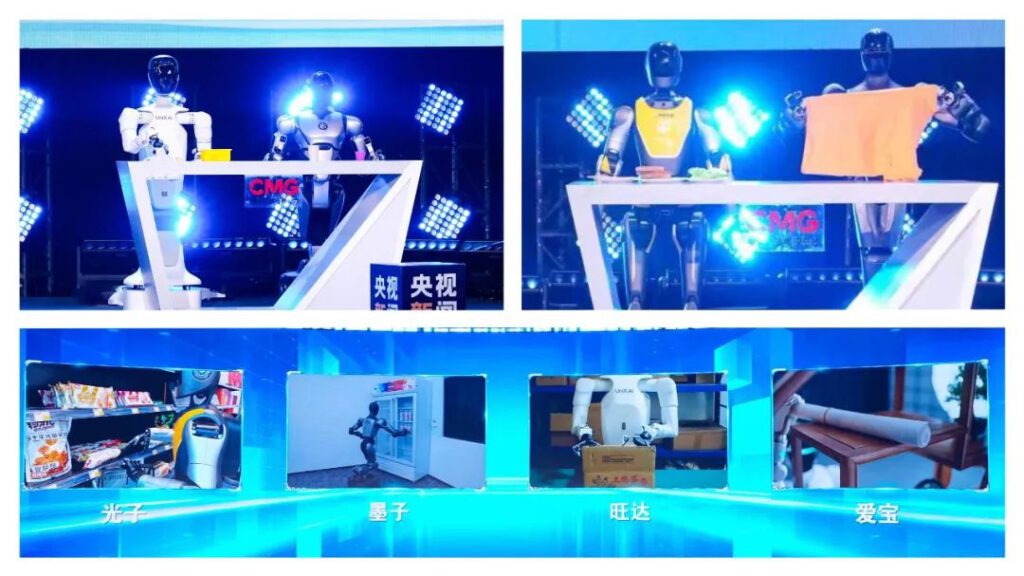
Underlying all of this is the formation of a new industrial ecosystem. No single company can independently build a complete household robotics system. Instead, the field demands collaboration across hardware manufacturers, AI developers, platform companies, and service providers. Home appliance firms bring scenario knowledge and manufacturing scale; tech companies contribute algorithms and computing power; and emerging ecosystem partners provide integration and application layers.
If automobiles once reshaped human mobility, household robots are beginning to redefine domestic life itself. The home is no longer just a space where humans use tools, but gradually becoming an environment shared with intelligent agents. In this process, humans are teaching machines what a home is, while machines are quietly reshaping what “home” means.
Source: AgeClub, xinhua, 21jingji, leikeji, tech china