


14.7 C
Berlin
Wednesday, September 23, 2026
spot_img
Home Blog Page 12

China Pursues Weather Forecasting Sovereignty with Its Own Developed CMA-RA V1.5 Dataset

0

As artificial intelligence reshapes the architecture of weather forecasting, meteorological data have emerged as a core strategic resource for nations. In this new era, control over high-quality atmospheric datasets is no longer merely a scientific concern but a matter of national security, technological sovereignty, and economic competitiveness.

Against this backdrop, China is accelerating the development of its own atmospheric reanalysis datasets in order to reduce long-standing reliance on European-dominated products and to align with broader national strategies on data security and technological self-reliance. 

For years, the global benchmark in climate data has been the European Centre for Medium-Range Weather Forecasts’ fifth-generation atmospheric reanalysis dataset, known as ERA5. Covering more than 80 years of historical data and continuously updated, ERA5 integrates global observations to reconstruct comprehensive climate records. It provides detailed variables including precipitation, temperature, and wind, and has become foundational to the artificial intelligence revolution in meteorology. Many leading Chinese-developed AI weather models have relied heavily on ERA5 for training.

However, dependence on external datasets raises strategic concerns. The value of meteorological data now extends far beyond routine weather forecasting. By reconstructing long-term atmospheric conditions, reanalysis datasets such as ERA5 are essential for understanding climate trends, improving forecast accuracy, and supporting disaster risk management. 

Governments worldwide use ERA5 to assess and manage risks from floods, wildfires, and other natural hazards, while insurance companies incorporate it into catastrophe modeling frameworks. The European Union has estimated that the dataset generates hundreds of millions of dollars in economic value annually. Yet Andreas Prein, professor of weather and climate modeling at ETH Zurich, has emphasized that weather forecasting is closely tied to national security. Excessive reliance on external data sources, he warns, can leave a country in a vulnerable and reactive position.

In response to these concerns, China has moved to secure greater autonomy in atmospheric data infrastructure. In a statement released in September, the National Data Administration announced that the China Meteorological Administration (CMA) had launched a global atmospheric reanalysis system development project. 

One of its central objectives is to break China’s operational dependence on European and American reanalysis products. That same month, the CMA opened global download access to its updated dataset, CMA-RA V1.5, marking the first time this new-generation reanalysis product has been made publicly available. According to the agency, several domestic AI weather models have already begun training on the dataset.

CMA-RA V1.5 demonstrates notable technical advances that signal China’s transition in the reanalysis field from following global leaders, to matching them, and in some areas achieving a leading position. One major breakthrough lies in data assimilation technology. The system incorporates a four-dimensional ensemble-variational hybrid assimilation framework, overcoming multiple technical bottlenecks. Satellite data assimilation in the early 20-year period increased by 13 percent, while the construction of a flow-dependent background error covariance matrix has enhanced assimilation efficiency. Product quality has surpassed earlier regional datasets such as CRA-40 and Japan’s JRA-55.

A second advance involves the integration of domestically controlled observation data. The dataset incorporates China-specific observational sources and includes independently developed radiosonde bias-correction techniques. In total, CMA-RA V1.5 assimilates data from 116 satellites encompassing 215 types of instruments, including 37 Chinese satellites covering 45 instrument categories. Domestic satellite data account for up to 18 percent of the assimilated observations, strengthening national data autonomy.

Third, the dataset achieves internationally competitive spatial resolution and timeliness. Its model resolution reaches 13 kilometers, with post-processing refinement to 10 kilometers, and it updates on an hourly basis in near real time. By comparison, ERA5 operates at a 25-kilometer resolution and is typically updated with a five-day delay. This combination of higher spatial resolution and shorter latency enhances the dataset’s suitability for both operational forecasting and AI model training.

The practical applications of CMA-RA V1.5 are already expanding. The dataset now serves 18 sectors, including agriculture, energy, and transportation, and supports more than 3,600 users. In the renewable energy sector, its 100-meter wind data have improved wind farm site selection, increasing power generation efficiency by approximately 15 percent. In agriculture, downscaled temperature and precipitation data have helped optimize planting strategies, reducing annual grain losses by an estimated five million tons.

The dataset is also gaining traction in academic and entrepreneurial circles. Professor Su Hui of the Hong Kong University of Science and Technology is incorporating CMA-RA V1.5 into the work of her meteorological technology startup, Stellerus, using it to train regional AI weather models and evaluate numerical forecasting systems. She notes that one of the dataset’s key strengths is its finer global grid resolution compared with ERA5. The combination of high spatial and temporal resolution provides a vast and detailed data foundation for machine learning applications.

International industry stakeholders are also taking notice. David Whitehead, head of meteorological risk management at the Finnish listed company Vaisala Oyj, has suggested that broader international access to Chinese meteorological data could stimulate the development and brokerage of weather derivatives in global markets. 

Vaisala, which specializes in providing meteorological data for financial hedging, has already begun exploring potential applications of CMA-RA V1.5. Rémi Gandoin, product development manager at the Danish engineering consultancy C2Wind, has observed that ERA5 contains certain biases and limitations, and that integrating multiple datasets can benefit researchers studying climate change and extreme weather. Such integration can also provide wind project developers with more robust data support for engineering design and decision-making.

Looking ahead, experts increasingly argue that the future of meteorological science and climate risk management lies not in reliance on a single global dataset but in the coexistence of multiple high-quality data systems. A diversified data ecosystem enhances resilience, reduces systemic vulnerability, and supports innovation across forecasting, energy planning, disaster mitigation, and financial risk modeling. 

As artificial intelligence becomes ever more central to weather prediction and climate services, the strategic significance of independently developed atmospheric datasets will continue to grow. In this context, CMA-RA V1.5 represents not only a technical milestone but also a broader shift in how nations approach data sovereignty and strategic capability in the age of AI-driven meteorology.

Source: sina, sohu, szhk

How China’s High-Power Microwave Weapons Broke Through the Engineering Barrier to Battlefield Deployment

0

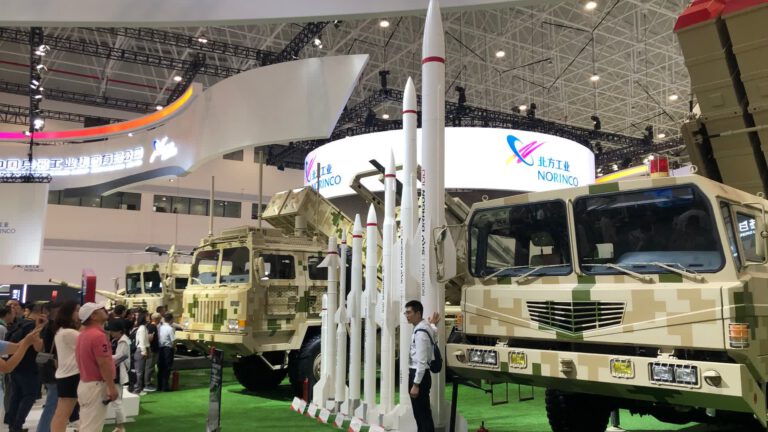
In recent years, China has continued to report advances in a range of so-called “new concept” weapons, including laser systems and electromagnetic railguns. Among these emerging capabilities, high-power microwave weapons have drawn particular attention. 

First introduced to the public at the Zhuhai Airshow in November 2024, the systems gained further prominence during the September 3, 2025 military parade, where they appeared as part of a new air defense formation. Their appearance signaled that high-power microwave technology is moving beyond experimentation and into an operational role within China’s layered air defense architecture.

Two systems in particular have been highlighted: the PLB-625E vehicle-mounted microwave weapon system, also known as “Hurricane 2000,” and the more advanced “Hurricane 3000,” a highly mobile vehicle-mounted high-power microwave platform. The former integrates detection, tracking, and strike capabilities into a single vehicle and is designed primarily to intercept light and small unmanned aerial vehicles within a range of approximately two kilometers. Its mission focus is low-altitude security, especially in scenarios involving small drones or coordinated drone swarms.

The Hurricane 3000 represents a comprehensive enhancement over its predecessor. Its effective interception range against light and small drones and drone swarms reportedly exceeds three kilometers. In addition to extended range, improvements have been made in detection capability, tracking precision, sustained operational capacity, and overall vehicle-level automation. 

A single vehicle can conduct detection-to-engagement operations independently, targeting micro and light unmanned platforms. At the same time, the system is designed to operate in coordination with other air defense assets, such as laser weapons and missile-artillery systems, forming an integrated “terminal counter-drone” network. Within this structure, the microwave system functions as one component of a layered defensive triad, tasked with missions ranging from terminal defense and border security to urban protection and critical infrastructure security.

From a technical perspective, the working principle of such systems follows a structured engagement chain. Radar is first used to detect moving targets through analysis of Doppler electromagnetic return signals, enabling initial detection and tracking. Once target position data are acquired, electro-optical systems assume a complementary role, employing optical sensors and servo mechanisms to capture and automatically track the object within the field of view. 

When engagement parameters are met, the high-power microwave antenna is directed at the target and emits concentrated microwave energy. The energy disrupts or damages the electronic systems of the drone, neutralizing it without the need for kinetic impact. While external designs may vary among different manufacturers, the fundamental operational principle of microwave-based directed-energy systems remains broadly consistent.

The emergence of microwave weapons must also be understood within the broader context of China’s evolving counter-drone strategy. China has invested heavily in a multi-layered anti-UAV architecture that incorporates missiles, anti-aircraft artillery, laser systems, and microwave platforms. Debate has emerged over whether directed-energy weapons might displace traditional missile and artillery systems, particularly in terminal defense roles. 

However, the prevailing view within Chinese defense discussions emphasizes complementarity rather than substitution. Missiles and artillery retain advantages in range, precision, and adaptability across diverse target sets. Directed-energy systems, by contrast, offer strengths in resisting saturation attacks and in cost-efficiency per engagement. Microwave weapons, in particular, are often described as having strong resilience against swarm tactics, since a single emission can potentially affect multiple drones within a beam footprint. The strategic logic, therefore, is not that one system can dominate all scenarios, but that layered integration enhances overall defensive resilience.

The development of high-power microwave weapons has presented significant technical challenges. One of the principal obstacles has been the miniaturization and weight reduction of high-power microwave sources. Traditionally, large pulsed power sources have been associated with nuclear effects simulation or laboratory research environments, where size and weight are less constrained. Adapting such systems for vehicle-mounted deployment requires extensive engineering breakthroughs in compact power generation and energy management.

A second challenge lies in system integration. To meet air defense requirements, detection, tracking, microwave emission, and onboard power supply systems must be integrated into a single mobile platform. This involves not only physical integration of hardware but also complex information and control system coordination. A third major challenge concerns electromagnetic safety. High-power microwave weapons must be engineered to avoid damaging their own platforms or nearby friendly systems, while also limiting unintended radiation in non-target directions. Ensuring electromagnetic compatibility in a dense operational environment is essential for practical deployment.

Looking ahead, Chinese defense planning envisions continued development of both conventional and directed-energy air defense systems. In the field of anti-aircraft artillery, trends include further light-weighting, improved precision, higher rates of fire, and deeper integration with missile systems. The objective is to create highly mobile, dense firepower units capable of countering diverse aerial threats, including cruise missiles, anti-ship missiles, precision-guided munitions, low-flying fixed-wing aircraft, helicopters, and unmanned platforms. Such systems are framed as the “last line of firepower” in an integrated air defense network, responsible for point defense and area protection.

High-power microwave weapons are expected to evolve in parallel with operational requirements. Future development is likely to emphasize enhanced counter-drone and counter-swarm capabilities, leveraging their cost-effectiveness and resistance to saturation tactics. At the same time, potential application areas may expand beyond physical drone neutralization to include disruption of information links, interference with airborne electronic reconnaissance systems, counter-precision-guided weapon roles, and even non-lethal active denial applications. The trajectory suggests that microwave systems will not function in isolation but as components within a broader, networked defense ecosystem.

Taken together, the public debut and subsequent analysis of these systems indicate that high-power microwave weapons are transitioning from experimental concepts to operational assets. Their integration alongside missiles, artillery, and laser systems reflects a strategic approach centered on layered defense, technological diversification, and adaptation to emerging threats such as drone swarms and precision-guided attacks. As these systems mature, their effectiveness will depend not only on technological refinement but also on how successfully they are incorporated into comprehensive air defense doctrines.

Source: Guancha, souhu, sina, top war

How China’s Historic Tourist City Suzhou Became a High-End AI Manufacturing Powerhouse

0

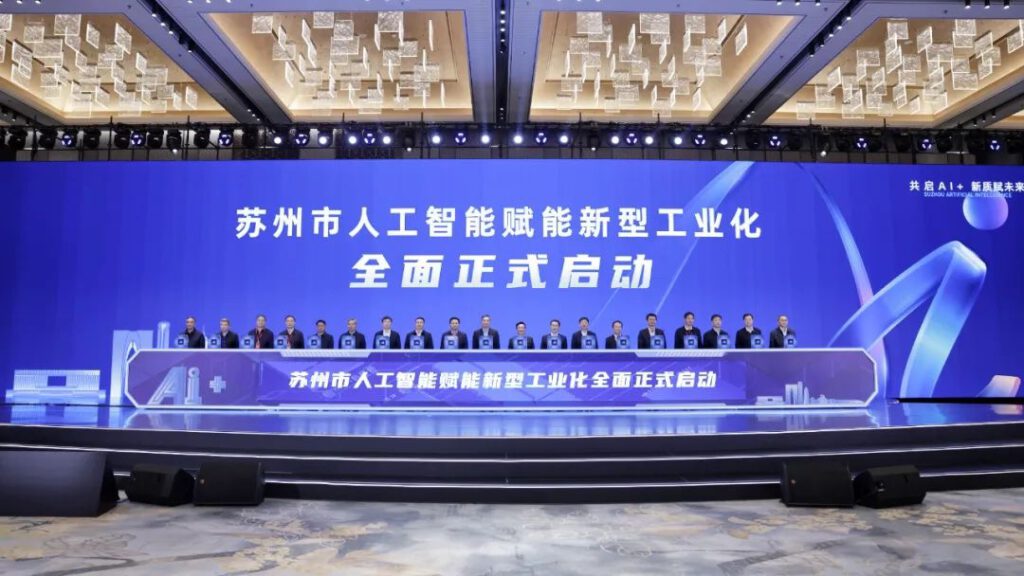
On January 4, 2026, Suzhou convened its Conference on Advancing New-Type Industrialization alongside the “AI + Manufacturing” Innovation and Development Forum, marking a decisive moment in the city’s industrial evolution.

Tracing Suzhou’s recent trajectory reveals a strategy that has consistently moved in step with the times. In 2021, the city emphasized the digital economy and digital transformation. In 2022, it shifted toward building industrial innovation clusters for the digital economy era. By 2023, the focus narrowed to the development of new energy vehicle industry clusters. Beginning in 2024, Suzhou clearly elevated “new-type industrialization” as the central theme of its annual agenda, a focus that was sustained and deepened through 2025.

In 2026, this theme underwent a critical upgrade. “AI + Manufacturing” was explicitly positioned as both the strategic core and the primary execution path for advancing new-type industrialization. At the conference, Suzhou announced that it would take the creation of a National Demonstration Zone for New-Type Industrialization as its main thread for the year, rolling out eight major initiatives comprising 28 concrete actions. Key targets include the dynamic cultivation of 150 industrial large models and the construction of more than 200 high-quality industrial datasets. By the end of the 15th Five-Year Plan period, Suzhou aims to make substantial progress in developing new quality productive forces, establish a modern industrial system, and ultimately build a globally leading “City of Intelligent Manufacturing” by 2035.

From the digital economy to new-type industrialization, and now to the precise focus on “AI + Manufacturing,” each iteration of Suzhou’s industrial strategy reflects a deep understanding of industrial development. Crucially, this understanding consistently translates into targeted empowerment for enterprises rather than abstract ambition.

Today, Suzhou stands as one of China’s most comprehensive industrial cities, encompassing 34 major industrial categories, 170 medium categories, and 514 subcategories. It is home to approximately 160,000 industrial enterprises, and in 2024 its above-scale industrial output reached RMB 4.7 trillion.

Globally, a new industrial revolution driven by artificial intelligence is rapidly reshaping economic structures and competitive hierarchies. From large language models and humanoid robots to new energy, low-altitude economies, and synthetic biology, new tracks are emerging at remarkable speed. Technological iteration is accelerating beyond traditional cycles, and industrial systems that cling to legacy models without proactive transformation risk rapid marginalization. 

Against this backdrop, Suzhou’s integration of AI into manufacturing is not a pursuit of short-lived hype, but a strategic inevitability. The timing is equally critical: 2026 marks the opening year of the 15th Five-Year Plan and a key window in the next round of global technological and industrial competition, making a strong first step particularly consequential.

In Suzhou, AI is steadily permeating the fine-grained operations of manufacturing enterprises. At an electronics company, for example, an expense reimbursement form involving installment payments now flows automatically through the financial system. Within seconds, the system extracts invoice amounts and contract payment terms, cross-references historical records to calculate the proportion already paid, verifies compliance with payment conditions, and forwards the request to the next approval stage. Today, 99% of such processes are approved automatically, with only 1% of complex cases requiring human intervention. Compared with the past—when financial staff manually searched contracts and reconciled data—approval times have been reduced to under five minutes, delivering a dramatic efficiency gain.

Suzhou’s deep manufacturing base has also created fertile ground for collaborative technology service providers. Many of their orders come directly from local enterprises. One local food manufacturer, for instance, long relied on more than 20 workers for manual sorting at the back end of its production line, creating a persistent efficiency bottleneck. By introducing robotic sorting systems, the company reduced staffing needs to just two people, seamlessly connected imported production lines, and eliminated a critical production constraint.

Such transformation scenarios are now commonplace across Suzhou’s manufacturing landscape. The rise of generative AI has significantly reshaped the city’s industrial and entrepreneurial atmosphere, prompting enterprises to concentrate less on abstract technological potential and more on concrete, scenario-based applications. Smart factories, logistics optimization, and industry-specific AI solutions have become focal points of R&D and commercialization, closely aligned with market demand for practical AI deployment.

The results are visible in the data. From January to November 2025, Suzhou’s above-scale industrial value added grew by 7.6% year-on-year, while total industrial output reached RMB 44.4 trillion, up 3.9%. The city’s six leading industries generated RMB 29.1 trillion in output, growing 4.1%, and the top 100 enterprises recorded a 5.1% increase. High-tech manufacturing output rose 5.5%, contributing 53.2% of total industrial output growth. The rapid expansion of “AI +” applications drove notable increases in the production of optoelectronic devices, integrated circuits, and industrial robots, which grew by 8.8%, 7.8%, and 17.1% respectively.

Behind the vitality of Suzhou’s “AI + Manufacturing” sector lies a first-class business environment and highly targeted policy support. Since 2025, the city has issued policy frameworks such as the Implementation Plan for Building an AI-Empowered Pioneer Zone for New-Type Industrialization and the Action Plan for Accelerating “AI + Manufacturing” Innovation, clearly defining development goals and priority tasks across technology R&D, scenario application, and industrial cultivation.

At the 2026 conference, Suzhou further unveiled eight major actions to advance “AI + Manufacturing.” These include cultivating 150 industrial large models; building more than 200 high-quality industrial datasets; promoting over 100 replicable benchmark application scenarios; creating smart terminal brands and nurturing more than 300 smart terminal products; establishing 10 industry empowerment centers and high-level platforms; expanding computing power capacity to 40,000 PFLOPS with inclusive access; developing more than 20 related standards; and optimizing the industrial ecosystem by attracting 240 leading talents and achieving breakthroughs in more than six domestically produced AI chips.

For entrepreneurs, Suzhou’s support is both comprehensive and concrete. From project selection and landing platforms to team building, financial support, talent subsidies, and investment matchmaking, the city offers end-to-end services—often described as enabling founders to arrive with “just a backpack.”

For enterprises, Suzhou’s advantages are evident in the details. Government-led activities centered on large models and AI are frequent and diverse, spanning industry chain conferences, sector-specific salons, technical workshops, and industry–academia–research matchmaking events, with at least one or two held every week. From industrial manufacturing to healthcare and education, and even cutting-edge fields such as AI for Science, all sectors are actively pushing for real-world implementation. Even traditional enterprises display strong enthusiasm for “AI +” transformation, creating a dense and pragmatic AI innovation atmosphere.

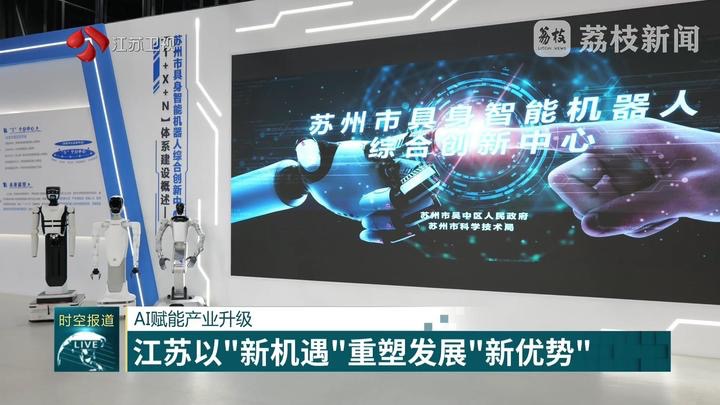
The government’s role extends beyond simply providing platforms. It actively releases demand signals and guides development directions. In Wuzhong District, the core hub for embodied intelligence and robotics, authorities not only publish typical application scenarios but also build supply–demand docking platforms to connect technology providers with end users. Industry discussions consistently center on scenario-based AI deployment: enterprises bring concrete problems, while research institutions and technology firms jointly explore how large models can address real pain points, grounding industrial dialogue firmly in practice.

Suzhou also organizes vertical, industry-specific matchmaking sessions for sectors such as automotive and advanced manufacturing, precisely aggregating upstream and downstream players to surface genuine implementation needs. Government teams proactively research enterprise pain points in AI adoption, coordinate resources, and help remove obstacles to deployment. In this pragmatic exchange environment, companies often find viable pathways for technological fit and scale-up. Enterprises that demonstrate outstanding progress in AI-driven transformation are further rewarded with official recognition and accompanying subsidies, reinforcing incentives for continuous upgrading.

Beyond industrial policy and infrastructure, Suzhou sustains its momentum through a compelling blend of livability and opportunity. Its deep manufacturing roots and dense concentration of leading firms provide abundant career options for graduates and professionals alike. At the same time, the city is renowned for its livable environment, cultural heritage, and orderly urban rhythm. Proximity to Shanghai, moderate population density, and comfortable living spaces allow professional ambition and quality of life to reinforce one another.

On this fertile ground, what grows is not merely a collection of enterprise transformation cases, but a city-level confidence in embracing the industries of the future—and shaping them with intent rather than reaction.

Source: China Daily, ifeng js, caifuhao, cadmm, jswx gov

Why has the Chinese Communist Party maintained such deep-rooted support among broad segments of the Chinese population? 

0

Beyond ideology or political structure, one frequently cited reason lies in a shared historical memory: during the country’s most difficult years, leaders and ordinary citizens endured hardship together. The experience of collective struggle, particularly in times of acute economic crisis, fostered a perception that the ruling elite did not stand apart from society but participated in its sacrifices. The years from 1960 to 1962, commonly referred to as the “Three Years of Difficulty,” offer a revealing example of this dynamic.

By 1960, China’s economy had fallen into severe distress. Grain output dropped to levels comparable to the early 1950s, while cotton production declined to that of 1951 and oil-bearing crops fell back to levels seen at the founding of the People’s Republic. Light industrial production contracted sharply. Average grain consumption per capita in 1960 was nearly 20 percent lower than in 1957, with rural consumption down by almost 24 percent. Edible oil consumption per person decreased by 23 percent, and pork consumption fell by as much as 70 percent. Malnutrition-related edema became widespread in many regions. The country faced its gravest economic challenge since 1949.

In response to food shortages, rationing standards were tightened nationwide. Urban residents’ grain allocations were reduced to minimum levels under the policy commonly summarized as “low standards, vegetables as substitutes.” The central leadership called upon Party members and state cadres to take the lead in enduring austerity. Symbolically and practically, this leadership example was emphasized at the highest levels.

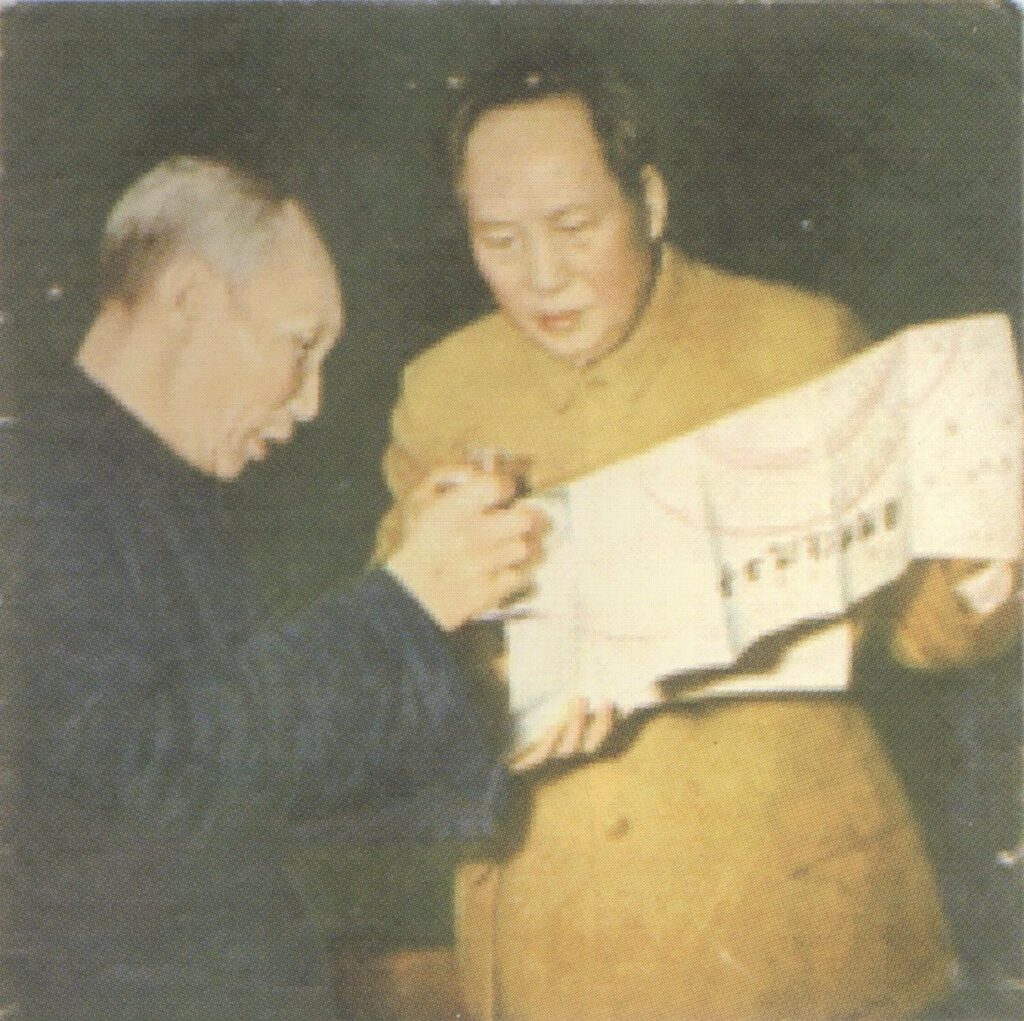
Within Zhongnanhai, the central leadership compound in Beijing, senior officials publicly declared reduced grain rations for themselves. Mao Zedong reported a monthly grain allotment of approximately 13 kilograms; Liu Shaoqi declared about 9 kilograms; Zhou Enlai reported roughly 12 kilograms; Zhu De matched Mao at around 13 kilograms. Although colleagues suggested these figures were lower than necessary and could be adjusted upward to align with the standard allocation of about 14 kilograms for most adult male cadres, the leaders insisted that their reported amounts were sufficient. Rations were issued according to their self-declared levels.

Mao also announced a personal commitment to the “three no’s”: no meat, no eggs, and no exceeding grain quotas. During this period, he reportedly went months without consuming meat or tea. When others urged him to supplement his diet for health reasons, he declined, reinforcing the principle that special provisions were inappropriate under national hardship. Similar patterns were observed among other senior leaders. Zhou Enlai had earlier set a precedent by dining in the general canteen rather than in separate facilities, leading to the abolition of differentiated dining arrangements within the State Council.

The austerity extended to family members. Children of senior officials were required to eat in public canteens rather than at home, subject to the same rationing standards as others. Requests for special food were discouraged or rejected. Even small attempts to provide additional provisions were criticized as violations of collective discipline. The emphasis was consistent: no special treatment during a national crisis.

Food scarcity led to widespread substitution practices. Wild vegetables, elm seeds, and other edible plants were mixed with flour to increase volume. Canteens experimented with incorporating coarse grains and forage plants into staple foods. Courtyards and unused plots within Zhongnanhai were converted into vegetable gardens, where cadres and their families planted corn, pumpkins, potatoes, beans, and leafy greens. Composting and soil improvement became common efforts. Such practices, while modest in scale, reflected both material necessity and symbolic participation in self-reliance.

Despite these efforts, hunger remained acute. Students and workers alike reported persistent feelings of deprivation. Thin gruels and coarse breads replaced former staples. Protein sources were rare. Occasional supplementation—such as small fish or sparrows—provided limited relief but could not fundamentally alter the overall scarcity. In some instances, even unconventional food sources, including crows, were consumed in canteens, though supplies were minimal and short-lived.

The hardship was not confined to the general population; it affected the leadership compound as well. Reports of edema among adults and fatigue among youth were common. Public messaging encouraged reduced physical activity and sun exposure as ways to conserve energy. While conditions in the capital were generally better than in the hardest-hit rural regions, they were nonetheless marked by austerity and shared constraint.

The significance of this period lies not only in its economic statistics but in the political culture it reinforced. The leadership’s insistence on adhering to rationing rules, avoiding special privileges, and participating in collective dining and cultivation was presented as an embodiment of egalitarian discipline. In official narratives and personal recollections alike, these actions have been cited as evidence that senior officials did not exempt themselves from national sacrifice.

This shared experience of scarcity became part of a broader historical memory. The generation that endured the early revolutionary years and the post-1949 reconstruction often framed legitimacy in terms of having “eaten bitterness” together. The Three Years of Difficulty reinforced this motif. Although the crisis exposed severe structural and policy challenges, it also produced stories of leaders and citizens facing deprivation under the same constraints.

In subsequent decades, as China moved into periods of reform and rapid economic growth, the memory of collective hardship continued to inform political discourse. The idea that the Party and the people had weathered crises side by side contributed to a narrative of mutual endurance and shared destiny. For many, the legitimacy of leadership was strengthened not solely by economic performance, but by the perception that, in moments of national emergency, those at the top were willing to live by the same standards imposed on everyone else.

The Three Years of Difficulty remain a complex and debated chapter in modern Chinese history. Yet within the broader arc of the People’s Republic, the period stands as a stark illustration of economic strain and social mobilization. It also serves as a reminder that in times of scarcity, symbolic acts of restraint and solidarity by leaders can carry lasting political significance, shaping public memory and contributing to enduring bonds between state and society.

Source: dsbc, scnu, xinhua

China’s Digital RMB 2.0: From Digital Cash to Interest-Bearing Digital Deposit Currency

0

At the beginning of the new year, China’s digital renminbi (e-CNY) has entered a new stage of development, officially transitioning from the era of “digital cash” to that of “digital deposit currency.” 

China’s international operation center for the digital RMB announced that the Digital RMB App, a core carrier of the system, has been comprehensively upgraded to Version 2.0. This update represents not only a technical iteration but also a profound shift in institutional design and operational logic, marking a milestone in the evolution of China’s central bank digital currency (CBDC).

Since its public launch in January 2022, the Digital RMB App has undergone 54 updates, consistently refining user experience. The most significant change in Version 2.0 is that, starting January 1, 2026, balances in verified (real-name) digital RMB wallets will accrue interest based on the current deposit rate listed by designated operating institutions. 

At present, ten institutions are authorized to operate digital RMB services: Industrial and Commercial Bank of China, Agricultural Bank of China, Bank of China, China Construction Bank, Bank of Communications, Postal Savings Bank of China, China Merchants Bank, Industrial Bank, MYbank (Alipay), and WeBank (WeChat Pay). These institutions have announced that real-name wallet balances will earn interest at their respective demand deposit rates, currently 0.05%, with calculation and settlement rules aligned with traditional demand deposits.

Interest will be settled quarterly on March 20, June 20, September 20, and December 20. Users can check the credited interest through the wallet asset section of the Digital RMB App after each settlement date. If an account is closed before a settlement date, interest will be calculated up to the day prior to closure at the prevailing rate. 

Importantly, only real-name wallets—classified as Tier I, II, and III—qualify for interest. Tier IV wallets, which can be opened using only a mobile phone number and are non-verified, are not eligible. This distinction reflects regulatory requirements related to anti-money laundering (AML) compliance and provides a clear legal basis for deposit insurance protection.

The introduction of interest payments signals a fundamental shift in the liability structure of the digital RMB. Previously positioned as “digital cash” (M0) and a direct liability of the People’s Bank of China (PBOC), the e-CNY emphasized payment functionality and a degree of disintermediation. However, in practice, the absence of interest limited user incentives to hold digital RMB, and commercial banks lacked sufficient motivation to actively promote it. 

Under the new framework, real-name digital RMB balances will be treated as commercial bank liabilities, included in deposit insurance coverage and incorporated into banks’ required reserve calculations. This realignment creates an incentive-compatible mechanism that integrates digital RMB more fully into the existing financial system.

The policy foundation for this transformation lies in the Action Plan on Further Strengthening the Digital RMB Management and Service System and Related Financial Infrastructure, issued by the PBOC on December 29, 2025. The plan establishes a new measurement framework, management system, and operational mechanism for the next generation of digital RMB. It clarifies that the future digital RMB will be supported technically and supervised by the central bank but will carry the liability attributes of commercial banks. Account-based in structure and compatible with distributed ledger technologies, the digital RMB will circulate within the financial system as a modern digital payment and settlement instrument, fulfilling the core monetary functions of unit of account, store of value, and medium of exchange—including in cross-border contexts.

Analysts suggest that the transition reflects three core considerations. First, risk control: a purely central bank–liability digital cash model could weaken banks’ credit creation functions and affect macroeconomic policy transmission. By converting digital RMB into commercial bank liabilities, it is brought under the umbrella of reserve requirements and deposit insurance, thereby enhancing financial stability. Second, user incentives: interest-bearing balances address a key obstacle to adoption, as users generally prefer assets that generate returns. Third, systemic integration: leveraging existing bank account management systems reduces compliance costs related to AML and know-your-customer (KYC) requirements while enabling seamless integration with traditional financial services.

With the introduction of interest, commercial banks are expected to expand innovation on the asset side of their balance sheets. As digital RMB deposits become equivalent to ordinary deposits, banks can utilize these funds for lending, wealth management products, and other financial services. Industry sources indicate that banks are preparing to allow customers to purchase traditional wealth management products using digital RMB, further embedding it into the broader “payment + finance” ecosystem.

From a macroeconomic perspective, the reform also introduces a potential new policy variable: the digital RMB interest rate. Combined with the traceability of digital transactions, this could enhance the precision of structural monetary policy tools. By incorporating digital RMB into the traditional framework of money creation and regulation, policymakers gain a more direct and technologically advanced channel for influencing liquidity and financial conditions.

Since research began in 2014, China’s digital RMB pilot programs have expanded across retail, catering, tourism, healthcare, education, public services, rural revitalization, and cross-border settlements, placing China at the forefront of global CBDC development. Yet as the economy becomes increasingly digital and intelligent, further improvements in regulatory clarity, legal status, and ecosystem expansion remain necessary. Broader pilot coverage, richer application scenarios, and stronger incentives for merchants and consumers will be key to sustaining momentum.

The shift from digital cash to digital deposit currency represents more than a technical upgrade—it is a structural transformation. By combining payment convenience with deposit functionality and financial integration, Digital RMB 2.0 strengthens incentives for users, empowers commercial banks, and deepens integration with the existing financial system. As reforms continue and use cases expand, the digital RMB is poised to play a more significant role in improving efficiency, lowering transaction costs, supporting financial stability, and advancing the international competitiveness of the renminbi.

Source: Xinhua, 21CBH, China’s state council, Nikkei Asia

China Launches First Batch of L3 Autonomous Vehicles for Testing in Mega-Cities and Highways

0

On December 15, 2025, China’s Ministry of Industry and Information Technology officially announced the first batch of L3 conditional autonomous driving vehicle licenses, marking the transition of China’s L3 autonomous driving from testing into commercial application. 

L3, or conditional automation, refers to vehicles that can independently handle acceleration, steering, and braking under specific scenarios, including complex situations like lane merging, overtaking, and road construction, only requesting human intervention when the system reaches its limits. 

Unlike L2 systems, where drivers remain fully responsible, once activated, L3 shifts the responsibility to the vehicle manufacturer or system provider, addressing the “ambiguous responsibility” issue of L2 systems.

The first approved models are the Changan Deep Blue SL03 and the Arcfox Alpha S5, which will operate on designated roads in Chongqing and Beijing, respectively. The Deep Blue SL03 can achieve single-lane autonomous driving at up to 50 km/h on Chongqing’s Inner Ring Expressway, New Inner Ring Expressway, and Yudu Avenue, primarily targeting urban traffic congestion scenarios. 

The Arcfox Alpha S5 can reach up to 80 km/h on Beijing’s Jing-Tai Expressway, Airport North Line, and Daxing Airport Expressway, suited for highways and fast roads. Both models are limited to specific operator units and are not sold to individuals, ensuring the technology is deployed in a safe, controlled environment.

The development of L3 not only represents a technical milestone but also drives upgrading of the automotive industry chain. Within defined operational design domains and speed limits, L3 can be replicated first in highways and semi-closed environments, accumulating legal, data, and operational experience for urban NOA (Navigation on Autopilot) and higher-level autonomous driving. This requires significant advancements in perception, computing power, and system integration, boosting the value of sensors, LiDAR, high-speed connectors, and high-performance autonomous driving chips.

Globally, the development of L3 shows diverse paths. Germany’s 2021 Autonomous Driving Act stipulates that manufacturers assume responsibility during L3 operation and require data recorders; Mercedes’ DRIVE PILOT has increased its operational speed to 95 km/h. The U.S. focuses more on commercializing L4 Robotaxis, with L3 not widely adopted as a transitional solution. Japan’s Honda once launched the L3 Legend, but due to high cost and limited scenarios, it was discontinued. In this context, China’s approval for L3 mass-produced vehicles represents a cautious and steady global approach.

In China, L3 commercialization signals a shift in smart driving from feature penetration to reliability verification. Previously, companies relied on test licenses for research, limited to certain roads. The “conditional product access license” now allows L3 vehicles to be sold, operated on public roads, and continuously regulated. Before the license, Changan Deep Blue SL03 had completed over 5 million kilometers of on-road validation, covering 191 scenario types and 400,000 simulated scenarios, passed 182 cybersecurity and data safety tests, over 1,000 functional safety checks, and established a database of more than 300 critical extreme scenarios, optimizing safety through a data-driven loop. Similarly, BAIC BluePark combines self-developed systems with Huawei’s ADS2.0 platform, building end-to-end data loops and multimodal large models to support L3 commercial operations.

The commercialization of L3 also brings legal and responsibility updates. In China, L0-L2 drivers bear accident responsibility, whereas L3 shifts it to manufacturers. In the event of an accident, the company must prove the system was defect-free. This requires stricter technical, data, and operational management, laying the groundwork for higher-level autonomous driving regulation. 

Building trust between humans and machines remains a key challenge: research shows that drivers over 50 need an average of six seconds to regain control after distraction, while the system’s takeover window is often less than ten seconds, making response time, driver monitoring, and interface alerts crucial for future traffic governance.

Technically, L3 relies on upgrades across cameras, LiDAR, high-speed connectors, and high-performance autonomous driving chips. Compared to L2 ADAS, highways and urban NOA vehicles double their camera count, with pixel resolution increasing from 2–3MP to 5–8MP. High-frequency, high-speed connectors and chip computing power requirements also rise, supporting L3 and Robotaxi deployment. According to the Ministry of Industry and Information Technology, 2025 saw 7.76 million L2-assisted vehicles sold in China with a penetration rate of 62.6%, while highway NOA installations grew over 250% year-on-year, entering large-scale adoption.

Chinese automakers are following three paths for L3 deployment: self-development, as in Changan’s Beidou Tianshu plan and XPeng’s hardware-software integrated strategy aiming for L4 mass production in 2026; ecosystem collaboration, like Lantu with Huawei ADS 4.0 to commercialize highway L3; and hardware pre-embedding, with BYD and Zeekr preparing LiDAR and high-power chips for OTA upgrades. 

By the end of 2025, Changan and BAIC BluePark were the first to obtain L3 production licenses, signaling that China’s smart driving is entering a new stage of engineering implementation and regulated operation.

Source: Aijian securities, CCTV, cls, our china story, sh auto news

Chinese Enterprise Software Companies Like Kingdee Are Moving from Cloud to AI

0

Ten years ago, Kingdee pioneered the concept of cloud transformation in China. Back in 2014, when digitalization was just beginning for Chinese enterprises, Kingdee decisively shifted from a traditional software company to a cloud service provider. This transformation positioned Kingdee as one of the first management software companies in China to successfully upgrade its business model and laid the foundation for the wave of digital transformation that would follow across Chinese enterprises.

In 2025, Kingdee took another bold step forward. In November, the company announced the rebranding of Kingdee Cloud to Kingdee AI, with Chairman and CEO Xu Shaochun unveiling that AI transformation goes beyond technological upgrades—it requires a systematic reshaping of operations, products, business models, ecosystems, organizational structures, talent, and leadership. 

As part of this transition, Kingdee also launched “Little K,” the first enterprise-level AI-native super platform in China, creating a new paradigm for AI-driven enterprise management. Xu underscored that the AI era is not a short-term technology race but a long-term marathon testing an organization’s resilience and strategic endurance. By embracing intelligent transformation with a long-term perspective, Kingdee aims to empower enterprises and elevate Chinese management practices on the global stage.

Not only Kingdee, but other ERP providers have also recently upgraded their brands and placed big bets on AI, aiming to seize an early advantage in the wave of industrial intelligence.

This transformation is not just about the development of individual companies—it also affects the large base of clients still reliant on traditional business models and has implications for the global competitiveness of Chinese management practices. Can Chinese software replace SAP, the world’s leading enterprise application provider? How can Chinese companies escape the service-heavy model and achieve exponential growth through productization? In the wave of overseas expansion, how can Chinese enterprises leverage their talent advantage to enter international markets?

Chen Guo, a digitalization expert and founder and chief evangelist of China’s enterprise knowledge open plan (KPro), shared his insights on the AI-driven transformation of enterprise software, the evolving market landscape, and opportunities for Chinese companies to expand globally, highlighting the key path for the IT industry to shift from service-oriented models to product-driven growth.

Kingdee’s transformation affects not only itself but also many clients relying on its traditional business. How do you view this?

Kingdee has already completed the shift of its traditional ERP business from 1990s-era technology to cloud-native architecture. The AI transformation of ERP can take different forms, and one common approach is “AI enhancement,” where AI is integrated into existing products. This allows ERP systems to achieve an initial level of AI capability, which reflects the current industry trend.

ERP has two core functions: running end-to-end business processes like procurement, sales, and production, and recording transactions to generate financial reports, known as “record to report.” Both of these processes can be transformed by AI. Intelligent agents can handle routine workflows, while AI that understands accounting rules can automatically record transactions.

Domestic software may even move faster than foreign competitors because ERP serves the manufacturing sector, and China is the world’s largest manufacturing hub, offering abundant real-world business scenarios. At the application level, despite perceived gaps in large AI model capabilities, domestic ERP software and international products like SAP are essentially on the same starting line.

ERP standardizes organizational operations. After the internet and cloud eras, AI brings new challenges and opportunities—what’s your view?

Traditionally, ERP assumed that if people followed fixed rules, accounting could be automated: first the business activity happens, then bookkeeping is completed according to standards.

However, as we discussed before, Western enterprise software doesn’t always fit seamlessly in China. For example, over the past 20 years, Chinese internet companies have grown rapidly, but their business processes are often poorly standardized. New businesses emerge constantly, rules are unclear, and IT teams spend a lot of effort defining processes. Much of China’s growth has relied on human effort—people solving problems manually—rather than highly automated systems. In the past, low labor costs masked these low-standardization, low-automation issues, but as living standards rise, the gaps become more visible.

AI introduces a new variable. In complex business scenarios, humans can describe processes in natural language, and AI can interpret them, organize logic, execute tasks, and generate structured, standards-compliant accounting information—all under human supervision, or “human-in-the-loop.” While this is still largely a vision today, the potential for AI to automate previously labor-intensive work is steadily increasing.

What are the specific directions and roadmap for applying AI in enterprises?

The direction of the industry is already clear. The ideal scenario for AI in enterprises is a so-called “unmanned company” or a system of autonomous multi-agents, where humans simply state a requirement and AI understands, reasons, and executes the tasks. Realistically, such a scenario is unlikely before 2050. What we can more reasonably foresee is the state of enterprise AI by around 2035, in the next 10 to 15 years.

During this period, mainstream AI will play two core roles, forming a human-AI hybrid model. The first is “understanding and orchestration”: AI interprets the requirements of decision-makers, breaks them into executable tasks, decides which tasks the intelligent agents handle versus humans, and coordinates the workflow between both. The second is “execution”: tasks are carried out by AI agents or humans, with humans supervising AI performance.

This human-AI hybrid model is what we see as an achievable future. Many companies, however, often focus on visions 20 or 30 years out, which are far ahead of what can realistically be implemented today.

Can Chinese software potentially replace SAP in the future or significantly improve on it?

Domestic software can fully replace SAP. Last year, I visited Kingdee’s SAP replacement projects and spoke with major clients like Weichai and Yunnan Tobacco. These clients had been using SAP and have now successfully switched to domestic software, often finding it easier to use. Recently, a large state-owned electrical equipment enterprise in Northwest China also replaced a decade-old SAP system with UFIDA software, showing that domestic replacements are accelerating.

Challenges remain. SAP is a standard product with relatively low implementation risk, benefiting enterprises, software vendors, and implementers alike. Many domestic projects, while successful, generate little profit for software or implementation companies, and clients often see the solution as mostly their own design, limiting the management value added.

China has the capability to build SAP-like products, but many projects still rely heavily on manual effort—a key challenge for the domestic IT industry.

With AI dominated by China and the U.S., what opportunities exist for Chinese enterprise software to go global?

Earlier this year, I spoke with several leading Chinese enterprise software companies about going global. They agreed that Chinese firms still lack experience in international operations, and cultural differences make it hard to build products as universally applicable as SAP. Currently, the main target markets are Southeast Asia, the Middle East, and Japan, with little presence in Africa or South America. Most companies also report that a single product cannot yet serve all markets effectively.

Chinese software companies are taking two main approaches. One is “China for local,” bringing domestic tools like Tencent Meeting to overseas users. The other is “local for local,” providing solutions tailored to local business needs, such as finance and sales. The latter has significant potential. For example, a Malaysian real estate group chose Kingdee over Microsoft because local IT talent is limited, and Kingdee provided hands-on support close to their operations, which made the project far more feasible and cost-effective.

A major advantage for Chinese firms going global is the size and efficiency of their IT talent. China has millions of highly skilled programmers, far more than countries like Saudi Arabia, and their productivity is extremely high. For now, leveraging this talent to deliver strong, localized services may be a more practical and immediate entry point than focusing purely on productization.

Source: guancha, sina finance, kingdee, sohu, xinhua

China Unveils Next-Generation Space Situational Awareness Constellation to Safeguard Space Operations

0

On November 26, the Xingyan Space Situational Awareness (SSA) constellation plan was officially unveiled in Beijing by Space Insighter. Founded in 2016, Space Insighter focuses on in-orbit spacecraft management and ground-to-space communications. It has developed an integrated, intelligent system for space measurement, control, communication, and traffic management, enhancing the capabilities and efficiency of space systems and providing comprehensive space management solutions to users worldwide.

Globally, the number of satellite launches has surged in recent years, with large-scale constellation deployments becoming mainstream as commercial space activity enters a phase of rapid growth. At the same time, the space environment faces unprecedented challenges. The sharp increase in the number of on-orbit satellites has intensified collision risks, while the proliferation of space debris poses a severe threat to the sustainable use of space.

According to the European Space Agency’s 2025 Space Environment Report, there are more than 50,000 pieces of space debris larger than 10 centimeters, approximately 1.2 million pieces between 1 and 10 centimeters, and around 140 million pieces between 1 millimeter and 1 centimeter. Traveling at several kilometers per second, these objects can damage spacecraft surfaces, disrupt critical systems, or even cause explosions upon impact.

There have already been multiple incidents highlighting these dangers. On November 5, 2025, the return capsule window of China’s Shenzhou-20 spacecraft cracked due to space debris during its planned return, forcing the original mission to be canceled, with the crew returning aboard Shenzhou-21 instead. In 2023, the solar array of China’s Tiangong space station suffered localized damage from micrometeoroid impacts, which was successfully repaired by astronauts during a spacewalk. In December 2022, the MS-22 spacecraft of the International Space Station experienced a micrometeoroid collision that caused a coolant leak.

According to Hu Yu, head of the Xingyan SSA constellation and chairman of Space Insighter, space situational awareness satellites can monitor on-orbit spacecraft and debris, collect and analyze data, and provide actionable insights to satellites to prevent collisions between satellites and with debris.

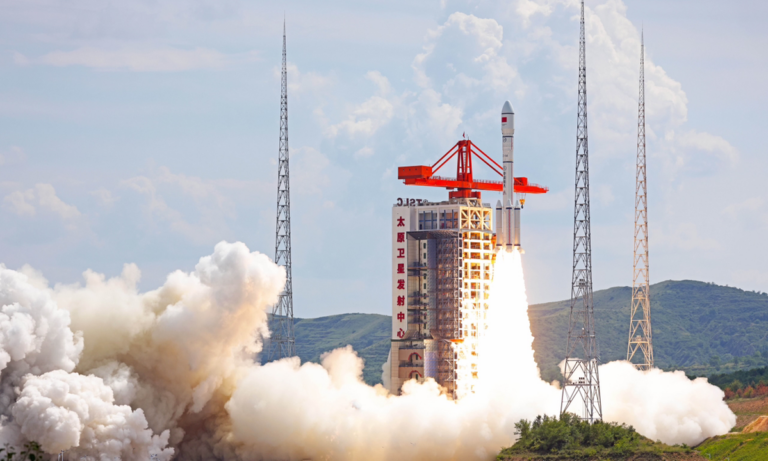
Space Insighter plans to launch two experimental satellites in the first half of 2026, followed by ten operational satellites in 2027, with additional enhancement and comprehensive satellites to be deployed subsequently. Leveraging its proprietary Observer spatial information analysis platform and the space management service platform Space Cloud, the Xingyan constellation will track and catalog satellites, monitor space debris, analyze orbital data, and predict collision risks. This will provide precise, efficient space traffic management services, addressing the growing congestion and debris threats in low Earth orbit and ensuring safer operations in space.

The Xingyan constellation is designed to independently observe and catalog low-Earth orbit targets, while also monitoring key high-orbit areas as needed. Its capabilities emphasize rapid short-arc orbit determination and anomaly detection. The satellites are equipped with wide-field cameras, infrared and multispectral imagers, electromagnetic monitoring instruments, onboard computing units, and intelligent processing software, integrating AI-driven early warning and automated collision avoidance technologies.

Construction of the constellation will proceed in two phases. Phase one will establish a core network of 12 high-performance satellites focused on rapid orbit determination and anomaly identification. Phase two will deploy 144 low-cost enhancement satellites, utilizing integrated payload and satellite platform design to reduce costs. The large-scale deployment will enhance the timeliness of low-orbit monitoring, with particular focus on quickly cataloging and tracking newly launched or maneuvering satellites.

Positioned as a critical infrastructure in the commercial space era, the Xingyan constellation establishes a comprehensive “monitoring-warning-service” ecosystem. With the global low-Earth orbit satellite count surpassing ten thousand, its commercial applications extend across multiple sectors. In data services, it provides subscription-based space traffic management reports to commercial space companies. In insurance and risk assessment, it helps satellite insurers quantify collision probabilities to inform underwriting decisions. In launch support, it provides safety analysis for launch trajectories, helping to secure launch missions from collision hazards.

Internationally, many commercial SSA companies rely on ground-based telescopes or phased-array radars to provide global observation and analytical services. In contrast, space-based SSA offers distinct advantages, including broader coverage and higher detection efficiency. For example, NorthStar Earth & Space is constructing a 52-satellite low-Earth orbit SKYLARK constellation, having launched four SSA satellites in January 2024. Turion Space’s DROID.001 satellite was launched in June 2023. Domestically, the first satellite of the Guangshi constellation, planned for 24 satellites, was launched by Kaiyun United on September 5, 2025. Space Insighter plans its Xingyan experimental satellites to launch in the first half of 2026.

Space Insighter emphasizes that it will continue to enhance its space management capabilities through sustained research and development, strengthening core SSA competencies, and collaborating with industry partners to build a shared, integrated space situational awareness network. 

This effort supports a safer, more orderly space environment and aligns with China’s strategic goals of advancing its space capabilities, strengthening national security in emerging domains, and transitioning from a spacefaring nation to a space power. The development of SSA technology is not only essential for collision prediction and avoidance but also forms the foundation for taking proactive control of space security and actively participating in future international space governance.

Source: rmzxw, geovis, guancha, xinhua, sina, space insighter, ifeng

Thousands of Drones, One Sky: Who’s Really in Control of China’s Low-Altitude Economy?

0

Shenzhen’s skies are becoming busier than ever. In 2024, the city recorded 776,000 drone cargo flights, with the daily number of airborne drones approaching 10,000. This rapid expansion of the low-altitude economy highlights a critical paradox: the very scale that drives its value is also the greatest test of urban governance and technological infrastructure.

At the 2025 IDEA Conference hosted by the Guangdong-Hong Kong-Macao Greater Bay Area Digital Economy Research Institute, Li Shipeng, Executive Director of Shenzhen Institute of Artificial Intelligence and Robotics for Society, emphasized that scale is the industry’s most pressing challenge.

Indeed, while Shenzhen opened 250 drone cargo routes and recorded 28,000 manned helicopter flights in 2024, the city’s ambition is even higher: a plan released by the Shenzhen Development and Reform Commission aims to support over 10,000 drones flying simultaneously and generate a low-altitude economy exceeding €16 billion by 2026.

Transitioning from sporadic flights to tens of thousands of drones in the sky represents a dramatic increase in management complexity. At small scales, drone operations can proceed with minimal oversight, but once numbers reach the tens of thousands, airspace becomes congested, separation distances shrink, and traditional management methods are no longer sufficient.

The consequences are already visible. In Shenzhen, densely packed airspace has led to multiple near-collision incidents between manned and unmanned aircraft. A core issue is height reference standards: manned aircraft rely on barometric altitudes, which fluctuate with weather, while drones depend on satellite navigation, which remains stable. Even legally compliant flights can create real-world position conflicts. Beyond this, scaling the industry exponentially increases the demands on infrastructure: computing power, communication bandwidth, and control logic must all leap to accommodate larger fleets. Whether current systems can handle scenarios with hundreds of thousands of drones in the air simultaneously remains a central concern for the industry.

Technological innovation is emerging as the solution. At the IDEA Conference, Li’s team showcased a comprehensive strategy combining hardware and software. On the hardware side, the “Height Box”, a network of multi-altitude sensing stations, collects real-time data and standardizes height references across all drones, effectively preventing altitude conflicts. This product has received certification from the Civil Aviation Administration of China, clearing a major regulatory hurdle.

Equally transformative are advancements in software. The Open SILAS system, upgraded from version 1.0 to 2.0, has evolved from a passive monitoring tool to an active management platform. Leveraging AI and large-scale models, it can automatically generate flight paths, assess risks, and provide collision-avoidance instructions. Its innovative continuous four-dimensional spatiotemporal data framework significantly improves computational efficiency, laying the foundation for managing even larger fleets.

A defining principle of these innovations is adaptability. To address the uneven development of low-altitude economies across China, a “low-altitude evolution” approach has been adopted, featuring a tiered product matrix. Regions with fewer than 100 daily flights can operate with basic monitoring systems, while megacities like Shenzhen, with daily flights approaching 10,000, require advanced systems capable of both real-time visibility and active intervention. This layered design ensures that technology meets current operational demands while remaining scalable for future growth, prioritizing solutions that are either the most powerful or the most appropriately tailored to local conditions.

Patience is a critical factor in the development of low-altitude economies, which are inherently long-term ventures. Drawing a parallel to the automobile industry, which evolved over more than 140 years, achieving a trillion-yuan-scale industry within a decade is already considered rapid growth. The guiding principles for this development are clear: safety as the baseline, tailored local strategies, and steady, controlled progress. Expanding flight volumes without robust safety measures risks creating systemic problems, as scale without governance inevitably leads to operational hazards.

Periods of cooling investment are a normal part of the innovation cycle. Emerging technologies typically experience rapid growth, a plateau, and renewed acceleration once initial challenges are addressed. With unmatched flight volumes, diverse application scenarios, and continuous system iteration, China is positioned to take a leading role in the global low-altitude economy. Achieving this requires international alignment, including adherence to global airworthiness standards, to enable Chinese drones to operate seamlessly both domestically and abroad.

Looking ahead, the core of technological progress in low-altitude economies lies in precision management. Navigation, communication, and monitoring systems must evolve to match increasingly fine-grained operational demands. As China confronts the challenges emerging from its rapid drone development—designing solutions, establishing standards, and building scalable infrastructure—its low-altitude economy is advancing at a pace that many Western countries have yet to match.

In Europe and North America, traditional reliance on established land and sea transport, coupled with entrenched regulatory practices, often leads to slow adaptation and operational inefficiencies. By contrast, China’s proactive approach—combining innovations like the Height Box with continuously evolving AI-driven management systems—is enabling a balance of efficiency and safety, positioning the country not only to solve its own urban air mobility challenges but also to set a potential global benchmark. 

While Western systems remain constrained by legacy infrastructure and incremental reforms, China is shaping a new paradigm, turning early problems into strategic advantages.

Source: guancha, sina, xinhua, southcn, xinwen bjd

Fear of China’s Internet Ecosystem: Why Chinese Social Media Faces Repeated Overseas Bans

0

On December 4, Taiwan’s Democratic Progressive Party announced a one-year ban on Xiaohongshu (also known as Red Note), a Chinese social media platform centered on lifestyle content, citing “information security” concerns—a move that sparked strong public opposition. 

With more than three million active users in Taiwan and a history of topping the iOS free app rankings, Xiaohongshu’s ban once again drew attention to the broader question of why Chinese internet platforms have become so competitive, both domestically and increasingly overseas. For years, a popular saying in the global tech industry has claimed that the United States focuses on innovation, China on imitation, and Europe on regulation. While this description captures part of the reality of China’s early internet development, it fails to explain a recurring phenomenon: Chinese internet companies often succeed in defeating the Western platforms they originally emulated.

Most major Chinese internet products can indeed trace their origins to Western prototypes. Taobao resembles eBay, Tmall echoes Amazon, Baidu mirrors Google, and early instant messaging tools followed similar paths. Yet in market after market, Chinese firms have outperformed their original models. Scholars have proposed numerous explanations, emphasizing institutional advantages, regulatory environments, or execution efficiency, while often dismissing innovation as a decisive factor. However, this interpretation overlooks a distinctive form of innovation that has been central to China’s internet success: combinatorial or secondary innovation.

Unlike primary innovation, which creates entirely new technologies or business models from scratch, combinatorial innovation recombines existing technologies, services, and market conditions to generate new solutions better suited to specific contexts. Historically, truly original innovations have been rare, while progress has largely come from recombining earlier breakthroughs. When executed effectively, such combinations can outperform the original innovations themselves by integrating multiple strengths into a single product or ecosystem.

The rise of Taobao illustrates this clearly. When Alibaba launched Taobao in 2003, eBay’s Chinese subsidiary, eBay EachNet, dominated the C2C market with over 70 percent share. Taobao initially lagged far behind in capital, technology, and user base. The turning point came with the introduction of Alipay, modeled after PayPal but adapted to China’s financial reality. At the time, low credit card penetration and widespread distrust of online transactions severely constrained e-commerce. Alipay’s escrow mechanism, holding payments until buyers confirmed receipt, solved both payment access and trust issues. This single integration of eBay-style marketplaces with PayPal-style payments—introduced faster and more decisively than eBay itself managed in China—enabled Taobao to rapidly overtake its rival.

A similar pattern emerged in the competition between Baidu and Google. While Google’s exit from China is often attributed solely to regulatory disputes, Baidu had already established a substantial and growing market lead beforehand. Beyond localization, Baidu pursued aggressive combinatorial innovation by integrating features inspired by various global platforms. Products such as Baidu Tieba, Baidu Baike, and Baidu Wenku addressed Chinese users’ specific needs for community discussion, localized knowledge, and document sharing, often launching earlier or scaling faster than Google’s equivalents. These integrations gradually shifted user loyalty toward Baidu, long before Google’s withdrawal.

The most emblematic outcome of combinatorial innovation is the emergence of Chinese “super apps,” with WeChat as the prime example. WeChat began as a simple messaging tool but rapidly absorbed features inspired by global platforms: location-based social networking, content feeds resembling Facebook and Twitter, blogging-style public accounts, digital payments akin to PayPal and Alipay, QR-code-based interactions, and eventually mini-programs that function as lightweight apps within the platform. None of these features were original in isolation, but their integration into a single, seamless ecosystem transformed WeChat into a comprehensive digital infrastructure rather than a standalone app.

Not all Chinese companies pursued super apps; many instead built interconnected app ecosystems under a single corporate umbrella. This approach intensified competition among major platforms such as Alibaba, Tencent, and Baidu, whose product portfolios increasingly overlapped. Unlike their American counterparts, Chinese internet giants rarely respected each other’s core business territories. Each aggressively entered competitors’ domains, accelerating innovation but also intensifying internal competition and compressing profit margins.

In contrast, the U.S. internet industry evolved toward a “monopolistic oligopoly” structure. Dominant firms such as Google, Amazon, and Meta typically avoid direct invasions into one another’s core markets, competing instead in peripheral areas or through partnerships. This restraint reflects legal risks, intellectual property barriers, and unwritten industry norms. While such an arrangement reduces friction and regulatory exposure, it also slows product iteration compared to China’s relentless cross-market rivalry.

China’s highly competitive environment produced two major consequences. First, rapid feature integration and business model experimentation dramatically accelerated innovation cycles. Developments such as livestream e-commerce emerged years earlier and more comprehensively in China than in the United States. Second, extreme competition intensified “involution,” squeezing margins and increasing survival pressure even for industry leaders. These forces collectively pushed Chinese internet firms to seek growth abroad.

Early overseas expansion, particularly into Southeast Asia, largely failed because companies mechanically transplanted domestic models without sufficient localization. Alibaba’s acquisition of Lazada demonstrated how strategies successful in China, such as dual-platform segmentation and large-scale shopping festivals, proved ineffective in markets with different income levels and consumption patterns.

The second wave of globalization, led by companies such as TikTok, Temu, SHEIN, and AliExpress, has been more successful precisely because it combines localization with combinatorial innovation. SHEIN exemplifies this approach by integrating European fast-fashion concepts, Chinese supply chain efficiencies, and platform-driven marketing strategies drawn from Chinese social commerce. This synthesis allowed it to scale rapidly in Western markets and outperform established incumbents.

Despite these successes, risks remain significant. Blindly exporting domestic models can still lead to failure, while aggressive market entry may disrupt entrenched interests in host countries. Moreover, unfamiliarity with foreign legal, political, and cultural environments exposes Chinese firms to regulatory backlash, as seen in controversies surrounding logistics subsidies, data privacy, and national security concerns.

Ultimately, the global competitiveness of Chinese internet firms cannot be reduced to imitation or institutional advantage alone. Their true strength lies in combinatorial innovation—the ability to integrate technologies, business models, and market conditions across borders. Whether this approach can sustain long-term success abroad will depend not only on technological adaptation, but also on a deeper understanding of global governance, public sentiment, and geopolitical realities.

Source: ifeng news, xinhua, whzh, goclickchina, digiant