


The integration of traditional Chinese medicine (TCM) and Western medicine has long been a central and enduring topic in the history of modern Chinese medicine. Across the twentieth century, generations of Chinese intellectuals and physicians attempted to reconcile two fundamentally different medical epistemologies and construct a new, coherent medical framework suited to modern conditions.
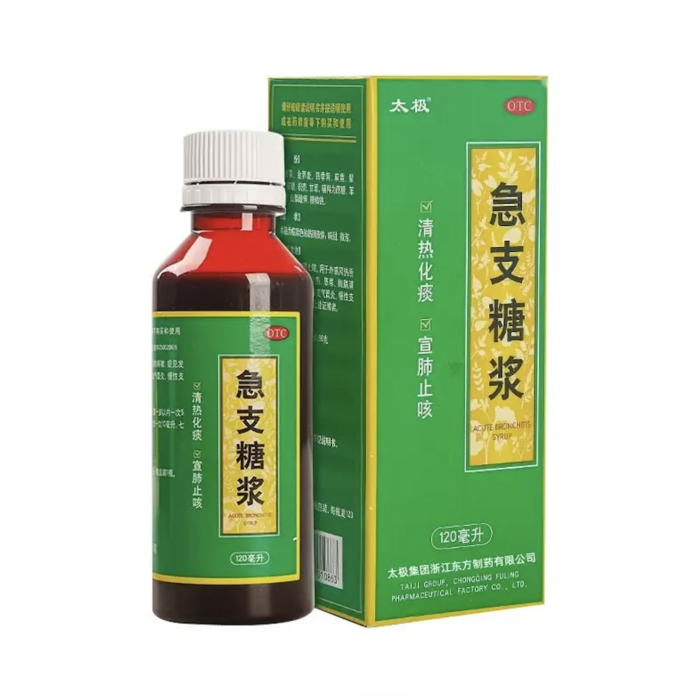
Among the most influential figures in this effort were Yun Tieqiao and Lu Yuanlei. Yun, well versed in both Chinese and Western learning. He addressed the long-standing tension between the traditional TCM concept of internal organs and the anatomical framework of modern medicine. Lu went further by advocating for the “scientification” of TCM, arguing that its theories should be interpreted and validated through experimentation and modern biomedical knowledge. Their intellectual legacy extended to later generations, most notably Shen Ziyin, a key pioneer of integrated Chinese and Western medicine and the inventor of Jizhi Syrup.
In 1955, Shanghai launched its first training program for Western-trained physicians to study TCM. Shen Ziyin, then a young physician at Huashan Hospital, was selected to participate. Between 1959 and 1962, Tu Youyou also joined a similar program, later acknowledging in her Nobel Prize lecture that her training in TCM had laid critical groundwork for her discovery of artemisinin. While Tu’s work followed one path of integration, Shen pursued another, with a clear ambition: to express TCM theory in terms intelligible to Western medicine and to translate traditional concepts into scientifically grounded clinical practice.
In 1969, amid large-scale medical deployments to China’s frontier and mountainous regions, Huashan Hospital organized two medical teams. Shen was dispatched to the mountainous areas of Fuling, Sichuan. In this environment of extreme scarcity, where access to medicine and equipment was severely limited, the integration of Chinese and Western medicine ceased to be an academic exercise and became a matter of practical survival.
During his itinerant medical work in the border regions near Hubei, Shen encountered an outbreak of pertussis caused by Bordetella pertussis. Facing widespread infection and an acute shortage of pharmaceuticals, he formulated treatments that combined the strengths of both medical systems. Drawing on Western principles of antibacterial therapy alongside TCM approaches emphasizing immune support, cough suppression, and expectoration, Shen selected locally available medicinal herbs and devised a formula suited to the region’s conditions. He trained barefoot doctors to prepare large batches of decoctions, which were delivered household by household to treat patients, particularly children.
After returning to Shanghai in 1970, Shen systematized the clinical insights gained in Fuling. By integrating syndrome differentiation from the Treatise on Cold Damage with modern antibacterial concepts, he developed an early theoretical framework for “treating different diseases with the same therapy.” The original pertussis formula was refined and successfully applied to the treatment of acute bronchitis, forming the prototype of an in-hospital preparation used in integrated medicine wards.
In 1985, Fuling Pharmaceutical Factory approached Shen to revive this formulation, bringing it back to its place of origin. This marked the beginning of what would become the widely recognized Jizhi Syrup. The factory itself had been established in 1972, with a government investment of RMB 70,000. At its inception, it employed only 58 workers and operated with minimal equipment: a grinder, an electric tricycle, two wooden cabinets, a stone mill, two iron pots, and several jars. Production was largely manual, yielding a limited range of traditional dosage forms with modest annual output.
The factory urgently needed a product with proven clinical efficacy and market viability. Shen Ziyin generously transferred the formulation, but translating it from a clinical recipe into an industrial product posed substantial technical challenges. From formulation optimization to process engineering and dosage form standardization, each step required extensive experimentation. Through repeated pilot and scale-up trials, the team ultimately established stable parameters. After meeting modern standards for quality control, equipment, and production management, Jizhi Syrup officially entered production in June 1985.
This marked the factory’s first truly modernized Chinese patent medicine and became the cornerstone product that propelled its national expansion. For what would later become Taiji Group, Jizhi Syrup represented more than commercial success; it demonstrated a viable pathway for modernizing TCM through classical theory, scientific manufacturing processes, and large-scale standardization.
As Taiji Group’s technological platforms and quality systems advanced, the production of Jizhi Syrup evolved from semi-automated bottling to fully digitized, end-to-end process control. Raw material traceability, process parameters, and finished product testing became fully documented and verifiable. Behind a seemingly ordinary bottle of syrup lay the institutional threshold of industrialized TCM modernization.
In 2019, with support from the Chongqing Municipal Government and the Fuling District Government, Taiji Group initiated a comprehensive restructuring. In 2021, China National Pharmaceutical Group (Sinopharm) became the controlling shareholder, completing a landmark central–local state-owned enterprise collaboration. The once modest factory had evolved into a nationally influential pharmaceutical enterprise.
Today, as a core component of Sinopharm’s modern TCM segment, Taiji Group has established a diversified portfolio spanning metabolic disorders, respiratory anti-infectives, cardiovascular and cerebrovascular diseases, controlled substances, and health products. Jizhi Syrup remains one of its most recognizable and enduring brands.
In recent years, Jizhi Syrup has entered a new phase of international expansion. Since its entry into the Macao market in 2017, it has rapidly established a presence in Singapore, Malaysia, and other regions. Through partnerships with established local pharmaceutical distributors, the product has entered mainstream pharmacies and received positive evaluations from overseas consumers.
According to Taiji Group executives, this internationalization has been underpinned by the company’s modern manufacturing infrastructure. Early adoption of GMP-compliant production lines, continuous equipment upgrades, and the introduction of intelligent manufacturing systems have ensured product consistency and regulatory compliance. Rigorous testing of every batch has enabled Jizhi Syrup to overcome technical barriers to international registration and achieve large-scale export.
Sustained investment in research has also yielded notable progress in new drug development and the modernization of classical prescriptions, forming a product matrix centered on Jizhi Syrup and extending across multiple therapeutic areas. In 2024, Taiji Huoxiang Zhengqi Oral Liquid received regulatory approvals in the Netherlands, France, and Spain; Fuling Pharmaceutical Factory renewed its certification with the UAE Ministry of Health; and Wuzi Yanzong Pills were exported to Indonesia for the first time. To date, products including Jizhi Syrup, Huoxiang Zhengqi Oral Liquid, Danshen Oral Liquid, and Tongtian Oral Liquid have entered markets across Southeast Asia, North America, and Europe, in some cases moving beyond ethnic Chinese communities into mainstream distribution channels.
In Singapore, Taiji Group has collaborated with local health platforms to promote public understanding of TCM through educational seminars and experiential programs. In Malaysia, localized marketing strategies have successfully positioned Jizhi Syrup among general consumers. In Europe, partnerships with health institutions have focused on introducing TCM concepts within broader health management frameworks.
Over the course of half a century, Taiji Group has evolved from a regional pharmaceutical workshop into a global modern TCM enterprise, constructing a comprehensive pathway that integrates industrialization, standardization, and brand development. As global demand for natural medicines continues to rise, and as the Belt and Road Initiative accelerates cross-border healthcare collaboration, TCM’s international influence is steadily expanding. In this context, the overseas journey of Chinese medicines represents not merely product export, but the transmission of medical knowledge, cultural systems, and service models.
Through Jizhi Syrup, Taiji Group illustrates a transition from exporting individual products to exporting integrated capabilities. By aligning production systems, regulatory strategies, branding, and cultural communication, the company has established a replicable model for the global expansion of TCM. As Taiji Group executives have observed, these products are not only commercial offerings of Chinese enterprises, but also carriers of TCM culture, gradually reshaping global perceptions and acceptance of traditional Chinese medicine.
According to Taiji Group’s 2024 annual report, annual sales volumes of Jizhi Syrup reached 12.29 million bottles for the 100 ml specification and 11.58 million bottles for the 200 ml specification, with total annual revenue exceeding RMB 1 billion.
On November 24, 2025, at the Eighth Belt and Road TCM Development Forum and the Third OTC Brand Conference in Hangzhou, Taiji Huoxiang Zhengqi Liquid and Jizhi Syrup were named among the “2025 China OTC Golden Blockbuster Products.” Both products also ranked first in their respective categories—TCM remedies for cold and summer-dampness, and cough and phlegm-related respiratory conditions—in China’s OTC comprehensive product rankings.
Source: ifeng finance, xueqiu, cnr, fudan