

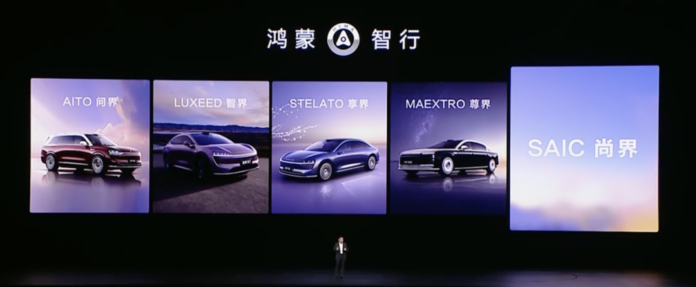
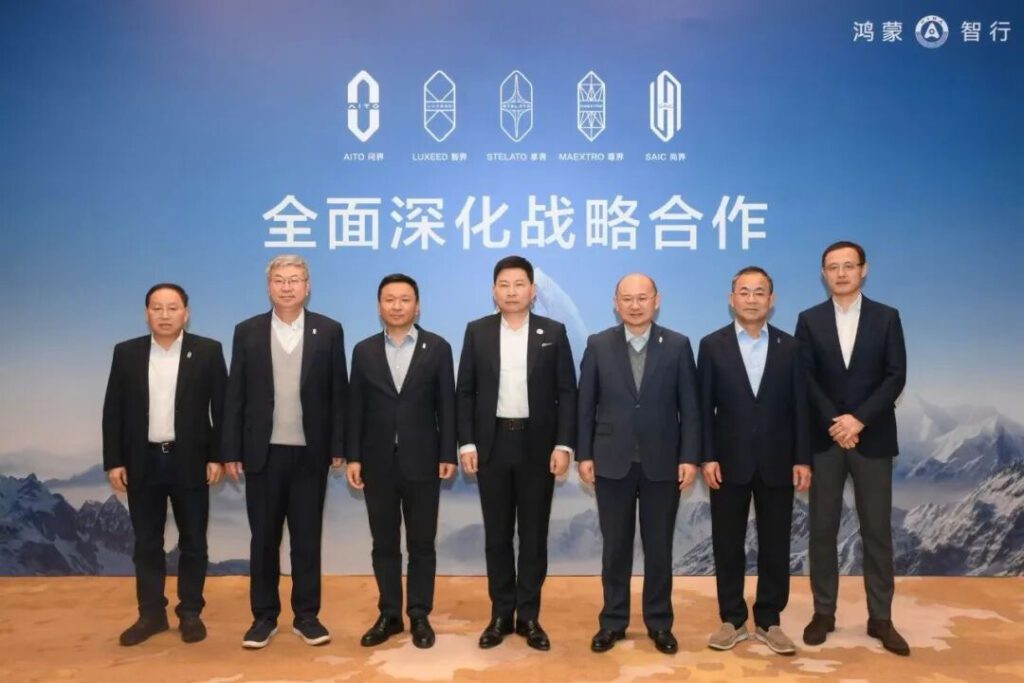
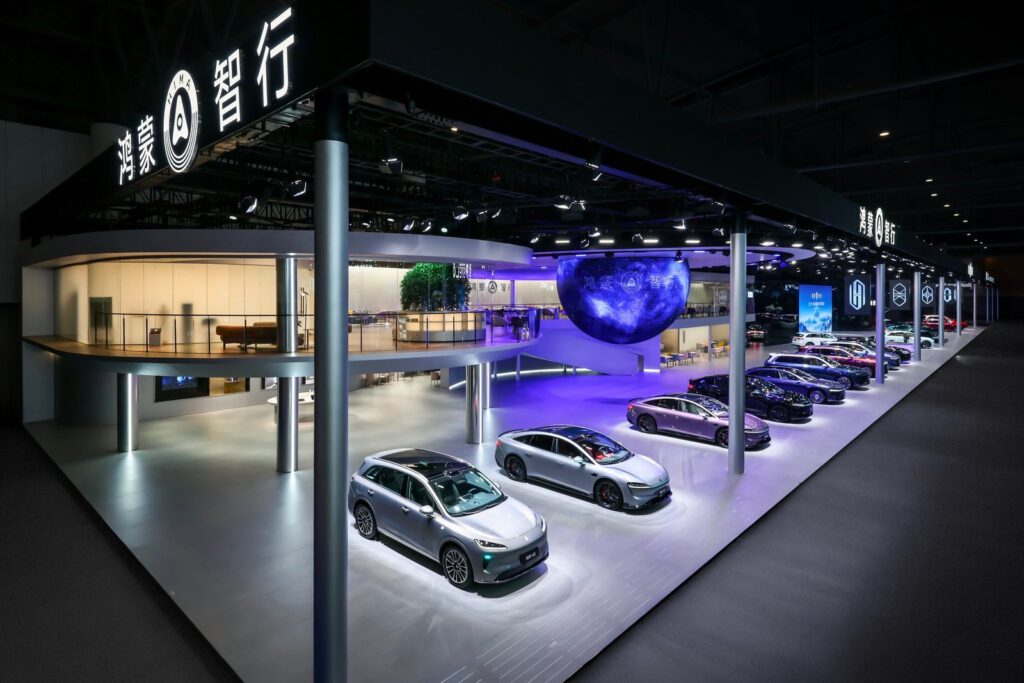
On December 9, Shanghai’s Bund became a focal point for Chinese automotive innovation. Huawei Executive Director Yu Chengdong joined the chairpersons of Seres, Chery, BAIC, JAC, and SAIC to present the first joint live showcase of the Harmony lntelligent Mobility Alliance (HIMA) brands—AITO, Luxeed, Stelato, Maextro, and Shangjie. The discussion spanned technology, products, user experience, and future industry organization, providing the industry with a first clear view that Chinese smart vehicles are evolving from single-brand competition to system-wide collaborative growth.
Over the past 43 months, HIMA has delivered over one million vehicles across its brands, a milestone that marks a significant chapter in the history of China’s new energy vehicle (NEV) development. Chery Chairman Yin Tongyue praised Huawei as a transformative force in the industry, empowering partners without reservation and elevating Chery as a whole. JAC Chairman Xiang Xingchu noted that Huawei’s exacting standards have driven JAC to fully surpass traditional luxury car benchmarks. Seres Chairman Zhang Xinghai highlighted the team culture of mutual support, while BAIC Chairman Zhang Jianyong lauded Yu Chengdong as the best product manager.
Traditional collaboration models between emerging and established carmakers have typically been segmented: the new entrant leads design and marketing, the legacy manufacturer handles production, and core technologies are sourced from third parties. This often leads to fragmented value chains and delayed responsiveness. Similarly, the loose collaborations between international auto suppliers and carmakers result in suppliers offering isolated technologies without influence over product definition or user experience. In contrast, HIMA is led by Huawei across product definition, core technology, development, standardization, quality control, brand marketing, and lifecycle services, while the partner automakers focus on manufacturing. This “value-led, capacity-supported” division of labor allows greater efficiency and control.
This model enables HIMA to cover the full price spectrum while maintaining clear brand differentiation. For example, the Luxeed R7’s newly launched Aurora Green color appeals strongly to younger and female consumers. The design, inspired by the northern lights, uses triple-layer pearl techniques to create blue-green hues with hints of purple and red, demonstrating the ecosystem’s capacity to translate unique inspirations into mass-market appeal.
Yu Chengdong summarizes the core strength succinctly: “They excel at vehicles, we excel at intelligence, chips, software, and algorithms.” HIMA leverages Huawei’s high-end brand experience and extends it to five partner carmakers, fully integrating capabilities across hardware and software.
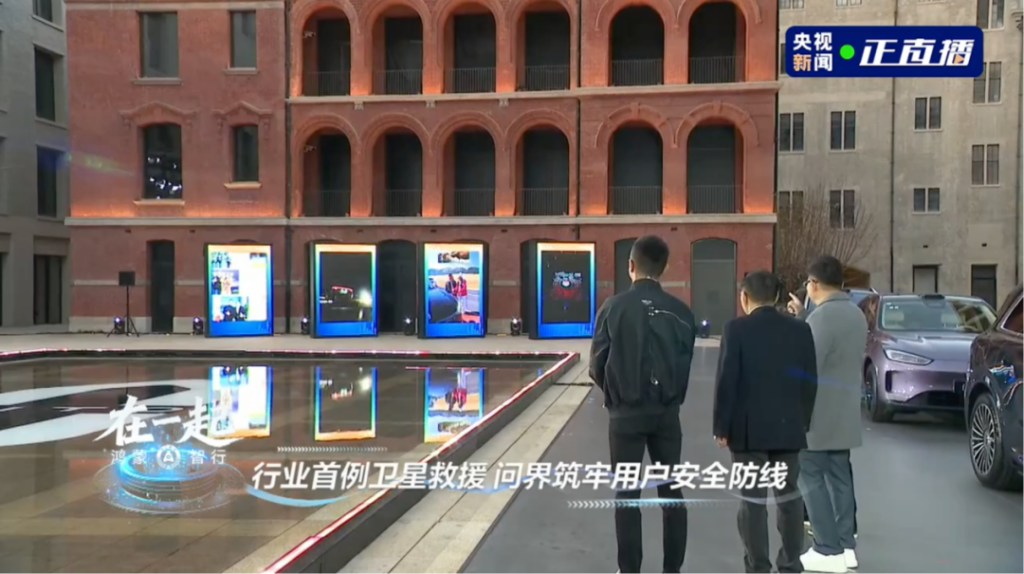
This approach manifests most clearly in safety. A notable example involved an AITO M9 owner who suffered a tire blowout in the remote area of Delingha, Qinghai. With no mobile or radio signal, the driver relied on the Huawei Galaxy Communication system in the car to perform a satellite rescue, confirm location, and secure assistance—demonstrating how integrated technology translates into real-world safety.
Battery safety is equally emphasized. As of November 2025, over 150 million cells of Huawei’s Whale Battery Platform had been deployed across one million vehicles, with no incidents of thermal runaway or quality-related accidents. The platform was designed to meet standards effective in July 2026, exceeding current national requirements for heat diffusion, water resistance, and impact protection, with multiple layers of redundancy. Such engineering rigor illustrates the depth of system-level expertise underpinning HarmonyOS Smart Mobility.
Rather than relying on stacked features typical of industry innovation, HIMA applies over 30 years of ICT experience to a scenario-driven product design philosophy, creating a technical moat. Maextro S800’s 4D millimeter-wave radar originates from distributed base station technology; Luxeed R7’s “Knock Knock” electromechanical doors draw inspiration from smartphone gestures; features like the Star Key and cross-device data flow enable seamless multi-device interaction; the AITO M9’s Galaxy Communication system supports satellite calls. This combination of scenario-oriented design and cross-domain technological integration addresses user needs in ways conventional approaches cannot.
HIMA maintains leadership across electrification and intelligentization, with Huawei’s Whale Battery Platform, HUAWEI DriveONE 800V silicon-carbide high-voltage drive, QianKun ADS 4 assisted driving, HarmonyOS Cockpit 5.0, integrated die-casting technology, the Xuanwu body, the Tuling platform, and Angel Seat active safety systems forming a comprehensive chain advantage spanning battery, power, driving, cockpit, and ecosystem.
Huawei’s extensive technological base also enables “Human × Car × Home” ecosystem integration, connecting devices in ways that surpass both iOS’s closed system and Android’s fragmented cross-device experience. According to Yu Chengdong, the car is a “wheeled smart terminal,” with HarmonyOS linking travel, home, office, health, and entertainment scenarios through seamless connectivity and natural voice interaction, creating long-term competitive advantages.
Additionally, HIMA leverages Huawei’s massive user base from smartphones and smart home devices to capture authentic and timely consumer demand. Over 52% of AITO owners use Huawei phones, compared to less than 30% for other brands, giving HarmonyOS Smart Mobility a built-in advantage in user insight. This enables rapid iteration of high-demand features such as voice recognition across multiple zones and cross-device file transfer, aligning product evolution directly with real user behavior.
The competitive edge arises from Huawei’s transfer of its complete consumer-oriented ecosystem to automotive applications, a strategy that is difficult to replicate. Customers can experience advanced technologies firsthand during purchase, such as assisted driving demos and cross-device integration, transforming abstract technology into tangible, accessible scenarios. This engagement encourages users to share their experiences organically, generating high-impact social proof. Daily content from a million owners creates a powerful network effect, enhancing brand visibility and influence beyond conventional advertising.
After-sales service is similarly integrated into the product experience. Rapid maintenance with replacement vehicles or compensation, free service if appointments are delayed, hotel-like dealership experiences, 24-hour roadside assistance, and cross-region charging and driving support all treat service as part of the product, a standard that traditional automakers rarely achieve. This frictionless experience often outweighs specific feature sets in customer retention.
For many Chinese automakers, establishing a luxury brand has historically been difficult. In the era of intelligent mobility, Huawei has become the key enabler of high-end brand transformation and ecosystem collaboration. Huawei’s R&D investments demonstrate this: in 2024, Huawei invested RMB 179.7 billion in research—over one-fifth of revenue—exceeding the combined R&D budgets of China’s top 15 automakers. HarmonyOS alone employs over 10,000 engineers with annual expenditures in the hundreds of millions of dollars.
Such concentrated, strategic investment enables HIMA to prioritize value over price competition. By focusing on high-end, technologically advanced, and high-quality products, the system enhances mechanical and intelligent capabilities while strengthening brand equity, allowing Chinese automakers to command premium pricing. Yu Chengdong emphasizes that while high technology introduces new risks, Huawei manages innovation, and partner automakers maintain quality and safety, together striving to match global luxury standards.
HIMA has facilitated Chinese brands’ leapfrogging of European luxury competitors. Most Maextro users previously owned Rolls-Royce or Bentley vehicles. According to LandRoads, from the first half of 2025, AITO achieved a Net Promoter Score of 74.8, surpassing Mercedes-Benz (38.0), BMW (43.3), and Audi (42.5).
The ecosystem also drives upstream industrial upgrades, improving supply chain utilization and enabling over 220 component manufacturers to enhance capabilities alongside HIMA. For instance, Kunshan Huguang Auto Electric, a key supplier of high-voltage wiring for AITO and Luxeed vehicles, maintained a production utilization rate above 90% in 2025.
The success of HIMA demonstrates that industrial advancement is not limited to individual automakers but requires holistic supply chain collaboration. By moving beyond zero-sum competition, Chinese automakers can achieve coordinated growth, fortify the domestic automotive industry, and develop an irreplicable global competitive edge.
Source: 36kr, souhu, cctv com