


In April 2026, inside the Georgia World Congress Center in Atlanta, the MODEX 2026 international logistics exhibition drew global attention to the next wave of warehouse automation.
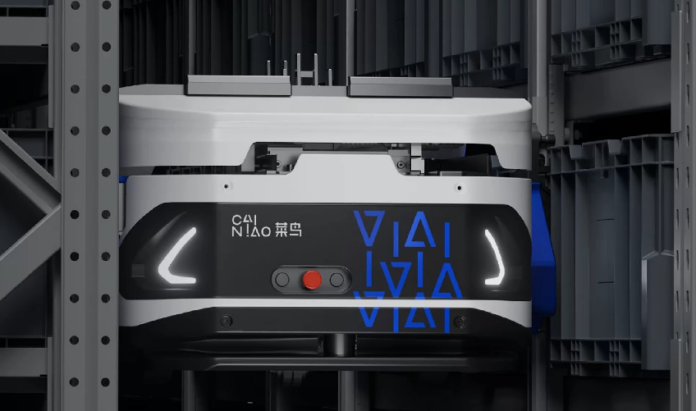
At the Cainiao booth, a silver-white climbing robot named ZeeBot became one of the most closely observed exhibits. Equipped with multiple sensor systems, it moved fluidly across and between shelving structures, demonstrating a form of warehouse mobility that differs fundamentally from conventional automation equipment.
At the same time, in a cross-border logistics warehouse in Dongguan, Guangdong, more than a hundred ZeeBot units were already operating in live production environments, serving a leading global e-commerce platform. With their deployment, inventory handling efficiency in the facility reportedly doubled compared with traditional automated systems.
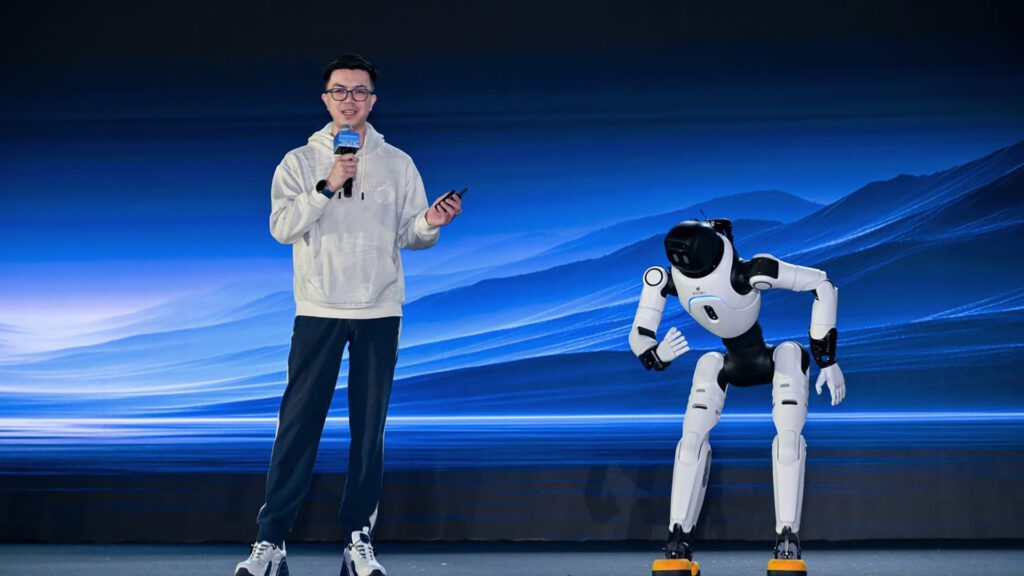
Cainiao, the logistics arm of Alibaba Group, was formally set up as a key part of Alibaba’s global supply chain network. On September 26, 2023, Alibaba’s board announced plans to spin off Cainiao as an independent company. At the same time, Cainiao officially submitted its listing application to the Hong Kong Stock Exchange, becoming the first business group to enter the IPO process following Alibaba’s restructuring into a “1+6+N” organizational structure.
In 2023, Cainiao also launched its “Cainiao Express” service in China, introducing a delivery model with doorstep delivery as a core promise. On the international side, it significantly improved cross-border logistics efficiency, reducing end-to-end delivery times from overseas orders to as fast as five working days.
Beyond its debut at an international trade fair and simultaneous commercial deployment in China, Cainiao has also begun preparing for global sales of the robot and is planning to roll out ZeeBot across its self-operated overseas warehouse network in Europe and North America during 2026. This marks not only a technological milestone, but also a step toward integrating the system into the operational backbone of global logistics infrastructure.
As Cainiao’s first self-developed climbing robot, ZeeBot represents a rethinking of warehouse automation at the system level. Unlike traditional solutions that primarily optimize flat-surface transportation or rely on fixed rail-based sorting systems, ZeeBot is designed to operate within three-dimensional storage structures.
It can move horizontally at speeds of up to four meters per second and ascend shelving structures equivalent to five stories in approximately ten seconds. Its design also significantly improves space utilization, increasing storage density by around 40 percent compared with conventional warehouse layouts. A modular architecture further enhances deployment flexibility, enabling warehouses to scale and reconfigure more rapidly in response to changing operational demands.
Behind these technical capabilities lies a broader transformation underway in the logistics industry. As global supply chains continue to restructure and cross-border e-commerce expands rapidly, the sector is increasingly constrained by efficiency bottlenecks, rising operational costs, and limited system resilience. Traditional automation approaches have largely focused on optimizing individual processes such as storage, transport, or sorting, but these systems often operate in isolation, preventing end-to-end coordination and limiting overall efficiency gains.
According to Bi Jianghua, Vice President of Cainiao Group and General Manager of its Logistics Technology Division, logistics networks are inherently long and complex. While each segment of the chain has significant potential for automation, the lack of integration between systems creates fragmentation in operational flows. The next phase of technological evolution, he argues, will therefore not be defined by isolated automation upgrades, but by the deep integration of software and hardware to enable full-chain intelligent coordination powered by artificial intelligence and multi-robot collaboration.
Within this context, climbing robots are seen as a strategic entry point for addressing discontinuities in warehouse operations. By enabling coordinated movement across both vertical and horizontal dimensions, systems like ZeeBot aim to unify previously fragmented workflows into a single intelligent operating layer. This approach goes beyond incremental efficiency improvements and instead targets a structural reconfiguration of how warehouse logistics are executed.
However, achieving full-chain intelligence is significantly more complex than optimizing individual processes. It requires not only integrated hardware and software development capabilities, but also a deep understanding of diverse global logistics scenarios, as well as large-scale real-world environments for continuous validation and iteration. This explains why, globally, relatively few companies have successfully deployed such systems at scale. Pure technology firms often lack long-term operational logistics experience, while traditional logistics providers may face limitations in core technology development capabilities.
Cainiao’s position lies at the intersection of these two domains. Its technological development is closely tied to real-world logistics operations, allowing innovations to be continuously tested and refined within live environments. At the same time, its global logistics footprint provides a broad range of application scenarios that accelerate product maturity and ensure practical relevance across different markets.
As of April 2026, Cainiao’s logistics technology solutions have been deployed across 27 countries and regions, with more than 800 collaborative projects spanning industries including telecommunications, fast-moving consumer goods, retail, transportation, manufacturing, pharmaceuticals, and chemicals. It has also established deep partnerships with numerous Fortune Global 500 companies. These globally distributed operations serve not only as application sites, but also as continuous testing grounds for technological refinement.
In manufacturing, Cainiao has implemented AI-driven smart warehouse systems in projects such as the intelligent factory built for ZTE, integrating automated storage and retrieval systems with advanced robotics to enable seamless coordination between physical logistics and information flow. In the new retail sector, its collaboration with Mixue has focused on building AI-powered supply chain systems centered on sales forecasting and intelligent replenishment, shifting decision-making from experience-based models toward data-driven and algorithmic optimization. In retail infrastructure, its partnership with Thailand’s CPAXTRA has introduced digital solutions and intelligent picking systems to improve in-store fulfillment efficiency and support the company’s transformation into a leading retail technology platform in Southeast Asia.
If diversified application scenarios provide the testing ground for technological evolution, then Cainiao’s global logistics network serves as the structural foundation for scaling those innovations. The company currently operates more than 40 overseas warehouses worldwide, where automation systems and AI-driven platforms are continuously deployed to improve cross-border fulfillment efficiency. In Brazil, its automated sorting center has increased processing efficiency by seven times while reducing operational costs by approximately 40 percent, becoming a critical logistics hub for South America. In the United States, through key warehouse clusters in Los Angeles and Houston, Cainiao has maintained average outbound delivery times within 24 hours during peak e-commerce seasons, ensuring stable service performance for global merchants.
Taken together, these developments reflect a broader shift in logistics technology from isolated automation toward fully integrated intelligent systems. By embedding robotics, artificial intelligence, and data-driven decision-making into a unified global network, Cainiao is contributing to a redefinition of supply chain efficiency and resilience at scale.
From the emergence of ZeeBot as a new type of climbing warehouse robot to the gradual expansion of intelligent logistics networks across continents, the industry is entering a phase in which software-hardware integration and scenario-driven innovation are becoming decisive factors. In this transition, logistics is no longer merely about moving goods efficiently, but about constructing a globally connected, adaptive, and intelligent system capable of continuously reshaping how supply chains operate.
Source: cainiao, 21jingji, eastmoney, KR asia, sohu