21 C
Berlin
Tuesday, May 19, 2026
spot_img
Home Blog Page 4

China’s Leasing Giant Ping An Driving ESG via Renewable Projects and Education

0

Under the guidance of China’s national “dual carbon” goals, durability has become the defining color of high-quality development. As a subsidiary of the Ping An Group specializing in financing and leasing, Ping An International Financial Leasing has, since its establishment, leveraged its close connection with the real economy and its “financing plus asset” business model to consistently uphold the concept of sustainable development. 

The company has deeply integrated green finance into its business strategy and practice, becoming an important financial force driving industrial upgrading and green transformation. Focusing on green industries and serving national and public interests, Ping An Leasing actively responds to national strategies, earnestly promotes green finance, and integrates its professional capabilities with industry needs. It deploys financing and leasing services in major construction projects such as hydropower, wind power, and water conservancy, allowing financial resources to flow into new infrastructure and renewable energy sectors. 

In hydropower, the Zala Hydropower Station in Tibet, the region’s first station with an installed capacity exceeding one million kilowatts, serves as a key power station for transmitting electricity from Tibet to other regions. The project is significant for promoting high-quality development in Tibet, regional sustainability, and ecological protection. Leveraging the scale of funds and multiple stakeholders, Ping An Leasing precisely aligned with the China Water Conservancy And Hydropower Engineering Bureau No.4 Co’s requirements, developing professional and accurate financial service plans for key project milestones, including river diversion, dam capping, water impoundment, and station commissioning. Customized repayment schedules based on project cash flow maximized capital efficiency and ensured smooth project implementation. Once operational, the hydropower station is expected to generate 3.946 billion kWh annually, saving 1.3 million tons of standard coal each year, significantly advancing clean energy development and utilization.

In the photovoltaic sector, Ping An Leasing keeps pace with new energy industry policies and trends, continuously supporting the development of the solar power industry. When informed that the Golmud A Photovoltaic Power Station in Qinghai Province faced expansion delays due to funding shortages, Ping An Leasing immediately responded, conducting in-depth research into procurement methods and capital requirements. By aligning dedicated credit resources with the station’s funding needs and construction schedule, the company removed financial barriers to capacity expansion, ensuring stable green power output that lights up thousands of households.

In charging infrastructure development, Ping An Leasing approaches the industry with innovative financing and leasing models, empowering urban infrastructure enterprises and creating resonance between emerging industries and green development. A leading charging service operator in Nanjing, with the company’s assistance, mobilized existing equipment assets and supplemented working capital, enabling rapid, large-scale business expansion and establishing itself as a key component of the city’s new energy ecosystem. 

In the commercial new energy vehicle sector, Ping An Leasing explores niche areas such as short-distance port transportation, interprovincial transport, and urban delivery, designing innovative financing and leasing products for pure electric light trucks and battery-swapping heavy trucks. By offering diversified green finance products and innovative services, the company reduces vehicle acquisition costs, helps logistics companies phase out high-pollution, high-energy-consumption vehicles, and promotes the adoption of green, clean, and low-carbon energy systems in the logistics industry, filling gaps in green finance services and accelerating the sector’s transformation.

Collaborating with industry partners and clients, Ping An Leasing has brought financial support to rural revitalization. In July 2025, the 13th stop of the “Golden Sunshine Road” project visited Zhulinzhai Primary School in Qiaotou Township, Hekou Yao Autonomous County, Honghe Hani and Yi Autonomous Prefecture, Yunnan Province. Despite challenging transportation and construction conditions, the company, together with partners, completed a 30 kW distributed photovoltaic system in 20 days. The solar station, which converts sunlight into electricity through the photovoltaic effect, is expected to generate more than 25,000 kWh annually, fully covering the school’s teaching, living, and electronic equipment power needs, creating a stable and green learning environment for students and teachers.

The “Golden Sunshine Road” project, which aims to illuminate classrooms and dreams with green energy, focuses on the electricity needs of schools in remote areas. Since its launch in 2017, Ping An Leasing has donated distributed photovoltaic systems to schools in 13 remote regions, including Baise in Guangxi, Yulin in Shaanxi, Kashgar in Xinjiang, Tiandong in Guangxi, Wuwei in Gansu, Tongren in Qinghai, Heqing in Yunnan, Xichang in Sichuan, Bijie in Guizhou, Genhe in Inner Mongolia, and Honghe in Yunnan. By 2025, the company had cumulatively donated 204.8 kW of distributed photovoltaic systems, bringing green electricity to over 2,700 children in remote areas.

The “Building Dreams with Golden Bricks” initiative strengthens rural education infrastructure through industry expertise. Launched in 2020, the project focuses on renovating and upgrading campus facilities. In October 2025, the sixth stop visited Sikai Town Central Primary School in Zhaojue County, Liangshan Yi Autonomous Prefecture, Sichuan Province, where Ping An Leasing, in collaboration with industry partners, built a standard basketball court and provided sports equipment, offering students safe, professional spaces for physical education. Previous stops included regions in Hubei, Qinghai, Shaanxi, and Sichuan, benefiting over 5,000 students with new cafeterias, kitchens, basketball courts, and washrooms, enhancing rural school infrastructure and laying the foundation for educational revitalization.

Source: clover aviation capital, tibet news cn, xinhua cgtn, china daily, economic observer

China’s Huishan: From Township Reform to Innovation-Driven Modernization

0

In 2026, China officially entered the 15th Five-Year Plan period. At the start of each planning cycle, amid profound global technological and industrial shifts, reflecting on the past and drawing lessons from history is essential. Over nearly fifty years of economic reform, two trajectories stand out: one began with the “household responsibility system” in Xiaogang Village, Anhui, solving basic food security; the other originated in Yuanqiao Township, Wuxi, Jiangsu, with the “One Contract, Three Reforms” initiative, which propelled rural industrialization and had a profound impact on Chinese modernization.

In Huishan District, Wuxi, the birthplace of the “One Contract, Three Reforms”, the echoes of that history are still vivid. By 1982, four years after Xiaogang Village implemented household contracting, the system was spreading nationwide. In Yuanqiao Township, 18 of 19 production teams contracted land to households, dramatically improving productivity, while the remaining team suffered crop losses due to heavy rains. This contrast prompted the township Party committee to consider whether reform could extend from the fields to factories.

With limited land and abundant labor, agriculture could not absorb all workers. Following the principle of “develop industry around agriculture, promote agriculture through industry,” Yuanqiao Township pioneered collective enterprises. Initially focused on repairing machinery and producing small components, they soon expanded into textiles, chemicals, and machinery. However, these enterprises still operated under agricultural-style management: leaders appointed from above, workers paid equally regardless of effort, and minimal accountability, which stifled vitality. Inspired by a successful individual enterprise contract the previous year, the township explored the idea of factory director responsibility systems.

A struggling clothing factory became a pilot for a “fixed profit submission, flexible bonus” system. Factory director Yang Hanbin implemented piece-rate work and performance-based pay, turning the factory profitable within a month. The model extended to other factories, and by March 1983, Yuanqiao Township officially launched the “One Contract, Three Reforms.” 

The “One Contract” referred to fully contracting enterprises with specific performance targets, including profits and other economic indicators. Contracts could be signed by an individual, a small team, or the management collectively, selected through self-nomination, appointment, bidding, and democratic election. The “Three Reforms” included: first, replacing the enterprise leader appointment system with a selection-based system; second, replacing fixed worker recruitment with contract-based employment; and third, replacing fixed wages with flexible pay. The reforms immediately activated the local economy, with total agricultural and industrial output in the township rising 74% that year.

The essence of the “One Contract, Three Reforms” was decentralizing management and profit rights to enterprises and workers, aligning responsibilities with rewards, and enabling those capable to benefit. It sparked the rise of southern Jiangsu township enterprises and provided lessons for broader economic reforms. This success relied on individuals: supply chain workers traveled nationwide to secure orders, enduring hardship and forging a resilient spirit; young managers and technical personnel proactively learned modern management practices, invited experts, and solved technical problems, enabling enterprises to survive and grow.

By the 1990s, township enterprises underwent property reforms, transforming from small workshops into leading, innovation-driven companies. China Conveyor, starting from three small houses, entered the automotive equipment sector and later expanded into new energy and embodied intelligent robotics. Si-neng specialized in power electronics and photovoltaic inverters, developing fully domestic solutions and achieving global competitiveness. 

Local governments also evolved, fostering new energy, electronics, and biomedicine, strengthening traditional industries, and planning for future sectors such as AI, aerospace, humanoid robotics, and resource recycling. The manufacturing foundation, skilled workforce, and flexible networks from the township enterprise era allowed Huishan to become an industrial magnet, integrating traditional strengths with emerging sectors.

In aerospace, Wuxi Aerospace Industrial Park hosts 330 high-tech enterprises, achieving a 90% local supply rate for critical components within a 50-kilometer radius, forming a full-chain ecosystem. Smart equipment and new energy companies, including LAND SPACE, have emerged as industry leaders. With 1,102 high-tech enterprises and the industrial clusters plus specialized parks model, Huishan’s industrial landscape has matured.

Innovation extends beyond industry to research and talent aggregation. Huishan partnered with universities to establish research institutes, promoting targeted corporate R&D and technology transfer, forming an “academy corridor” that attracts top-tier talent. Financial mechanisms, including industrial mother funds, specialized funds, and virtual capital pools, provide comprehensive support. Functional zone and administrative reforms ensure efficient allocation of land, funds, and projects, enabling strategic development.

Reform has also reshaped urban functions and cultural heritage. The Huishan New City TOD project, high-speed rail hubs, and logistics networks integrate transportation, consumption, industry, and innovation. From the rise of township enterprises to high-tech innovation, and from industrial transformation to urban and cultural development, Huishan’s development genes remain continuous while evolving through practice. 

Source: south reviews, wuxi gov, yzwb, our jiangsu

China’s Central State-Owned Enterprises Accelerate AI Industrial Applications

0

In recent years, with the rapid development of artificial intelligence technologies, China has been accelerating the implementation of its AI strategic framework. On February 10, 2026, the State-owned Assets Supervision and Administration Commission of the State Council (SASAC) convened a meeting to further deploy the “AI+” special initiative among central state-owned enterprises.

 The meeting emphasized that central enterprises should strengthen investment-driven development, actively expand effective investment in computing power, promote the coordinated development of computing power and electricity, improve full-chain data governance capabilities, and continuously consolidate the foundational infrastructure of the artificial intelligence industry.

The meeting stressed that central enterprises must firmly grasp the development trends of artificial intelligence technology and industry. Taking the formulation and implementation of the 15th Five-Year Plan as an opportunity, they should identify their positioning and advantages in the field of artificial intelligence, establish scientific and effective industrial cooperation and management mechanisms, and further play a strategic supporting and demonstration role in national development. Central enterprises are expected to become key providers of intelligent computing infrastructure, important drivers of AI applications across industries, and organizers of systematic industrial deployment, thereby better serving the overall national development agenda.

The meeting also pointed out that central enterprises must strengthen their sense of responsibility and urgency in developing the artificial intelligence industry. They should actively adapt to the global wave of technological and industrial transformation, seize new opportunities in AI development, and enhance independent innovation in key core technologies, particularly breakthroughs in large-model technologies. Efforts should be made to transform more research outcomes from experimental prototypes into marketable products and industrial applications. 

At the same time, enterprises are encouraged to cultivate application scenarios by deeply integrating artificial intelligence with their core businesses and industrial needs, exploring high-compatibility, high-value, and highly reliable application areas in order to promote large-scale deployment of AI technologies. 

In fact, SASAC has been actively promoting the “AI+” initiative among central enterprises in recent years. These enterprises have focused on key sectors such as energy, manufacturing, and telecommunications, collaborating with leading companies to create more than 1,000 application scenarios. 

For example, China FAW, Dongfeng Motor Corporation, and China Changan Automobile have introduced intelligent robots into automobile manufacturing processes, enabling robots to operate directly on factory production lines and increasing assembly efficiency by approximately 30 percent. In terms of data resource development, central enterprises have led the construction of 11 industry-level trusted data spaces and established four major data industry consortia covering transportation, energy, green development, and finance. In July 2025, SASAC officially launched the AI open-source platform “AI Huanxin” for central state-owned enterprises. Since its launch, the platform’s user base has increased tenfold, providing free public access to 2,200 domestic intelligent computing chips, more than 4,700 models, and over 1,200 datasets, thereby significantly supporting the growth of the AI industry ecosystem.

Artificial intelligence technologies are also being increasingly integrated into the actual production processes of central enterprises. China National Petroleum Corporation, for instance, has developed the Kunlun Large Model which is the first industry-level large model in China’s energy and chemical sector to receive national approval. Its parameter scale has evolved from 33 billion to 70 billion and eventually to 300 billion parameters, and it now supports more than one hundred industrial application scenarios. One example is the seismic forward and inverse modeling large model, which has improved the efficiency of solving seismic wave equations by ten times and shortened exploration project cycles by more than 20 percent, significantly enhancing oil and gas exploration efficiency.

As AI applications continue to deepen, China has also accelerated its top-level policy planning. In August 2025, the State Council proposed six key areas of action including technology, industry, consumption, public services, governance, and international cooperation. According to the plan, by 2027 the penetration rate of intelligent terminals and intelligent agents is expected to exceed 70 percent, and by 2035 China aims to fully enter an intelligent society. Experts believe that central enterprises possess large-scale application scenarios in key sectors such as energy, transportation, telecommunications, and finance, making them important testing grounds and incubators for AI technology deployment. As such, they play a core role in implementing national strategies, driving technological innovation, and building industrial ecosystems.

In practical implementation, several central enterprises have already established representative application cases. For example, China Mobile has developed an AI-enabled public cloud full-process threat response system for billion-scale cloud threats. By integrating capabilities from foundational models such as Jiutian and DeepSeek, it has created a security cloud-brain intelligent operations platform capable of managing thousands of security devices across the entire network and processing more than seven billion pieces of security data daily. As a result, the average handling time for security incident tickets has been reduced by 82.5 percent, the automated processing rate for security alerts has reached 99 percent, and the false alarm rate has been reduced to 0.2 percent. 

State Grid has also applied artificial intelligence to the inspection and maintenance of power transmission and transformation equipment through the use of drones, intelligent substation inspection systems, and robotic power operation technologies, improving the efficiency of fault analysis and handling by approximately 50 percent. 

China CRRC has focused on “AI + equipment manufacturing,” building 13 core application scenarios across three major areas: research and design, production and manufacturing, and operation and maintenance services. In the aerodynamic drag simulation of high-speed trains, for example, an intelligent simulation large model has reduced computational time from 24 hours to around 10 seconds, greatly improving research and development efficiency.

Despite these significant achievements, the large-scale deployment of artificial intelligence in central enterprises still faces multiple challenges. First, there are still difficulties in integrating AI technologies with complex industrial scenarios. Many enterprises report that general-purpose large models still need improvement in supporting vertical industry models. At present, companies mainly rely on small models or distilled lightweight large models. 

While these models have relatively lower deployment costs, they still suffer from limited generalization capability, weaker interpretability, and the persistence of hallucination problems, which make it difficult to fully meet the requirements of production-level applications. At the same time, general solutions provided by technology companies often fail to adapt to specific industry needs, while industry experts within enterprises may struggle to translate vague business pain points into precise technical requirements, creating a gap between technological supply and industrial demand.

Secondly, the high cost of AI deployment remains another constraint. In traditional manufacturing sectors in particular, a large number of legacy machines were not originally designed for data collection and often lack sensor interfaces or rely on closed communication protocols. Retrofitting such equipment with sensors and gateways for digital transformation involves high costs, long implementation cycles, and significant technical challenges. Moreover, industrial AI applications typically require equipment upgrades, production line transformations, large-scale data collection and processing, and the integration of industry knowledge, which increases investment costs and raises concerns among enterprises regarding the return on investment.

In addition, the insufficient supply of high-quality data has also limited the further development of AI applications. Many central enterprises still face challenges in data governance, including inconsistent data standards, incomplete sharing mechanisms, and unresolved data security concerns. These issues lead to a shortage of high-quality datasets, limited cross-industry data circulation, and underutilization of the value of data as a production factor. At the same time, the shortage of interdisciplinary talent has become increasingly prominent. Many enterprises lack professionals who possess both deep industry knowledge and expertise in artificial intelligence. According to research estimates, by 2025 the demand for AI talent in Beijing alone will reach about 540,000, with a shortage of approximately 210,000 interdisciplinary professionals.

In response to these challenges, central enterprises plan to develop long-term strategies centered on the “AI+” initiative in order to better transform artificial intelligence technologies into real productive forces. They will strengthen national-level platform development and resource coordination, support central enterprises in leading the establishment of AI innovation platforms and high-quality datasets, and promote collaboration among industry, academia, and research institutions to jointly tackle key technological challenges. 

Efforts will also be made to accelerate market-oriented reforms of data elements by unifying data standards, improving data quality, strengthening security supervision, and promoting data sharing and circulation. Finally, talent development and incentive mechanisms will be improved through cooperation between central enterprises and universities to cultivate interdisciplinary AI professionals, while establishing evaluation and incentive systems for compensation and technology commercialization that better align with the characteristics of the AI industry, thereby laying a solid foundation for the long-term development of China’s artificial intelligence sector.

Source: news cn, SCMP, China Daily, scio gov cn, xinhua, bijiannet

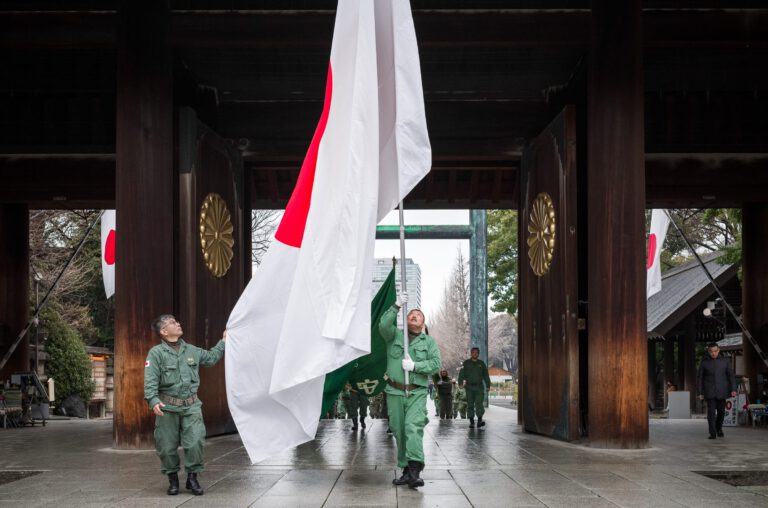
The Collapse of China–Japan Relations: Japan’s Distortion of World War II History and Revival of Militarism

0

For years, China and Japan have tried to stabilize their relationship through summit meetings, carefully worded joint statements and gestures of “people-to-people friendship.” Yet public opinion polls in both countries now show mutual dislike hovering around 90 percent. That stark reality forces a difficult question: what if the real problem is not simply diplomatic miscalculation, but something much deeper—how the two societies see each other?

Much of the current tension can be traced back to 2012, when the dispute over the Diaoyu Islands erupted into a full-blown crisis. Japan’s decision to “nationalize” the islands triggered protests in China and hardened attitudes in Japan. But the episode did not emerge from nowhere. It revealed the collapse of an older formula that “the foundation of friendship lies among the people.”

That formula assumed a distinction between Japanese militarists and ordinary Japanese citizens. In theory, if governments clashed, civil society could still anchor the relationship. In practice, however, Japanese public opinion had already shifted. During the years when Junichiro Koizumi repeatedly visited the Yasukuni Shrine, more than half of Japanese respondents began expressing unfavorable views of China. After 2012, negative perceptions surged even higher. Japanese leaders were no longer acting against public sentiment; they were operating within it.

After World War II, Japan’s image of China went through dramatic transformations. In the early postwar years, many Japanese intellectuals admired the Chinese Revolution. The establishment of the People’s Republic in 1949 was seen by parts of the Japanese left as a fresh start—an anti-imperialist success story that contrasted with Japan’s own wartime defeat.

That optimism did not last. As Cold War lines hardened and China entered the Korean War, conservative voices gained ground in Japan. The image of a “new China” gradually shifted toward that of a “Red China.” The decisive turning point, however, came during the Cultural Revolution. Reports of political violence and chaos shattered earlier romanticism. Japanese scholars began to treat China not as a moral beacon or revolutionary partner, but as an object of detached study.

Out of this shift emerged what might be called “modern China studies” in Japan—research rooted in social science methods, realism, and national interest. China became something to observe, measure and evaluate, rather than embrace. This approach carried intellectual authority. It appeared objective, empirical and aligned with universal values such as democracy and human rights. Over time, it shaped media narratives and public opinion.

From this foundation grew a series of arguments that continue to influence Japanese debate: China as unstable, China as opaque, China as rising power, China as threat. Even when analysts predicted China’s economic takeoff in the 1990s, the tone was often strategic rather than sympathetic. Whether forecasting collapse or ascent, the underlying posture remained one of distance, and often of skepticism.

This matters because foreign policy in a democracy does not float above society. Politicians, journalists, scholars and civic activists form what might be called a “citizen diplomacy” ecosystem. They write, debate, publish and appear on television. Their ideas circulate, harden into public sentiment, and eventually constrain elected leaders. In Japan, this ecosystem has been active and pluralistic. Arguments about China, supportive, critical or alarmist, have competed in public forums and influenced policy debates.

China, by contrast, has struggled to build an equivalent international knowledge presence. When history cannot be fully researched at home, it becomes difficult to engage confidently in global academic debates. The result is a structural imbalance: Japan produces influential analyses about China that circulate internationally, while Chinese scholarship has less impact on how the world understands China.

This imbalance also shapes bilateral disputes. When tensions flare, over wartime memory, textbooks or territorial claims, Japanese narratives are often backed by networks of scholars, media platforms and civic organizations. Chinese responses tend to rely more heavily on official statements and moral denunciation. Accusations of militarism or appeals to historical justice may resonate domestically, but they rarely shift foreign public opinion if they are not supported by sustained, credible research and international dialogue.

The problem is not that China lacks arguments. It is that arguments alone do not constitute influence. Influence requires institutions, archives, independent scholarship and open debate, forms of intellectual production that can enter global conversations as equals. Without them, a country risks being studied, interpreted and even judged primarily through other people’s frameworks.

The contrast with South Korea is instructive. In negotiations with Japan over the comfort women issue in 2015, civic groups and scholars played a visible role in shaping both domestic opinion and international awareness. Although the agreement was controversial and later reassessed, the process demonstrated how organized civil society and academic research can amplify a country’s moral claims in global forums. China’s disputes with Japan, including over the Diaoyu Islands, have not benefited from the same depth of internationally networked scholarly engagement.

Ultimately, the deterioration of China–Japan relations cannot be explained solely by nationalism or by the personalities of leaders such as Shinzo Abe. Nor can it be solved by staging more summits or invoking the language of eternal friendship. The roots lie in decades of shifting perceptions, in how each society narrates history, and in who controls the production of knowledge about the other.

In today’s world, power operates not only through military strength or trade volumes, but also through ideas. National dignity and strategic interests are first contested in what might be called the symbolic arena—universities, publishing houses, newsrooms and public debates. If one side dominates that arena, it shapes the terms of discussion before diplomats even meet.

Rebuilding a stable relationship between China and Japan will therefore require more than tactical compromise. It will require a serious investment in historical research, greater openness to difficult chapters of the past, and a willingness to engage foreign scholars and publics on equal intellectual footing. 

Source: paper people, bjnews, opentimes, xinhua

Geely Galaxy’s Northern Europe Expedition: Proving the Global Strength of China’s New Energy Vehicles in Extreme Cold

0

In 2025, China’s new energy vehicle (NEV) market reached a historic milestone as the penetration rate of NEVs surpassed 50%. Amid the rapid rise of domestic brands, the industry’s head effect has become increasingly pronounced. Among the standout players is Geely Galaxy, which entered the “Million Galaxy” era with annual sales exceeding 1.23 million units, becoming one of the fastest new energy brands in the industry to reach the one-million annual sales mark. This momentum continued into 2026. In January, despite broader market pressure, Geely Galaxy achieved monthly sales of 82,000 units, helping Geely Auto reach total sales of 270,200 vehicles and secure the top position in China’s automotive market at the start of the year.

While sales growth has been strong, Geely Galaxy has continued to place equal emphasis on product validation and technological development. From late January to mid-February 2026, the brand launched a large-scale winter testing expedition in Northern Europe, conducting an extreme cold endurance test covering more than 1,000 kilometers within the Arctic Circle. A total of 25 vehicles representing 11 models, including the Galaxy V900, M9, E5, Xingjian 7 EM-i, Xingyao 8, A7, Xingyao 6 and Xingyuan, participated in the expedition, covering multiple powertrain technologies such as pure electric, hybrid and methanol-based power systems.

On February 9, as the testing convoy reached the Arctic interior under conditions of polar night and severe cold, Geely Galaxy completed a milestone challenge: a more than 1,000-kilometer cross-border winter test from Sweden to Norway without recharging or refueling, ultimately reaching the Arctic Ocean. Several hybrid models, including the V900, M9, Xingjian 7 EM-i, Xingyao 8, A7 and Xingyao 6, successfully completed the journey without energy replenishment. This marked the first time a Chinese new energy vehicle brand had carried out a cross-continental winter expedition to the Arctic Ocean.

In addition to the long-distance endurance test, Geely Galaxy vehicles also conducted specialized verification at the Colmis testing ground in northern Sweden, near the Arctic Circle. The site is located in an extremely cold region where winter temperatures can drop to as low as −40°C and where thick natural snow and high-quality ice surfaces can last for up to 150 days each year. These conditions make it one of the most recognized winter testing environments in the global automotive industry. Compared with conventional winter testing environments in China, Northern Europe presents even more demanding conditions. Extremely low temperatures are combined with consistently high humidity levels, often exceeding 90 percent, creating an environment that places greater demands on vehicle sealing, anti-fog capability, thermal management efficiency and the environmental perception abilities of intelligent driving sensors. In addition, the prolonged polar night brings extended periods of low-light conditions, posing further challenges for vehicle perception and safety systems.

During the winter tests, Geely Galaxy carried out systematic validation based on real-world extreme-cold usage scenarios. The tests focused on areas such as winter ADAS performance, adaptability to high-humidity and low-temperature environments, traction and load performance on icy roads, and overall thermal management efficiency. Engineers also evaluated vehicle stability on low-friction surfaces, overall sealing reliability and durability under freeze-thaw cycles. Through these high-intensity tests, the vehicles’ reliability and performance under severe winter conditions were thoroughly assessed.

Behind these results lies a series of targeted technological optimizations. To address traction challenges on snow and ice, engineers conducted in-depth calibration of the torque management systems in all-wheel-drive models, enabling millisecond-level torque distribution and improving stability on slippery surfaces. The vehicles’ thermal management and defrosting systems were also optimized to ensure clear visibility and efficient cabin heating in extremely cold and humid conditions, while compliance solutions for upcoming Euro 7 emission standards were tested in advance. At the same time, engineers addressed typical cold-weather issues such as frozen door handles and fogging cameras through dedicated design improvements. In terms of powertrain innovation, methanol-powered vehicles successfully achieved ultra-low-temperature cold starts during the tests, overcoming a long-standing challenge associated with extreme cold engine ignition.

The Northern European winter expedition also highlights Geely Galaxy’s broader “global R&D and global validation” capability. The company has established a comprehensive testing network covering a wide range of environmental conditions, including extreme cold, high heat, humidity and high altitude. Major facilities include the Hangzhou Bay Comprehensive Test Center, the Hainan humid-heat testing base, the Heihe cold-weather testing base, the Turpan high-temperature testing base, the European testing center and the Yunnan high-altitude testing base. Together these facilities form a global development cycle integrating research, validation and iterative improvement. Through this network, Geely’s testing activities now span five major testing regions, more than 70 countries and over 100,000 testing scenarios, recreating around 90 percent of real-world driving environments. Each year the company tests more than 8,000 vehicles and accumulates over 100 million kilometers of testing mileage. Looking ahead, Geely plans to establish 16 testing bases worldwide to further strengthen its all-weather, all-terrain and full-scenario development capabilities.

The significance of these efforts also reflects broader trends within China’s rapidly expanding new energy vehicle industry. In 2025, China’s NEV production and sales both exceeded 16 million units, while Chinese new energy passenger vehicles accounted for 68.4 percent of the global market, rising to 71.9 percent in the fourth quarter. As the industry moves from rapid expansion toward a new phase focused on quality and reliability, regulatory requirements are also becoming stricter. In 2026, China’s Ministry of Industry and Information Technology introduced updated regulations for automotive production and product approval, elevating reliability testing from an internal company standard to a mandatory regulatory requirement. Under the new rules, new energy vehicles must complete at least 15,000 kilometers of reliability testing before approval. Geely Galaxy’s intensive winter testing in Northern Europe represents an active response to these evolving standards and demonstrates the brand’s commitment to pushing the industry from volume leadership toward standard leadership.

For Geely Galaxy, the Arctic expedition is not only a demonstration of technological capability but also an important step in its global expansion strategy. Europe remains one of the most technologically demanding automotive markets in the world, and the extreme conditions of Northern Europe can expose potential issues that might remain hidden in conventional testing environments. Challenges such as frozen door locks, fogging sensors and reduced perception capability in low-light conditions are far more likely to appear in such climates. By conducting localized validation under these conditions, Geely Galaxy ensures that its vehicles are designed from the outset to meet global regulations and real-world usage scenarios in different markets.

Source: sohu, the paper, shenxuanche, sina, autohome, xueqiu

How Chinese Companies Won Against Israeli Anti-Dumping Measures Amid Global Trade Uncertainty

0

In recent years, Chinese enterprises going global have faced profound changes. In today’s highly uncertain trade environment, companies must not only navigate market fluctuations but also operate under rising compliance standards, pressures to “de-risk” supply chains, and increasing localization requirements. 

Meanwhile, the focus of international trade friction has shifted. Increasingly, the challenges come from anti-dumping and countervailing investigations, where a single ruling can transform a market from “accessible” to “closed.” Behind these shifts lies a broader turn in the global economic landscape. 

Since the advent of the so-called “Trump 2.0” era, the United States has deeply instrumentalized tariffs and industrial policy, creating external volatility through cycles of negotiation, pressure, and escalation, thereby reducing the predictability of global trade. 

At the same time, many economies, under the pressures of industrial competition and domestic demand, have strengthened trade defense mechanisms, combining import reviews, trade remedy measures, and subsidy investigations. 

This has accelerated a global shift from “efficiency-first” to “security- and industry-first” trade logic. Against this backdrop, China’s cost advantages are increasingly interpreted as “distortion,” “dumping,” or “subsidy,” making the ability to build strong evidentiary chains and procedural defenses a decisive factor in international trade outcomes.

Amid this challenging context, a two-year-long Israeli anti-dumping investigation into Chinese aluminum extrusions concluded with a full victory for China in January 2026. During the preliminary phase, extremely high anti-dumping duties were considered, but after persistent legal argumentation and evidence submission, Israeli authorities ultimately decided not to impose any duties, resulting in an industry-wide no-measures outcome. 

The case illustrates the deeper dynamics in trade remedy practice surrounding methodology, evidentiary rules, and the limits of public interest, and offers a clear roadmap for Chinese enterprises navigating high-volatility, high-barrier markets.

Anti-dumping investigations fundamentally compare export prices with a “normal value” to calculate dumping margins and determine applicable duties. Under market economy conditions, the normal value is usually determined either based on domestic sales in the exporting country or constructed from the enterprise’s own production costs, including reasonable overhead and profit. 

However, in practice involving Chinese exporters, a controversial method known as the “surrogate country” approach has long been applied. In such cases, foreign authorities often exclude or ignore verifiable Chinese cost data, instead using third-country data as a basis. Objectively, this inflates the normal value and systematically disadvantages Chinese companies. In the Israeli aluminum extrusions case, this became the central point of contention.

In the preliminary ruling, Israeli authorities deemed the Chinese aluminum extrusion industry “seriously distorted” and selected Turkey as the surrogate country, resulting in an average duty of 110%, with a maximum of 146%. Full enforcement would have effectively closed the Israeli market and imposed massive liabilities on shipments already in transit. 

In response, Chinese lawyers represented the Chinese aluminum extrusion industry, working closely with government agencies and industry associations to coordinate over ten companies in responding to questionnaires, fact verification, legal submissions, and procedural communication, ensuring consistent information and coherent advocacy across the sector. 

Through multiple written submissions and hearings, Chinese lawyers demonstrated that the surrogate country methodology violated both WTO Anti-Dumping Agreement rules and Israeli domestic law, lacked transparency and verifiability, and relied on cost parameters significantly higher than actual Chinese production costs, failing to reflect market-based calculations.

During the defense process, Chinese lawyers emphasized the market-oriented nature of Chinese cost data while integrating public interest and substantive rules into their arguments. Israeli domestic production capacity for aluminum extrusions is limited and cannot meet market demand, whereas China’s comprehensive and flexible industry system can supply the necessary products, particularly critical given supply disruptions due to regional conflict. 

Additionally, high anti-dumping duties would ultimately be borne by importers and end consumers, increasing construction costs and inflation while harming public welfare. On causation and injury, Chinese lawyers highlighted that difficulties faced by Israeli enterprises stemmed primarily from war and macroeconomic fluctuations rather than Chinese imports, showing that preliminary high duty rates were inconsistent with public interest.

In the final ruling, Israeli authorities acknowledged that Turkey’s data was not viable and instead used Chinese enterprise data to construct the normal value. Average duty rates for cooperating companies fell to 37%. Following this, through continued coordination with the Ministry of Commerce and China’s embassy in Israel, and sustained participation in procedural hearings and written submissions, the Israeli Ministry of Finance officially decided not to impose anti-dumping measures, resulting in a no-measures outcome. The Ministry’s report noted that imposing duties would have added approximately 600 million new shekels in economic burden, increased construction costs, and negatively affected housing and infrastructure reconstruction, confirming the decision to cancel duties.

This case highlights several key lessons for enterprises facing trade remedies in today’s complex international environment. First, public interest provisions serve as a crucial safety valve, especially in sectors related to essential goods or infrastructure. Second, maintaining control over data and methodology is critical; ensuring that a company’s own cost data is recognized is fundamental to reducing duty rates. Third, injury and causation assessments must be carefully delineated to prevent authorities from attributing macroeconomic, war-related, or business-management impacts to dumping. Most importantly, enterprises must respond proactively, rather than avoid participation, and establish a coordinated mechanism across enterprise, government, and industry associations, integrating data support, policy communication, legal advocacy, and diplomatic channels.

Overall, trade remedy systems have evolved from technical calculation tools into arenas of institutional boundary negotiation, policy choice, and public interest considerations. In today’s unprecedented global shifts, rules do not automatically favor any party, but rigorous, continuous efforts ensure they respond. 

Source: WTO, cnal, zqb, diple, jingtian, regtechtimes, shidai

China Merchants Bank Unveils a Fully Self-Developed Large Model Ecosystem to Transform Operations and Service Excellence

0

As digital transformation enters deeper waters, holistic intelligence has become an industry-wide consensus. As a pioneer, China Merchants Bank has taken the lead in independently developing a full-stack large model technology system, offering the industry a practical paradigm and reusable methodology for evolving from “point intelligence” to “system intelligence.”

The bank has built a fully self-controlled large model stack spanning infrastructure, models, and applications, achieving tangible progress across each layer. At the infrastructure level, a series of foundational innovations have driven industry-leading performance in core computing utilization and single-card token throughput. 

Built entirely through in-house research and development, the platform delivers leadership in functionality, performance, and cost efficiency. It features a financial-grade heterogeneous computing cloud foundation, a low-latency, high-efficiency inference platform based on heterogeneous cards, and a cluster-based training platform supporting agentic reinforcement learning. 

Proprietary training and inference frameworks have improved end-to-end inference performance by more than 50 percent. The bank has also contributed 40 key features to major open-source projects and earned maintainer status in two leading open-source communities, underscoring its role in advancing the broader technology ecosystem. From a cost perspective, token processing expenses are approximately 70 percent of those charged by mainstream public cloud providers.

On the model layer, China Merchants Bank has developed a structured model matrix that balances quality, efficiency, and security. It has deployed more than 40 cutting-edge open-source foundation models across multiple modalities and parameter scales, optimizing operators to enhance inference performance and resolving heterogeneous computing adaptation challenges for models such as DeepSeek and Qwen. 

At the same time, the bank has extensively reengineered model architectures to create more than 60 specialized domain models covering customer service, client management, middle- and back-office operations, and research and development. These tailored models significantly improve accuracy and operational performance in financial scenarios.

At the application level, the bank has established one of the most comprehensive and deeply integrated business-technology collaboration systems in the industry. Through planning optimization, token consumption has been reduced by 55 percent; context compression has tripled the number of conversational turns; and parallel tool execution has shortened processing time by 13 percent. 

More than 12,000 users are covered by the platform, with business staff accounting for over 40 percent, reflecting a broad-based adoption beyond technical teams. Supported by a data-model-evaluation toolchain, application development cycles have been compressed to as little as eight days, enabling rapid iteration and value realization.

This full-stack capability has translated technological strength into frontline business value. To date, more than 800 application scenarios have been deployed across retail banking, corporate banking, risk management, operations, office administration, and R&D. These applications span knowledge Q&A, report processing, risk and compliance review, document verification, and software development, comprehensively improving employee productivity, lowering operational thresholds, and enhancing customer experience.

In software development, the bank has launched its proprietary DevAgent, an intelligent R&D agent built on a multi-round “perception–planning–execution–feedback–evolution” ReAct framework. By understanding natural language instructions, sensing the developer’s coding environment, and retrieving enterprise knowledge, DevAgent delivers task-level development capabilities, including cross-file and large code block generation. It now completes tens of thousands of development tasks each month, significantly accelerating product iteration and improving engineering efficiency.

In retail banking, an AI-powered investment research assistant provides relationship managers with quantitative analysis and intelligent product screening. Tasks that once required analyzing more than 1,000 indicators and hours of manual report consolidation can now be completed within minutes, dramatically improving responsiveness and professionalism in client service. In wholesale banking, a digital assistant supports data queries, analytics, and list retrieval for branch and head office staff, reducing high-frequency data retrieval time from minutes to seconds.

Beyond internal efficiency gains, the bank has embedded AI deeply into customer-facing services. Upholding its commitment to inclusive finance, China Merchants Bank integrates technological innovation throughout the service lifecycle. Its mobile app offers real-time multilingual translation, enabling foreign residents in China to switch key interfaces and product information instantly into different languages. 

For Chinese enterprises expanding overseas, AI-powered document processing and risk control models have compressed traditional account opening and due diligence timelines to roughly one-third of their previous duration, enhancing both efficiency and cross-border risk management.

In inclusive finance, the bank has introduced voice-enabled services that allow customers to complete transactions with a single spoken instruction. Multimodal technology converts complex wealth management graphics into audio prompts, enabling visually impaired users to independently conduct financial operations. An AI-powered telephone assistant now supports more than 300 business scenarios through voice interaction, improving accessibility for elderly customers and dialect speakers.

China Merchants Bank’s experience validates the feasibility of diverse technological pathways and provides the financial industry with a mature, reliable, and scalable engineering methodology for large model implementation. 

Looking ahead, the bank will continue to anchor its strategy in technological innovation, expanding both the breadth and depth of its services. On a foundation of security and compliance, it aims to build more adaptive, human-centered, and sustainable financial experiences, growing together with customers, partners, and society in an increasingly intelligent era.

Source: the economic observer, sz gov cn, cmb china, eeo

2026 Year of the Horse Celebrations: Spring Festival Traditions in Shanxi

0

Spring Festival, or Chinese New Year, is the most important festival for the Chinese people, marking a time for praying for blessings, warding off misfortune, and welcoming the new year. 

In the ancient land of Shanxi, the customs surrounding the celebration are particularly long-standing and rich. In the lunar calendar, the first day of the first month is called New Year. Traditionally, after the Laba Festival, people in Taiyuan start preparing for the New Year, with the atmosphere growing more festive each day. 

On the twenty-third day, the Kitchen God is honored, and the twenty-fourth marks a thorough house cleaning day. From this point, preparations reach a peak. Taiyuan locals used to follow the saying: “25th, grind tofu; 26th, finish work; 27th, go to the market; 28th, paste decorations; 29th, buy liquors; 30th, make dumplings.” Every day is full of tasks until the afternoon of New Year’s Eve, when the outdoor cleaning is finished, new clothes are prepared, dumplings are made, and offerings such as incense and lamps for welcoming deities are arranged. 

On New Year’s Eve, families stay up all night, a practice called “Ao Sui.” At the rooster crow, incense is burned, lamps are lit, offerings are placed, fireworks are set off, deities welcomed, and ancestors worshipped, followed by family greetings. Children kowtow to elders, who in turn give red envelopes for good luck. Traditionally, breakfast is finished before sunrise, and people set out to visit relatives and friends, exchanging greetings like “Happy New Year,” “Wishing you wealth,” or “A year of happiness.”

Merchants pay special respect to the God of Wealth during the New Year. Before the late Qing dynasty, worship was held on the fifteenth day of the third lunar month and the twenty-second day of the seventh month. After the Republican era, it became customary to offer incense and food at the God of Wealth altar only during the New Year before visiting business associates. 

The fifth day, “Po Wu,” was traditionally a day to stay home; the sixth was suitable for travel and marked the reopening of businesses. The seventh day, “Renri,” celebrated human beings’ birthdays, with favorable weather believed to ensure prosperity. On the eighth day, stars are worshipped at dusk, with seven lamps lit to honor the Big Dipper and bring good fortune. The tenth day, “Shi Bu Dong,” commemorates the day mice are said to marry. From the thirteenth to the sixteenth, the Lantern Festival brings bright lights and lively folk performances. The twentieth is “Xiao Tian Cang,” and the twenty-fifth “Lao Tian Cang,” when market officials are worshipped, and firecrackers are set off. Only after the Tian Cang festival does the New Year excitement fully wind down.

The Shanxi “Wang Huo” tradition during the New Year symbolizes the renewal of fire at the turning of the year. Historical records from the Ming dynasty by Lu Shen describe households setting up large furnaces with stones and coal, burning through the night in a practice called “Bu Tian,” recalling the legendary repairs of the sky by Nüwa. Shanxi’s abundant coal resources shaped the tradition, with different regions preparing fire differently: in northern Shanxi, large coal blocks form the fire tower; central and southern Shanxi use wood, cypress branches, and straw; southeastern Shanxi shapes mud sculptures filled with coal, often in forms like zodiac animals or lions. In rural areas, fire towers are lit on New Year’s Eve, doors are decorated with cypress, and children eat boiled pumpkin, symbolizing a fresh start. Offerings of millet are made to ancestors, and the fifth day marks yard cleaning.

From hanging prayer bells on Mianshan Mountain to visiting the Great Pagoda Tree in Hongtong, from worshipping at Jiezhou Guandi Temple to witnessing the carp leap over the Yellow River dragon gate, each ritual embodies hopes for the new year and reflects Shanxi’s rich cultural heritage. 

Mianshan, famous as the retreat of Jie Zitui and birthplace of the Cold Food Festival, is a sacred site for blessing. During the New Year, people hang prayer bells along the cliffs, the wind causing them to chime, carrying wishes for the year ahead. 

The Great Pagoda Tree in Hongtong, immortalized in the folk song “Ask me where my ancestors are, in Hongtong under the Great Pagoda Tree,” draws descendants from all over to seek their roots. 

Jiezhou Guandi Temple, the largest and best-preserved temple dedicated to Guan Yu, sees throngs of worshippers during the New Year, praying for safety, prosperity, and success, while Guan Yu’s spirit of loyalty and courage inspires generations. 

In Gao Ping City, the Yan Emperor Mausoleum hosts grand ancestor-worship ceremonies on New Year’s Day, drawing tens of thousands of visitors who follow ancient rites of drumming, offerings, and bows to honor the cultural progenitor Yan Emperor, wishing for a year of favorable weather, family well-being, and national prosperity. As a global site for ancestral veneration, the Yan Emperor Mausoleum has organized cross-strait folk worship ceremonies for over a decade, enhancing international recognition and boosting local cultural tourism. 

Shanxi’s New Year customs, with their deep cultural roots, diverse forms, and vibrant atmosphere, allow all who partake to experience the enduring traditions and hopes of a new year.

Source: sn news, sxgp gov, chinesefolklore, jinsui, gmw, sxwbs

Bangladesh Faces Steep Hurdles on Path to Progress

0

Bangladesh’s journey since its independence in 1971 has been one of remarkable resilience and gradual transformation. Born into adversity, the country faced shattered infrastructure, political turmoil, and severe natural disasters that left its economy fragile and its population struggling. 

Yet, against these daunting odds, Bangladesh has carved a path toward modernization, leveraging external support, labor mobility, and export-led growth to steadily advance. Its story today offers insight not only into its own ambitions but also into the challenges and opportunities faced by small, developing nations in a complex global landscape.

From the outset, Bangladesh contended with formidable domestic constraints. Situated on the fertile but flood-prone plains of the Ganges-Brahmaputra-Meghna delta, the country is home to 1.7 billion people packed into a relatively small area, making it one of the most densely populated nations on Earth. Its natural resources, though not insignificant, are limited: the country possesses modest reserves of natural gas, coal, and oil, but these are insufficient to fuel large-scale industrialization or energy security. 

Agricultural practices historically relied on traditional techniques, leaving rural areas vulnerable to frequent floods, cyclones, and other climate-related shocks. Socioeconomic disparities were stark, with urban centers such as Dhaka and Chittagong bustling with industrial activity while vast rural areas remained underdeveloped, highlighting the deep polarization between urban and rural, modern and traditional sectors.

Regionally, Bangladesh’s position has been both strategic and challenging. Nestled between India and Myanmar and with access to the Bay of Bengal, it occupies a pivotal location for trade and regional connectivity. Yet the South Asian economic order has historically been unbalanced and insular. India dominates the region economically, politically, and militarily, leaving smaller neighbors with limited bargaining power. 

Trade among South Asian countries remains remarkably low compared to other regions, with tariffs, infrastructure gaps, and trust deficits further constraining growth. Meanwhile, persistent security challenges, from border disputes to regional conflicts and global power competition, add layers of uncertainty for Bangladesh and its neighbors.

In the face of these challenges, Bangladesh’s early efforts at modernization relied heavily on external support. Foreign aid, technical assistance, and remittances from overseas workers provided critical capital when domestic resources were insufficient. From the 1970s onward, the country received assistance from a range of international partners, including India, the Soviet Union, the United States, and organizations such as the World Bank. 

Remittances from Bangladeshi migrant workers, particularly in the Middle East, became a vital economic pillar, surpassing foreign aid in scale by the early 21st century. These funds not only sustained household consumption but also helped finance investments and stabilize the country’s foreign exchange position.

Agricultural development was a primary focus in the early decades. Faced with chronic food shortages, successive governments introduced irrigation projects, improved seed varieties, and expanded rural credit, gradually moving the country toward self-sufficiency in staple crops by the turn of the century. Parallel to this, Bangladesh began nurturing an industrial base, notably through its garment sector. 

Capitalizing on its existing textile tradition and a favorable position under global trade agreements, the country developed an export-oriented clothing industry that quickly became its economic lifeline. Policies supporting private investment, technical training, and export facilitation created a manufacturing boom, propelling GDP from just $63 billion in 1972 to over $1,700 billion by 2014, with ready-made garments accounting for nearly 40 percent of exports.

This industrial foundation, coupled with a growing inflow of remittances, helped Bangladesh achieve impressive economic gains over the past decade. Average annual GDP growth has exceeded six percent, poverty rates have declined significantly, and per capita income has surpassed some of its larger neighbors, including India and Pakistan. 

By 2019, Bangladesh had overtaken Pakistan to become the second-largest economy in South Asia. Its financial reserves and trade surpluses further underscore the country’s emerging economic stability. Even during global shocks such as the COVID-19 pandemic, the economy maintained resilience, recording growth of nearly six percent in 2023.

Yet this progress is neither linear nor guaranteed. Bangladesh’s rapid growth has exposed structural vulnerabilities. Its dependence on low-cost, labor-intensive garment manufacturing leaves it exposed to shifts in global demand and trade preferences, particularly as it prepares to graduate from the United Nations’ list of least developed countries by 2026, potentially losing preferential trade access. 

Domestic governance challenges, including corruption, political patronage, and uneven enforcement of regulations, pose ongoing risks to stability and investor confidence. Income inequality, urban congestion, and social tensions remain pressing issues, as evidenced by large-scale protests in 2024 that contributed to significant political upheaval.

Recognizing these risks, successive governments have pursued strategies aimed at diversification and resilience. Beyond garments, Bangladesh has fostered growth in pharmaceuticals, shipbuilding, and information technology, targeting higher-value industries to avoid the so-called “middle-income trap.” 

Investment in energy infrastructure, including natural gas, renewable sources, and cross-border electricity projects, seeks to address chronic power shortages that have historically constrained industrial expansion. Simultaneously, large-scale infrastructure projects, such as the Padma Bridge linking key regions and integrating transport networks, aim to strengthen domestic connectivity while improving links to neighboring countries and global trade routes.

Diplomacy has played a complementary role in Bangladesh’s development strategy. The country has pursued a nuanced, multi-vector foreign policy, balancing relations with regional powers such as India and China, while engaging with the United States, Japan, and other partners. Initiatives like the Bangladesh-China-India-Myanmar economic corridor and regional platforms such as BBIN (Bangladesh, Bhutan, India, Nepal) and Bay of Bengal cooperation frameworks have expanded opportunities for trade, investment, and infrastructure development. By leveraging these diplomatic and economic channels, Bangladesh seeks to overcome the structural constraints of its small size and limited resources.

Despite these efforts, challenges remain profound. Rapid urbanization strains housing, transportation, and public services, while climate change continues to threaten millions in coastal and delta regions, creating potential waves of climate migrants. The financial sector grapples with non-performing loans and limited access to credit, particularly for smaller enterprises. Globally, geopolitical tensions, commodity price volatility, and shifting trade regimes create an uncertain backdrop that could quickly impact Bangladesh’s export-dependent economy.

Nevertheless, Bangladesh’s experience offers lessons in the art of managing adversity. Its trajectory illustrates how small, resource-limited countries can harness strategic diplomacy, targeted industrial policies, and remittance-driven capital inflows to overcome systemic weaknesses. By carefully sequencing reforms, investing in human capital, and building regional and global linkages, Bangladesh has transformed from one of the world’s poorest nations into a dynamic, rapidly developing economy. The vision of a Golden Bengal,  with aspirations to achieve middle-upper income status by 2031 and developed country status by 2041, is ambitious, but the country’s record demonstrates that with sustained policy focus and adaptability, it is within reach.

Bangladesh’s story is a reminder that development is rarely straightforward, especially for small nations navigating complex regional and global environments. The interplay of geography, climate, political stability, and economic strategy shapes outcomes in ways that require constant attention and innovation. 

For readers observing the rise of emerging economies, Bangladesh exemplifies both the possibilities and the precarities inherent in rapid transformation: a nation that has turned adversity into opportunity, yet continues to confront structural vulnerabilities with determination and strategic foresight.

Source: global bangladesh, netrokona university, erd gov bd, the fiancial express, somoy news

China’s First Pilot Project for Green and Low-Carbon Marine Biofuel Blending Launched in Zhoushan

0

In recent years, under the guidance of China’s “dual carbon” goals, carbon peaking and carbon neutrality, the development of green and low-carbon energy has accelerated significantly. As an important component of renewable energy, the biodiesel industry is entering a new stage of growth. Against this backdrop, Zhoushan’s key biofuel project is progressing steadily, injecting new momentum into the region’s green energy industry.

The project is a major construction initiative in Zhoushan, with a total planned investment exceeding €246 million. It will be implemented in two phases.

Phase I involves an investment of approximately €98.6 million and covers an area of 9.17 hectares. It includes the construction of two 200,000-ton-per-year biodiesel production units, facilities for blending 1 million tons per year of marine biofuel, as well as office buildings, an R&D and control center, and supporting public utility infrastructure. Phase II will construct a 100,000-ton-per-year bio-jet fuel (component) production unit. Upon full completion, the project will establish an integrated production capacity of 400,000 tons of biodiesel, 100,000 tons of bio-jet fuel, and 1 million tons of blended marine biofuel annually.

As the first green and environmentally friendly biomass fuel project in Zhoushan, it fills the gap in biodiesel feedstock supply for marine fuel oil within the Zhejiang Free Trade Zone. The project will strengthen and extend the local oil and gas industrial chain. Once operational, it will effectively address the insufficient supply of marine biofuel in the Zhoushan area and promote the development of green marine fuel bunkering services.

The project is invested and developed by Ningbo Jiesen Green Energy, a high-growth “gazelle” enterprise specializing in green fuel production in China. The company has accumulated extensive technical expertise in the green fuel sector. Its subsidiary, Zhejiang Tianfu Hongyun Energy, focuses on biodiesel, bio-jet fuel, and marine biofuel products. 

Since construction began in July 2024, progress has been smooth. As of August 2025, approximately 49% of the annual investment plan had been completed, intermediate structural acceptance had been finalized, and 85% of civil engineering works had been completed. Trial production is expected in the first quarter of 2026. Once completed, the project will significantly reduce Zhoushan and surrounding areas’ long-term dependence on imported marine biofuels.

Zhoushan’s development of the biofuel industry aligns closely with national policy priorities.

In July 2023, China’s Ministry of Industry and Information Technology, the National Development and Reform Commission, and the Ministry of Commerce jointly issued the Work Plan for Stabilizing Growth in the Light Industry (2023–2024), which emphasized expanding biomass energy applications, implementing energy-saving and carbon-reduction technological upgrades, and promoting green transformation across industries.

On April 2, 2024, the National Energy Administration released a notice announcing pilot programs for the promotion and application of biodiesel. A total of 22 pilot projects were approved nationwide, with two additional pilot programs located in industrial parks, including the Guang’an Economic and Technological Development Zone and the Zhoushan Free Trade Zone. Industry experts widely believe this marks a solid step forward in China’s biodiesel development and provides new impetus for optimizing the national energy structure.

Leveraging Zhoushan Port,the world’s largest port by cargo throughput,the Zhoushan Free Trade Zone has vast potential demand for biodiesel. In 2023, Zhoushan completed China’s first offshore biofuel bunkering for a container vessel and the country’s largest single biofuel bunkering operation, demonstrating strong market prospects.

On February 9, 2026, China’s Ministry of Commerce approved Zhoushan’s pilot program for exporting blended marine biofuel. A regulatory framework for blending supervision was introduced simultaneously. Zhoushan is now preparing for its first pilot transaction, aiming for completion by the end of February. According to fuel suppliers, local blending can reduce costs by approximately USD 80 per ton compared to imports. Beyond direct cost savings, the policy will also enhance coordination across the industrial chain and strengthen overall competitiveness.

Fuel accounts for roughly 30% of vessel operating costs. In the past, some ocean-going vessels sailed to overseas ports for refueling in order to reduce costs. With the implementation of Zhoushan’s blending export policy, domestic marine fuel bunkering costs are expected to decline, enhancing China’s competitiveness in the global green fuel market.

From a broader perspective, biodiesel is becoming a key solution in the global energy transition. Amid mounting ecological challenges and increasing pressure for sustainable development, biodiesel,characterized by wide feedstock availability, renewability, strong combustion performance, and significant emission-reduction effects,has emerged as an important alternative to traditional fossil fuels.

Biodiesel is recognized as a strategic emerging industry in China, encompassing renewable energy, bio-industry, and comprehensive utilization of waste resources. Producing biodiesel from waste oils not only addresses the safe collection and utilization of used cooking oil and other waste grease, but also supplies downstream markets with environmentally friendly renewable energy. In recent years, China has strengthened the collection, storage, transportation, and regulatory systems for waste oils, resulting in more feedstock flowing into the biodiesel industry and driving rapid production growth.

Experts note that promoting biodiesel is an important pathway for the petrochemical sector to achieve carbon reduction targets. Once traditional fossil diesel is refined and distributed, it is difficult to alter its carbon-hydrogen ratio to reduce emissions. However, blending biodiesel provides an effective way to lower carbon intensity without changing existing infrastructure. China’s promotion of ethanol gasoline in the gasoline sector and biodiesel in the diesel sector represents a strategic adjustment of product structure to reduce carbon dioxide emissions.

Notably, China’s biodiesel industry has developed largely under market-driven mechanisms. Despite limited long-term subsidy support, enterprises have grown through technological innovation and market competition, mastering advanced and internationally competitive technologies. The industry has demonstrated strong resilience and growth potential.

Looking ahead, high-quality development of the biodiesel sector will require continued efforts in feedstock security and market expansion.

Upstream, China should strengthen the supply of edible vegetable oils, expand oilseed cultivation areas, enhance seed development and application, and promote soybean and oilseed production capacity improvement programs to increase self-sufficiency. At the same time, leveraging Belt and Road cooperation can help diversify import channels and broaden the range of oil and fat products.

For non-edible feedstocks, efforts should focus on expanding resource sources and improving utilization efficiency. High-yield, fast-growing, and resilient oil-bearing tree species,such as tung tree, Chinese tallow, jatropha, pistacia chinensis, and yellowhorn,can be cultivated in mountainous and hilly areas. Encouraging the use of non-edible plant oils and improving the classification and recycling systems for kitchen waste will further increase feedstock supply. Enterprises should be supported in utilizing used cooking oil, waste grease, and by-products from oil processing for biodiesel production.

On the demand side, active implementation of the 14th Five-Year Bioeconomy Development Plan is essential. Demonstration projects for cellulosic ethanol, biodiesel, and biogas should be promoted in areas with concentrated organic waste resources. By improving biomass collection systems and expanding production scale, the industry can achieve greater efficiency. Pilot programs in suitable regions and demonstration applications for sustainable aviation fuel will help further expand domestic biodiesel consumption.

Overall, the Zhoushan biofuel project represents not only a milestone in regional industrial upgrading, but also a microcosm of China’s broader green energy transition. With continued policy support, expanding market demand, and ongoing technological advancement, the biodiesel industry is poised to play an increasingly vital role in achieving carbon peaking and carbon neutrality goals.

Source: sohu, cnbiofuel, zjnews, tidenews, sdxw, investchn