3.3 C
Berlin
Tuesday, December 2, 2025
spot_img
Home Blog Page 162

Startmission von Labormodul „Mengtian“ erfolgreich abgeschlossen

0

Um 15:37 Uhr am Montagsnachmittag ist das Raumlabormodul „Mengtian“ für die chinesische Raumstation von einer Trägerrakete „Langer Marsch 5B Y-4“ vom Wenchang-Startplatz ins All geschickt worden. Circa acht Minuten später trennte sich das Labormodul mit der Rakete und trat korrekt in die geplante Umlaufbahn ein. Damit ist die Startmission erfolgreich abgeschlossen worden.

Das Labormodul „Mengtian“ ist das dritte Modul der chinesischen Raumstation und das zweite Modul für wissenschaftliche Experimente. Es besteht aus einer Arbeits-, einer Lade-, einer Luftbremse-Güter- und einer Ressourcenkapsel. Beim Start wiegte es circa 23 Tonnen. Das Modul wird hauptsächlich für raumwissenschaftliche sowie angewandte Experimente eingesetzt. Mit der Verwaltung des Raumstation-Komplexes und einem zügigen Gütertransport werden wissenschaftliche Experimente innerhalb und außerhalb der Raumstation unterstützt.

Es handelt sich um die 25. Flugmission seit Beginn des chinesischen bemannten Raumfahrtprojekts und dem 446. Flug einer Trägerrakete der Langer-Marsch-Serie.

(Quelle: CRI Deutsch, CCTV-13)

Chinese scientist proposes multi-robot collaborative 3D printings, accelerating digital construction

0

With the development of robotics, 3D printing of buildings is becoming possible, but the equipment used for 3D printing of building structures is often large, limiting the height of printed buildings.

Scientists from Imperial College London and Queen Mary University of London have successfully developed a 3D printing device for building materials and a high-precision material deposition actuator that can be mounted on a drone, and have developed autonomous navigation and task allocation method that enables the communication between multiple drones, as well as optimizing the number and time allocation for simultaneous printing of drones.

By combining the respective advantages of a free and flexible flying UAV and a parallel robot with high precision and high rigidity, the instability of the UAV in the air is successfully solved, and the error of its end-effector is controlled within 5 mm, making aerial high-precision 3D printing by UAV possible.

Considering the uncertainties such as expansion or sinking during the deposition of different materials, the team introduced a measurement and evaluation method for the printed structure based on 3D image scanning and reconstruction technology, effectively controlling the accumulation of errors between the printed building mechanism and the design model during the printing process, and adjusting the flight trajectory of the UAV in the subsequent printing process in real-time.

On September 21, the paper was published as a cover article in Nature under the title “Aerial additive manufacturing with multiple autonomous robots”.

The first author of the paper is Ketao Zhang, an assistant professor in the School of Engineering and Materials Science, Queen Mary University of London, and the corresponding author is Mirko Kovac, a professor in Aerial Robotics, Imperial College London.

Building a 2-meter-tall column structure in 30 minutes

3D-printed buildings by drones may look cool, but in reality, it took almost 10 years to go from idea to gradual optimization and full scientific validation.

In 2014, Professor Mirko Kovac’s team came up with the idea of 3D printing buildings from drones. In the initial stages of the study, researchers fixed the 3D printing device underneath an unmanned person. However, the problem came with the small changes in the UAVs’ positions in the air, which caused a wide range of deviations in the material deposition head of the printing device, seriously affecting the material printing results.

To ensure high accuracy in 3D printing, it is necessary to avoid the problem of proportional enlargement of leverage errors. This problem is often caused by the tilting of the 3D printing nozzle due to drone position and attitude deviations, and the team uses control algorithms to combat this problem.

After joining the team in 2016, Ketao Zhang proposed to retrofit the UAV with a nimble miniature Delta parallel manipulator, successfully solving one of the technical bottlenecks of the research, namely the high-precision 3D printing of construction drones. The final print accuracy of less than 5 mm was achieved in a laboratory environment, with a cylindrical print head of 8 mm in diameter. “This is currently the highest level of printing accuracy in a lab environment based on mobile robots with flying robotic devices.” Zhang Ketao said.

It is noteworthy that the UAV platform was designed by Zhang Ketao and his team independently because the existing UAVs on the market could not achieve the team’s printing goals. They optimized the design through continuous experiments to achieve a structure that does not collapse after the deposition of material layer by layer. After studying the preparation and selection of its blending ingredients from a materials science perspective, the team ultimately designed two 3D printing drones that can print cement-like materials and low-density polyurethane foam respectively.

Real-time measurements were another challenge for the team. They used a dense mapping algorithm to reconstruct the 3D mesh and then obtained the height of the deposited structure from the 3D reconstructed digital model, enabling the 3D printing of layers on top of each other.

Promising the fastest application for restoring high-rise buildings

The traditional building design is largely limited by existing construction methods and tends to be one-size-fits-all in terms of structural design. The advantage of 3D-printed buildings is that they are design-driven and can be designed to suit individual preferences or needs, allowing for personalized and more complex structures.

Because construction drones come with their power supply to print materials, they are not limited by building height or material delivery pipelines when 3D printing. This method also reduces carbon emissions during material transportation compared to traditional construction methods.

In addition, drones can theoretically work 24 hours a day, thus increasing construction productivity and thus saving more time and human resources costs. 3D printing design and construction of houses also reduce waste and loss of construction materials during handling, reduce environmental impact, and provide greater freedom in the structural aspects of floors.

Recent research in structures shows that nearly 40 percent of the materials used in solid structures for traditional buildings can be saved from the structural load-bearing capacity perspective of structural mechanics. It is reported that the team has been granted patents in measurement algorithms and other related aspects. At present, several large construction companies in the UK have already cooperated with them to transform the results of the technology.

Ketao Zhang believes that the fastest application scenario for the technology to land could be in high-rise buildings or infrastructure restoration work. The method is not to “steal jobs” from construction workers, but by the drones to complete the repetitive, high-risk factor of work. It frees up people to tackle more complex and varied design and planning tasks.

The technology could also potentially be applied to the manufacture of buildings on Mars or the moon. Of interest is that the method is not only applicable to drones, it is also suitable for guiding the cooperation between drones and ground mobile robots, and the collaborative printing of multiple autonomous robots.

For post-disaster reconstruction efforts, the technology can also give relevant support, such as the handling of emergency facilities or temporary building reconstruction. If an earthquake occurs in an area, the distribution of materials is often greatly affected when roads are destroyed and vehicle movement is obstructed. Remote delivery by drones and multi-robot 3D printed construction technology can be used to build temporary structures.

In the future, the technology still has some difficult points to overcome. For example, how to charge the drone, and how to better store energy for the drone through wireless or other ways. Ketao Zhang said, “meeting the continuous power supply for drones requires a high degree of techniques for the battery material and charging method. We envisioned solar cells, but their performance is currently not sufficient to power drones.”

Moving the technology from the lab to an environment outside the lab is another challenge. Inside the lab, the team uses a motion-tracking system to control the drone’s position. “In outdoor scenarios, we may later use vision-based real-time positioning and map construction methods for the real-time perception of the environment for the UAV or robot due to the large error of positioning systems such as GPS,” said Ketao Zhang.

On the other hand, 3D printing materials are also the direction that the team will continue to research. Currently, cement-like materials can achieve the performance of ordinary cement ingredients traditionally used.

Promote digital development of the construction industry

Ketao Zhang graduated from Beijing Jiaotong University with a bachelor’s degree in mechanical engineering and automation, and during his PhD, he participated in a joint project on mechanical engineering-mechanical design and theory, focusing on the design and kinematic analysis of reconfigurable parallel robots.

At that time, Ketao Zhang had already developed the idea of retrofitting parallel robots to UAVs for more dexterous operation. In 2016, Ketao Zhang developed the Aerial Robotic Construction System with Professor Kovac, enabling aerial robots to 3D print construction structures autonomously.

According to Ketao Zhang, the goal of his research in the near future is to enable people and robots to show their talents and capacities and better collaboratively enhance the digital development of the construction industry.

At present, digitalization and smart manufacturing are developing rapidly in China, especially in the automotive manufacturing industry and medical care, and are also driving progress in the digitalization and visualization of architectural design. “In construction manufacturing, digitalization has a lot of room for development.” Ketao Zhang said.

Therefore, the direction he would like to continue exploring in the future is foldable, structurally dexterous robots and their use in digital manufacturing, human-robot collaboration, extreme environments, and deep space applications to solve more complex and diverse scientific challenges.

(Source: Nature, DeepTech)

Baumwollerntesaison in Xinjiang beginnt

0

Baumwollpflücker arbeiten auf einem Feld im Uigurischen Autonomen Gebiet Xinjiang. Im Oktober beginnt die Baumwollerntesaison in Xinjiang, dem größten Baumwollanbaugebiet Chinas.

(Quelle: CRI Deutsch, Xinhua)

Guangzhouer Zoo begrüßt Baby-Leierhirsche

0

Insgesamt vier Hainan Leierhirsche wurden kürzlich im Zoo von Guangzhou (Provinz Guagndong) geboren. Die Zahl der Leierhirsche im Zoo liegt nun bei über 20. Die Hainan Leierhirsche sind auf der Insel Hainan in China beheimatet und stehen zusammen mit dem Großen Panda, dem Goldstumpfnasen-Affen und dem Südchinesischen Tiger auf der Liste gefährdeter Tiere auf nationaler Ebene.

(Quelle: CRI Deutsch, VCG)

Internationaler Tag der Pandas

0

Am 27. Oktober wurde der Internationale Tag der Pandas begangen. In der Chengdu Aufzuchtstation faulenzen die niedlichen Pandabären in ihrem Zuhause, was sehr süß aussieht.

(Quelle: CRI Deutsch, VCG)

Intelligente Landwirtschaft läuft in Anhui auf Hochtouren

0

Im Oktober färben sich die Reisfelder golden, wenn in der Region Wuhu in der ostchinesischen Provinz Anhui am Unterlauf des Jangtse-Flusses die Herbsterntezeit beginnt. Auf den Feldern herrscht reges Treiben bei der Reisernte. Im Gegensatz zu den Vorjahren sind in diesem Jahr in erster Linie mehr Landwirte in der Praxis der intelligenten Landwirtschaft tätig.

In der Gemeinde Eqiao in der Region Wuhu hat Landwirt Gui Wanfa am Rande seines Reisfeldes ein Schild mit der Aufschrift „digitaler Überwachungspunkt für Reisanbau“ aufgestellt, von dem aus die von den Überwachungsgeräten auf dem Reisfeld erfassten Daten in Echtzeit übermittelt werden können.

„Wir haben bereits mehr als 500 mu (etwa 33 Hektar) Reis geerntet, und einige der Reisfelder können einen Ertrag von 650 kg pro mu erbringen, die intelligente Landwirtschaft hat also einen großen Beitrag dazu geleistet“, sagte Gui Wanfa und tippte dabei auf die entsprechende App in seinem Mobiltelefon. So seien Informationen über Bodenfruchtbarkeit, Bewässerungsbedarf, Reife der Pflanzen sofort verfügbar.

Guo Shuangshuang, Projektleiterin der intelligenten Landwirtschaft in der Region, sagte, dass das System bisher 308 Reisanbaugebiete mit einer gesamten Anbaufläche von mehr als 210.000 mu (14.000 Hektar) erfasst. „Mit Hilfe von Satelliten, Drohnen und auf den Feldern verteilten Geräten überwacht und analysiert unser System insgesamt dreizehn Phasen des Reiswachstums und liefert dadurch den Landwirten visuelle Daten sowie verschiedene Anbauvorschläge. Die Landwirte können nunmehr mit unserer Hilfe Dünger ausbringen, Unkraut jäten, Schädlingen und Krankheiten vorbeugen und derartige Probleme behandeln, und zwar nicht mehr nur nach Erfahrung und Gefühl. Die digital bewirtschafteten Reisfelder können den Ertrag um etwa zehn Prozent pro mu steigern“, teilte Guo Shuangshang Reportern mit.

Beim Anblick der goldenen Reisfelder war Gui Wanfa überwältigt von seinen Gefühlen. “Früher musste man beim Anbau von Reis die Düngung nur mit bloßem Auge und aus Erfahrung beurteilen, entweder wurde zu viel oder zu spät gedüngt, was negative Auswirkungen auf den Ertrag hatte. Wenn wir jetzt in unser Handy schauen, kann uns das System sagen, wie wir düngen sollen.“ Er sagte, dass durch die so genannte Präzisionsdüngung etwa 25 Kilogramm pro mu Düngemittel einsparen könnten.

Laut Ma Bin, Direktor des Büros für ländliche Entwicklung in Wuhu, beobachte und erfasse das intelligente Landwirtschaftssystem das Wachstum der Pflanzen und steuere den Reisanbau mit wissenschaftlichen Methoden, was von vielen Landwirten begrüßt werde. Der nächste Schritt in der Region Wuhu sei die Ausweitung der Demonstrationsbasis für intelligente Landwirtschaft, damit die neuesten technologischen Errungenschaften besser für die landwirtschaftliche Produktion genutzt werden könnten.

(Quelle: CRI Deutsch, gmw.cn)

Die Welt achtet darauf, was China denkt

0

Die dramatischen wirtschaftlichen und sozialen Veränderungen Chinas in den letzten 10 Jahren lassen sich anhand von quantitativen Indikatoren sichtbar machen, während die Veränderungen im politischen Bereich vielleicht nicht ganz so stark in Zahlen ausgedrückt werden, aber dennoch zentral und entscheidend sind.

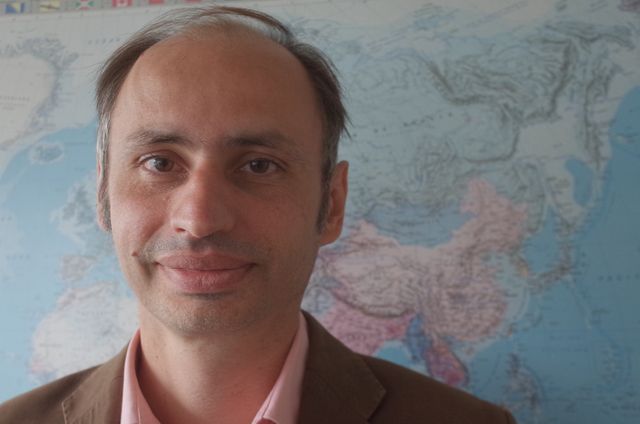
Nach Angaben der Nationalen Entwicklungs- und Reformkommission Chinas stieg die chinesische Wirtschaftsleistung von 7,49 Billionen US-Dollar im Jahr 2012 auf 15,89 Billionen US-Dollar im Jahr 2021 und das Pro-Kopf-BIP von 6.300 US-Dollar auf über 12.000 US-Dollar. Gleichzeitig wurden die 98,99 Millionen armen Menschen auf dem Land aus der Armut befreit, so dass der Grundsatz „Niemand wird zurückgelassen“ ein Meilenstein für den allgemeinen Wohlstand ist. „Für China wäre das Erreichen eines dieser Indikatoren ein Wunder in der Wirtschafts- und Sozialgeschichte der Welt“, kommentierte Zheng Yongnian, Direktor des Advanced Institute of Global and Contemporary China Studies der Chinese Univ ersity of Hong Kong, Shenzhen.

Er betonte auch, dass ein wichtigerer Faktor hinter diesen Erfolgen die Fortschritte im politischen System Chinas sind, das sich in den letzten 10 Jahren entscheidend verändert hat. Das britische und das amerikanische politische System wurden einst von vielen Ländern und Regionen als „Leuchttürme der Demokratie“ angesehen, aber der Aufstieg und die Entwicklungserfolge Chinas haben dazu geführt, dass immer mehr Menschen neu darüber nachdenken, was Demokratie bedeutet.

Seit einem Jahrzehnt versucht China, neue Informationstechnologien zu nutzen, um besser auf die öffentliche Meinung zu reagieren. Bis heute haben alle 31 Provinzen, autonomen Regionen und Kommunen den Umgang mit den Online-Nachrichten der Bürgerinnen und Bürger geregelt, und 28 von ihnen haben institutionalisierte Dokumente zum Umgang mit Nachrichten herausgegeben und damit die Institutionalisierung des gesamten Prozesses der Volksdemokratie auf dieser digitalen Plattform vorangetrieben.

Die wiederholten Kriege, die von den USA angezettelt wurden, die Reaktion auf die COVID-19-Epidemie, der Preisanstieg in vielen Ländern, der durch die Wirtschaftssanktionen des Westens gegen Russland verursacht wurde, die weltweite Energiekrise und die stetige Entwicklung Chinas bilden einen starken Kontrast. „Chinas Schwierigkeiten sind vorübergehend, während die Schwierigkeiten des Westens strukturell und systemisch sind, also grundlegend anders geartet“, meinte Zheng.

Bewahrer und Reformer der internationalen Ordnung

Im September und Oktober 2013 schlug der chinesische Präsident Xi Jinping den gemeinsamen Bau von Belt and Road vor. Bis heute hat China mehr als 200 Kooperationsdokumente mit 149 Ländern und 32 internationalen Organisationen unterzeichnet, um das Projekt Belt and Road gemeinsam aufzubauen. Dabei wurden zahlreiche Erfolge erzielt: Eine große Anzahl von Projekten wie die China-Laos-Eisenbahn wurde massiv gefördert, der Grad der Liberalisierung und Erleichterung von Handel und Investitionen wurde erhöht und der Bestand an Auslandsinvestitionen ist von weniger als 600 Milliarden US-Dollar auf mehr als 2,6 Billionen US-Dollar gestiegen.

„Die internationale Ordnung wurde seit dem Ende des Zweiten Weltkriegs von den westlichen Ländern unter der Führung der Vereinigten Staaten dominiert, aber dieses Muster ändert sich jetzt durch den Aufstieg Chinas und die Wiederbelebung der chinesischen Nation. Die Chinesen werden immer selbstbewusster und durchsetzungsfähiger“, hat Zheng beobachtet.

Zheng ist der Meinung, dass die Welt eine demokratischere und gerechtere internationale Ordnung braucht und nicht ein hegemoniales System, das von einem Land oder einer nationalen Interessengruppe dominiert wird. Da die USA China als Bedrohung betrachten, weil sie befürchten, das Land könne ihnen den hegemonialen Status streitig machen, wird China von ihnen dämonisiert.

„Was China seit 10 Jahren im internationalen System zu erreichen versucht, ist, dass wir alle Dinge diskutieren, anstatt dass ein Land der gesamten internationalen Gemeinschaft seinen Willen aufzwingt. Für Zheng ist der von den USA geförderte „Multilateralismus“ im Grunde ein Gangstertum, das sich gegen Drittländer mit anderen Ideologien richtet. Der von China befürwortete Multilateralismus ist offen und inklusiv und zielt darauf ab, gemeinsame Probleme zu lösen, mit denen alle konfrontiert sind.

Die ADB, die asiatische Entwicklungsbank, ist ein gutes Beispiel dafür. Dabei handelt es sich um die erste multilaterale Finanzinstitution, die auf Initiative Chinas gegründet wurde, um die Entwicklung der Infrastruktur zu unterstützen und die Zusammenarbeit zwischen China und anderen asiatischen Ländern und Regionen zu fördern. Im Oktober 2021 zählte die ADB 104 Mitgliedsländer. „Die Vereinigten Staaten und Japan waren gegen die ADB, aber bis heute stehen ihnen die Türen der ADB offen. China war in jüngster Zeit Opfer von Imperialismus und hegemonialen Bestrebungen und möchte daher, dass die Welt gleichberechtigter und inklusiver wird“, wie Zheng meint.

2014 sagte der ehemalige malaysische Premierminister Mahathir: „Wir hatten schon vor zweitausend Jahren einen Austausch mit China, aber China hat uns nie überfallen. Im Gegensatz dazu haben wir unsere Beziehung zu Europa erst 1509 begonnen, aber zwei Jahre später haben sie uns besetzt. China verfolgt keine solche aggressive Politik, also sind wir sehr bereit, mit China auszukommen und ich bin zuversichtlich, dass China unsere Freundschaft fortsetzen wird.“

Zheng lebt und arbeitet seit vielen Jahren in Singapur. Seiner Meinung nach haben die Menschen in den südostasiatischen Ländern einen Maßstab im Herzen.

„Was China denkt“ beeinflusst die Welt

Als Hochschullehrer hat Zheng mehr Kontakt zu jungen Menschen, und in den letzten 10 Jahren hat er einen deutlichen Wandel in der öffentlichen Meinungslandschaft festgestellt. „Junge Menschen in China haben nicht nur ein stärkeres Gefühl für ihre nationale Identität, sondern auch ein objektiveres Verständnis von China. Weil die Chinesen die ganze Welt sehen, können sie ihr eigenes Land aus der Perspektive der Welt umfassender und tiefer kennenlernen.“

„Der Westen hat die China-Bedrohungs-Theorie und die China-Kollaps-Theorie vertreten, aber meiner Meinung nach ist das mehr Wahrsagerei als Wissenschaft und dabei kommen immer sehr unrichtige Prognosen heraus. Jetzt, wo China zur zweitgrößten Volkswirtschaft der Welt geworden ist, haben sich die Probleme des Westens immer noch nicht geändert.“ Laut Zheng blickt der Westen schon seit der griechischen Antike auf den Osten, aber bis heute hat er den Osten immer als eine andere und antagonistische Existenz im Vergleich zu seiner eigenen betrachtet. Dies hat dazu geführt, dass der Westen die institutionellen Unterschiede zwischen dem Osten und dem Westen oft in einer Dichotomie betrachtet.

Zusammen mit den historischen Faktoren seit der jüngsten Zeit hat sich der Westen immer als Vertreter des Fortschritts gesehen und der Osten galt in seiner Vorstellung als Gegenpol und rückständig. „Es gibt weder eine absolute Demokratie noch eine absolute Diktatur. Die westlichen Länder nutzen die Macht des Kapitals, um die gesellschaftliche Macht zu verschleiern. Es ist schwierig für den Westen, China wirklich zu verstehen, wenn er nicht aus seinen Normen und Denkweisen heraustreten kann.“
Wichtiger als die Frage, wie der Westen China sieht, ist, ob China den Diskurs über die Wahrheit selbst in die Hand nehmen kann. In den letzten 10 Jahren hat die chinesische Führung wiederholt die Notwendigkeit betont, die internationale Kommunikationsfähigkeit zu stärken, Chinas internationalen Diskurs zu verbessern, ein günstiges Umfeld für die öffentliche Meinung zu schaffen und positive Beiträge zur Förderung des Aufbaus einer menschlichen Schicksalsgemeinschaft zu leisten. China hat begonnen, einen eigenständigen Diskurs vorzuschlagen, der sich stark gegen die Definitionshoheit, die Themensetzung und den kontroversen Ermessensspielraum des internationalen Diskurses absichert, den der Westen lange Zeit innehatte.


Heute haben die Initiativen und Konzepte, die Chinas Position, Weisheit und Werte verkörpern, weltweit große Aufmerksamkeit und Anerkennung gefunden. Da viele von Chinas Ideen Wirklichkeit werden, studieren immer mehr internationale Gelehrte China und immer mehr Menschen lesen chinesische Literatur und Abhandlungen. China wird nicht mehr nur dargestellt, sondern gestaltet sich selbst, und „was China denkt“ beeinflusst die Welt auf positive Weise.

(Quelle: Global Times, CGTN)

China’s 20th Communist Party Congress: education, science and technology, and talent are measured together

0

On October 16, 2022, China’s 20th Communist Party Congress (CPC) opened, and General Secretary Xi Jinping pointed out that China should comprehensively improve the quality of independent training of talents, focus on creating top-notch innovative talents, and convene talent from the world for use.

The emphasis on the independent cultivation of talent is a new formulation. “This expression is very targeted, it contains two layers of meaning, to strive to open up to the outside world, and based on independent training to cultivate talents,” analyzed Zhou Hongyu, a member of the Standing Committee of the National People’s Congress and vice president of the China Education Association.

Since China’s 18th CPC, the Party Congress report on education has had a different emphasis. For example, the report of China’s 18th CPC emphasized education equity, and Du Yubo, then China’s vice minister of education, proposed that efforts should be made to achieve a higher level of universal education.

The key word in the report of China’s 19th CPC is education power, which is related to the development stage of Chinese education. Xiao Guo’an, then director of China’s Hunan Provincial Education Department, pointed out after the meeting that China has solved the problem of education capacity and is moving towards education quality.

“From China’s 18th CPC to China’s 20th CPC, the overall thinking about education, science and technology, and talents has become more and more significant.” Zhou Hongyu believes that this is a trend of building correlations, “In the past, education was discussed independently, but the 20th CPC report has linked education, science and technology, and talent training together.”

Independent cultivation of talents

For China, the independent cultivation of talent is a new proposition.

“Autonomous cultivation has not been talked about much before.” Zhou Wenhui, deputy director of the Graduate Education Research Center of Beijing University of Technology, cited the example of graduate education, “In 2022, the number of master’s students has exceeded 3.3 million, and although the strategic goal of cultivating graduate students based in China has been achieved, the quality of China’s graduate education is still far from the world’s advanced level.”

According to statistics, since 2012, China has independently trained more than 600,000 PhDs and 6.5 million master’s degrees, and the training scale of science and technology (STEM) PhDs has surpassed that of the United States. “Currently, China is in the critical period of moving from a large postgraduate education country to a strong postgraduate education country, and there is an urgent need to strengthen the internal construction and further improve the quality of postgraduate education,” said Zhou Wenhui.

At the same time, Chinese talents and technology in the West continuously encountered the siege. Many visa applications of Chinese students were refused due to their STEM profiles, which are considered sensitive under the ongoing China-US competition.

Talking about independent training, international university rankings can not be ignored. Wang Yunlai, president of Nanjing University Education Research Institute, said that Chinese universities should keep their determination and not be swayed by international rankings, and take root in Chinese land and build a world-class university with Chinese characteristics.

Meanwhile, Zhou Hongyu believes that independent cultivation cannot be simply understood as not participating in the international ranking. “Cultivation still needs to be based on a full range of development, but must be soberly aware that it may be increasingly difficult to cultivate high-level talent through international exchange and cooperation.”

How to improve the quality of independent training? “Be confident, but not blindly confident. To cultivate top talents, we have to work hard to improve the education level and research level of professors and create conditions for the cultivation of talents. Secondly, we have to be self-aware, compared to the West, we have to realize that we still have gaps in some areas and keep absorbing what the other side has.” Zhou Hongyu said.

Accelerate the building of an education power

The report of China’s 20th CPC points out that China should adhere to the priority development of education, science and technology, self-sustaining and self-improvement, and talent to lead the drive to accelerate the construction of a power of education, science and technology, and talent.

This is the second time that the term education power appears in China’s CPC report. The report of China’s 19th CPC mentioned that building a strong education power is a fundamental project for the great rejuvenation of the Chinese nation, and education must be given priority.

According to China’s Ministry of Education, over the past decade, China’s education penetration level has continued to improve, further expanding the nation’s access to education and further increasing the level of education. There are 22,000 high schools with 39.764 million students enrolled, and a gross enrollment rate of 91.4 percent, an increase of 6.4 percentage points over the decade. The number of higher education schools has reached 3,012, with a total size of 44.3 million students. Within 10 years, the gross enrollment rate was 57.8%.

In Zhou Hongyu’s impression, this is the first time that China’s CPC report puts education, science and technology, and talent together. “Education, science and technology, and talent are the basic and strategic support for the comprehensive construction of a modern socialist country. These three also happen to reflect the continuous rise of China in the international arena in this decade, especially the quality of education has drawn great attention from the West,” said Zhou Hongyu.

It is worth noting that in China’s previous CPC reports, education has often been associated with people’s livelihood, such as “strengthening social construction in improving people’s livelihood and innovative management” is linked with “education is the cornerstone of national revitalization and social progress”; “raising the level of safeguarding and improving people’s livelihood, strengthening and innovating social governance” is related to “giving priority to the development of education”. But in this year’s report, education is related to science and technology and talent development, and the order in the report is also before people’s livelihood.

“Since China’s 18th CPC, the chain of thinking on education has been very clear.” According to Zhou Hongyu, the three reports answer three questions respectively, should China become an education power? How to become an education power? How to accelerate the building of an education power. “It can be seen that the relationship between them is layer by layer, step by step refined and increasingly operable.”

(Source: Xinhuanet, CCTV)

USA treffen europäische Verbündete „hart“

0

Der französische Präsident Emmanuel Macron hat die USA in jüngster Zeit wiederholt dafür kritisiert, dass sie in Zeiten der europäischen Energiekrise Gas zu hohen Preisen an Europa verkaufen und mit „Doppelmoral“ arbeiten. Macron erklärte, die USA belieferten den europäischen Markt mit Gas zu einem Preis, der drei- bis viermal so hoch sei wie der Inlandspreis.

In der Tat gibt es viele andere Beispiele dafür, dass der Reichtum Europas von den USA geerntet wird: Die Anhebung der Zinssätze des US-Dollars führt zum Beispiel zu einer erheblichen Abwertung des Euro. Die Vereinigten Staaten können ihre europäischen Verbündeten immer noch „hart treffen“, um echtes Geld zu bekommen.

(Quelle: CRI Deutsch)

Hainan: Industriepark wird High-Tech-Basis

0

Der Industriepark Dongfang Lingang befindet sich in der Stadt Dongfang in der Provinz Hainan und ist einer der wichtigsten Parks des Freihandelshafens Hainan. Der Industriepark entwickelt sich allmählich zu einer High-Tech-Industriebasis mit petrochemischen neuen Materialien, Herstellung von Schiffsausrüstung und sauberer Energie.

(Quelle: CRI Deutsch, Xinhuanet)