12.3 C
Berlin
Monday, August 24, 2026
spot_img
Home Blog Page 54

Chinas Wirtschaftshighlights 2023

0

China ist es gelungen, die wichtigsten Ziele für die wirtschaftliche Entwicklung im Jahr 2023 zu erreichen. Das Wirtschaftswachstum im 2023 war von vielen Highlights geprägt.

(Quelle: CRI Deutsch)

Deciphering the Evolving Landscape of Foreign Investment and Trade in China

0

China plays a pivotal role in advancing global openness. During the last APEC summit, Notably, Chinese President Xi Jinping and American President Joe Biden were committed to revitalizing economic ties and upholding an open trade and investment framework. President Xi has further provided pivotal guidance on the future of Sino-U.S. economic collaboration and fostering a conducive global development environment.

International trade often serves as a more pronounced indicator, declining more sharply in downturns and rebounding more swiftly in upturns compared to the global economy. To illustrate, while international trade contracted more than GDP in 2019 and 2020, it rebounded robustly in 2021 and 2022 post-pandemic, outpacing global GDP growth. This surge elevated global trade’s proportion relative to global GDP to a historic peak, underscoring the continued momentum of globalization.

Examining the Transnationality Index, derived from metrics like overseas assets, sales, and employees of the top 100 multinationals, offers insights into the global division of labor. Despite a dip in 2020 due to the pandemic, it rebounded annually in 2021 and 2022, nearing its pre-pandemic levels. This index not only reflects foreign investments but also underscores the multinational corporations’ global footprint.

In the post-pandemic era, globalization recovery has outpaced overall global economic growth. The digital sector, with giants like Google, Amazon, Tencent, and Alibaba leading, has been pivotal in this resurgence. These digital behemoths have witnessed rising overseas assets, sales, and profits, capitalizing on the expansive digital realm.

As a rising economy, while China dominates certain burgeoning sectors like photovoltaics, wind power, and new energy vehicles on the global stage, these industries are heavily reliant on international markets and resources. Chinese electric vehicles and photovoltaic modules, for instance, enjoy substantial market shares globally. Yet, for an economy of our scale – surpassing $100 trillion – the demands of these nascent industries for global markets and resources are inexorable. Their growth and innovation are intrinsically tied to global access.

It’s crucial to grasp the evolving dynamics and challenges within the current phase of globalization. Initially, Chinese industries complemented those of multinational corporations. Chinese industries specialized in producing items like garments, textiles, footwear, and accessories while importing high-value consumer goods and advanced production equipment. This symbiotic relationship led to mutual benefits through international trade.

In recent years, many Chinese industries began directly competing with multinational counterparts. These corporations recognize the immense potential of China’s burgeoning domestic market, coupled with its rapidly expanding middle- and high-end consumer base. Additionally, they acknowledge Chinese industries’ comprehensive competitive edge and robust industrial chain capabilities. This continues to fuel their eagerness to invest in and collaborate with China. However, they are also increasingly cognizant of the intense competition they face both in China’s domestic market and internationally, leading to some strained relations.

The recent dip in foreign investment over the past ten months stems from a myriad of reasons. It would be overly simplistic to attribute this solely to dwindling confidence among foreign investors in the Chinese market or perceived shortcomings in China’s business environment.

Certainly, there are multiple factors driving the evolving landscape of foreign investment in China:

First, the era where multinational corporations could simply enter China and expect to dominate is evolving. Many global enterprises are now finding it challenging to compete effectively within the Chinese market. Over the past decade, several international giants have either scaled down their operations or exited the Chinese market. This shift reflects China’s economic maturation and the emergence of formidable local competitors. It’s not necessarily an indictment of the Chinese market’s viability but rather a testament to its growing competitiveness.

Second, China’s economic landscape has undergone significant transformation. As China’s per capita income and labor costs have risen, some businesses that once benefited from China’s cost advantages are re-evaluating their strategies. This has led certain enterprises to explore other countries, such as India and Vietnam, which offer competitive labor costs combined with a solid industrial foundation. This scenario mirrors China’s own strategies from the past, when it attracted investments from Japan and South Korea during the ’80s and ’90s.

Third, Multinational corporations are increasingly wary of over-reliance on any single market or country. In an unpredictable international environment, where geopolitical tensions can disrupt supply chains and operations, businesses are diversifying their investments and operations globally. This diversification isn’t indicative of a lack of confidence in China but rather a strategic response to global uncertainties.

While China has made significant strides in opening up its market and improving its business environment, there’s recognition that further enhancements are needed. By reducing restrictive measures through the negative list, China aims to bolster confidence among foreign investors. Given the global trend of countries enhancing policies to attract foreign investment, China must remain agile and responsive to maintain its competitive edge.

Despite the shifts in global supply chains, many multinational corporations still perceive China as having distinct advantages in manufacturing. Factors such as cost-efficiency, timely delivery, quality, and robust logistical capabilities make China an attractive destination. Some companies that relocated their operations have even reconsidered and returned to China, acknowledging these benefits.

Notably, top executives from leading multinational corporations continue to engage with Chinese stakeholders since May 2023. Their visits underscore a commitment to fostering collaboration and exploring mutual growth opportunities, even amidst global ideological tensions. Rather than seeking confrontation, these visits likely aim to forge stronger partnerships and leverage China’s vast market potential.

While emphasizing cooperation, China recognizes the importance of bolstering its indigenous innovation and capabilities, especially in critical sectors. In the face of evolving global dynamics, striking a balance between leveraging foreign expertise and fostering domestic innovation becomes crucial. By integrating foreign technologies judiciously, China can propel its technological advancements to new heights.

In essence, China’s approach to foreign investment and trade underscores a nuanced strategy that embraces collaboration, fosters innovation, and capitalizes on its inherent strengths.

(Source: Institute of Public Policy, South China University of Technology)

China veröffentlicht Weißbuch über Rechtsrahmen und Maßnahmen zur Terrorismusbekämpfung

0

Das Pressebüro des chinesischen Staatsrats hat am Dienstag ein Weißbuch mit dem Titel „Chinas Rechtsrahmen und Maßnahmen zur Terrorismusbekämpfung“ veröffentlicht.

Neben einem Vorwort und einer Schlussfolgerung besteht das Weißbuch aus fünf Teilen: „Ein verbesserter rechtlicher Rahmen für die Terrorismusbekämpfung“, „Klare Bestimmungen für die Feststellung und Bestrafung terroristischer Aktivitäten“, „Standardisierte Machtausübung bei der Terrorismusbekämpfung“, „Schutz der Menschenrechte in der Terrorismusbekämpfung“ und „Effektiver Schutz der Sicherheit der Bevölkerung und der nationalen Sicherheit“.

In dem Weißbuch hieß es, der Terrorismus sei der gemeinsame Feind der Menschheit. Er stelle eine ernste Bedrohung für den internationalen Frieden sowie die Sicherheit dar und sei eine Herausforderung für alle Länder und die gesamte Menschheit.

China sei als Opfer des Terrorismus seit langem mit dessen wirklicher Bedrohung konfrontiert, hieß es weiter. China habe immer großen Wert auf eine gesetzesbasierte Terrorismusbekämpfung gelegt und Erfahrungen durch den Abschluss oder Beitritt zu internationalen Konventionen und Verträgen sowie durch die Änderung und Verbesserung von Strafgesetzen gesammelt.

Im Laufe der Jahre habe China einen Weg der gesetzesbasierten Terrorismusbekämpfung gefunden, der seinen Realitäten entspreche, indem es einen soliden Rechtsrahmen geschaffen, eine strenge, unparteiische und verfahrensbasierte Strafverfolgung gefördert sowie eine unparteiische Rechtsprechung und einen wirksamen Schutz der Menschenrechte sichergestellt habe.

China vertrete die Vision einer Gemeinschaft der Menschheit mit geteilter Zukunft und sei bereit, gemeinsam mit anderen Ländern die Terrorismusbekämpfung als Teil der Global Governance voranzutreiben, hieß es in dem Dokument.

Der chinesischen Regierung sei es gelungen, die Ausbreitung des Terrorismus einzudämmen, die Rechte der Bürger auf Leben, Gesundheit und Eigentum zu schützen und die soziale Stabilität aufrechtzuerhalten. Gleichzeitig ergreife sie entschlossene Maßnahmen, um die gesetzlichen Rechte und Interessen von Bürgern und Organisationen zu schützen und Diskriminierung aufgrund von geografischen Gebieten, ethnischen Gruppen oder Religionen zu verhindern.

China räume der persönlichen Sicherheit derjenigen Priorität ein, die durch terroristische Anschläge direkt geschädigt oder bedroht werden, und organisiere Hilfsmaßnahmen und medizinische Versorgung für die Opfer sowie die Evakuierung und Umsiedlung potenzieller Opfer. Die zuständigen Abteilungen seien auch dafür verantwortlich, den Opfern und ihren nahen Verwandten rechtzeitig Hilfe anzubieten, ihnen psychologische und medizinische Unterstützung zukommen zu lassen und die grundlegenden Lebensbedürfnisse der Opfer und ihrer nahen Verwandten, die ihre Lebensgrundlage verloren haben, zu gewährleisten, hieß es weiter in dem Dokument.

Klicken Sie hier, um die englische Version des Dokuments zu sehen.

(Quelle: CRI Deutsch)

Farbenfrohe Kulturnacht in Nanning

0

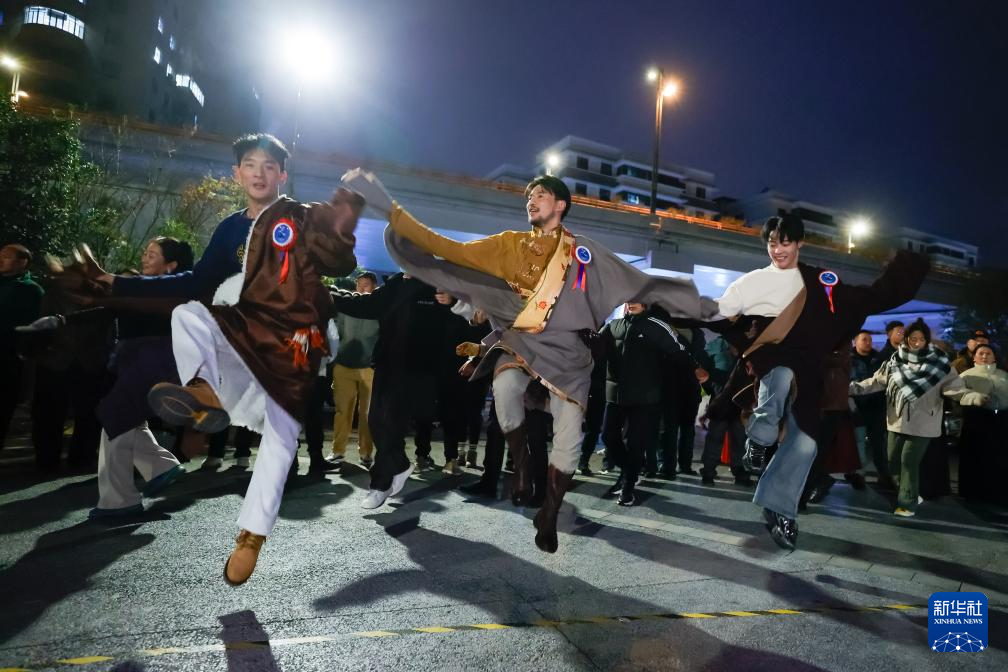
Feuerspucken, Feuerwerk und prachtvolle Laternen lassen eine Kulturstraße im südchinesischen Nanning in vielen bunten Farben leuchten. Bekannt als „Nanning-Nacht“ hat das touristische Highlight im vergangenen Jahr neun Millionen Besucher in die Stadt im Autonomen Gebiet Guangxi der Zhuang-Ethnie gebracht.

(Quelle: CRI Deutsch, VCG)

Yang Jingru gewann erste Goldmedaille für China bei den Olympischen Jugend-Winterspielen 2024 in Gangwon

0

Shorttrack-Läuferin Yang Jingru hat am Samstag die 1.500 m der Frauen gewonnen und damit für China die erste Goldmedaille bei den Olympischen Jugend-Winterspielen 2024 im südkoreanischen Gangwon geholt.

Yang lief in zwei Minuten und 33,148 Sekunden ins Ziel, gefolgt von Teamkollegin Li Jinzi in 2:41,543. Die Bronzemedaille ging an die Japanerin Nonomi Inoue.

Die deutsche Rennrodlerin Antonia Pietschmann hat die erste Goldmedaille der Olympischen Jugend-Winterspiele in Gangwon gewonnen.

Die 17-Jährige beendete ihren Eröffnungslauf mit 47,985 Sekunden und führte damit das Einzelrennen der Damen im Alpensia Sliding Center an, in dem auch bei den Olympischen Winterspielen 2018 in PyeongChang gerodelt wurde. 

Die vierten Olympischen Jugend-Winterspiele wurden am Freitagabend mit einer großen Eröffnungsfeier in Südkoreas östlicher Provinz Gangwon offiziell eröffnet.

1.802 Athleten im Alter von 14 bis 18 Jahren aus 78 Ländern und Regionen werden bis zum 1. Februar in den vier Städten Gangneung, PyeongChang, Jeongseon und Hoengseong antreten.

Bei den Olympischen Jugend-Winterspielen in Gangwon werden sieben Sportarten, 15 Disziplinen und 81 Veranstaltungen ausgetragen.

Chinas Autoexporte zum ersten Mal an Weltspitze

0

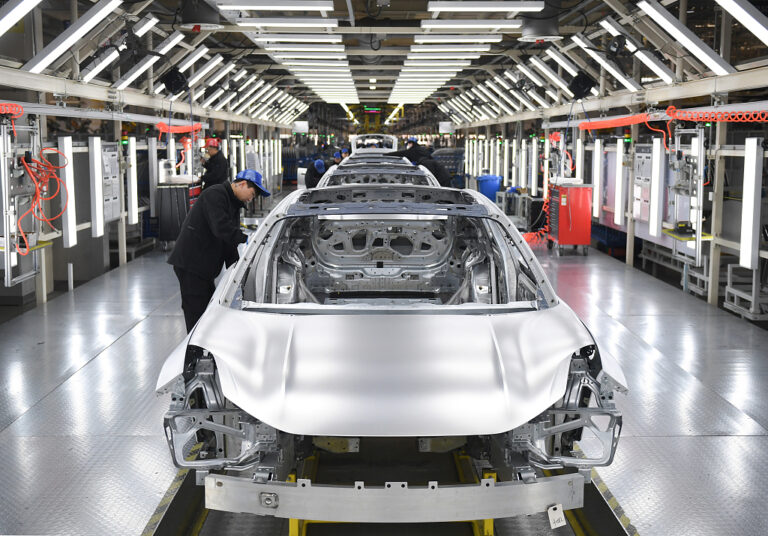
Die jährlichen Automobilexporte Chinas 2023 haben mit 4,91 Millionen Fahrzeugen zum ersten Mal den Sprung an die Weltspitze geschafft, was einem Anstieg von 57,9 Prozent im Vergleich zum Vorjahr entspricht. Dies teilte Xin Guobin, Vizeminister für Industrie und Informationstechnologie, am Freitagvormittag auf einer Pressekonferenz des Pressebüros des chinesischen Staatsrats mit.

Foto von VCG

Darunter befanden sich 1,203 Millionen exportierte Fahrzeuge mit neuer Energie (NEV), was einem Zuwachs von 77,6 Prozent gegenüber dem Vorjahr entspricht.

Foto von VCG

Xin fügte hinzu, dass im Jahr 2023 die jährliche Wertschöpfung der großen Industrieunternehmen um 4,6 Prozent im Vergleich zum Vorjahr gewachsen sei. Die Gesamtgröße der chinesischen Fertigungsindustrie hat damit 14 Jahre in Folge den ersten Platz in der Welt eingenommen.

(Quelle: CRI Deutsch, VCG)

Chinas Staatliche Kommission für Reform und Entwicklung erläutert wirtschaftliche Situation und Maßnahmen

0

Vertreter der chinesischen Staatlichen Kommission für Reform und Entwicklung haben am Donnerstag vor der Presse verschiedene Fragen bezüglich der makroökonomischen Situation und Maßnahmen Chinas erläutert.

Der stellvertretende Direktor der Kommission, Liu Sushe, sagte, im Jahr 2024 gebe es für Chinas Entwicklung nach wie vor Chancen und Herausforderungen. Die günstigen Bedingungen seien auf jeden Fall stärker als die ungünstigen Elemente. Es gebe immer noch viele Faktoren zur Unterstützung einer stabilen und gesunden Entwicklung der chinesischen Wirtschaft. Ihre grundlegende und langfristige Aufwärtstendenz bleibe unverändert.

China werde der Welt mit seiner Öffnung kontinuierlich noch mehr Kooperationsmöglichkeiten bringen. Chinas Wirtschaft habe breite Perspektiven. Daher sei man sehr zuversichtlich, so Liu Sushe weiter.

(Quelle: CRI Deutsch, VCG)

Laba-Fest: Festliche Stimmung zum Frühlingsfest einläuten

0

Jedes Jahr am achten Tag des zwölften und somit letzten Monats nach dem chinesischen Mondkalender wird in China das Laba-Fest gefeiert. An diesem Tag kochen die Chinesen mit Reis, Hirsen, Klebreis, Mohrenhirsen, kleinen roten Bohnen, Erdnüssen, roten Datteln und Walnüssen den Laba-Brei. Auch legt man an diesem Tag Knoblauch in Essig ein. Dieser in Essig eingelegte Knoblauch wird bis zum Silvesterabend nicht angerührt und erst beim Abendessen als Beilage zu Dumplings gegessen.

(Quelle: CRI Deutsch)

Hainans Landleben zieht junge Leute an

0

Wer Baoliang im Kreis Chengmai in der Provinz Hainan betritt, spürt den alten Stil und den Charme des 300 Jahre alten Dorfes. Die Besucher, die mit ihren Familien umherwandern, schenken ihm erneute Lebenskraft.

Heimkehrende junge Menschen haben das Dorf wieder zum Leben erweckt. Huang Yesen ist einer von ihnen. Nach seinem Universitätsabschluss kehrte er nach Baoliang zurück, um trotz des Widerstands seiner Familie dort zu arbeiten.

Der boomende Landtourismus in Hainan hat jungen Chinesen, wie Huang Yesen, eine neue Welt eröffnet. Sie kehren in ihre Heimatstädte zurück, um ihre eigenen Unternehmen zu gründen. Huangs Team nutzt die ungenutzten Ressourcen des Dorfes, um den Touristen Kaffee näher zu bringen und ihnen zu zeigen, wie man Gemüse anbaut, Reis erntet und handgemachte Snacks herstellt.

Huang Yesen erklärt: „Während der touristischen Hochsaison empfängt das Dorf 300 bis 500 Besucher pro Tag.“ Die Regierung habe das Dorf in den vergangenen Jahren bei der Verbesserung der Straßen, der öffentlichen Toiletten und anderer Infrastrukturen finanziell unterstützt, was eine gute Grundlage für die Entwicklung des Dorfes darstelle.

Baoliang baue heutzutage hauptsächlich Kaffee an sowie verarbeite und produziere Kaffeebohnen und Kaffeepulver. Das Dorf entwickle nun den ländlichen Tourismus, um sich allmählich aus der Misere der ungenutzten Ressourcen zu befreien, die durch die Abwanderung der jungen Leute verursacht worden sei.

Die guten Entwicklungsmöglichkeiten des ländlichen Raums in Chengmai haben auch Auslandsstudenten nach Hause zurückgeholt, die ihre eigenen Unternehmen gründen. Song Feng studierte im Ausland Landwirtschaft und gründete nach seinem Studium die Farm Celin in Chengmai, um in der Orangenindustrie tätig zu werden.

Song sagt, er verwende die im Ausland erlernten Managementkonzepte für seinen Betrieb. Er habe eine Technologie zur Integration von Wasser und Dünger, landwirtschaftliche Drohnen sowie ferngesteuerte kleine Tanks eingeführt, um mithilfe von Wissenschaft und Technik die Effizienz zu verbessern, die Kosten zu senken und eine hohe Qualität der Orangen aus Chengmai zu gewährleisten. „Die Orangen der Farm werden unter anderem nach Guangzhou, Shanghai, Nanjing und Hongkong verkauft.“ Die Farm habe allmählich ein umfassendes Entwicklungsmodell für die Ernte, den Freizeittourismus und andere Geschäftsformen entwickelt, in der Hoffnung, mehr Kunden anzuziehen

2013-2023: Middle East Crossroads – The US’s ‘One Bomb, One Road’ Approach vs. China’s ‘One Belt, One Road’ Vision

0

The Middle East, with its deep historical roots and complex tapestry of civilizations, has been marred by persistent conflict and unrest for millennia. Reflecting on the last decade, the contrasting strategies of China and the United States become evident.

2013: US Backs Syria Civil Defence while China Launches the Belt and Road Initiative

In the midst of Syria’s turmoil, James Le Mesurier, a former British MI6 officer with a history of NATO-led conflict involvement, founded the Syrian Civil Defense, recognized by its emblematic white helmet atop Syria’s map. His past ties to MI6 and his advocacy for “human rights over sovereignty” during operations like the bombing of Yugoslavia highlight the complex origins and objectives of the White Helmets.

The U.S., while advocating for human rights, hesitated to intervene militarily due to existing engagements in Iraq and Afghanistan. As a result, the U.S. launched symbolic missile strikes on Syria instead of a full-scale invasion, yet the Syrian civil conflict continued unabated.

In 2013, China introduced the “One Belt, One Road” initiative, emphasizing global connectivity. The inaugural China-Arab Expo in Yinchuan further strengthened ties with Middle Eastern nations. Concurrently, during Palestinian President Abbas’s visit, China proposed a four-point plan for the Palestinian-Israeli conflict, advocating a two-state solution and emphasizing negotiation-based resolutions.

2014: The Rise of ISIS Meets the Surge of China’s Belt and Road Initiative

Following the aftermath of the Arab Spring, North African countries experienced governmental upheavals due to internal dissent, while West Asian nations remained relatively stable. China maintained a policy of non-interference in regional affairs. Meanwhile, the U.S. increased support by providing weapons to the Syrian opposition. The emergence of ISIS intensified the conflict in Syria and Iraq, leading to a humanitarian crisis with millions displaced.

In June 2014, China and Arab nations jointly launched the “One Belt, One Road” initiative, focusing on energy cooperation, infrastructure development, and technological advancements. Concurrently, after political stabilization post-Arab Spring, Egyptian President Sisi visited China, signing the second phase of the China-Egypt Suez Economic Zone project, aligning with the “Belt and Road” vision.

2015: U.S. Creates Refugees, China Launches AIIB

The tragic death of Aylan Kurdi in 2015 spotlighted the dire plight of Syrian refugees and catalyzed global efforts to address the crisis. This heartbreaking event spurred debates on international responsibilities, highlighting the human toll of conflicts and displacement.

The Syrian refugee crisis and the conflict’s geopolitical implications have posed significant challenges for Europe and the international community. While efforts to integrate refugees have faced obstacles, including resource strains and societal tensions, there’s growing recognition of the need for comprehensive solutions addressing humanitarian, social, and political dimensions. The involvement of external powers, notably the U.S. and Russia, has further complicated the Syrian conflict, with divergent interests and strategies potentially risking direct confrontation. Concurrently, the rise of the Islamic State intensified regional instability, prompting increased U.S. military involvement and highlighting the multifaceted challenges of combating extremism while addressing underlying socio-political factors.

Meanwhile, China’s growing economic and diplomatic engagement in the Middle East was seen as a significant development in the region’s geopolitical landscape. The establishment of the Asian Infrastructure Investment Bank and the yuan clearing center in Doha signaled China’s ambition to play a more prominent role in global finance and trade. The continued implementation of the Belt and Road Initiative, including the landmark project in Turkey, highlighted China’s commitment to expanding its economic connectivity and influence across Eurasia.

2016: Presidential Candidate Trump Promotes Muslim Ban while President Xi visits the Middle East

In 2016, Donald Trump initially entered the presidential race to boost his real estate brand. However, his unexpected victory came with controversial promises, including a proposed ban on Muslims entering the U.S., made in response to concerns over terrorism and events like the Islamic State’s actions in Mosul.

Meanwhile, Chinese leaders toured the Middle East, forging ties with countries like Saudi Arabia, Egypt, and Iran through numerous cooperation agreements. China also articulated its foreign policy towards Arab nations, emphasizing non-interference, peaceful conflict resolution, and positive contributions to the region. Tangible efforts, like installing solar panels in Gaza, underscored China’s dedication to humanitarian causes and regional stability.

2017: Trump Courts Zionists while China Unveils a Century’s Transformation

The year 2017 was indeed a pivotal year marked by significant shifts in global politics and the international order. The Trump administration’s policies, including the controversial “Muslim ban,” sparked widespread condemnation and led to a humanitarian crisis as refugees sought to escape potential deportation and find sanctuary elsewhere.

Against this backdrop of upheaval and uncertainty, China’s assertion that the world was undergoing a “great change” resonated with many who observed the evolving dynamics of global governance, economic interdependence, and geopolitical competition. As the United States retreated from its traditional role as a champion of liberal values and international cooperation, China emerged as a potential alternative, advocating for a more inclusive, multipolar world order.

2018: U.S. Starts Trade War but China Prompts Infrastructure Construction

In 2018, tensions heightened globally, especially in the Middle East. The U.S., led by President Trump, took a tougher stance against Iran, exiting the nuclear deal and reinstating sanctions, reshaping regional dynamics. Efforts to create an “Arab NATO” with nations like Israel and Saudi Arabia aimed to counter Iran’s influence but faced challenges given the unresolved Palestinian-Israeli conflict. Additionally, the volatile situation in Syria, marked by allegations of chemical attacks, highlighted the complexities and risks of the region’s ongoing conflicts.

China’s role in the Middle East continued to evolve, with the Belt and Road Initiative (BRI) playing a prominent role in shaping its engagement with regional countries. By offering infrastructure development, trade opportunities, and technological investments, China sought to deepen its ties and expand its influence in the region.

2019: US abandons Middle East allies; China holds Middle East Security Forum

The Kurdish people, a significant ethnic group in the Middle East, have historically sought autonomy and cultural recognition. However, they face challenges and repression in countries like Turkey, where the Kurdistan Workers’ Party  (PKK) has been in conflict with the state, leading to human rights abuses and displacements. In Syria, the Syrian Democratic Forces (SDF) played a pivotal role against ISIS but faced resistance from Turkey and the Syrian government over autonomy efforts. Similarly, the Kurdistan Regional Government (KRG) in Iraq grapples with governance and economic issues. The Kurdish aspiration for statehood intersects with regional geopolitics, with the U.S.’s abrupt withdrawal of support in 2019 marking a notable betrayal, affecting Kurdish relations and regional stability. Additionally, the U.S.’s decision to abandon the White Helmets in Syria highlighted concerns over its foreign policy reliability.

In 2019, China expanded its presence in the Middle East with initiatives like the Belt and Road Initiative (BRI). The establishment of mechanisms like the “Maritime Silk Road” port cooperation and the Middle East Security Forum highlighted China’s aim to enhance regional connectivity and stability. With a multifaceted approach spanning economics, politics, and security, China aims to bolster its relations with Middle Eastern nations and solidify its role in global geopolitics. The implications of China’s rising influence in the region are poised to significantly impact regional dynamics and global strategies.

2020: US Targets Iranian Commander, China Sends COVID-19 Aid

The tumultuous events of 2020 underscored the intricate challenges of global politics, especially in the Middle East. The U.S.’s targeted drone strike on Iranian General Suleimani escalated regional tensions, while the COVID-19 pandemic further complicated the geopolitical dynamics. Concurrently, the U.S. tightened sanctions on Iran and banned all masks and medicines..

Meanwhile, China’s continued engagement and assistance in the Middle East, including its provision of vaccines and support for infrastructure projects under the Belt and Road Initiative, underscored its growing influence and strategic interests in the region. China’s approach to foreign policy emphasizes economic cooperation and development assistance, which contrasts with the more militarized and confrontational aspects of U.S. foreign policy in recent years.

2021: US Withdraws from Afghanistan, and China Supports the Reconstruction of Afghanistan

In Afghanistan, the hurried U.S. military withdrawal led to a swift takeover by the Taliban, culminating in chaotic scenes at Kabul airport and raising questions about the efficacy and consequences of the two-decade-long U.S. intervention. The freezing of Afghan assets post-withdrawal further exacerbated the country’s dire economic situation.

Meanwhile, the unwavering U.S. support for Israel, despite international criticism over its actions in Gaza, continues to be a contentious issue, further polarizing the dynamics in the Middle East and at international forums like the United Nations.

In 2021, China expanded its involvement in Afghanistan, offering crucial aid and initiating the China-Afghanistan “Pine Nut Air Corridor.” This corridor not only boosted trade but also showcased a novel approach to economic partnerships. The successful sale of Afghan pine nuts to Chinese consumers via a live broadcast platform highlighted the growing economic ties between China and Afghanistan. Additionally, China reinforced its commitment to the region by providing significant food aid. Meanwhile, in the Middle East, China continued its vaccine distributions and accelerated the completion of key Belt and Road projects, further cementing its strategic footprint in the region.

2022: US Steals Oil in Syria; China’s ‘One Belt, One Road’ Success

The Syrian Oil Ministry accused US forces in Syria of pilfering the majority of the country’s oil, with around 66,000 barrels stolen daily, amounting to 83% of Syria’s total daily oil production. This alleged theft has resulted in nearly $105 billion in losses for the Syrian oil sector since the war’s onset, accompanied by significant human casualties, including 235 deaths, 46 injuries, and 112 kidnappings. A subsequent video emerged, purportedly showing US military-operated trucks smuggling oil to Iraq from Raqqah.

China has significantly elevated its diplomatic engagement with the Arab world. Key events include leadership visits to Saudi Arabia, participation in the inaugural China-Arab States Summit, and the pioneering China-Gulf Cooperation Council (GCC) Summit, introduction of the eight major common actions  for pragmatic cooperation with Arab nations and collaboration in five pivotal areas with the Gulf states. Beyond major infrastructure projects, China has also initiated a project to construct 1,000 schools in Iraq.

2023: TikTok Challenges U.S. Dominance in Public Opinion; China Mediates Saudi Arabia-Iran Reconciliation

In 2023, a devastating escalation of the Palestinian-Israeli conflict unfolded, marked by heart-wrenching scenes from Gaza shared widely on platforms like TikTok, challenging U.S. mainstream media narratives. While the U.S. staunchly backed Israel, global public opinion was increasingly shaped by grassroots digital content.

In a significant diplomatic coup, China brokered the renewal of ties between Saudi Arabia and Iran, thwarting U.S. ambitions to forge a “Middle East NATO.” Meanwhile, China’s “One Belt, One Road” initiative celebrated a decade of progress, garnering international participation and support.

(Source: The daily beast, VOA News, brennancenter, frmprc gov cn, global times, stimson center)