


As artificial intelligence continues to advance at an unprecedented pace, global demand for computing power is growing exponentially. Traditional ground-based data centers are increasingly constrained by high energy consumption, limited land resources, cooling challenges, and geographical coverage limitations.
Against this backdrop, deploying computing capabilities into space and building space-based computing networks has emerged as a new frontier in global technological competition. Companies in the United States, including those exploring AI-enabled satellites and space data centers, are accelerating their efforts to establish a foothold in this emerging sector.
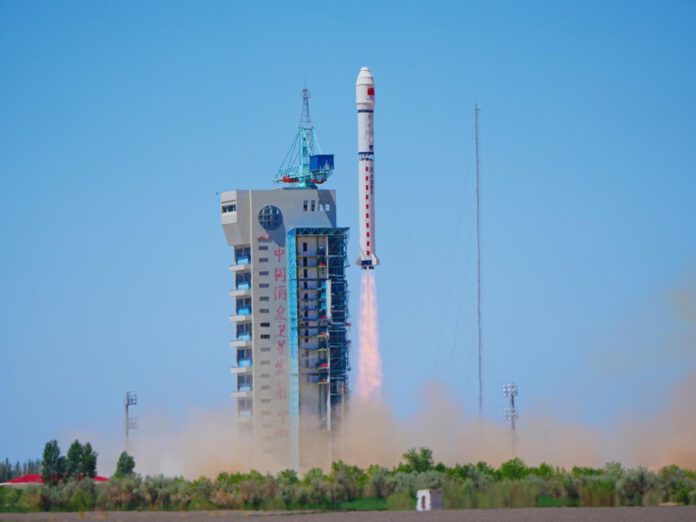
China has already begun large-scale exploration in space computing. In May 2025, Chinese aerospace company Guoxing Aerospace, in collaboration with Zhejiang Lab, successfully launched the world’s first space computing satellite constellation from the Jiuquan Satellite Launch Center.
The mission marked China’s transition from conceptual research to practical engineering implementation in space-based computing. The initial constellation consists of 12 computing satellites, with each satellite achieving a peak computing capability of 744 TOPS and the entire constellation reaching approximately 5 POPS of computing capacity. Equipped with an in-orbit artificial intelligence model, the system demonstrates the integration of “computing power in space, networked satellites, and AI models deployed in orbit.”
Space computing refers to the integration of computing, storage, and communication capabilities within orbital platforms. By combining satellite constellations, high-speed inter-satellite communication, and onboard intelligent processing systems, space computing enables real-time data processing, intelligent analysis, and autonomous decision-making directly in orbit.
One of the key drivers behind space computing is the growing difficulty of transmitting and processing massive volumes of satellite-generated data. As the number of satellites in orbit continues to increase, individual satellites can generate enormous amounts of data, while only a limited portion can be transmitted back to Earth due to communication bandwidth constraints, weather conditions, and transmission costs.
By bringing computing capabilities into space, satellites can process and analyze data locally before sending critical information to the ground, transforming the traditional model from “collecting data in space and processing it on Earth” to “processing data directly in space.”
The rapid expansion of artificial intelligence has further intensified the demand for new computing infrastructure. Ground-based data centers require significant amounts of electricity and face increasing challenges in power supply, cooling efficiency, and physical space. In contrast, space offers abundant solar energy resources and vast deployment capacity, creating new opportunities for sustainable and globally distributed computing infrastructure.
China’s space computing industry has now moved beyond initial concept validation and entered a stage of technological demonstration and ecosystem development. Relying on independently developed intelligent satellite platforms, Chinese researchers have completed in-orbit verification of space computing systems and demonstrated the use of laser-based inter-satellite communication and distributed computing technologies to achieve efficient coordination among satellites.
Commercial applications are also beginning to emerge. In 2025, Guoxing Aerospace and industry partners conducted an in-orbit test involving a transportation AI model deployed on satellites. The system processed remote sensing images of the Pazhou area in Guangzhou, completing analysis and returning results within minutes while significantly reducing the need for ground-based data transmission. The project demonstrated the potential of space computing in practical scenarios such as intelligent transportation and remote sensing analysis.
At the policy and industrial level, China is accelerating efforts to cultivate a complete space computing ecosystem. Relevant authorities have initiated discussions on dedicated space intelligent computing constellations and are supporting research into key technologies, including radiation-resistant AI chips, high-speed laser communication, energy systems, thermal management, and computing standards. The development of space computing is expected to integrate multiple industries, including aerospace, telecommunications, semiconductor manufacturing, and artificial intelligence.
However, large-scale deployment of space computing still faces significant challenges. Space environments impose strict requirements on satellite reliability, radiation resistance, energy supply, and heat dissipation. High-performance computing hardware consumes substantial power and generates considerable heat, while satellites have limited space for cooling systems and energy generation. In addition, reducing launch costs remains a critical factor in achieving commercial scalability.
Industry experts believe that space computing must follow a gradual development path from experimental satellites to demonstration constellations and eventually large-scale networks. Instead of rapidly expanding physical infrastructure, the current priority should be breakthroughs in core technologies, industrial coordination, and standard development.
With continued advances in satellite manufacturing, commercial launch services, artificial intelligence hardware, and space communication technologies, space computing is expected to reach broader commercial adoption within the next five to ten years. As a strategic intersection of artificial intelligence, satellite internet, and aerospace technology, space computing could become a crucial component of future digital infrastructure.
China’s efforts to accelerate the development of the space computing ecosystem represent not only an attempt to overcome the limitations of traditional computing infrastructure but also a strategic move toward shaping the next generation of global computing networks.
Source: stdaily, kepuchina, people, sina, xinhua