


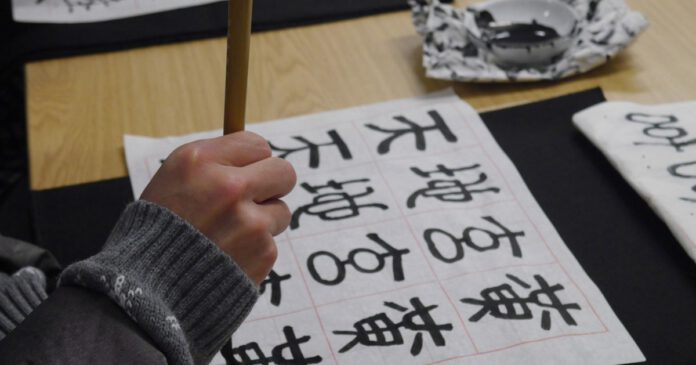
The formation of any culture is never an isolated process. Every civilization is rooted in its own historical soil, yet it is also shaped and enriched through encounters, exchanges, and mutual learning with other civilizations.
The history of Sinology is a vivid example of this process. Its emergence and development reflect not only the enduring vitality of Chinese civilization, but also the long history of dialogue between China and the wider world.
Chinese civilization has a long and continuous history. Its philosophy, writing, language, institutions, literature, and arts have together formed a cultural tradition that has endured for thousands of years. Confucianism, Daoism, and the diverse schools of thought that flourished in ancient China provided a profound intellectual foundation for Chinese culture.
They also became an important basis through which people beyond China came to understand and study the country. Without the accumulated vitality and richness of Chinese civilization, Sinology could not have emerged.
More than two thousand years ago, the Chinese began to reach beyond their immediate geographical surroundings. Zhang Qian’s missions to the Western Regions opened important channels connecting China with Central Asia, West Asia, and regions farther west.
Silk, porcelain, tea, and other Chinese products traveled along these routes, while ideas, religions, technologies, and cultural practices from other civilizations entered China. What later came to be known as the Silk Road was therefore much more than a commercial route. It was also a bridge between civilizations.
The arrival of Buddhism in China offers a particularly important example. Originating in India, Buddhism entered China during the Han period and gradually became integrated with Chinese culture. Chinese monks traveled westward in search of Buddhist scriptures, while foreign monks came to China to translate and teach Buddhist texts.
The journeys of Faxian and Xuanzang were not simply religious pilgrimages; they were also extraordinary intellectual journeys that expanded Chinese knowledge of Central and South Asia. Xuanzang’s travels, for example, produced valuable records of the geography, history, society, and customs of the regions he visited. Buddhism itself was transformed through its encounter with Chinese thought, eventually giving rise to distinctly Chinese traditions such as Chan Buddhism.
Christianity, particularly Nestorian Christianity, also entered China during the Tang dynasty. The Nestorian Stele erected in Chang’an in 781 provides important evidence of the religious and cultural exchanges between China and the West. These examples demonstrate that Chinese civilization was not a closed system. Throughout its history, it repeatedly encountered foreign ideas, absorbed what it found valuable, and transformed those ideas within its own cultural context.
The maritime world created another important channel of communication. Beginning in 1405, Zheng He’s voyages connected China with numerous countries and peoples across Southeast Asia, South Asia, the Middle East, and East Africa. His fleets carried Chinese silk, porcelain, tea, and other goods abroad and returned with spices, medicines, animals, plants, and other products. More importantly, these voyages facilitated the exchange of institutions, knowledge, customs, art, religion, and technology.
The significance of these journeys lies not only in their scale, but also in their spirit of engagement. The voyages represented a tradition of seeking contact and friendship with other peoples. They demonstrated that maritime exploration could serve not merely commercial or military purposes, but also the cause of peaceful communication between civilizations. Together, the land and maritime Silk Roads created channels through which China and the wider world gradually came to know one another.
It was within this long history of contact that the foundations of Sinology were laid.
At first, European knowledge of China came largely through merchants, travelers, diplomats, missionaries, and explorers. Their travel accounts and reports introduced European readers to China’s geography, government, economy, products, customs, language, and social life. Marco Polo’s famous account was among the most influential of these works, while numerous other travel diaries, letters, reports, and books followed. Although such writings inevitably reflected the authors’ own cultural assumptions and sometimes contained misunderstandings or exaggerations, they nevertheless played an important role in bringing China into the intellectual horizon of Europe.
From the sixteenth century onward, missionaries became particularly important intermediaries between China and Europe. They studied the Chinese language, read Chinese classics, interacted with Chinese scholars, and recorded their observations of Chinese society. At the same time, they introduced Western knowledge of mathematics, astronomy, geography, and other sciences into China. The resulting process was characterized by both “Western learning spreading eastward” and “Chinese learning spreading westward.”
Among the most important figures in this process were Michele Ruggieri and Matteo Ricci. Rather than treating Chinese culture simply as an obstacle to missionary activity, they sought to understand it from within. They studied Confucian texts and engaged Chinese intellectuals in dialogue. Their efforts demonstrated that meaningful cultural exchange requires more than the transmission of information; it requires the willingness to understand another civilization on its own terms.
A number of major works gradually transformed European knowledge of China from scattered observations into a more systematic body of learning. Juan González de Mendoza’s History of the Great and Mighty Kingdom of China, published in 1588, brought together a vast amount of information concerning China’s history, geography, government, education, military affairs, customs, products, and everyday life. It was translated into several European languages and circulated widely.
Another landmark appeared in 1687 with the publication of Confucius Sinarum Philosophus, or Confucius, the Chinese Philosopher. Written in Latin, the work introduced European readers to Confucius and major Confucian classics in a systematic manner. Its influence extended far beyond the study of China. European thinkers including Leibniz, Voltaire, Rousseau, and Montesquieu encountered Chinese philosophy and political thought through the growing body of literature on China. Chinese civilization thus became not only an object of curiosity but also a source of intellectual reflection for Europe.
This was a decisive stage in the emergence of Sinology as an independent field of study. In 1814, Jean-Pierre Abel-Rémusat began teaching Chinese and related languages and literature at the Collège de France. Chinese language, history, literature, and geography subsequently entered European academic institutions. Sinology gradually developed in France and then in many other countries, including Portugal, Spain, Italy, the Netherlands, Germany, Russia, Japan, and the United States. It increasingly incorporated methods from linguistics, history, anthropology, archaeology, sociology, and other disciplines.
Sinology is therefore both connected with China and distinct from traditional Chinese scholarship. Its object of study is Chinese civilization, but its development has taken place within different intellectual and cultural traditions. Chinese scholars and foreign Sinologists may examine the same historical subject while approaching it from different perspectives, using different questions and methodologies. This difference is not necessarily a weakness. On the contrary, it can provide valuable opportunities for mutual reflection.
Sinology can serve as a mirror through which the world sees China, but it can also become a mirror through which China sees itself.
The history of Sinology reminds us that the vitality of a civilization does not lie in resisting all change. It lies in its ability to communicate, absorb, transform, and renew itself. Chinese civilization has survived and developed over thousands of years partly because of its capacity to incorporate elements from other cultures. Buddhism became deeply integrated into Chinese intellectual and spiritual life; foreign artistic, religious, scientific, and technological influences enriched Chinese society; and in modern times, China has continued to learn from other civilizations.
Cultural exchange, however, is never a one-way process. It is not simply a matter of one civilization giving and another receiving. Genuine exchange is a process in which both sides are changed. Through dialogue, each civilization gains the opportunity to reconsider its own assumptions and discover new possibilities.
This lesson is particularly important in the twenty-first century. Modern transportation and communications have brought societies closer together than ever before, but geographical proximity does not automatically produce mutual understanding. Differences in history, religion, values, and social experience can still create misunderstanding and conflict. In such a world, the importance of understanding, respect, and equal dialogue has become even greater.
The significance of Sinology therefore extends beyond the academic study of Chinese language and culture. It represents a way of understanding another civilization through sustained intellectual engagement. To study a civilization seriously is not simply to judge it by one’s own standards, but to enter, as far as possible, its historical experience and cultural context.
Chinese civilization has produced many ideas that continue to possess value beyond their original historical setting: self-renewal, moral responsibility, respect for others, honesty, trust, and harmony between human beings and nature. At the same time, China has much to learn from the achievements and experiences of other civilizations. Cultural confidence should not mean cultural isolation. Genuine confidence allows a civilization to appreciate its own heritage while remaining open to the strengths of others.
Sinology was born from encounters between civilizations. It began with the movement of people, goods, religions, books, and ideas along ancient roads and across seas. It grew through travel accounts and missionary writings, matured through the translation and study of Chinese classics, and eventually became an established academic discipline. Its history is therefore not merely the history of a field of scholarship. It is also a history of humanity’s long search for understanding across cultural boundaries.
Looking ahead, the value of Sinology should not be measured only by the number of scholars, universities, or publications devoted to the study of China. Its deeper value lies in its capacity to promote dialogue. When different civilizations are willing to understand one another, recognize their differences, learn from one another, and seek common ground, cultural diversity becomes a source of strength rather than division.
Harmony does not mean the disappearance of difference. It means that differences can coexist with mutual respect. The history of Sinology demonstrates that civilizations can meet without losing their identities, and that through sustained exchange they can enrich one another.
Humanity may still be far from the ideal of a world in which different peoples live together in mutual understanding. Yet distance should not be a reason to abandon the journey. The ancient dream that people across the world might live as members of one human family remains worth pursuing.
Sinology came into being through the meeting of civilizations, and its future should continue to be shaped by that meeting. When cultures become more open, more understanding, and more willing to learn from one another, the study of China becomes more than an academic enterprise: it becomes part of the broader human effort to build bridges across differences and to create a world in which civilizations can coexist, communicate, and flourish together.
Source: qstheory, sass org cn, people, uwtsd