



For years, limited flight endurance has been one of the biggest obstacles to the widespread adoption of drones. Whether used for power line inspections, wildfire monitoring, emergency response, logistics, or low-altitude transportation, drones have been constrained by short flight times and slow energy replenishment.
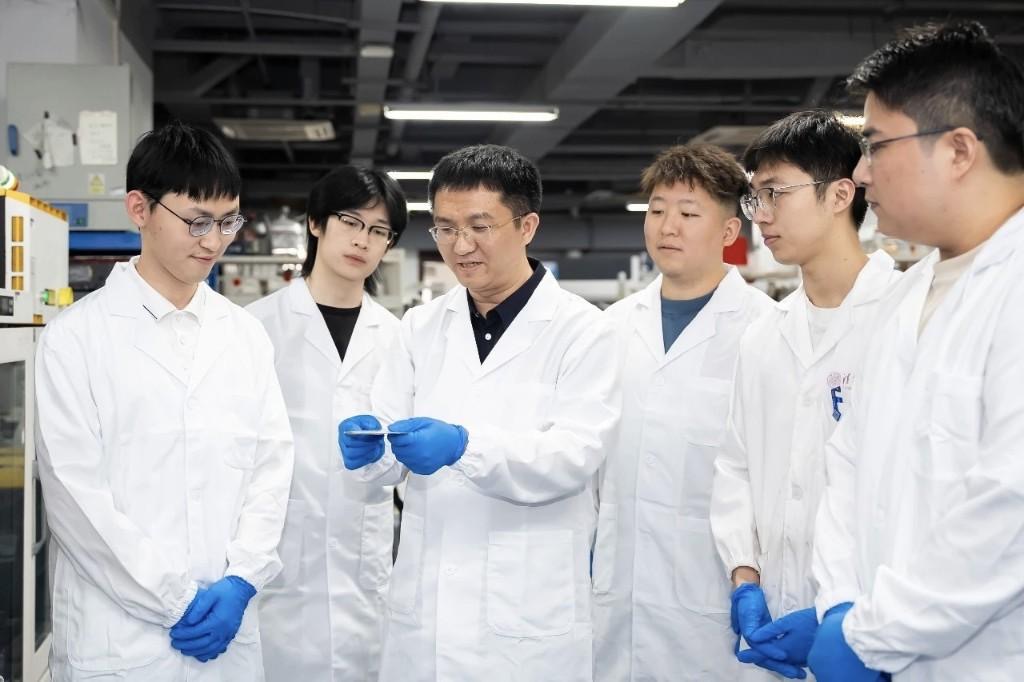
In May, however, two major technological breakthroughs from China offered new hope for overcoming this long-standing challenge. On May 6, the prestigious scientific journal Nature published a research paper by Professor Zhou Guangmin’s team from Tsinghua Shenzhen International Graduate School. The team introduced an innovative concept known as a “premediator,” a molecular design strategy that significantly improved the performance of lithium-sulfur batteries. Their prototype pouch cell achieved an energy density of 549 Wh/kg, nearly twice that of today’s mainstream commercial lithium-ion batteries.
Just four days later, another milestone was announced. Researchers at the Dalian Institute of Chemical Physics, Chinese Academy of Sciences, led by Academician Chen Zhongwei and Associate Professor Zhang Meng, unveiled a high-specific-power air-cooled hydrogen fuel cell stack. The technology passed a national scientific evaluation with a specific power of 1,970 W/kg, placing it among the world’s leading fuel cell systems.
Although these two innovations follow different technological paths, they share the same objective: enabling drones to fly farther, operate longer, and support the rapid growth of the low-altitude economy.
For drones, the greatest limitation has never been the electric motor, it has always been the power source. One of the most important indicators of battery performance is energy density, which measures how much energy can be stored per unit of weight. Higher energy density allows an aircraft to remain airborne longer without increasing its payload.
Today’s commercial lithium-ion batteries typically achieve practical energy densities between 250 and 300 Wh/kg. After decades of development, this technology is approaching its theoretical limits, making further improvements increasingly difficult.
As a result, researchers have turned their attention to lithium-sulfur batteries, which are widely regarded as one of the most promising next-generation energy storage technologies.
Sulfur is abundant, inexpensive, and environmentally friendly. In theory, lithium-sulfur batteries can store far more energy than conventional lithium-ion batteries. However, commercial development has been hindered by a major challenge known as the “shuttle effect.”
During battery discharge, sulfur is converted into intermediate compounds called polysulfides. These compounds tend to dissolve into the electrolyte and migrate between the battery’s electrodes, causing the gradual loss of active materials. As a result, battery capacity declines rapidly over repeated charging and discharging cycles.
Scientists around the world have spent more than a decade trying to suppress this phenomenon. Previous approaches focused on physically blocking the migration of polysulfides or chemically trapping them. While these methods achieved partial success, they often compromised energy density, battery weight, or long-term stability.
Professor Zhou’s team adopted a fundamentally different strategy.
Instead of attempting to block the polysulfides, they designed a special molecular structure called a premediator. This molecule remains chemically inactive during normal operation but is activated only when it encounters polysulfides inside the battery. Once activated, it performs two critical functions simultaneously: it confines the polysulfides near the cathode to reduce material loss while accelerating electrochemical reactions to improve energy conversion efficiency.
To identify the optimal molecular design, the researchers combined quantum chemical simulations with machine learning to screen nearly 200 candidate structures. The resulting battery maintained excellent cycling stability while achieving an energy density of 549 Wh/kg under practical testing conditions that closely resemble real-world applications.
The significance of this achievement extends beyond a new laboratory record. It represents an important step toward making lithium-sulfur batteries commercially viable for drones, electric vehicles, and future aerospace applications.
While lithium-sulfur batteries focus on storing more energy, hydrogen fuel cells offer another solution: supplying power continuously for much longer periods. The newly developed air-cooled fuel cell stack from the Dalian Institute of Chemical Physics delivers a specific power of 1,970 W/kg, meaning that every kilogram of the system can continuously produce nearly two kilowatts of power, approximately 60 percent higher than the performance of mainstream commercial air-cooled fuel cells.
Often described as the “heart” of a hydrogen-powered drone, the fuel cell stack generates electricity through the electrochemical reaction of hydrogen and oxygen. Unlike liquid-cooled systems, an air-cooled design dissipates heat using ambient air, eliminating pumps, coolant, and complex piping. This makes the system lighter, simpler, and particularly suitable for weight-sensitive platforms such as unmanned aerial vehicles.
Most industrial drones today can remain airborne for only 30 to 40 minutes before returning for battery replacement or recharging. Hydrogen-powered drones, by contrast, can operate for around two hours, while replacing a hydrogen cylinder takes only a few minutes instead of hours of charging. This dramatically improves operational efficiency for applications such as power grid inspection, pipeline monitoring, forest protection, and emergency rescue.
China has also made significant progress in hydrogen-powered aviation.
The hydrogen-powered composite-wing drone Qing’ou-30B, developed by the Harbin Institute of Technology Chongqing Research Institute, has demonstrated flight endurance of up to 12 hours. Meanwhile, the AEP100 megawatt-class hydrogen turboprop engine has successfully completed flight testing, marking another important step toward large-scale hydrogen-powered aircraft.
Rather than competing with each other, lithium-sulfur batteries and hydrogen fuel cells are expected to serve complementary roles.
High-energy-density batteries are well suited for consumer drones, light industrial aircraft, and future electric vertical takeoff and landing (eVTOL) vehicles, where minimizing weight is essential. Hydrogen fuel cells, on the other hand, are better suited for long-endurance missions, heavy payload transportation, and continuous industrial operations requiring rapid refueling.
Together, these technologies are expanding the possibilities of the low-altitude economy. Of course, challenges remain before either technology can achieve widespread commercialization. Lithium-sulfur batteries must further improve manufacturing consistency, long-term durability, and safety. Hydrogen-powered systems still require broader hydrogen infrastructure, safer storage technologies, and lower life-cycle costs.
Nevertheless, the direction is becoming increasingly clear. As drone delivery, aerial inspection, urban air mobility, and advanced logistics continue to develop, energy systems will remain the foundation of future aviation. Breakthroughs in both lithium-sulfur batteries and hydrogen fuel cells demonstrate China’s growing capabilities in next-generation aerospace power technologies.
As these innovations move from research laboratories to commercial deployment, the long-standing endurance limitations of drones may finally become a challenge of the past, paving the way for a more efficient, sustainable, and connected low-altitude future.
Source: xinhua, gepote, sciencenet, tsinghua, sina, sohu