


Amid profound changes in the international landscape, a nation’s enduring vitality and capacity for renewal are ultimately rooted in the depth of its civilization. Throughout human history, Chinese civilization stands as the only major civilization that has continued uninterrupted for more than five thousand years.
Across centuries of transformation, social change, and external challenges, it has maintained remarkable resilience and vitality. This ability to endure through time provides an important key to understanding China’s historical development and its contemporary trajectory.
In recent years, discussions surrounding civilization, views of civilization, civilizational states, and comparisons between Chinese and Western civilizations have attracted increasing attention in both academic circles and public discourse.
From the perspective of the theory of the “civilizational state,” contemporary China is characterized by several distinctive features, including an exceptionally long historical tradition, a vast population, a broad territorial scale, and profound cultural accumulation.
Among these characteristics, the continuity of Chinese civilization over thousands of years is particularly significant. Why has Chinese civilization been able to survive and thrive throughout history? What underlying forces have sustained its continuity? The answers can be found in the unique structure and internal logic of Chinese civilization itself.
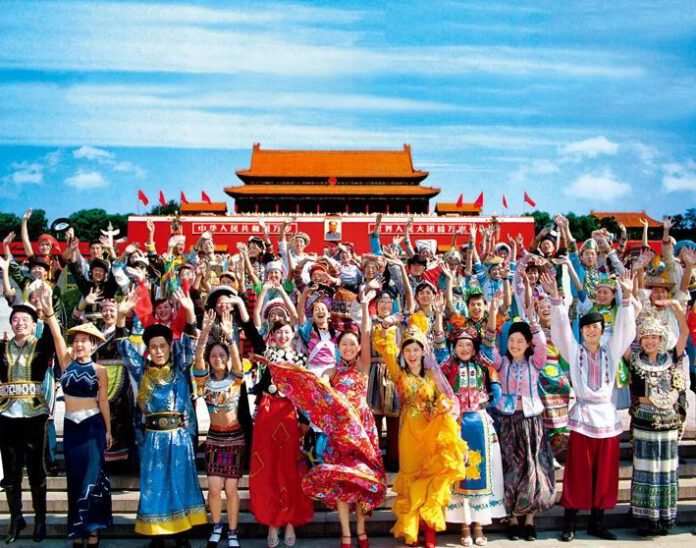
The first foundation of Chinese civilization’s longevity lies in its broad and inclusive character. From its earliest formation, Chinese civilization developed across a vast geographical space and within a diverse human environment. The concept of “extensive territory and a large population” not only describes the scale of ancient Chinese society but also reflects the expansive nature of Chinese civilization.
The greatness of Chinese civilization does not come from a single religious foundation, a singular mode of production, or a uniform way of life. Rather, it is built upon diversity, inclusiveness, and richness.
Ancient Chinese civilization was primarily based on agricultural civilization while also incorporating grassland nomadic traditions, mountain and forest cultures, commercial traditions, and maritime cultures. Through interaction and integration among these different elements, it developed into a complex civilization that combined unity with diversity.
In the modern era, Chinese civilization has continued to absorb new forms of human development, including industrial civilization, information civilization, ecological civilization, and technological civilization. These interactions have expanded the scale and vitality of Chinese civilization, allowing it to continuously adapt to new historical conditions.
The breadth of Chinese civilization is also reflected in the evolution of its intellectual and cultural traditions. The “Hundred Schools of Thought” during the Warring States period established a foundation of intellectual diversity and openness. The exchange, competition, and integration among different schools of thought contributed to the formation of a profound Chinese intellectual tradition.
Even after Confucianism became the dominant ideological framework of traditional Chinese society, it was not a closed or isolated system. Instead, it incorporated elements from Daoism, Mohism, Legalism, Buddhism, and other traditions, developing into a flexible and resilient cultural system.
In the history of human civilization, some smaller and more homogeneous civilizations declined or disappeared when faced with dramatic environmental changes or external pressures.
Chinese civilization, however, has benefited from its internal diversity and vast capacity for adjustment. When confronted with crises, it has repeatedly demonstrated the ability to transform challenges into opportunities through adaptation, integration, and innovation. This resilience has allowed the continuity of its civilizational heritage.
Chinese civilization has endured not only because of its breadth, but also because of its ability to change and renew itself. The ancient Chinese wisdom that “when circumstances reach an extreme, change becomes necessary; through change, progress becomes possible; through progress, continuity can be achieved” reflects a deep understanding of transformation. The concept of “change” emphasized in the ancient classic The Book of Changes has long been central to Chinese thought.
Throughout Chinese history, processes of renewal and reform have appeared repeatedly. The principles of “discarding the old and creating the new,” “building upon tradition while innovating,” and “reviving the past through new interpretations” have shaped China’s historical development.
The evolution of the Chinese concept of “great unity” provides a clear example. From the feudal structure of the Western Zhou dynasty, to the centralized administrative system established during the Qin and Han dynasties with shared systems of writing, transportation, and social norms, and later to the integrated multi-ethnic political order of the Tang, Yuan, Ming, and Qing periods, the idea of unity has continuously evolved in response to changing historical conditions. Today’s modern Chinese nation, characterized by “pluralistic unity,” represents a further development and transformation of this historical tradition.
Another important reason for the continuity of Chinese civilization is its identity as a learning-oriented civilization. Learning has never been regarded merely as an individual pursuit; it has also been understood as a driving force behind civilizational development. Chinese traditions have long emphasized the importance of education, lifelong learning, and the pursuit of knowledge. Learning, in this context, extends beyond books to include nature, society, practice, other cultures, and even lessons gained from difficulties and failures.
The history of Chinese civilization is also a history of cultural exchange and mutual learning. China experienced several major waves of learning from other civilizations. After the Eastern Han period, the introduction of Buddhism led to a long process of integration between Buddhist thought and Chinese culture. In the early twentieth century, China studied and absorbed Marxism, later developing forms adapted to Chinese historical conditions. Since the beginning of reform and opening up, China has extensively learned from the achievements of modern global civilization and promoted development through engagement with the wider world.
These historical experiences demonstrate that Chinese civilization’s openness has never meant simple imitation. Rather, it has involved maintaining cultural confidence while absorbing, transforming, and creating new ideas. This capacity for learning and innovation has enabled Chinese civilization to continuously renew itself.
Ultimately, the continuation of civilization depends on people. Chinese civilization has traditionally placed great emphasis on the role of individuals, believing that the strength of a civilization is reflected not only in its material achievements and institutions but also in the moral qualities and responsibilities of its people. Throughout history, scholars, officials, thinkers, and social leaders have played crucial roles in preserving and advancing Chinese civilization.
Whenever China faced major challenges or periods of crisis, generations of dedicated individuals emerged to protect cultural traditions, promote reform, and seek new paths forward. From the traditional scholar-official class to modern groups committed to national development and social progress, these figures have served as important carriers of China’s civilizational heritage.
The endurance of Chinese civilization for more than five thousand years is therefore rooted in a unique set of internal mechanisms: a broad and diverse civilizational structure, a spirit of innovation and adaptation, an openness to learning and exchange, and the continuous contribution of generations of people committed to carrying civilization forward.
Source: chinanow, xuexi, cgtn, xinhua