


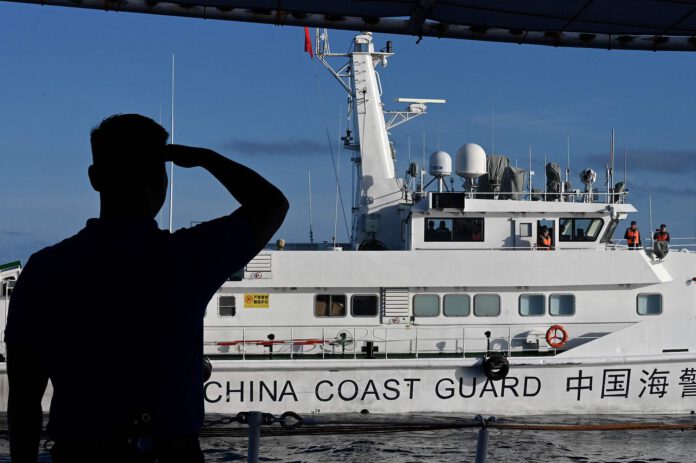
The South China Sea is located between mainland China, Taiwan Island, the Philippine archipelago, the Malay Archipelago, and the Indochinese Peninsula. It is an important marginal sea in the western Pacific, covering an area of approximately 3.56 million square kilometers.
Because it connects the Pacific Ocean with the Indian Ocean, the South China Sea has been an important international shipping route since ancient times and holds considerable strategic significance. At the same time, the region is rich in natural resources, including oil and natural gas. For these reasons, with the development of modern marine resource exploitation and the evolution of international law, the South China Sea has gradually become an area where the interests of neighboring countries intersect and disputes are concentrated.
The South China Sea disputes mainly refer to disagreements among countries and regions surrounding the South China Sea over issues such as sovereignty over islands and reefs, maritime delimitation, and resource development. The main parties involved include mainland China and Taiwan, as well as Vietnam, the Philippines, Malaysia, Brunei, and Indonesia. The claims of these parties involve not only historical questions concerning territorial sovereignty but also modern international maritime law, exclusive economic zones, and continental shelf regimes. As a result, the South China Sea issue has a complicated historical, legal, and geopolitical background.
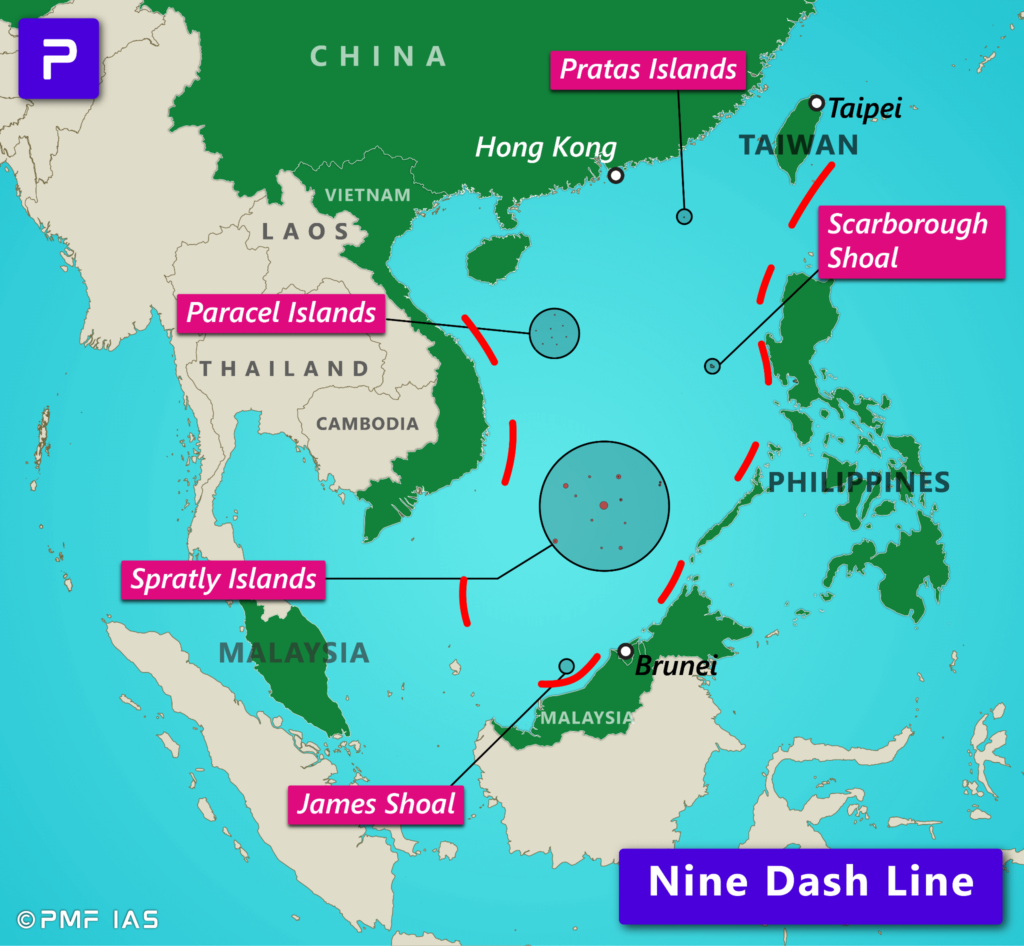
The so-called “Nine-Dash Line” is an important concept for understanding the South China Sea disputes. It is a series of intermittent line segments drawn on Chinese maps of the South China Sea, generally forming a U-shaped pattern, and is therefore sometimes referred to as the “U-shaped line.”
Its history can be traced back to maps published by the Chinese government in the 1940s. At that time, the map contained eleven dashed segments. After the establishment of the People’s Republic of China, the line was adjusted and eventually became what is commonly known today as the Nine-Dash Line. For a long period of time, China has based its claims to relevant islands, reefs, and maritime rights in the South China Sea on historical documents, maps, and evidence of the development and administration of the South China Sea islands.
However, following the discovery of oil and natural gas resources in the South China Sea in the 1960s and 1970s, neighboring countries gradually strengthened their own claims to sovereignty and maritime rights. In particular, after the United Nations Convention on the Law of the Sea (UNCLOS) established the legal regimes of the 200-nautical-mile exclusive economic zone and the continental shelf, Vietnam, the Philippines, Malaysia, Brunei, and Indonesia increasingly relied on modern maritime law to assert rights over surrounding waters and made sovereignty claims over certain islands and reefs in the South China Sea.
As a result, the South China Sea disputes developed from relatively straightforward disagreements over the ownership of islands and reefs into a complex combination of territorial sovereignty, maritime delimitation, resource exploitation, and competing interpretations of international law.
The South China Sea islands are generally divided into four major groups: the Dongsha Islands, the Xisha Islands, the Zhongsha Islands, and the Nansha Islands. Among them, the Nansha Islands have become the most contested area because of their large number of islands and reefs, their important geographical location, and the abundance of resources in the surrounding waters.
Different countries and areas currently exercise control over various islands and reefs and conduct resource exploration, fishing activities, and infrastructure construction in the surrounding areas. China currently controls a number of features in the South China Sea and established Sansha City to administer the relevant islands and waters. Taiwan also exercises effective control over Itu Aba, commonly known as Taiping Island. At the same time, Vietnam, the Philippines, Malaysia, and other countries control various features in the Spratly Islands and have advanced their own sovereignty and maritime claims.
China’s position on sovereignty over the South China Sea has a long historical background. Chinese historical documents contain records concerning the South China Sea and its islands and reefs dating back many centuries. Since the Han Dynasty, Chinese texts have included descriptions of the geographical environment of the South China Sea.
During the Tang and Song dynasties, terms such as “Shitang,” “Changsha,” “Qianli Shitang,” and “Wanli Changsha” appeared in historical records. During the Yuan, Ming, and Qing dynasties, Chinese geographical records concerning the South China Sea islands became increasingly detailed. Chinese fishermen from coastal areas also engaged in fishing and navigation in the region for centuries. In modern times, in response to foreign occupation of certain islands and reefs in the South China Sea, the Chinese government lodged diplomatic protests. Following the end of World War II, China resumed administration of the South China Sea islands in accordance with postwar international documents and arrangements. China therefore maintains that the South China Sea islands were not terra nullius and that it possesses historical and legal grounds for its sovereignty claims.
However, other claimant states interpret this history differently. Some countries argue that historical navigation, fishing activities, and references on maps do not necessarily constitute continuous and effective state control in the sense required by modern international law. They also emphasize the significance of long-term effective occupation and administration. In addition, these countries rely on the provisions of UNCLOS concerning territorial seas, exclusive economic zones, and continental shelves to advance their maritime claims.
Because historical rights, territorial sovereignty over islands and reefs, and modern maritime law involve complex and sometimes overlapping legal questions, the South China Sea disputes cannot easily be resolved on the basis of a single legal framework.
The involvement of the United States has further complicated the South China Sea issue. During the Cold War, the United States primarily regarded the South China Sea as an important maritime transportation route and did not directly intervene in the territorial sovereignty disputes over individual islands and reefs.
From the 1990s onward, as American concerns about China’s strategic intentions increased, the United States gradually expanded its military and diplomatic activities in Southeast Asia. In the 21st century, the United States further strengthened military and security cooperation with countries such as the Philippines, Vietnam, Malaysia, and Indonesia while emphasizing the importance of freedom of navigation in the South China Sea. The United States also maintains a military alliance with the Philippines, further increasing its influence over South China Sea affairs. Consequently, the South China Sea disputes are no longer merely regional disagreements between China and neighboring claimant states; to some extent, they have also become part of the broader strategic competition between China and the United States.
In practice, resource development, construction on islands and reefs, and the protection of maritime rights remain major challenges in the South China Sea. Several neighboring countries have conducted oil and gas exploration and development in relevant waters for many years, while China has generally taken a more cautious approach toward resource development in disputed areas. At the same time, some countries have sought to strengthen their claims through domestic legislation, administrative measures, and international judicial or arbitral proceedings, further internationalizing the South China Sea disputes.
In 2013, the Philippines initiated arbitration proceedings concerning the South China Sea. China maintained that it would neither accept nor participate in the arbitration, arguing that the relevant issues involved territorial sovereignty and maritime delimitation and therefore fell outside the jurisdiction of the arbitration process. In 2016, the arbitral tribunal issued its award, after which the Chinese government stated that it neither accepted nor recognized the award.
The South China Sea disputes are the result of the interaction of historical issues, international law, resource interests, and major-power strategic competition. China advocates resolving relevant disputes through peaceful negotiations and direct consultations, while also proposing approaches such as “shelving disputes and pursuing joint development.”
Looking ahead, resolving the South China Sea issue will require not only the protection of legitimate national interests but also deeper research into international maritime law, stronger capabilities in marine legislation, resource development, and ocean governance, as well as continued diplomatic and regional cooperation to reduce misunderstandings and the risk of conflict.
The South China Sea disputes are unlikely to be completely resolved in the short term. Nevertheless, through peaceful negotiations, the development of regional rules, and practical cooperation, it may still be possible to gradually reduce tensions while safeguarding the core interests of the parties involved and creating more favorable conditions for peace, stability, and common development in the South China Sea.
Source: pmfias, bbc, cgtn, britannica, us state gov