


In 2024, China’s pet population surpassed 120 million. As pets increasingly become emotional companions rather than simply household animals, a new question has gained attention among millions of owners: how should a pet’s life be respectfully concluded?
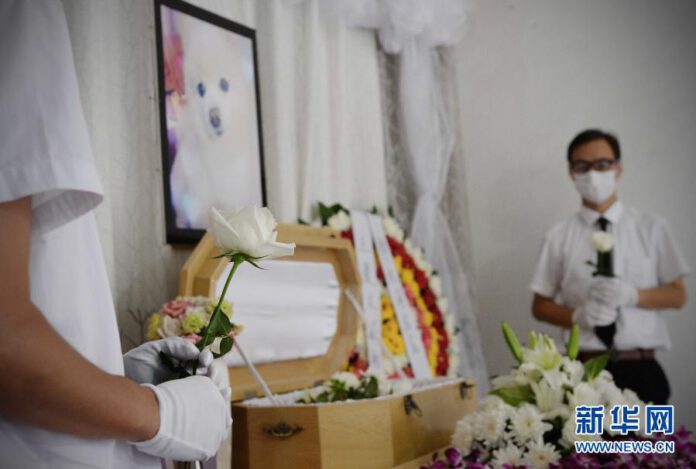
For many years, the death of a pet was rarely discussed. After an animal passed away, owners often had limited options beyond simple disposal or burial. Today, however, more and more people are choosing to give their pets a formal farewell. Services such as cremation, farewell ceremonies, ashes preservation, and memorial products are gradually becoming part of China’s expanding pet economy.
Behind this change is the rapid growth of a new market. By June 2025, more than 8,000 companies in China had registered business activities related to pet funeral services, with many established within the past three years. Industry reports estimate that China’s pet funeral market reached around 230 million euros in 2023 and could exceed 1.3 billion euros by 2030. The rise of this industry is closely linked to two major trends: the growing number of pets and the changing emotional role they play in people’s lives.
For many urban families, pets are no longer simply animals kept at home. They are companions that share daily routines, provide emotional support, and accompany people through important moments. A cat or dog may spend more than a decade with a family, becoming part of memories connected to relationships, work, relocation, and personal growth.
When such a companion dies, many owners are not only dealing with the loss of an animal, but also the disappearance of a familiar presence in their lives. This emotional demand has transformed pet funeral services from simple disposal into a form of farewell ceremony.
A typical process may include collecting the pet’s body, cleaning and arranging it, holding a private farewell ceremony, completing cremation, and preserving the ashes. Some owners choose to keep paw prints, fur samples, photographs, or customized memorial items as reminders of their pets.
Prices vary depending on location and services. In major cities such as Beijing, Shanghai, and Chongqing, pet funeral services have become increasingly visible. The industry, once concentrated mainly in first-tier cities, is now expanding into smaller urban areas as demand changes from simply asking “is there such a service?” to “is the service professional and respectful?”
Behind this market expansion are countless emotional stories. A pet funeral worker once recalled receiving a small dog that had died in a traffic accident. The animal’s injuries were severe, and its owners, a mother and daughter, were devastated when they arrived. Unable to provide professional reconstruction, the staff carefully cleaned the body and covered the injuries so that the family’s final memory would not be filled with painful images.
For many workers in this industry, the goal is simple: to allow an animal to leave with dignity.
Their work is not only about handling remains. It is also about supporting people at one of their most vulnerable moments.
Some owners arrive at funeral facilities overwhelmed and unsure what to do next. Others initially request the simplest possible service because they cannot accept the reality of the loss. But when cremation approaches, some suddenly ask to see their pets one more time.
Many workers have found that farewell ceremonies are not unnecessary rituals. Instead, they can help owners acknowledge the loss and begin the process of moving forward.
People respond differently to these moments. Younger owners may speak to their pets as if they were still alive, calling their names and recalling memories. Older owners often remain quiet, standing beside the farewell room and silently watching. Some people leave the room briefly because they cannot hold back their emotions.
The experience of working with death has also changed the perspectives of many pet funeral professionals themselves. One worker once said that after years in the industry, he rarely cried because the animals he handled had already passed away. He had never seen them running, playing, or interacting with their families, so it was difficult to form a personal connection.
That changed after he encountered a rescued stray cat. The cat was found injured on the roadside and appeared lifeless. As preparations were being made, it suddenly moved and let out a weak cry. It was rushed to a hospital and survived. The rescuers gave it a name that represented hope for a better future. A year later, the cat died because of illness.
Seeing the same animal that had once fought for life lying on the farewell table made the worker understand something he had previously struggled to fully grasp: people are not only mourning death itself. They are mourning the future they imagined but will never see.
However, as the industry grows, it also faces challenges.
Because pet funeral services are still relatively new in China, regulations and industry standards remain incomplete. Problems such as unlicensed operations, misleading advertising, unclear pricing, and excessive sales practices have appeared in some areas.
Some consumers have reported paying for “individual cremation” but being unable to verify whether the process was actually carried out separately. Others have said they were encouraged to purchase additional services at emotionally difficult moments.
The industry also faces regulatory complexity. Pet funeral services involve multiple areas, including animal disease prevention, environmental protection, and market supervision. In the past, many operators lacked clear guidance on what qualifications and procedures were required.
Location is another challenge. Because funeral services are traditionally associated with negative perceptions, some communities resist pet funeral facilities nearby. As a result, many businesses operate in suburban areas and maintain a low profile.
Yet these challenges also reflect an industry moving from rapid expansion toward greater regulation.
In recent years, Chinese authorities have paid increasing attention to the proper handling of animal remains. Regulations require deceased animals to undergo appropriate disposal procedures rather than being abandoned. Some regions have begun developing professional facilities that provide transportation, disease prevention, and standardized treatment services.
Meanwhile, responsible operators are improving transparency. Some record cremation procedures to reassure owners, while others participate in charity programs that provide free cremation services for stray animals.
The development of China’s pet funeral industry is ultimately about more than business.
It reflects a broader social change: a growing recognition that animals can hold emotional value and deserve respect at the end of their lives.
China’s relationship with pets is evolving. What was once a rarely discussed topic is becoming part of modern urban life. From a simple act of disposal to a meaningful farewell, pet funeral services represent a society that is gradually learning to value companionship, memory, and every form of life.
For many owners, the final farewell is not only about saying goodbye. It is about preserving the years of love and companionship that came before.
source: zqb, xinhua, sohu, dfcfw