


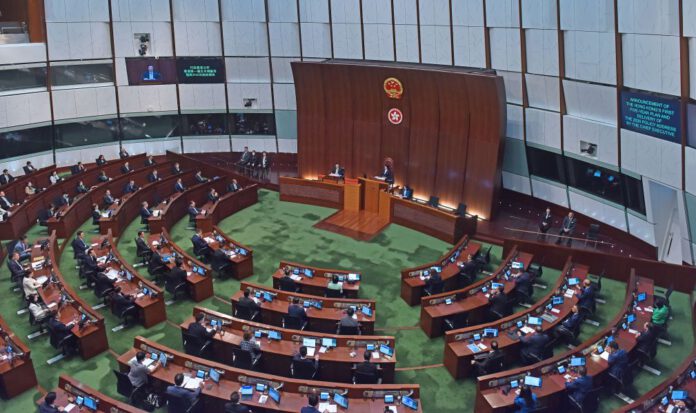
On September 16, 2026, the Hong Kong Special Administrative Region Government unveiled its first Five-Year Plan, covering the period from 2026 to 2030. The plan sets out priorities including consolidating Hong Kong’s position as an international financial, shipping, trade and aviation hub; developing its innovation and technology capabilities; accelerating the development of the Northern Metropolis; attracting global talent; improving livelihoods; and contributing more actively to national development.
By establishing longer-term objectives alongside annual policy and budgetary arrangements, Hong Kong is seeking to move beyond incremental policymaking towards a more coordinated approach to economic and social transformation.
This does not mean abandoning Hong Kong’s market-oriented traditions or simply replicating the development model of mainland cities. On the contrary, the city’s value lies in its distinctive position under the “One Country, Two Systems” framework. Its international financial networks, common law system, free-port status, professional services and global talent pool remain important assets. The purpose of long-term planning is to bring these advantages together more effectively, ensuring that they complement the mainland’s industrial capacity, technological development and expanding domestic market.
Infrastructure provides the most visible evidence of how far cooperation between Hong Kong and the mainland has progressed. High-speed rail connections, cross-border roads, port facilities and increasingly integrated transport networks have reduced the time and friction involved in moving people and goods across the region. The Hong Kong section of the Guangzhou–Shenzhen–Hong Kong Express Rail Link has connected the city more closely with the national railway network, while the expansion of intercity railways across the Guangdong-Hong Kong-Macao Greater Bay Area is helping transform the region into a more integrated economic space.
The significance of these developments extends well beyond transport. As connectivity improves, businesses can distribute research, manufacturing, logistics and professional services across different cities more efficiently. Residents gain greater access to employment, education, healthcare and cultural activities. Cross-border cooperation is gradually evolving from occasional exchanges into an everyday economic and social reality.
Over the next five years, the Northern Metropolis is expected to become a major test of this transformation. Located along Hong Kong’s northern boundary, the area offers opportunities to develop new residential communities, innovation clusters and strategic links with Shenzhen. Proposed railway projects, including the Northern Link and its Spur Line, as well as the Hong Kong-Shenzhen Western Rail Link, could further strengthen cross-border connectivity if delivered according to plan.
Yet the success of these projects should not be measured simply by the number of kilometres of railway constructed or the amount of investment committed. The more important question is whether infrastructure can attract businesses, create quality employment, encourage research collaboration and generate sustainable economic activity. Without a clear industrial strategy, even large infrastructure investments risk becoming expensive assets that fail to deliver their full economic potential. Transport links must therefore be developed alongside land-use planning, commercial facilities, talent policies and cross-border coordination.
Economic exchanges between Hong Kong and the mainland demonstrate the scale of the opportunities. According to figures provided by Shenzhen Customs, trade between the mainland and Hong Kong increased from approximately RMB 420.87 billion in 1997 to RMB 2.6 trillion in 2025, representing average annual growth of 6.7 per cent. In the first five months of 2026, bilateral trade reached approximately RMB 1.4 trillion, up 48.6 per cent year on year. Trade passing through Shenzhen ports accounted for more than 70 per cent of the total cited in the figures.
These numbers highlight the continuing importance of Hong Kong within regional supply chains and cross-border commerce. However, a sharp increase over a limited period should not automatically be interpreted as a permanent growth trend. Global demand, trade policies, supply-chain restructuring and geopolitical uncertainty can all influence future performance. Hong Kong’s long-term competitiveness will depend on its ability to move beyond the expansion of existing trade flows and create new sources of value.
Innovation and technology represent one of the most promising avenues. Hong Kong has internationally recognised universities, research institutions, access to global capital and expertise in intellectual property and professional services. Shenzhen and other Greater Bay Area cities have developed strong capabilities in advanced manufacturing, electronics, artificial intelligence and commercial technology applications. Combining these strengths could create a more complete innovation ecosystem, connecting fundamental research with financing, product development, manufacturing and international markets.
Cooperation agreements between the Ministry of Science and Technology and the Hong Kong SAR Government have already established a foundation for closer collaboration in research, resource sharing, technology transfer and personnel exchanges. The first Five-Year Plan provides an opportunity to turn these arrangements into more practical outcomes. The Hetao Shenzhen-Hong Kong Science and Technology Innovation Co-operation Zone, universities and private enterprises could become important platforms for joint research and commercialisation.
Nevertheless, establishing laboratories and innovation parks is only the beginning. Hong Kong must address the persistent challenge of translating research into commercially viable products. Start-ups need access to capital, testing facilities, customers and affordable space in which to grow. Researchers need clearer pathways from academic discovery to commercial application, while businesses need confidence that intellectual property will be protected and cross-border collaboration can operate within workable regulatory frameworks. Without progress in these areas, innovation risks remaining a policy ambition rather than becoming a meaningful economic engine.
Finance will remain another pillar of Hong Kong’s development. The city has long served as an important gateway through which mainland companies access international capital and global investors participate in Chinese markets. Continued cooperation in stock markets, exchange-traded funds and other financial products can strengthen this role. Opportunities in renminbi internationalisation, green finance, digital finance and wealth management may also create new areas of growth.
However, Hong Kong’s status as an international financial centre cannot be taken for granted. Global interest rates, geopolitical tensions, regulatory changes and shifts in investor confidence can affect capital flows rapidly. Long-term planning can establish strategic direction, but it cannot substitute for market confidence. Maintaining a predictable legal and regulatory environment, deepening market liquidity and delivering high-quality professional services will remain essential. At the same time, financial development should support the real economy by helping innovative businesses raise capital and enabling productive investment, rather than relying solely on trading activity and asset valuations.
Cultural exchange, education and talent mobility are equally important to the future of regional integration. Hong Kong’s universities, cultural institutions and international networks complement the mainland’s expanding consumer market, technological industries and tourism resources. Cooperation in exhibitions, performing arts, film production, sporting events, research programmes and youth employment could help create a Greater Bay Area that functions not only as an interconnected economic region but also as a shared space for living, learning and cultural exchange.
Infrastructure may bring cities closer geographically, but sustained integration also requires mutual understanding and opportunities for ordinary people. Easier professional qualification recognition, more convenient cross-border services and greater access to education and employment can help ensure that regional cooperation delivers tangible benefits beyond major corporations and investors.
Despite these opportunities, Hong Kong faces several significant risks in implementing its first Five-Year Plan. The first is the gap between ambition and execution. Large infrastructure projects require substantial capital, lengthy construction periods and coordination across land use, environmental protection, public finances and regulatory approvals. If costs rise or implementation falls behind schedule, expected economic benefits may be delayed. The government will need transparent performance indicators, regular reporting and a willingness to adjust priorities when circumstances change. The number of projects launched should never be confused with the value they ultimately create.
The second risk concerns external dependence and economic concentration. Deeper integration with the mainland offers substantial advantages, but Hong Kong must also preserve and expand its international connections. Global trade tensions, changes in investment patterns and external policy restrictions could affect its traditional industries. A resilient strategy should therefore combine stronger mainland cooperation with continued engagement across international markets. Diversification into healthcare, green industries, professional services, technology and the creative economy could help reduce excessive reliance on a limited number of sectors.
A third challenge is ensuring that economic growth translates into improvements in everyday life. Housing affordability, an ageing population, youth employment and unequal access to opportunities remain important social concerns. New transport networks and innovation districts should ultimately create better jobs, more accessible public services and a higher quality of life. If investment generates impressive economic statistics without delivering meaningful improvements for residents, public confidence in the development strategy may weaken.
Hong Kong must also strike a careful balance between administrative coordination and market flexibility. Long-term planning can reduce uncertainty and align public investment with strategic objectives, but excessive rigidity could constrain entrepreneurship and discourage private-sector innovation. The city’s competitive advantage has historically depended on its ability to respond quickly to international opportunities. The challenge is to provide a clearer long-term direction without sacrificing that adaptability.
Ultimately, the importance of Hong Kong’s first Five-Year Plan lies not in the number of targets it contains, but in whether it can connect the city’s international advantages with the mainland’s industrial depth and the Greater Bay Area’s growing economic scale. Infrastructure can bring cities closer; technology can connect industries; finance and trade can mobilise resources; and cultural and educational exchanges can build the social foundations for lasting cooperation.
Hong Kong is not starting from scratch. It is building on decades of economic exchange, infrastructure development and institutional cooperation with the mainland. The next five years will test whether those foundations can support a new stage of development, one defined by stronger coordination, more effective execution and greater economic resilience.
The plan offers a roadmap, but its success will ultimately be judged by results.
Railways must generate economic activity, research must lead to commercial innovation, finance must support productive investment, and regional integration must improve the lives of ordinary residents. If Hong Kong can turn these objectives into measurable achievements while preserving its openness, legal certainty and international outlook, its first Five-Year Plan could become a turning point in the city’s evolution from a gateway connecting China with the world into a more active contributor to the country’s long-term development.
Source: gdtzb gov cn, locpg gov cn, gov hk, cmab gov, cnbayarea, ndrc gov cn, most gov cn, southcn