


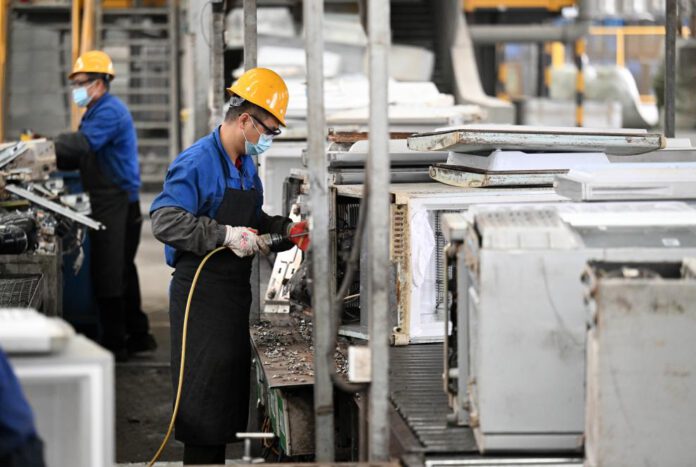
When a car reaches the end of its life, its value does not disappear. Beneath the worn-out bodywork, damaged engine and discarded components are hundreds of kilograms of recoverable steel. After dismantling, sorting and processing, this material can be returned to steel production. Chinese steelmakers are now taking this a step further: instead of recycling automotive scrap only into ordinary construction steel, they are working to turn it into high-quality automotive steel and specialty alloys.
The scale of the opportunity is growing rapidly. In 2025, China recovered approximately 9.801 million end-of-life motor vehicles, an increase of 24.5% year on year and 4.7 times the 2020 figure. Between 2024 and 2025, cumulative vehicle recoveries reached 17.673 million. Assuming that each scrapped vehicle yields around 800–900 kilograms of recoverable steel, cars alone generated more than 8 million tonnes of scrap steel in 2025.
This is part of a much larger shift in China’s resource landscape. After decades of industrial development, the country has accumulated an enormous stock of steel in buildings, vehicles, machinery and household appliances. China’s social steel stock was estimated at approximately 12 billion tonnes in 2022, or 8.3 tonnes per capita. By 2023, it had risen to around 12.8 billion tonnes, equivalent to 8.9 tonnes per capita. As these products reach the end of their service lives, an increasing volume of steel is becoming available for recycling.
The shift matters because China’s steel industry remains heavily dependent on imported iron ore. The country produces more than 900 million tonnes of crude steel annually, making it the world’s largest steel producer. Yet in 2025, China imported approximately 1.26 billion tonnes of iron ore, worth around RMB 880.4 billion. Its dependence on imported iron ore stood at roughly 81%.
Scrap steel offers an alternative source of raw material. Traditional blast furnace-basic oxygen furnace production relies primarily on iron ore and coke, while electric arc furnaces can melt scrap directly to produce steel. Industry estimates suggest that using one tonne of scrap steel can reduce iron ore consumption by approximately 1.4–1.6 tonnes compared with conventional production routes. Greater scrap use therefore has the potential to reduce both raw-material imports and the carbon intensity of steelmaking.
But turning an old car into high-quality steel is far more complicated than simply melting it down. End-of-life vehicles contain a mixture of steel, copper, aluminium, plastics, rubber and other materials. After shredding, these materials can become difficult to separate completely. While ordinary scrap may be suitable for producing some construction steel, automotive sheet steel, bearing steel and other specialty products require much stricter control over impurities.
Copper is one of the biggest obstacles. Cars contain copper wiring, electric motors and electronic components. During shredding, copper can become mixed with iron and enter the scrap supply. Once copper enters molten steel, conventional oxygen blowing cannot easily remove it. Excessive copper content can cause surface cracking during high-temperature processing and rolling, a problem known as copper-induced hot shortness. This makes copper contamination a serious barrier to producing high-quality steel from automotive scrap.
The solution begins before the scrap reaches the furnace. Dismantling facilities need to remove motors, wiring harnesses and other copper-containing components as early as possible. After shredding, magnetic separators, eddy-current systems and optical sorting technologies can further separate iron, copper, aluminium and non-metallic materials. Some steelmakers are also exploring ways to control copper during the smelting process, including the use of trace rare-earth elements such as cerium and lanthanum to form high-melting-point compounds.
Another challenge arises inside the electric arc furnace. Molten steel can absorb nitrogen from the surrounding atmosphere. Excessive nitrogen can reduce toughness and affect processing performance, particularly in automotive steel and specialty alloys. Steelmakers therefore use techniques such as carbon dioxide bottom blowing, secondary refining and vacuum treatment to control nitrogen levels and improve steel purity.
One example of this technological shift is CITIC Special Steel’s project in Jingjiang, Jiangsu Province. The company is developing a fully scrap-based electric arc furnace production line designed to manufacture specialty steel. The project has a planned annual capacity of 500,000 tonnes and combines 100% scrap feedstock with green electricity and advanced furnace technology. Its reported carbon emissions are approximately 139.77 kilograms per tonne of steel, more than 90% lower than those associated with traditional long-process steelmaking.
Other Chinese steelmakers are also exploring higher-value applications. Baosteel, for example, has been working on using electric arc furnace steel in automotive structural components, including B-pillar reinforcements and seat connection parts. This represents an important change: instead of being recycled into lower-grade construction products, steel recovered from old vehicles could eventually return to the automotive supply chain.
International experience offers useful examples. BMW’s Car2Car project has explored recycling steel from end-of-life vehicles into new vehicles, with the reported recycled-material share increasing from 1% to 81%. In the United States, electric arc furnaces account for a significant share of steel production. Companies such as Nucor have demonstrated that electric furnace-based production can support high-quality products, including flat steel.
However, technology alone will not determine how quickly this model expands. Scrap must be collected, dismantled, transported, shredded, sorted and processed before it can enter a steel plant. Each stage adds cost. Historically, electric arc furnace production in China has sometimes been RMB 300–500 more expensive per tonne than conventional long-process steelmaking, limiting the incentive for steelmakers to expand capacity.
A viable recycling system therefore requires cooperation across the entire supply chain. Dismantling companies need sufficient returns to invest in more precise vehicle dismantling. Scrap processors need stable demand to justify investment in sorting equipment. Steelmakers need a reliable supply of consistently high-quality scrap at competitive prices. Without coordination between these businesses, the technical potential of automotive recycling cannot be fully realised.
China has already established policy targets to support this development. The country’s 14th Five-Year Plan for the scrap steel industry, published in 2021, set a target of raising the national comprehensive scrap ratio in steelmaking to 30% by the end of the plan period. It also called for an annual processing capacity of 200 million tonnes among qualified scrap-processing companies, alongside higher targets for the comprehensive utilisation of steelmaking slag.
The baseline figures show how much progress was still required. In 2020, China’s total scrap steel resources amounted to approximately 260 million tonnes. Around 233 million tonnes were consumed in steelmaking, 20 million tonnes in foundries, while approximately 8 million tonnes remained in inventory. The scrap ratio in steelmaking was 21.8%.
During the 13th Five-Year Plan period, China consumed a cumulative 874 million tonnes of scrap steel. According to industry estimates, this saved 1.486 billion tonnes of iron ore, conserved approximately 305.9 billion kilograms of standard coal and reduced carbon dioxide emissions by around 1.398 billion tonnes. It also reduced solid waste by approximately 262 million tonnes.
The recycling infrastructure has expanded as well. By the end of the 13th Five-Year Plan period, China had 478 officially recognised scrap-processing companies, with an annual processing capacity of approximately 130 million tonnes. More than 500 scrap shredding lines were operating, with a combined capacity exceeding 70 million tonnes.
Vehicle recycling is also becoming more sophisticated. In Tianjin’s Ziya Economic and Technological Development Zone, a recycling industrial cluster has developed around the recovery and processing of used materials. The zone has 155 resource-recycling companies and reported annual industrial output of RMB 12.54 billion. Its annual dismantling capacity for used machinery and electrical equipment has reached approximately 5 million tonnes.
A finely dismantled passenger car can yield an estimated 740 kilograms of scrap iron, 100 kilograms of aluminium, 70 kilograms of plastic and 36 kilograms of rubber. Engine dismantling can recover nearly 50 different types of materials. This shows why the value of an end-of-life vehicle extends well beyond its steel body.
Carbon policy is adding another incentive. The European Union’s Carbon Border Adjustment Mechanism entered its definitive phase in 2026, making the carbon footprint of imported steel increasingly relevant to export costs. Electric arc furnace production powered by green electricity and supplied with recycled scrap could help Chinese steelmakers reduce emissions and strengthen their competitiveness in low-carbon steel markets.
Industry forecasts suggest that China’s scrap steel recycling and utilisation could exceed 350 million tonnes by 2030. This does not mean scrap will replace iron ore entirely. Rather, as more vehicles and industrial products reach the end of their service lives, recycled steel is becoming an increasingly important part of China’s raw-material supply. What was once the final destination of an old car is now becoming the starting point for another cycle of steel production.
Source: coollabs, sohu, xinhua, csteelnews