


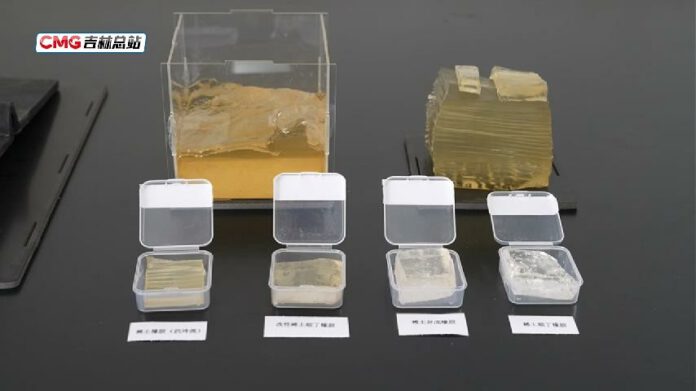
Conventional nickel-based butadiene rubber sells for approximately 2,276 € per ton, while rare-earth butadiene rubber commands around 3,074 € per ton, a premium of roughly 35%. The difference is not simply the value of rare-earth materials, but the performance advantages and molecular engineering behind the product.
On July 16, 2026, a 100,000-ton-per-year rare-earth butadiene rubber facility at Dushanzi Petrochemical successfully entered production with technical support from the Changchun Institute of Applied Chemistry of the Chinese Academy of Sciences. The entire production line delivered premium-grade products meeting performance standards, marking a major breakthrough in China’s original rare-earth catalytic rubber technology and its transition from laboratory research to large-scale industrial production.
The rapid growth of electric vehicles is creating new demands on tires. Large battery packs make EVs heavier, while electric motors deliver powerful torque almost instantly from a standstill. Frequent acceleration and braking place additional stress on tire compounds. Industry estimates suggest that EV tires may wear 15% to 20% faster than those of comparable gasoline-powered vehicles.
Tire manufacturers face a difficult balancing act: improving wear resistance can compromise grip, while enhancing wet-road traction can increase rolling resistance and reduce driving range. Achieving durability, strong grip and low rolling resistance simultaneously has become one of the industry’s biggest challenges.
Rare-earth butadiene rubber offers a new approach. Contrary to what its name might suggest, rare earths are not simply ground into powder and mixed into the rubber. Instead, neodymium, a rare-earth element, acts as a coordination catalyst during the polymerization of butadiene. It helps control how individual molecules connect, allowing scientists to precisely engineer the polymer’s molecular structure.
In polybutadiene, a higher cis-1,4 structural content generally contributes to better elasticity and low-temperature performance. Neodymium-based catalytic systems can achieve cis-1,4 content exceeding 98%, with some reported technical results reaching 98.5% or approaching 99%. Research published in February 2026 by Hiroshima University and other institutions also demonstrated neodymium-catalyzed polybutadiene with more than 98% cis content.
Compared with conventional nickel-based butadiene rubber, rare-earth butadiene rubber offers advantages in wear resistance, tensile strength, fatigue resistance, tear resistance, low-temperature performance, heat generation and rolling resistance. Application tests have reported a 5.6% improvement in mileage index and a 16.6% improvement in abrasion index for tread compounds incorporating the material.
Other industry application data indicate that dynamic heat generation can fall by 3–5°C, rolling resistance may decrease by 10%–20%, and wear resistance may improve by approximately 15%–30%. Some estimates suggest potential EV range improvements of 15–30 kilometers. Actual results, however, depend on the entire tire formulation, including carbon black, silica, additives and vulcanization systems.
The technology is the product of more than six decades of research. In 1964, researchers Ouyang Jun and Shen Zhiqiong, among others, published the first international research demonstrating the use of rare-earth catalysts to produce butadiene rubber. In 1982, research on rare-earth complex catalytic stereospecific polymerization received the Second Prize of China’s State Natural Science Award.
Successive generations of researchers, including Jiang Liansheng, Zhang Xuequan and Bi Jifu, continued the work through thousands of scale-up experiments and dozens of pilot tests. In 2006, the Changchun Institute of Applied Chemistry began comprehensive cooperation with Dushanzi Petrochemical. Researchers worked alongside industrial teams to overcome challenges involving catalyst stability, continuous polymerization and large-scale production, eventually developing a complete industrial process package based on fully domestically developed intellectual property.
The newly commissioned facility uses second-generation industrial technology. Major breakthroughs include precise catalyst structure regulation, fully automated production with one-touch process control, and 100% domestic technology and equipment manufacturing. The team also solved technical challenges involving homogeneous single-active-site catalyst preparation, catalyst tolerance and raw-material adaptability, efficient chain-transfer and chain-shuttling polymerization, as well as the integration of long-chain branching and functionalization. The technology enables independent domestic production across the full Mooney viscosity range, including the BR1260 and BR1240 grades.
China’s industrial expansion is taking place on multiple fronts. The Dushanzi facility provides large-scale production capacity, while its products are entering testing and validation programs at leading domestic tire manufacturers. In Zhejiang, Transfar has built a 270,000-ton flexible production facility capable of switching between nickel-based and rare-earth butadiene rubber. Its products are exported to more than 30 countries and regions, and the company has established partnerships with the world’s top 25 tire manufacturers.
Technological improvements are continuing. Jinzhou Petrochemical’s third-generation rare-earth catalyst technology has reportedly reduced costs by 15%, while the Changchun Institute’s second-generation industrial technology has achieved independent production across the full range of Mooney grades.
Market demand is also growing. Industry statistics indicate that China’s domestic demand for rare-earth butadiene rubber increased from approximately 65,000 tons in 2023 to 86,000 tons in 2024 and 93,000 tons in 2025. Tire manufacturing accounts for more than 75% of consumption.
The development also has strategic implications. China has historically depended heavily on imported natural rubber, with domestic self-sufficiency estimated at around 15% and import dependence exceeding 80%. High-performance synthetic rubber provides an additional source of supply and strengthens the resilience of the domestic rubber and tire industries.
Rare-earth butadiene rubber will not completely replace natural rubber. The two materials have different performance characteristics and are more likely to complement each other in advanced tire formulations. Beyond EV and heavy-duty truck tires, potential applications include footwear, industrial conveyor belts and golf balls.
As the global tire industry evolves, competition may increasingly depend not only on manufacturing scale and cost, but also on the ability to design materials at the molecular level and control the technologies behind them.
Source: qq, cm163, eastmoney, sretc ciac, xinhuaxmt, cnpc, jo gov cn