


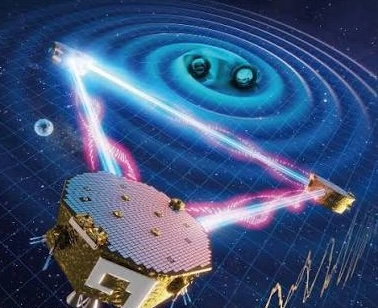
If electromagnetic waves allow humanity to see the universe, gravitational waves allow us to hear it. More than a century after Albert Einstein predicted their existence in his theory of general relativity, gravitational waves have opened an entirely new window onto the cosmos.
Today, as nations compete to unlock the secrets of the universe, China is steadily emerging as a major player in the global race for space-based gravitational wave detection.
China recently marked another significant milestone in its ambitious Taiji Program, the country’s space-based gravitational wave detection initiative. Researchers at the Institute of Mechanics of the Chinese Academy of Sciences successfully developed the first fully functional interferometric optical platform designed specifically for the Taiji mission and completed rigorous ground testing.
The achievement represents an important step from laboratory research toward engineering implementation, laying a solid technological foundation for China’s future gravitational wave observatory in space.
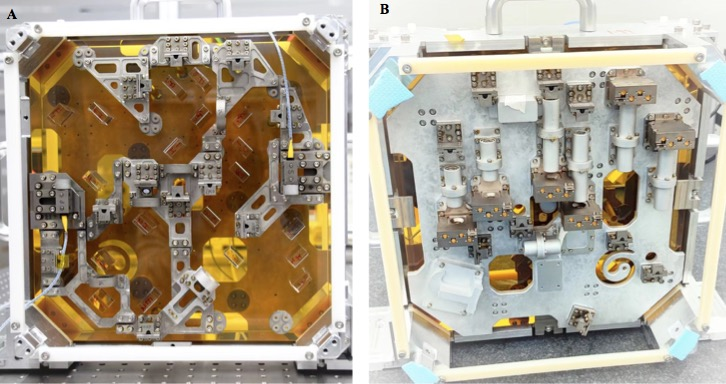
At the heart of the breakthrough lies one of the world’s most demanding measurement challenges. The research team introduced an innovative three-dimensional optical architecture that physically separates heat-generating components from the laser beam path, greatly reducing thermal interference.
Combined with advanced noise-reduction algorithms developed by the team, the system achieves picometer-level precision, capable of detecting changes on the order of one ten-thousandth of the diameter of a human hair. Such extraordinary sensitivity satisfies the stringent requirements for future space-based laser ranging.
Often described as “ripples in space-time,” gravitational waves are generated whenever massive objects such as black holes or neutron stars accelerate or collide. Unlike light, they travel through the universe almost unaffected by dust, gas, or magnetic fields, carrying pristine information from the most violent events in cosmic history. For scientists, gravitational waves provide a completely new way to study the universe, offering insights into the formation of black holes, the evolution of galaxies, and even the earliest moments after the Big Bang.
In 2016, the Laser Interferometer Gravitational-Wave Observatory (LIGO) in the United States announced the first direct detection of gravitational waves, capturing the signal produced by the merger of two black holes. The discovery confirmed Einstein’s century-old prediction and earned the 2017 Nobel Prize in Physics. However, ground-based detectors such as LIGO are sensitive mainly to high-frequency gravitational waves. Many of the most scientifically valuable signals, including those emitted by supermassive black holes and other large-scale astrophysical systems, exist at much lower frequencies and can only be observed from space.
Space-based gravitational wave observatories therefore represent the next frontier of gravitational-wave astronomy. Free from the seismic vibrations and environmental disturbances that limit ground observatories, satellites flying millions of kilometers apart can detect tiny changes in distance caused by passing gravitational waves. Such observations promise to reveal previously inaccessible phenomena and deepen humanity’s understanding of gravity, cosmic evolution, and the structure of the universe.
International competition in this field has become increasingly intense. The European Space Agency’s Laser Interferometer Space Antenna (LISA), scheduled for launch in the 2030s, will deploy three spacecraft separated by approximately five million kilometers to detect low-frequency gravitational waves. The United States has rejoined the project, making LISA one of the world’s most prominent international scientific collaborations.
China, meanwhile, has developed its own independent approach through the Taiji Program.
Proposed by the Chinese Academy of Sciences, the Taiji mission envisions three spacecraft orbiting the Sun in an equilateral triangle with arm lengths of approximately three million kilometers. Highly stable laser interferometers will continuously measure minute variations in the distances between the spacecraft, allowing scientists to detect gravitational waves passing through the constellation.
The mission demands extraordinary technological capabilities, including ultra-stable laser interferometry, drag-free flight control, precision inertial sensors, micro-thrusters, and exceptionally stable spacecraft platforms.
To realize this vision, China has adopted a three-stage development strategy.
The first stage was successfully completed with the launch of Taiji-1 in 2019. As China’s first technology demonstration satellite for space-based gravitational wave detection, Taiji-1 verified several key technologies in orbit, including high-precision laser interferometry, inertial sensing, drag-free control, and micro-Newton propulsion. The mission confirmed the feasibility of China’s technical roadmap and provided valuable experience for subsequent missions.
The second stage will involve the launch of Taiji-2, a two-satellite mission designed to comprehensively validate critical technologies such as inter-satellite laser ranging and drag-free control while carrying out scientific experiments related to stochastic gravitational-wave backgrounds and relativistic frame-dragging effects.
The ultimate goal is Taiji-3, a three-satellite observatory with a baseline of three million kilometers that will conduct full-scale observations of low- and middle-frequency gravitational waves. If successful, it will enable China to explore some of the universe’s most energetic and distant phenomena while making significant contributions to global gravitational-wave astronomy.
China’s efforts extend beyond the Taiji Program. Another major initiative, the TianQin Project, led by Sun Yat-sen University, is pursuing a complementary space-based observatory in Earth orbit. The successful completion of the TianQin-1 technology demonstration mission has further strengthened China’s position in this rapidly advancing field.
In 2021, Chinese scientists published a comprehensive review in Nature Astronomy, introducing the concepts and progress of both the Taiji and TianQin projects to the international scientific community. Their research suggests that future joint observations involving Taiji, TianQin, and Europe’s LISA mission could dramatically improve the localization of gravitational-wave sources and enhance studies of black hole formation, cosmology, and the fundamental nature of gravity.
From the successful in-orbit verification of key technologies by Taiji-1 to the recent development of a fully functional interferometric optical platform, China’s space-based gravitational wave program has steadily progressed from theoretical concepts to engineering reality. Each technological advance brings the country closer to constructing a giant observatory spanning millions of kilometers in space, a scientific instrument capable of detecting the faintest vibrations of the universe.
The exploration of gravitational waves is ultimately a quest to answer some of humanity’s oldest questions: How did the universe begin? How do black holes evolve? What is the true nature of gravity? As China continues to advance the Taiji Program through sustained scientific innovation, it is not only pursuing national technological excellence but also contributing to one of humankind’s greatest endeavors, the exploration of the universe itself.
Source: taiji.ictp-ap, CNSA, sciencenet, xinhua, clp ac