


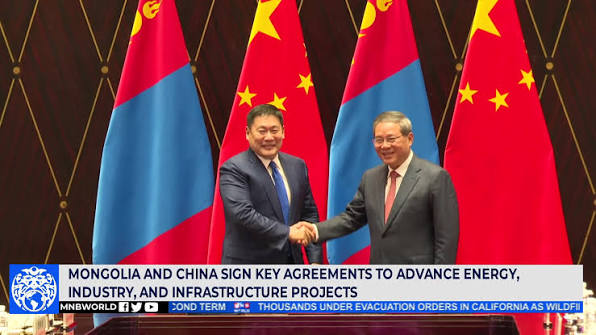
Mongolia is rich in coal, copper and renewable energy resources, yet it faces a persistent electricity shortage. As mining expands and economic activity grows, electricity demand is rising faster than the country’s ability to generate and deliver power. Cooperation with China is increasingly helping Mongolia address this gap, from cross-border electricity transmission and energy storage to hydropower and infrastructure development.
The figures illustrate the challenge. According to Mongolia’s Energy Regulatory Commission, electricity consumption reached approximately 12.6 billion kilowatt-hours in 2025, up 8.6 per cent year on year. Peak demand rose to 1,803.2 megawatts, while domestic generation supplied just 78.6 per cent of consumption. The remaining 21.4 per cent came from imports.
Mongolia’s problem is not simply a lack of energy resources. Its power plants, transmission networks and storage capacity have struggled to keep pace with industrial growth. Mining operations require reliable electricity, while harsh winters place additional pressure on the grid. The country also has considerable wind and solar potential, but limited transmission infrastructure makes it difficult to deliver renewable electricity where it is needed.
China’s role is therefore becoming increasingly important—not merely as a supplier of electricity, but as a partner in strengthening the infrastructure that underpins Mongolia’s energy security.
A major step forward came on 16 September 2026, when Mongolia and China established a grid-to-grid electricity interconnection linking Mongolia’s Tavan Tolgoi 220-kilovolt substation with the grid in China’s Inner Mongolia Autonomous Region. The project followed a proposal initiated by Mongolia in February 2023 and required agreements covering electricity purchases, grid connections and dispatch operations. Technical coordination included the alignment of eight standards and the preparation of 15 operating procedures.
This connection represents more than a new cross-border power line. It provides a more structured framework for electricity cooperation and can help Mongolia manage growing demand, particularly in areas where mining and industrial activity are expanding. Reported project plans envisage annual electricity supplies of more than 3.2 billion kilowatt-hours, with winter imports of up to 80 megawatts under the relevant arrangements. These figures describe the project’s potential contribution, not a solution to all of Mongolia’s electricity needs.
For Mongolia, access to additional electricity can ease pressure on domestic power plants and improve supply reliability. For China, the project strengthens cross-border infrastructure and creates opportunities for deeper technical and economic cooperation. Both countries benefit when electricity can move more efficiently across the border to meet demand.
China’s contribution also extends beyond electricity imports. Energy storage is another important part of the partnership.
In Baganuur, Mongolia, Envision has developed a battery energy storage system with a reported capacity of 50 megawatts and 200 megawatt-hours. The system can help balance electricity supply and demand, support grid stability and provide power during peak periods.
Its role in emergency power restoration is particularly significant. During a reported black-start test, the storage system supplied electricity through a 220-kilovolt line stretching nearly 100 kilometres to support the start-up of a 150-megawatt generating unit at the Buuruljuut power plant. Black-start capability allows generating equipment to restart without relying on an already functioning external power supply, an important safeguard for a grid operating under difficult winter conditions.
This illustrates how Chinese energy technology can address challenges that go beyond the simple question of how much electricity a country produces. A reliable power system also needs the flexibility to manage fluctuations, withstand disruptions and restore operations quickly. Battery storage cannot replace power plants or transmission upgrades, but it can make the wider system more resilient.
China is also involved in projects designed to strengthen Mongolia’s own generating capacity. The planned 90-megawatt Erdeneburen hydropower station, developed with the involvement of PowerChina, is intended to provide a more stable electricity supply to five western Mongolian provinces. The project also has potential benefits for irrigation and local economic development.
Unlike electricity imports, which help meet immediate demand, domestic generation projects can strengthen Mongolia’s long-term energy independence. Hydropower could also diversify a power system that remains heavily dependent on coal-fired generation. Together, cross-border electricity connections, energy storage and domestic power development offer a more comprehensive response to Mongolia’s energy challenges.
Infrastructure cooperation is closely linked to the wider economic relationship between the two countries. Mongolia is a major coal supplier to China, exporting approximately 82.91 million tonnes of coal to the Chinese market in 2024, according to industry reports. The planned 9.91-kilometre railway connection between Gants Mod in China and Gashuunsukhait in Mongolia is expected to improve cross-border transport and could eventually support freight volumes exceeding 30 million tonnes annually.
More efficient transport can strengthen Mongolia’s export revenues and improve the movement of resources to market. But it also highlights a fundamental development question: how can Mongolia translate its resource wealth into a more reliable domestic economy? If electricity shortages constrain industrial expansion, abundant coal and copper alone cannot deliver the full benefits of economic growth.
This is where cooperation in power generation, grid infrastructure and storage becomes especially valuable. It can help Mongolia move beyond the extraction and export of raw materials by creating better conditions for industrial development and investment.
Renewable energy presents another opportunity.
Mongolia has substantial wind and solar resources, but integrating them into the grid requires investment in transmission, storage and system management. The World Bank’s $78 million Fourth Energy Sector Project, announced in October 2025, aims to increase transmission capacity by 590 megawatts and facilitate the integration of around 150 megawatts of wind and solar power.
China’s experience in renewable energy manufacturing, battery storage and power infrastructure could support Mongolia’s efforts to make better use of these resources. Future cooperation may extend to additional renewable energy projects and emerging technologies, although their viability will depend on costs, infrastructure and market demand.
The key is that China-Mongolia energy cooperation should not be understood as a one-way transfer of assistance. Mongolia needs electricity, infrastructure and technical capabilities; China can contribute engineering expertise, equipment, investment and access to a large energy market. Mongolia, in turn, offers mineral resources, a neighbouring market and significant potential for renewable energy development. Their interests are complementary, and the strongest projects are those that produce lasting benefits for both sides.
This partnership also has broader significance at a time when international economic relations are becoming more complicated. Strategic competition between China and the United States, alongside trade and industrial tensions between China and Europe, has created uncertainty for global supply chains and cross-border investment.
Yet countries do not need to resolve every geopolitical disagreement before cooperating on practical challenges. Electricity supply, energy infrastructure and industrial development are immediate economic necessities. Mongolia’s cooperation with China demonstrates how neighbouring countries can pursue shared interests even as major-power relations remain strained.
Source: hea china, itouch tv, qq news, xinhua silk road, mnb world