


Despite advances in battery manufacturing, scientists still face a fundamental challenge: understanding exactly what happens inside electrode materials as batteries charge, discharge, and age. Researchers can measure the elements present in a material, but identifying how those elements are chemically bonded and how their local environments change is considerably more difficult. Without this information, determining why a battery loses capacity or how to improve its long-term stability can require extensive experimentation.
A research team led by Chinese Professor Zeng Heping at the Chongqing Institute of East China Normal University has developed a promising approach to addressing this challenge. The team advanced a technique known as Transient Interference-Based Spectroscopy (TIBS), combining ultrafast lasers, spectroscopic analysis, and machine learning to distinguish chemical environments in battery-related materials. The research, titled “Transient interference-based spectroscopy for a molecular-bond-sensitive probe of lithium ion batteries,” was published in Energy & Environmental Science and selected for the journal’s inside cover.
Under the reported experimental conditions, TIBS distinguished lithium compounds, detected lithium oxide (Li₂O), and identified lithium concentration changes as small as 0.3%, with an average recognition accuracy of 94.7%. More importantly, the research points toward a new way of investigating the chemical processes that influence battery performance and degradation.
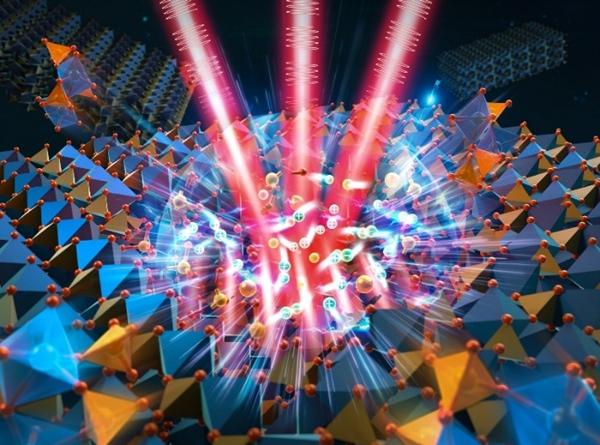
The technique works by using three femtosecond laser pulses to create an exceptionally intense optical field. A femtosecond is one quadrillionth of a second. Under these extreme conditions, molecules can undergo ionization and fragmentation, producing atomic and ionic signals that reflect differences in their original chemical environments. By analyzing these signals, researchers can distinguish compounds that may be difficult to differentiate through conventional elemental analysis alone.
In simple terms, traditional techniques often help answer the question, “What elements are present?” TIBS seeks to go further by investigating the chemical states in which those elements exist. It does not directly photograph individual molecular bonds; rather, it uses differences in spectroscopic responses to infer information about chemical bonding and local environments.
This distinction could have important consequences for battery research. Lithium ions are essential to the operation of lithium-ion batteries, but not all lithium remains equally available for energy storage. Certain side reactions can consume active lithium or produce compounds associated with performance degradation. Lithium oxide is one such compound of interest in specific battery chemistries. Being able to distinguish it from active electrode materials could help researchers better understand how unwanted reactions develop and how they affect battery performance.
For battery developers, the practical challenge is not simply determining that a battery has lost capacity, but identifying why. Is the decline associated with the loss of active lithium, changes in the electrode’s crystal structure, or reactions occurring at the interface between the electrode and electrolyte? Different mechanisms require different solutions. If researchers can identify these processes more precisely, they may be able to reduce trial-and-error experimentation and focus on more effective material designs and manufacturing conditions.
TIBS could therefore contribute to more efficient battery research by providing additional evidence about the chemical mechanisms behind degradation. This may help researchers evaluate new electrode compositions, investigate unwanted reaction products, and understand why certain materials perform better than others during repeated charging and discharging. Although the technique has not yet been shown to shorten commercial development cycles across the industry, its potential lies in making experiments more informative and material-design decisions more evidence-based.
Another promising feature is its ability to analyze materials at different depths. Battery electrodes are not always chemically uniform. Lithium migration and side reactions may vary between the surface and the interior, affecting the electrode’s overall performance. By adjusting laser-pulse energy and the number of accumulated pulses, researchers can progressively analyze material at different depths and investigate changes in composition and chemical state.
This capability could be useful when studying thick electrodes, where reactions may occur unevenly across the material. Such information could help researchers understand why a material performs well in a small laboratory sample but behaves differently when incorporated into a practical battery. It could also support investigations into electrode design and manufacturing processes. However, depth profiling of electrode materials should not be confused with real-time, nondestructive observation of every reaction inside a fully assembled battery. Further development would be needed to establish the method’s suitability for different industrial applications.
The potential industrial implications extend to quality control and failure analysis. Battery manufacturing involves numerous stages, from raw-material preparation and electrode coating to cell assembly and formation. Small variations in composition or material structure can contribute to differences in performance and reliability. If TIBS can be developed into a reliable and cost-effective analytical tool, it may help manufacturers investigate abnormal material behavior, compare production batches, and identify possible causes of manufacturing defects.
The value would not simply come from adding another inspection procedure. It would come from obtaining chemical-state information that existing methods may not readily provide. For example, when a batch of electrode materials performs unexpectedly, researchers could compare its spectroscopic signatures with those of reference samples to investigate whether differences in chemical environments contribute to the problem.
Nevertheless, industrial adoption will depend on practical considerations, including measurement repeatability, analysis speed, equipment costs, and compatibility with existing production workflows. The technology must demonstrate that it provides sufficiently useful information to justify its implementation. Its present capabilities represent a promising research direction, rather than proof that it is already ready for widespread deployment on battery production lines.
Battery safety is another area where improved material analysis could have long-term value. Thermal runaway, which can cause a battery to overheat and potentially catch fire, involves complex interactions among internal short circuits, heat generation, electrolyte reactions, and material instability. No single chemical compound explains every battery failure, and detecting lithium oxide alone cannot predict whether a battery will become unsafe.
However, a better understanding of chemical changes during battery aging could help researchers investigate the mechanisms associated with degradation and instability. By combining spectroscopic measurements with cycling tests, resistance measurements, and thermal analysis, scientists may be able to build a more comprehensive picture of how particular materials behave under different operating conditions. Such findings could eventually inform the development of more stable electrode materials and improved battery designs, although TIBS is not itself a real-time battery safety-monitoring system.
The significance of this research also extends beyond existing lithium-ion batteries. Researchers are exploring lithium-rich cathodes, solid-state batteries, and other advanced energy-storage materials that involve increasingly complex chemical processes. In some materials, oxygen anions participate in charge compensation through processes known as anion redox. These reactions can contribute to additional capacity but may also introduce challenges involving structural stability and unwanted side reactions. Understanding them requires information about not only elemental composition but also electronic states and local chemical environments.
If TIBS can demonstrate reliable performance across these more complex materials, it could become a useful complementary tool for next-generation battery research. The team has also identified potential applications in other material systems, including polymers, organic components, and materials in different physical states. Its broader applicability, however, will require validation for each new class of material.
From a strategic perspective, the research highlights an important dimension of global competition in the energy-storage industry. Battery leadership is often measured by manufacturing capacity, market share, production costs, and commercial performance. Yet long-term competitiveness also depends on the ability to understand materials at a fundamental level and translate that understanding into better technologies.
Advanced material characterization, the experimental investigation of a material’s composition, structure, and properties, is an essential link between scientific discovery and industrial innovation. Better measurement capabilities can help researchers identify failure mechanisms, test hypotheses, and evaluate new materials with greater precision. In this sense, the importance of TIBS lies not only in its reported detection performance, but also in its exploration of a new approach to chemical-state analysis.
For China’s energy-storage industry, developing such capabilities could contribute to a stronger foundation for materials research, precision measurement, and advanced manufacturing. The combination of ultrafast laser physics, spectroscopy, materials science, and machine learning also illustrates the potential of interdisciplinary research to generate analytical methods applicable across multiple fields.
The work should therefore be viewed as a promising scientific advance rather than an immediate solution to battery degradation or safety problems. Its ultimate impact will depend on whether it can deliver reliable measurements, provide meaningful advantages over existing techniques, and support measurable improvements in research or manufacturing.
As batteries become increasingly important to electric mobility, renewable-energy integration, and large-scale energy storage, the ability to understand their internal chemistry will become ever more valuable. TIBS offers a new way to investigate the microscopic processes that influence battery performance, potentially helping researchers move from identifying what is present in a material to understanding how that material behaves.
Source: cqecnu, Energy & Environmental Science