


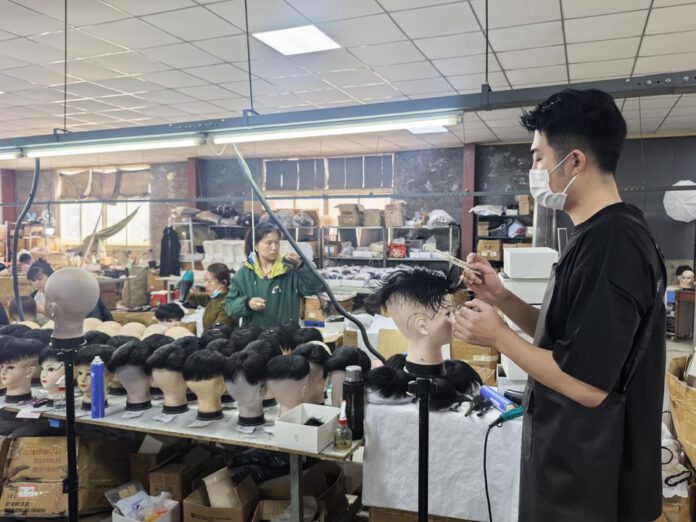
“Buying hair, especially long hair.” For decades, this familiar call could be heard in streets and villages across China. In Juancheng County, Heze, Shandong Province, however, the humble business of collecting hair has evolved into a major industrial cluster serving markets around the world.
Today, Juancheng is recognized as an important hub for human-hair raw materials and a major production base for hair products. Its industry covers the entire chain from raw-material collection and processing to product design, manufacturing, branding, logistics and international sales. The county has developed a particular strength in real-human-hair products, especially hair extensions, rather than synthetic wigs.
The origins of the industry date back to the 1960s and 1970s, when people in towns such as Zhengying and Fuchun began collecting and trading human hair alongside other materials such as horsehair and animal hides. As demand increased, local traders expanded their procurement networks from nearby areas to other parts of China and eventually to India and Southeast Asia.
Human hair became a valuable raw material because of its natural appearance, texture and versatility. Compared with synthetic fibers, high-quality human hair offers a more realistic look and feel, making it particularly suitable for premium wigs, extensions and customized hair products.
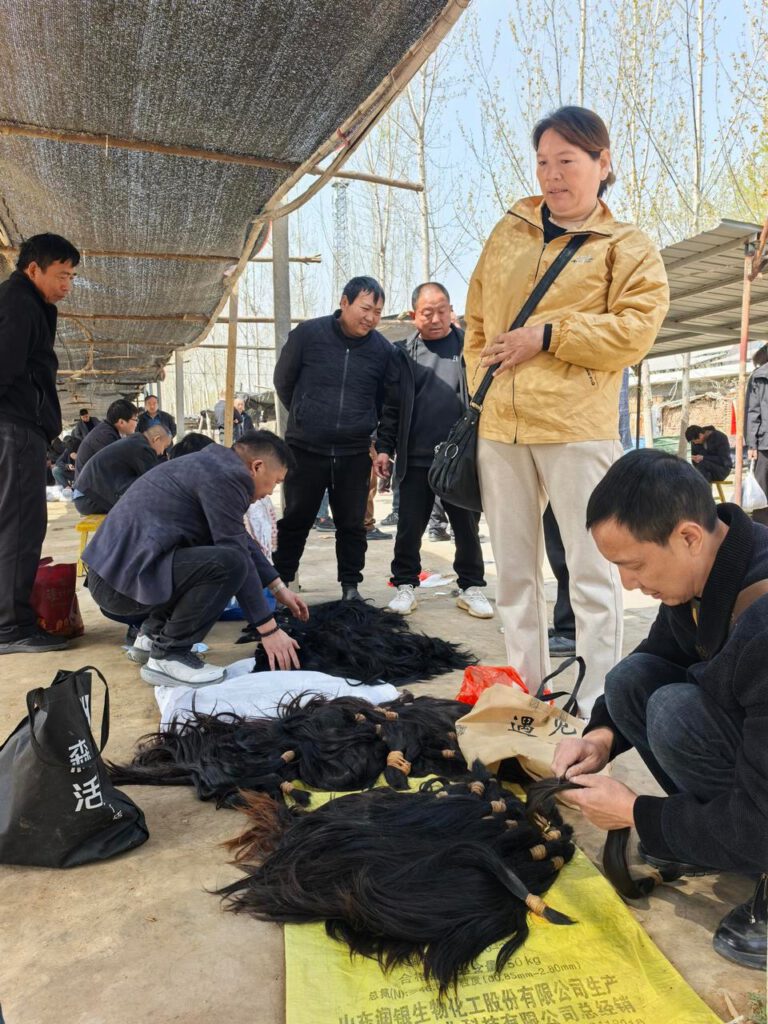
For many years, Juancheng mainly served as a raw-material trading center. At the beginning of the 21st century, however, rising demand for hair extensions and the upgrading of the beauty industry created an opportunity for local businesses to move further up the value chain. Enterprises began processing raw hair locally, and family workshops and small factories expanded rapidly.
This transformation greatly increased production capacity, but it also exposed structural weaknesses. Many businesses operated independently, with inconsistent product quality, limited standardization and intense price competition. Although the number of enterprises increased, the industry lacked strong coordination and brand influence.
The turning point came with the development of industrial parks and stronger government support. In 2012, Juancheng began planning and developing dedicated hair-product industrial parks. A third industrial park started construction in 2024. Concentrating enterprises in specialized industrial zones enabled businesses to share infrastructure and public services, including water, gas and environmental treatment facilities.
The county also incorporated hair products into its key industrial development programs and established mechanisms to coordinate enterprises, industry associations and government departments. These measures helped transform a fragmented network of workshops into a more organized industrial cluster.
The results have been substantial. Juancheng now has hundreds of hair-product enterprises and a large workforce engaged in the industry. In 2024, the county’s hair-product industry recorded an industrial output value of 54.6 billion yuan. From January to July 2025, output reached 41.68 billion yuan, an increase of 12.46 percent year on year.
The industry has also developed a complete production chain. Products now include hair wefts, wigs, extensions, ponytails, hairpieces and customized products, with thousands of varieties available for different markets.
Behind these products is a production system that combines traditional craftsmanship with modern manufacturing. Human hair must first be sorted according to length, color, thickness and direction before undergoing disinfection, cleaning and processing. In the production of high-end products, weaving and hair-setting processes can require highly skilled manual work.
A premium wig or hair extension may go through dozens or even hundreds of individual procedures. The direction, density and arrangement of each strand can affect the final appearance and comfort. This accumulated craftsmanship has become one of Juancheng’s most important competitive advantages.
For a long period, however, Juancheng remained heavily dependent on contract manufacturing and wholesale trade. Many enterprises had strong production capabilities but limited control over international brands, distribution channels and pricing. As a result, much of the added value was captured elsewhere in the supply chain.
In recent years, local enterprises have increasingly shifted toward independent design, branding and direct international sales. Companies are paying greater attention to consumer preferences, fashion trends and differences between overseas markets. Product development now covers not only manufacturing techniques but also styles, colors, materials and customized solutions.
Digital platforms have accelerated this transition. Juancheng businesses are increasingly using international e-commerce platforms and independent websites to reach customers directly. Social media and livestreaming have also become important tools for marketing hair products and demonstrating their appearance and application.
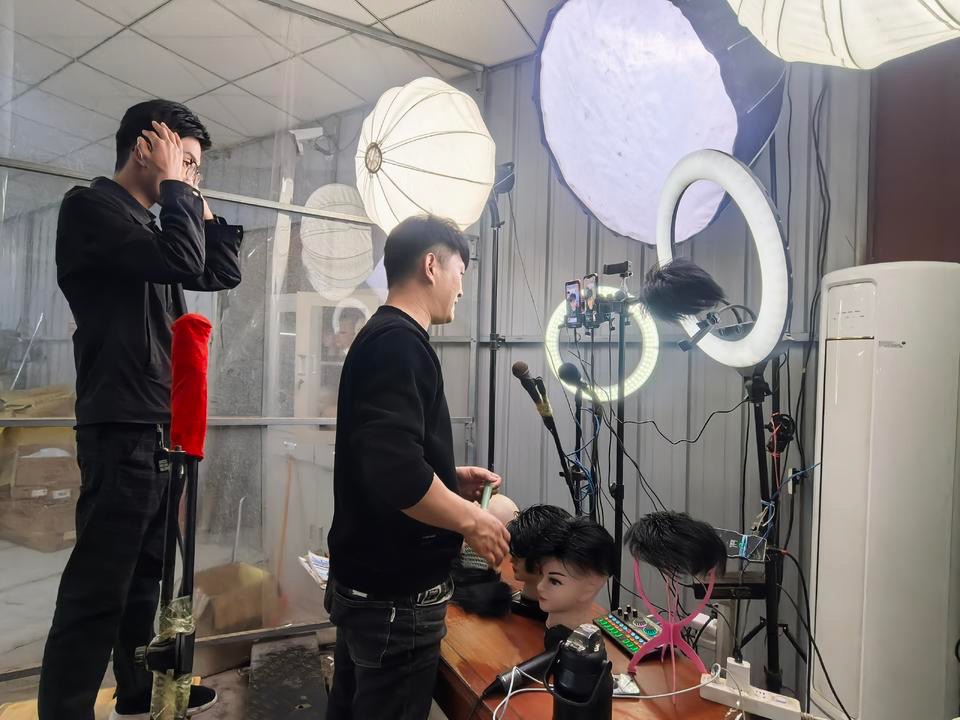
Cross-border e-commerce has opened another channel for small and medium-sized manufacturers. Instead of relying entirely on traditional trading companies, businesses can now respond more quickly to consumer demand, test new products and build direct relationships with overseas customers.
Logistics has also become a key part of the county’s internationalization strategy. As an inland county, Juancheng once faced relatively high transportation and international shipping costs. To address this challenge, the county has developed public bonded warehouses, cross-border e-commerce service centers and other trade-support facilities, while strengthening connections with Heze Mudan Airport and its international cargo functions.
These improvements are helping create a more efficient system for importing raw materials and exporting finished products, reducing logistics costs and improving the speed of international shipments.
The industry’s global reach continues to expand. Juancheng’s hair products are now exported to more than 80 countries and regions. In 2024, the county’s hair-product import and export volume reached approximately € 3.21 billion, accounting for around 70 percent of the county’s total foreign trade. In the first seven months of 2025, imports and exports reached about € 2.6 billion, up 48.75 percent year on year.
The county has also sought to strengthen its international visibility through trade fairs and industry events. Its first hair-products expo in 2025 brought together domestic manufacturers and international buyers, providing a platform for business cooperation and helping promote the “China Hair Capital” brand.
Juancheng’s development demonstrates how a traditional rural industry can evolve through specialization, industrial clustering, technological improvement and digital transformation. What began with people collecting hair door to door has developed into a sophisticated supply chain connecting raw-material networks, skilled manufacturing, modern logistics and global consumer markets.
The significance of Juancheng’s hair industry lies not simply in the volume of hair it processes, but in the industrial ecosystem built around it. Decades of experience in sourcing and processing human hair have created a deep pool of skills and suppliers, while industrial parks, e-commerce platforms and logistics infrastructure have provided new channels for expansion.
As global consumers increasingly seek personalized and high-quality hair products, Juancheng is moving toward higher-value segments of the market. Greater investment in product design, technology, international branding and direct-to-consumer sales will determine whether the county can further strengthen its position in the global hair-products industry.
Source: xinhua, dzplus, eastmoney, sina