


On April 30, 2026, Chinese President Xi Jinping attended a symposium on strengthening basic research in Shanghai and delivered an important speech. He emphasized that basic research is the source of the entire scientific system and the starting point for solving technological problems. He called for greater efforts and more effective measures to strengthen basic research, enhance China’s capacity for original innovation, and lay a stronger foundation for building the country into a leading scientific and technological power.
The fundamental importance of basic research lies in the fact that major technological breakthroughs ultimately depend on a deep understanding of underlying mechanisms and scientific laws. Without long-term accumulation in basic research, applied technologies become like water without a source, making it difficult to overcome technological bottlenecks at their roots. Without the forward-looking guidance of basic research, industrial development can also become like a ship without a rudder, struggling to find its direction in unexplored areas. The development of China’s new energy vehicle (NEV) industry over more than three decades provides a compelling example of the value of long-term commitment to scientific research.
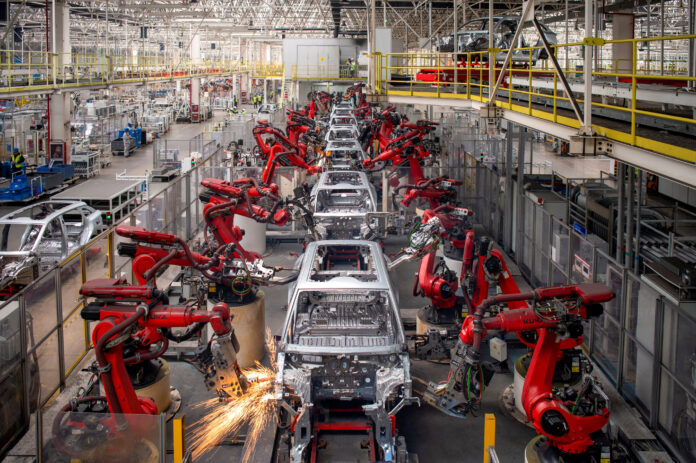
In 2025, China’s NEV production and sales ranked first in the world for the eleventh consecutive year, while new energy passenger vehicles accounted for 68.4 percent of the global market. The industry has therefore achieved a leading position in terms of scale and engineering capabilities. However, this leadership does not necessarily mean that China has achieved the same level of strength in fundamental theories, original scientific discoveries, or underlying technologies. Engineering excellence is not equivalent to deep theoretical accumulation.
As global competition in the automotive industry increasingly moves from application-oriented technologies toward fundamental theories and core underlying technologies, breakthroughs in basic research have become essential for China to consolidate its leadership in NEVs and transform itself from a major automobile producer into a true automotive power.
The evolution of China’s NEV industry illustrates this transition. In the early stage, during the periods of the Eighth and Tenth Five-Year Plans, electric vehicles were incorporated into national science and technology programs, and the “Three Verticals and Three Horizontals” technical framework under the 863 Program established major directions for research. Universities and research institutes played the leading role, creating the initial technological foundation and cultivating China’s first generation of NEV researchers.
However, investment was relatively limited, and research was often disconnected from industrial needs and focused insufficiently on fundamental scientific questions. Some companies had already begun independent exploration. BYD, for example, established a central research department and invested in electrochemical research, particularly in battery cycle life and safety, laying the groundwork for its later development.
As the industry entered the commercialization stage, research became increasingly driven by practical engineering requirements. The launch of the “Ten Cities, Thousand Vehicles” demonstration program in 2009 accelerated the market adoption of NEVs. Consumer demand for longer driving ranges and greater reliability encouraged research into battery materials, manufacturing processes, and other key technologies. This market-driven approach improved the performance of critical components, but many fundamental research achievements remained concentrated in universities and research institutes, while connections between scientific discoveries and industrial engineering were still relatively weak.
With the rapid expansion of the NEV market, Chinese companies began to develop stronger in-house research capabilities. They established independent research departments, joint laboratories, and other collaborative innovation platforms. Basic research gradually shifted from simply supporting existing products to helping define future technology directions. BYD’s Blade Battery is one example.
By starting from actual vehicle requirements and combining fundamental electrochemical understanding with innovative product and manufacturing design, the company significantly improved battery safety and system integration, contributing to the renewed prominence of lithium iron phosphate batteries.
Nevertheless, much of the research during this stage remained incremental, focusing on optimization rather than genuinely disruptive innovation. Leading companies therefore began to deepen cooperation with universities and research institutes, forming new models in which companies identify industrial problems and academic institutions help address the underlying scientific questions.
Today, however, the industry is entering a new phase. As NEVs become increasingly widespread and their applications more diverse, conventional theories and engineering approaches are approaching their limits. Requirements for longer range, faster charging, greater safety, and more intelligent driving are pushing the industry into technological “uncharted territory.” At this point, simply improving existing products is no longer sufficient. Companies must increasingly define new research questions themselves and invest in original scientific exploration.
For enterprises operating at the technological frontier, basic research should therefore be closely connected with long-term strategic needs. The NEV industry can be understood as a five-level structure, progressing from mechanisms and materials to components, systems, and complete vehicles.
Chinese companies have developed strong capabilities at the component, system, and vehicle levels, but their accumulation of fundamental research at the mechanism and material levels remains comparatively limited. Strategic basic research can help bridge this gap. Such research typically requires five to ten years or even longer, has the potential to redefine products if successful, and provides a technological foundation that can support multiple products and applications.
Its value can be seen in several ways. First, a deeper understanding of underlying mechanisms can reduce engineering uncertainty and the cost of trial and error. For example, battery safety under collision involves complex interactions among material damage, structural dynamics, and electrochemical processes.
Understanding these mechanisms scientifically can provide quantitative guidance for engineering design and significantly reduce repetitive testing. Second, basic research can transform vague engineering experience into clearly defined scientific boundaries. In electric drive systems, for instance, understanding the fundamental limits of power density, temperature, noise, and other parameters can make system design more predictable, measurable, and reliable.
Third, fundamental breakthroughs can enable entirely new technological architectures. BYD’s e⁴ platform, for example, moves beyond conventional mechanical four-wheel-drive structures by using independently controlled electric motors and advanced coordination algorithms. This represents a shift from optimizing individual components to fundamentally restructuring vehicle dynamics and control.
Looking forward, several areas deserve particular attention. Next-generation batteries will require breakthroughs in energy density, safety, cycle life, and performance under extreme conditions, as conventional electrochemical systems approach their theoretical limits. Comprehensive vehicle intelligence will also require fundamental research into perception, cognition, vehicle dynamics, and control, enabling intelligent driving and intelligent chassis systems to work together at millisecond-level speeds.
In addition, automotive semiconductors and industrial software are becoming common foundations for both electrification and intelligent vehicles. Research into chip architecture, real-time operating systems, functional safety, and reliability will be critical to achieving greater technological autonomy.
The key challenge, therefore, is not simply to conduct more basic research, but to establish an effective pathway connecting scientific discovery, engineering development, and industrial commercialization. This requires stronger coordination between industry and academia.
Companies are often focused on engineering problems, cost, and development cycles, while universities tend to prioritize scientific questions and theoretical contributions. Companies should consequently translate complex industrial and commercial problems into clearly defined scientific questions and regularly communicate these research needs to universities and research institutes.
At the same time, major strategic research projects require stable, long-term, and concentrated investment. For areas of high strategic importance, resources should not be dispersed across numerous short-term projects. Instead, interdisciplinary teams should be formed and sufficient resources concentrated on key scientific challenges. Talent development is equally important. Enterprises, universities, and research institutes should establish more flexible mechanisms for two-way talent mobility and develop interdisciplinary researchers who understand both fundamental science and industrial engineering.
Most importantly, China needs to establish a complete innovation chain from “0 to 1 to 10 to 100.” The 0-to-1 stage is the discovery of new scientific principles, in which universities and research institutes play a major role while companies participate at an early stage. The 1-to-10 stage focuses on turning scientific discoveries into stable technologies through engineering validation and prototype development, with enterprises taking the lead. The 10-to-100 stage is the large-scale commercialization of mature technologies, which requires companies to integrate them systematically into products and industrial systems. Building research platforms, pilot-testing facilities, and evaluation mechanisms that support all three stages will help ensure that scientific discoveries can become genuine industrial capabilities.
China’s more than thirty years of NEV development demonstrate that sustainable technological leadership cannot rely solely on manufacturing scale or engineering efficiency. The most important competitive advantages often lie beneath the visible product, in the scientific principles, materials, algorithms, and technological architectures that make innovation possible. As China moves from being a major automobile producer toward becoming an automotive power, the decisive competition will increasingly take place at the level of basic research.
The next stage of China’s NEV development therefore requires greater strategic patience, sustained investment, and a willingness to tolerate failure. Basic research cannot always produce immediate commercial returns, but it creates the technological options that determine what industries can achieve years or even decades later.
By strengthening original scientific research, connecting it more effectively with engineering and commercialization, and building a long-term innovation ecosystem, China can turn its existing engineering and industrial advantages into deeper and more sustainable technological leadership, providing a stronger foundation for the development of a world-leading automotive industry.
Source: bulletin cas cn, BYD, global times, scmp