


In the early years of the People’s Republic of China, the country’s railway system faced a fundamental challenge: restoring transportation services, connecting different regions, and supporting national economic development. Over the past seven decades, China’s railways have evolved from a relatively underdeveloped network with limited capacity into a modern railway system featuring advanced technologies, an extensive operational network, and one of the world’s largest high-speed rail networks.
Today, China has 165,000 kilometers of operational railway lines, including more than 50,000 kilometers of high-speed rail. Railways have not only transformed the way people travel but have also profoundly influenced China’s industrial development, regional economies, urban growth, and international trade.
The development of China’s railway system has always been closely connected to the country’s national priorities and changing social needs. In the early years after the founding of the People’s Republic of China, the country had just over 20,000 kilometers of operational railway lines. Many existing lines had been damaged by war, and the national railway network remained incomplete.
At that time, railways played a fundamental role in supporting industrial production and the national economy. Coal, steel, grain, and other essential materials all depended on rail transportation to move across regions. Restoring existing lines and constructing new railway routes therefore became essential tasks in national economic development.
The completion of major projects, including the Chengdu–Chongqing, Tianshui–Lanzhou, Baoji–Chengdu, Lanzhou–Xinjiang, and Chengdu–Kunming railways, gradually expanded the national railway network. These projects improved regional connectivity while providing vital support for industrial development, resource utilization, and economic growth. China’s participation in the construction of the Tanzania–Zambia Railway also marked an early milestone in its international railway cooperation.
Following the launch of reform and opening-up, China experienced rapid economic growth, accelerating urbanization, and increasing population mobility. Industrial production, urban development, and foreign trade expanded significantly, driving railway demand to unprecedented levels.
Existing infrastructure struggled to keep pace with this growth, shifting the central challenge from whether railway connections existed to whether the network had sufficient capacity. During this period, China invested heavily in double-track construction, railway electrification, locomotive and rolling stock upgrades, and improvements in transportation management.
Beginning in 1997, a series of major railway speed increases significantly reduced passenger travel times while improving the overall efficiency of existing lines. Major projects such as the Beijing–Kowloon Railway and the Lanzhou–Xinjiang double-track railway further strengthened the national network, while heavy-haul railways such as the Daqin Railway enhanced freight transportation capacity.
The Qinghai–Tibet Railway overcame extraordinary engineering challenges, including high-altitude conditions, permafrost, and fragile ecosystems, extending the railway network to the Tibetan Plateau. China’s railway development was therefore shifting from simply expanding the network toward improving speed, capacity, and technological standards.
Entering the 21st century, the growth of urban clusters and increasing interregional travel created new demands on traditional railway transportation. In 2004, China began systematically advancing the development of dedicated passenger rail corridors. The opening of the Beijing–Tianjin Intercity Railway in 2008 marked the beginning of a new era of large-scale high-speed rail construction and operation.
Subsequently, major high-speed railways, including the Beijing–Shanghai, Wuhan–Guangzhou, and Zhengzhou–Xi’an lines, entered service, extending the high-speed rail network across the country. The Medium- and Long-Term Railway Network Plan released in 2016 further established the framework of eight north–south and eight east–west high-speed rail corridors, providing a long-term blueprint for national network development. By the end of 2025, China’s high-speed rail network had exceeded 50,000 kilometers, connecting major cities and urban clusters across the country.
China’s rapid progress in high-speed rail has not been driven by large-scale investment alone. It is the result of long-term planning, engineering expertise, advanced manufacturing, and sustained technological innovation. Through decades of research, technology transfer, and independent development, China has established a comprehensive technological system covering railway design, track systems, traction power supply, communications and signaling, train control, and high-speed train manufacturing.
The Beijing–Zhangjiakou High-Speed Railway, for example, incorporates intelligent construction technologies and automatic train operation in a challenging geographical environment. Fuxing high-speed trains continue to improve operational performance and safety, while advances in bridges, tunnels, tunnel-boring machines, and track engineering have strengthened China’s overall railway construction capabilities.
By addressing challenges ranging from high-altitude permafrost to complex geological conditions, extreme cold, and desert environments, China has accumulated extensive experience in railway engineering and operations. Its railway industry has progressed from technological catch-up to independent innovation and increasingly sophisticated system integration.
The significance of high-speed rail extends far beyond faster trains. By transferring a substantial proportion of long-distance passenger traffic to dedicated high-speed lines, China has also released capacity on conventional railways. These existing lines can continue to serve freight transportation, conventional passenger services, and more affordable travel.
As a result, China has gradually developed a multi-layered railway system consisting of high-speed railways, conventional railways, intercity railways, suburban railways, and dedicated industrial railway lines. High-speed rail primarily serves long- and medium-distance passenger travel, while intercity railways strengthen connections within urban clusters. Suburban railways increasingly support commuting within metropolitan areas, and conventional railways continue to provide extensive coverage and cost-effective passenger and freight services. Together, these different types of railways form an integrated national transportation network capable of meeting the needs of different regions, industries, and population groups.
The development of China’s railway system is also reflected in the continuous improvement of transportation services and public welfare. The annual Spring Festival travel rush, known as Chunyun, offers a particularly clear illustration of this transformation. In 1954, China’s railways carried approximately 23 million passengers during the Spring Festival travel period. By 2024, the figure was expected to reach 480 million.
To accommodate this enormous growth in demand, railway services have evolved from adding temporary trains and optimizing scheduling to providing online ticketing, electronic tickets, and increasingly intelligent passenger services. Online ticket sales were first introduced during the 2012 Spring Festival travel rush, and the 12306 ticketing system has continued to develop, fundamentally changing how passengers purchase tickets and plan their journeys. Locomotive technology has also advanced from steam and diesel engines to electric locomotives and Fuxing high-speed trains, greatly improving transportation efficiency and service quality.
At the same time, China’s railway development has not overlooked the basic travel needs of people living in remote and less-developed regions. Public-service local trains continue to operate on mountainous routes, in remote communities, and in areas with limited transportation alternatives. These trains provide essential services for residents traveling to school, seeking medical treatment, attending markets, visiting relatives, and transporting agricultural products.
For many communities along these routes, the trains are more than just a means of transportation; they are vital links to external markets and public services. The value of railway development therefore lies not only in the efficiency of high-speed trains but also in the continued commitment of conventional services to meeting everyday public needs.
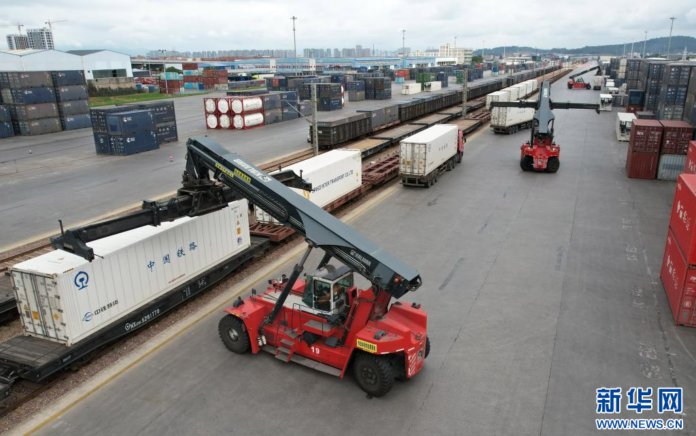
Railway transportation has also expanded into specialized logistics and international markets. Cold-chain transportation is an important example. In 1953, China’s railway authorities officially began transporting perishable goods and started developing refrigerated railway wagons. Over subsequent decades, advances in refrigeration, insulation, ventilation, and transportation management enabled the gradual establishment of a nationwide railway cold-chain network.
This system has provided reliable transportation for food, agricultural products, and other temperature-sensitive goods. In recent years, with the opening of international routes such as the China–Laos Railway, railway cold-chain services have increasingly extended into cross-border logistics. Through the use of new refrigerated wagons, remote monitoring, and specialized maintenance systems, these services have improved cargo quality control, shortened transportation times, reduced cargo losses, and supported regional trade. Looking ahead, intelligent monitoring, data analytics, energy efficiency, environmental protection, and multimodal transportation will play increasingly important roles in the development of railway cold-chain logistics.
The rapid development of China’s railways has also been supported by continuous institutional reform. In 2013, China implemented a major restructuring of its railway administration, separating the government’s regulatory functions from the railway sector’s business operations. Government responsibilities were transferred to institutions including the Ministry of Transport and the National Railway Administration, while railway business operations were assumed by China State Railway Group.
This reform established a clearer division of responsibilities: government agencies oversee industry regulation and safety supervision, while China State Railway Group is responsible for the operation and coordination of the national railway system. Meanwhile, China State Railway Group and China Railway Construction Corporation primarily undertake railway engineering and construction, while CRRC Corporation Limited focuses on manufacturing locomotives, passenger trains, and other railway equipment. These organizations perform different but complementary roles in railway construction, equipment manufacturing, and operations.
Separating government administration from business operations does not mean that the railway network can function as a collection of independent systems. Railways are highly interconnected. Every train’s departure time, station stops, route allocation, and passing arrangements must be coordinated with other trains and the wider network. The national train timetable is effectively a comprehensive scheduling system that determines how railway capacity is allocated while ensuring operational safety and efficiency. Therefore, although the 2013 reform separated regulatory responsibilities from commercial operations, the national railway system still requires unified coordination and dispatching to maximize the efficiency of the entire network.
Railway construction is also a capital-intensive undertaking requiring substantial long-term investment. In the past, the main priority was to expand the network and address infrastructure shortages as quickly as possible. As the network has grown, however, investment decisions have increasingly focused on passenger demand, economic returns, and the financial capacity of local governments. Railway projects are commonly financed through the combined participation of China State Railway Group, local governments, and financial institutions.
Local governments may contribute part of the project’s initial capital, as well as funding for land acquisition, demolition, and supporting infrastructure around railway stations. The remaining funds may be raised through bank loans, bonds, and other financing channels. Once a railway is completed, it must cover interest payments, maintenance, and operating expenses over many years. Project planning must therefore consider not only construction requirements but also future passenger demand, transportation revenue, and long-term debt repayment capacity.
This means that China’s railway development is gradually shifting from an emphasis on expanding construction scale toward improving project quality and investment efficiency. Different regions have different population sizes, industrial foundations, economic conditions, and transportation needs. Not every railway project requires the highest construction standard. High-speed railways designed for 350 kilometers per hour or 250 kilometers per hour, conventional railways, and other regional lines each serve different purposes. Determining the appropriate technical standards, station locations, and construction schedules requires balancing regional development needs with long-term operating costs and local fiscal capacity. The central question is no longer simply whether a railway can be built, but which type of railway is most suitable for a particular region.
The impact of railways on regional economies also requires a balanced perspective. High-speed rail reduces travel time between cities, making business cooperation, tourism, consumption, and access to public services more convenient. It also creates opportunities for industrial relocation and regional integration.
However, improved transportation does not automatically generate economic growth. After a high-speed railway opens, industries and population may concentrate in cities along the route. At the same time, it may accelerate the movement of talent, consumption, and capital toward larger metropolitan centers. Whether a city ultimately benefits depends on its industrial base, ability to attract residents and businesses, quality of public services, and overall urban governance. Railways can improve the external conditions for urban development, but they cannot replace the need to build strong industries and long-term competitiveness.
As China’s railway network has become increasingly sophisticated, its development has also expanded beyond domestic infrastructure to international markets. The Tanzania–Zambia Railway marked an early stage of China’s overseas railway cooperation. More recent projects, including the China–Laos Railway, the Jakarta–Bandung High-Speed Railway, and the Hungary–Serbia Railway, demonstrate the growing international presence of Chinese railway technology, equipment, and engineering capabilities.
Chinese railway companies are increasingly participating in overseas projects through design, construction, equipment supply, operation, and maintenance, while exploring comprehensive service models covering the entire railway industry chain. Meanwhile, the China–Europe Railway Express has continued to expand international logistics routes, strengthening trade links between China, Europe, and countries along the corridors. Railways have thus become not only essential infrastructure for China’s domestic economy but also an important means of promoting international connectivity and regional cooperation.
From restoring railway lines and connecting the country in the early years of the People’s Republic of China, to increasing transportation capacity during the reform and opening-up period, and eventually building one of the world’s largest high-speed rail networks, China’s railway development over more than seven decades reflects the continuous improvement of the country’s industrial capabilities, technological innovation, organizational capacity, and overall national strength.
Railway construction has connected previously isolated regions. Advances in railway technology have driven innovation in high-end equipment manufacturing and engineering. Railway operations have supported large-scale population mobility and freight transportation, while the expanding network has continuously reshaped relationships between cities, industries, and regions.
Today, the challenges facing China’s railway system go beyond speed and mileage. The priorities are increasingly focused on how to improve coordination between different types of railways, balance infrastructure development with investment constraints, enhance transportation efficiency, and ensure that the railway network better serves industrial development and public needs. Looking ahead, China’s railways will continue to advance toward greater intelligence, sustainability, network integration, and international cooperation, playing an increasingly important role in the country’s broader goal of becoming a leading transportation power.
From the question of whether railway connections existed, to whether transportation capacity was sufficient, and now to how to build and operate a more efficient and sustainable railway network, China’s railway development has continually adapted to the changing needs of the country and its people. The railway system is no longer simply a means of transportation. It has become essential infrastructure connecting national strategies, industrial development, urban growth, and everyday life.
Source: china railway, xinhua, csrc, people