


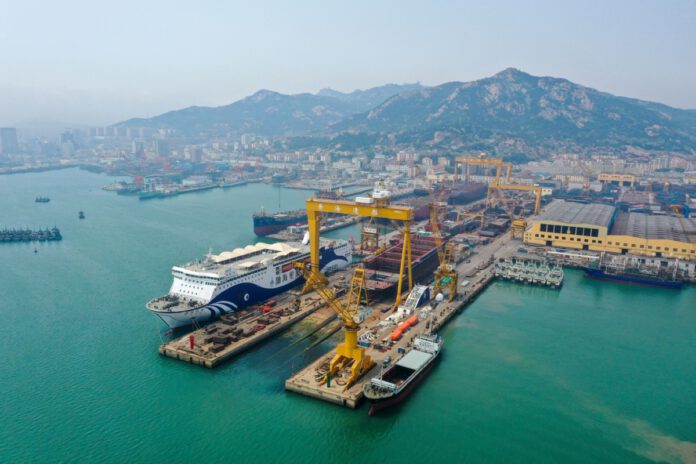
According to China’s Ministry of Industry and Information Technology (MIIT), China’s shipbuilding industry maintained its global leadership in the first quarter of 2026, ranking first worldwide in three key indicators: completed shipbuilding output, new orders, and order backlog.
During the first quarter of 2026, China completed 15.68 million deadweight tons (DWT) of shipbuilding, representing a year-on-year increase of 46.0%, with export vessels accounting for 96.1% of total output.
New orders reached 59.53 million DWT, soaring by 195.2% compared with the same period last year, while the order backlog stood at 322.30 million DWT as of the end of March, up 43.6% year on year.
China accounted for 57.3% of global completed shipbuilding output, 84.9% of new orders, and 69.8% of the global order backlog. Among the world’s 18 major ship types, China ranked first in new orders for 15 categories.
In particular, Chinese shipbuilders secured more than 90% of the global market share for very large crude carriers (VLCCs), large car carriers, bulk carriers, and container ships with capacities exceeding 10,000 TEUs. Some major shipyards have already secured production schedules extending three years into the future, demonstrating strong long-term market confidence.
China’s sustained global competitiveness is underpinned by its comprehensive and highly integrated industrial supply chain. At a shipyard in Nantong, Jiangsu Province, a new Floating Liquefied Natural Gas (FLNG) facility has entered the module installation phase, where intelligent welding robots perform high-precision steel welding on automated production lines.
Through digital transformation and intelligent manufacturing, the company not only broke the long-standing international monopoly in FLNG construction but also achieved a record-breaking completion time of just 33 months, setting a new industry benchmark.
From steel plates and pipes to cryogenic valves, marine engines, and advanced equipment, China has established a complete industrial ecosystem that covers research and development, raw materials, component manufacturing, ship assembly, and final delivery. This integrated supply chain enables shipbuilders to respond quickly and efficiently to global market demand while maintaining cost competitiveness.
Wan Zhe, Professor of Economics at Beijing Normal University, noted that China possesses the world’s most comprehensive shipbuilding industrial system. Major industrial clusters in the Yangtze River Delta and the Bohai Rim have created highly efficient regional supply chains, allowing manufacturers to shorten production cycles and improve delivery efficiency. Meanwhile, continuous progress in domestic production of high-end marine equipment, including marine engines, boilers, gas supply systems, specialized steel, and LNG fueling systems, has significantly enhanced the resilience and security of China’s shipbuilding supply chain while reducing dependence on imported technologies.
Digitalization and intelligent manufacturing have become another major driving force behind the industry’s competitiveness. Leading Chinese shipbuilders have widely adopted Model-Based Definition (MBD), digital twin technology, and intelligent production lines throughout the entire shipbuilding process, from design and manufacturing to operation and maintenance.
At Jiangnan Shipyard, digital shipbuilding technologies have reduced the construction period for a 20,000-TEU container ship from approximately 28 months to just 16 months. At Dalian Shipbuilding Industry, a very large crude carrier (VLCC) can now be completed in around 180 days, while labor productivity has increased by about 20% compared with five years ago.
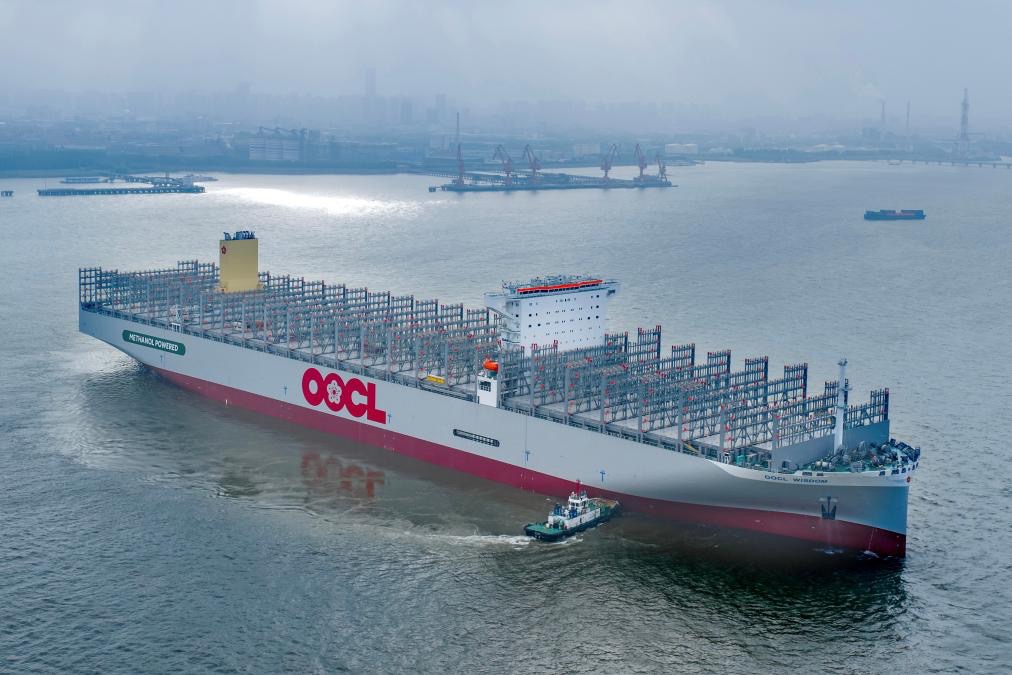
In addition, intelligent vessels such as the Dongfang Zhihui optimize sailing speed automatically, reducing energy consumption by more than 10%. Digital twin technologies also enable lifecycle management of ships, transforming Chinese shipbuilders from traditional manufacturers into providers of integrated digital and low-carbon maritime solutions.
Green and low-carbon development has emerged as a new growth engine for China’s shipbuilding industry. In the first quarter of 2026, China captured 80.2% of the global market for new green ship orders, including LNG-, LPG-, methanol-, and ethane-powered dual-fuel vessels, as well as fully electric ships.
A series of domestically developed green vessels have recently been delivered, including the “Kun” series 15,000-TEU methanol dual-fuel container ship, the “Tianshan” 174,000-cubic-meter LNG carrier, and the “Innovation 19,” China’s first river-sea bulk carrier powered entirely by methanol. The “Kun” series is expected to reduce carbon dioxide emissions by approximately 120,000 tons annually, while the “Innovation 19” cuts carbon emissions by 90% and nearly eliminates sulfur oxide emissions. These achievements demonstrate China’s rapid transition from technological innovation to the large-scale commercial deployment of environmentally friendly vessels.
According to Professor Wan, China’s early investment in alternative-fuel technologies, including methanol, LNG, battery-electric, and ammonia-powered ships, has enabled its shipbuilders to capitalize on the accelerating global transition toward decarbonized shipping.
As the International Maritime Organization (IMO) pursues its target of achieving net-zero greenhouse gas emissions from international shipping around 2050, and as the European Union continues to strengthen maritime carbon regulations, global demand for low-carbon vessels is expected to grow rapidly. Leveraging its technological capabilities and comprehensive industrial ecosystem, China is well positioned to become a leading supplier of next-generation green ships.
Moreover, China is actively contributing to international maritime standards by promoting green methanol within the IMO framework and exporting integrated solutions that combine technology, infrastructure, and technical standards, further strengthening its influence in global maritime governance.
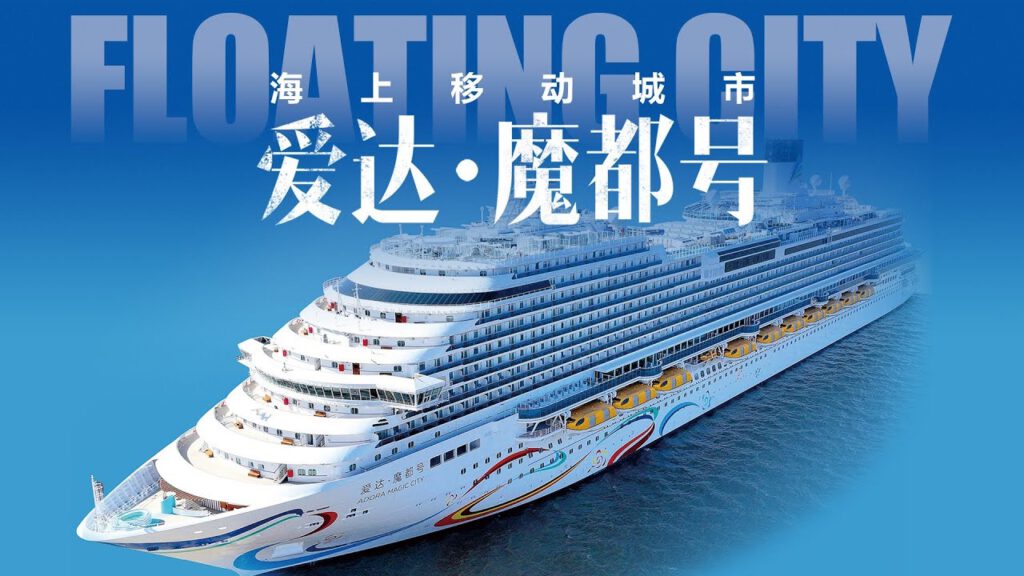
China has also continued to expand its presence in the high-end vessel market. In recent years, Chinese shipbuilders have successfully delivered some of the world’s largest and most technologically advanced vessels, including 24,000-TEU ultra-large container ships, 174,000-cubic-meter LNG carriers, the world’s largest shallow-draft LNG carrier, advanced offshore wind installation vessels, floating production storage and offloading units (FPSOs), and deep-sea aquaculture equipment. The successful delivery and commercial operation of Adora Magic City, China’s first domestically built large cruise ship, marked another milestone, demonstrating that China has established full-spectrum shipbuilding capabilities covering virtually every major category of commercial and offshore vessels.
Particularly noteworthy is China’s rapid progress in LNG carrier construction, a sector that was once dominated by South Korean shipbuilders. The number of domestic supporting enterprises involved in LNG shipbuilding has increased from just over 20 to more than 130, significantly improving localization rates, strengthening supply chain security, and enhancing China’s competitiveness in one of the world’s most technologically demanding ship segments.
China’s customer base has also become increasingly diversified. Orders from leading European shipowners, including companies from Greece and Switzerland, have continued to rise, reflecting growing international confidence in the quality, reliability, and delivery capability of Chinese shipyards. With continuous advances in innovation, intelligent manufacturing, and green technologies, Chinese shipbuilders are evolving from followers into global leaders in the maritime industry.
As the global shipbuilding market enters a new cycle of recovery and expansion, China’s advantages in industrial integration, manufacturing efficiency, technological innovation, and sustainable development are becoming increasingly evident. By fostering high-quality development through digitalization, green transformation, and advanced manufacturing, China is expected to maintain its leading position across all three major shipbuilding indicators while making an even greater contribution to the future of global shipping and the broader world economy.
Source: news cn, hk01, guancha, xinhua, china daily