


2011 komponierte Johan Famaey „Chinese Memories“, eine Hymne auf die chinesisch-europäische Freundschaft. Dieser belgische Musiker betrachtet die chinesische Musik aus einem westlichen Blickwinkel und gibt alten östlichen Texten ein überraschendes östlich-westliches Aussehen. Bei seinem Konzert in einer alten Barockkirche in Antwerpen (Nordbelgien) hatte LHCH einen Platz in der ersten Reihe, denn das Kamerateam war vor Ort, um alles zu filmen.
„Chinese Memories“ ist ein wunderschöner Liederzyklus, in dem die Großartigkeit der Oper, die Intimität des Liedes und bewegende Filmmusik mit einer Prise chinesischer Tradition kombiniert werden. Bei den Liedern handelt es sich um Gedichte aus der Tang- und der Songdynastie. An diesem Samstag, dem 24. September, hatten wir die Gelegenheit, eine unvergessliche musikalisch-literarische Begegnung zu erleben.
Junger Flame, der sich in China verliebt hat
Bereits als Teenager komponierte und arrangierte Johan Famaey Musik für die Orchester und Chöre, die er leitete. 2002 schloss er sein Studium am Lemmens Institut für Orgel bei Luc Ponet, Klavier bei Veerle Dieltiens, Harmonielehre bei Carl Van Eindhoven und Kontrapunkt bei Hans Vervenne ab.
Aber 2005 zog Johan Famaey nach Qingdao in China. Während seines vierjährigen Aufenthalts kam er mit der traditionellen chinesischen Musik in Berührung. „Das hat mich dazu gebracht, mit chinesischen Musikern und Komponisten zusammenzuarbeiten“, sagt er erneut begeistert. Danach schrieb er Arrangements und Musik für Yangqin (chinesisches Hackbrett), Sheng (Mundorgel), Pipa (chinesische Laute) und Dizi (Bambusflöte).
China in Belgien
Im Sommer 2009 kehrte er, fasziniert von der chinesischen Musik, nach Belgien zurück, um andere an seiner Leidenschaft teilhaben zu lassen. 2011 wurde „Chinese Memories“ für das Sangam Ensemble komponiert und von diesem aufgeführt. Die Texte sind Gedichte von Dichtern der Tang- und der Song-Dynastie. Sie gehören zu den wichtigsten Vertretern der Poesie des alten China. 2019 gewann Johan die Kompositionswettbewerbe Verdi Keurmerk und Cantabile. Seine Kompositionen werden von Metropolis Music Publishers herausgegeben.
Vor der chinesischen Botschaft
An diesem Wochenende, dem 24. September, haben die beiden Opernsängerinnen Jolien De Gendt und Annelies Van Hijfte, begleitet vom Ensemble der Chapelle De Lorraine, das Meisterwerk in einer prächtigen Barockkirche, die heute den Namen Amuz trägt, erneut aufgeführt. Hybride „Chinese memories“. Es muss Johan Famaey tief bewegt haben, dass er seine Kreationen vor einem Publikum aus Vertretern der chinesischen Botschaft und angesehenen Gästen spielte.
Die Poesie von Su Shi und Li Qingzhao ist mit viel Herz und Intelligenz vertont worden. Eine manchmal überraschende Version, mit barocken, zeitgenössischen und chinesischen Akzenten! Wir fühlten uns gerne verloren zwischen Europa und Asien, in einem Eurasien, das heute durch den Konflikt in der Ukraine zerrissen ist. Auf jeden Fall bleibt die Freundschaft zwischen Belgien und China intakt und verspricht uns auch für die Zukunft großartige Kooperationen.
On October 13, China’s State Council Joint Prevention and Control Mechanism held a briefing on the scientific and precise prevention and control of the COVID-19 epidemic, with several renowned epidemiologists in attendance, to explain China’s future COVID-19 epidemic response policy.
Why must China adhere to the “dynamic zero”?
Liang Wannian, head of China’s National Health Commission’s Leading Group of Experts on Epidemic Response and Disposal, explained that the “dynamic zero” implemented by the Chinese government is based on the “people first, life first” concept. The core of the “dynamic zero” is to stop the continuous community spread of the epidemic, to prevent the formation of a large-scale epidemic or large-scale epidemic rebound.
Secondly, the common international perspective of public health is to stand from the perspective of the population and use indicators such as mortality and excess mortality to measure, rather than the perspective of the disease and death rate and the individual. For the Omicron mutant strain, though the disease and death rate is decreasing compared to the previous mutant and original strains, the total morbidity rate is high because it is spreading faster, transmission is more insidious, and immune escape is gradually increasing, which means that there will be a large number of infections in the population. If the number of infections is multiplied by the individual mortality rate, the number of deaths will be relatively high, and the population mortality rate will be higher than that of influenza, and not lower than that of the original strain and other mutated strains, which shows that the overall risk to human beings has not decreased significantly, and this is precisely the important indicator used by the World Health Organization and various countries in judging its risk.
Third, China has 267 million elderly people, and a large number of patients with underlying diseases, all of them at high risk of infection with the coronavirus. In addition to the effect of prevention and control in the previous period, the Chinese have a low rate of COVID-19 infection in general, their natural immunities are not strong, although having a certain degree of immunity through full vaccination, but the new mutant strains of this immunity is strengthening the escape.
Fourth, the scientific community is still unable to fully grasp the mutation of COVID-19, in what direction it will change in the future, and its virulence, pathogenicity, and the magnitude of the danger after the mutation. Meanwhile, China has proved in the past three years that prevention and control are effective, feasible, and scientific, so in the face of these uncertainties, China should use a deterministic strategy and a deterministic approach.
Fifth, China considers the long-term harm of this disease. Some studies have shown that a certain percentage of infected people will have various sequelae such as fatigue, respiratory difficulties, neurocognitive impairment, etc. The pathogenic mechanism and final duration of this condition are not fully understood scientifically, which concerns China deeply.
Why can’t China accept coexistence with COVID-19 like many countries?
From a global perspective, the vast majority of countries have indeed shifted from the previous prevention of infection to focus on preventing serious illness and death, and preventing the crowding of medical resources.
These choices are made for a variety of reasons, such as based on the prevention and control philosophy of each country, based on the capacity and conditions of prevention and control, based on the rapid spread of Omicron mutant strains that have no relevant mechanisms, organizational safeguards, and mobilization capacity, etc. So it can be concluded that many are passive adjustments, for example, from the United States, Japan, and some countries to relax and adjust to the situation, which may be brought about by the epidemic of several waves of shock, and even excess deaths.
Liang Wannian pointed out that China has a strong capacity to secure materials, coordinate economic and social development, and epidemic prevention and control, so China should adhere to the “dynamic zero”, and eventually overcome the disease, rather than give in like many countries due to realistic constraints.
How to calculate the cost-effectiveness of epidemic control?
All countries around the world are affected by epidemics, especially the impact that epidemics have on economic development. One of the objectives of epidemic prevention and control is to avoid and mitigate as much as possible the impact on economic development caused by the epidemic.
“But because the COVID-19 epidemic has lasted for nearly three years, which is also rare in the history of human diseases, especially pandemic diseases, lasts so long, and the virus is repeatedly mutating, spreading faster and other such characteristics, the epidemic prevention and control measures will then change and adjust accordingly, and will inevitably have some impact on economic development. ” Liang Wannian mentioned that this is why China adheres to the “dynamic zero” general policy. The purpose is to minimize the epidemic through scientific, legal, and precise prevention and control, and reduce the adverse impact of epidemic prevention and control measures on the economy and society.
There are different indicators to measure the effectiveness of prevention and control. From a public health perspective, it is most cost-effective to protect the interests of a larger, longer-term, larger population in the face of a pandemic epidemic. Countries are struggling to balance such costs and benefits. In this case, the trade-off is to be made based on each country’s culture, philosophy of prevention and control, and conditions.
How can China’s local governments be better urged to put an end to cascading and one-size-fits-all behavior?
Lei Zhenglong, director of China’s National Administration of Disease Control and Prevention, mentioned that the next stage, China will continue to adhere to the problem-oriented, focusing on the problems reflected by the public, found that the local violation of the “Nine Prohibitions” and other epidemic prevention and control requirements, and firmly urge the rectification in place, both to grasp the epidemic prevention and control, but also to serve the public, and timely solve the problems of the masses urgent difficulties and worries.
At the same time, China will actively give full play to the rectification of the multiple-layer work task force role, fast referral, verification of the masses held complaints, strengthen the follow-up supervision, strengthen the typical problem notification exposure, to ensure that the multiple-layer problem is properly resolved promptly.
In der Stadt Chengdu in der Provinz Sichuan hat vor kurzem eine Lichtshow stattgefunden. Die Laternen in Form von kulturellen Elementen der Antiken Shu-Zivilisation, wie Sonnenvogel, Goldornamente und Bronzekunstwerke, verbinden moderne Technik und Tradition harmonisch miteinander.
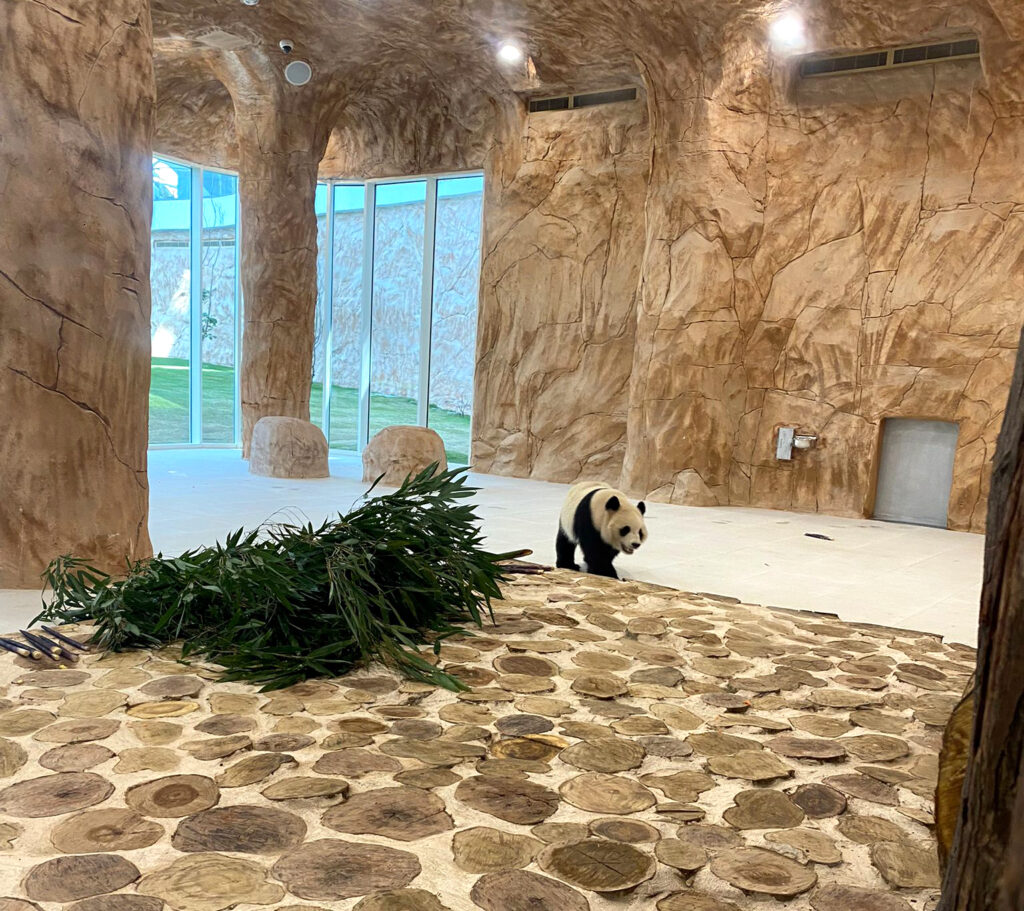
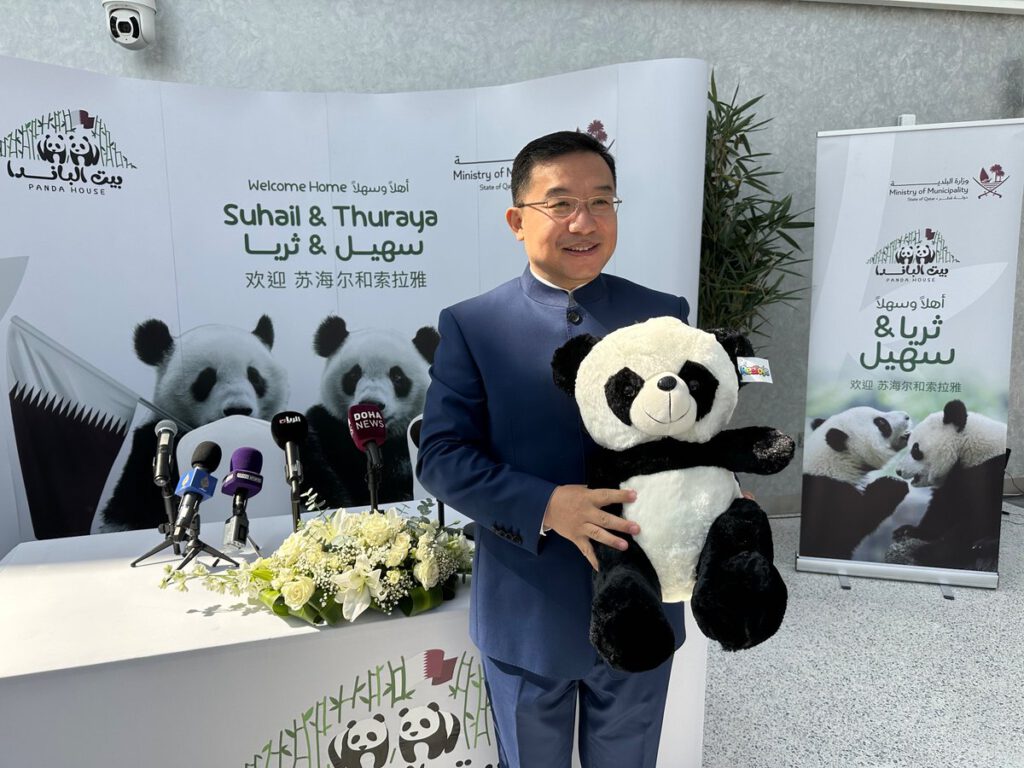
Die Großen Pandas Jingjing und Sihai sind am Mittwoch (Ortszeit) in Doha, der Hauptstadt von Katar, angekommen. Es handelt sich um die ersten Großen Pandas im Nahen Osten. Im Rahmen der kommenden Fußballweltmeisterschaft in Katar werden sie der Öffentlichkeit präsentiert.
Eine gespaltene Welt dient niemandes Interessen und eine Konfrontation zwischen den Lagern führt die Welt nur in eine Sackgasse. Dies sagte der stellvertretende chinesische Außenminister und Mitglied des Parteikomitees des chinesischen Außenministeriums, Ma Zhaoxu, am Donnerstag auf einer Pressekonferenz im Pressezentrum des 20. Parteitags der KP Chinas.
Bei der Erläuterung der Ziele der chinesischen Außenpolitik sagte Ma, die Ziele der chinesischen Außenpolitik seien ganz klar: den Weltfrieden sichern, die gemeinsame Entwicklung fördern und den Aufbau einer Gemeinschaft der Menschheit mit geteilter Zukunft vorantreiben. China trete entschieden für das internationale System mit den Vereinten Nationen als Kern, die internationale Ordnung auf der Grundlage des Völkerrechts und die grundlegenden Normen der internationalen Beziehungen auf der Grundlage der Ziele und Grundsätze der UN-Charta ein sowie fördere die Entwicklung der Global Governance in eine gerechtere und vernünftigere Richtung.
Die Wahrung der eigenen nationalen Souveränität, Sicherheit und Entwicklungsinteressen sei eine heilige Aufgabe der chinesischen Diplomatie, so Ma Zhaoxu weiter. China lehne alle Arten von einseitigen Sanktionen und extremen Druck ab und akzeptiere kein Nullsummenspiel oder das Gesetz des Dschungels.
China werde an seinem Entwicklungspfad im Bereich der Menschenrechte festhalten und lehne eine Politisierung von Menschenrechtsfragen ab. Nahezu 100 Länder hätten bei den Vereinten Nationen ihre Unterstützung für Chinas gerechte Position zum Ausdruck gebracht und sich gegen eine Einmischung in die inneren Angelegenheiten Chinas unter dem Vorwand der Menschenrechte ausgesprochen, während sich mehr als 80 Länder gegen eine Politisierung der Frage der Ursprungsuntersuchung von Viren ausgesprochen hätten, so Ma Zhaoxu weiter.
Die „witzigen“ Gedichte zeugen von der großen Meisterschaft der chinesischen Dichter im Umgang mit Worten und Schriftzeichen. Chinesische Schriftzeichen werden zur Freude der Leser und Bewunderer dieser mit Poesie gefüllten „chinesischen Puzzles“ manipuliert. Weniger Linien, auf dem Kopf stehende Zeichen, Rätsel… Eine sehr aktuelle visuelle Kunst, die allerdings fast 1000 Jahre zurückreicht!
„Shenzhi tī shī“, auch „seltsame Zeichen“ genannt, sind eine Form von „Mystery“ oder rätselhafter Poesie… Es handelt sich um Gedichte, deren Lektüre zum Teil von der Erscheinung der Figuren abhängt, was ihre Farbe, ihre Form und sogar ihre Position betrifft. Man versteht sie also nicht auf den ersten Blick.
Fachleute führen den Ursprung dieser Praxis auf die Tang-Periode (7.-10. Jahrhundert) zurück, mit seltsamen Inschriften, die auf Dunhuang-Manuskripten gefunden wurden
Historisch korrekter ist es jedoch, diese brillante Erfindung Su Shi (Su Dongpo, 1037-1101) zuzuschreiben, einem berühmten Dichter der Song-Dynastie. Und noch konkreter auf das Gedicht „Wan Tiao“, oder „Abendblick in die Ferne“.
Grafische Kunst für das Prestige
Für diesen Vierzeiler in Heptasilben hat Su Shi 12 Zeichen auf originelle Weise nachgezeichnet, von denen einige verdreht, andere auf den Kopf gestellt oder groß und fett geschrieben sind, oder im Gegenteil verpackt, bestimmte Elemente des Zeichens stehen schräg, andere fehlen.
Um das Gedicht zu lesen, müssen Sie die Form und Schreibweise der Buchstaben beobachten und die Wörter hinzufügen, die die besondere, stilisierte Schreibweise beschreiben.
Am Ende hat dieses Gedicht von Su Shi nicht 12, sondern 28 Zeichen!
Was ist der Kontext dieser literarischen Erfindung? Laut einer historischen Chronik spielt die Geschichte während der Herrschaft von Kaiser Shenzong (1048-1085) von den Nördlichen Song. Ein Abgesandter aus Liao (im Khitan-Reich) kommt an den Hof und prahlt provokativ mit dem hohen kulturellen Niveau seines Königshofs. Daraufhin bat der Kaiser Su Shi, ihm als Gastgeber zu dienen. Der Abgesandte befragt den bedeutenden Dichter über die Kunst der Poesie. Su Shi antwortet: „Gedichte zu schreiben ist einfach, aber sie zu beobachten ist viel komplizierter.“ Eine ziemlich rätselhafte Formel, die eine brillante Kreation vorbereitet. Das war an den arroganten Abgesandten gerichtet. Doch als der Abgesandte diese Zusammensetzung sah, wusste er nicht, was er antworten sollte. Diese Episode, die berühmt wurde, hat seinen Schnabel für immer geschlossen. So rettete Kaiser Song Shenzong dank Su Shi die Ehre der Gelehrten seines Hofes, die von dem Abgesandten des Khitan-Reiches verächtlich gemacht wurden.
Von der Song- zur Qing-Zeit
Was als Herausforderung an das Prestige begann, wurde schnell zu einem beliebten Buchstabierspiel unter angesehenen Dichtern, insbesondere während der Qing-Dynastie, mit Wan Shu, Zhang Chao, Deng Zhilin und Li Zhiqi als wichtigen Vertretern. Es war Wang Shu, der die Erfindung dieser „witzigen“ Gedichte wirklich weiterführte. Ein echtes „chinesisches Rätsel“, wie wir im Westen sagen.
Auf den ersten Blick hat sich der Dichter damit begnügt, alle Figuren auf den Kopf zu stellen, aber man muss über das hinaussehen, was man vor sich hat. Das Gedicht besteht nicht einfach aus verkehrt herum geschriebenen Buchstaben (gespiegeltes Lesen), sondern aus den Worten, die den dargestellten Buchstaben gegenüberstehen. Das bedeutet, dass wir das Gedicht zunächst mit den vorhandenen Zeichen lesen können (die Tatsache, dass sie auf dem Kopf stehen, stört das Lesen nicht), und dass wir dann das Gedicht neu lesen müssen, indem wir für jedes gegebene Zeichen sein Gegenstück unter semantischen Gesichtspunkten finden.
Ein Beispiel: Die ersten Buchstaben des ersten Satzes lauten zunächst: „Das gute Wetter und die Frühlingshitze lassen auf sich warten.“ Wenn wir aber eine semantisch „umgekehrte“ Lesart vornehmen, lautet sie: „Die Regenfälle und die Kälte des Herbstes kamen früher“.
Die „witzigen“ Gedichte zeugen von der großen Meisterschaft der chinesischen Dichter im Umgang mit Worten und Schriftzeichen. Sie zeugen von dem kreativen Genie der chinesischen Schrift. Sie sind eine Kuriosität für die Augen und ein Fest für den Geist, auch wenn es manchmal etwas dauert, bis man sie durchschaut.
In September 2020, China put forward carbon peaking in 2030 and carbon neutrality in 2060. Two years have passed and the connotations, opportunities, and challenges of “dural carbon targets” are slowly being understood, but there are still many unknowns to be solved.
Macroeconomic perspectives on dual carbon
Looking at the international level, the carbon peak in developed countries is mostly due to the natural decline of carbon emission growth after economic development reaches a certain level and the market demand decreases. When their carbon peak is reached, the GDP per capita is generally 20,000-25,000 USD, and the United States has reached more than 60,000 USD GDP per capita, some countries in the European Union reached 40,000-50,000 USD, Japan and South Korea reached more than 30,000 USD, but China’s GDP per capita in 2021 had just reached 12,000 USD.
The carbon emissions of developed countries such as Europe and the United States have peaked in some cases even before the start of the UN climate change negotiations. But overall, the carbon peaking process in developed countries has gone through a longer period of high plateau fluctuations with multiple peaks protruding rather than a linear single peak. For example, the U.S. was at a high level of carbon emissions in the late 1980s, but it was not until after 2005 that it entered a phase of fluctuating decline. This means that China’s carbon peak may not be a single peak, but multiple peaks, and there is no need to force a shutdown due to emission fluctuations that would harm the normal operation of the economy and society, but China still tries to suppress the peak and shorten the high plateau period.
In 2010, the term low-carbon economy was not yet proposed in Chinese government documents, because China’s industrialization and urbanization were still in a rapid development stage, and the energy structure was dominated by coal, so it was extravagant to talk about low carbon. The main motivation for “carbon neutral” is that China realized a disruptive technological breakthrough.
Existing technologies in China can be divided into two categories. The first category is improving technology to improve energy efficiency, such as coal power technology improvement, from subcritical, supercritical to ultra-supercritical, carbon emissions dropped from 450g/kWh to 270g/kWh. The second category is disruptive technologies, such as photovoltaic power generation costs that have fallen by nearly 90% in 10 years.
In addition to hard technologies, soft technologies are also important, that is, the rigid regulation and guidance of the system. China has long proposed to live in harmony with nature, ecological civilization construction, and improve the quality of the atmosphere. Moreover, China has entered the upper middle level of developing countries, and is the world’s second-largest economy, zero carbon development is the opportunity, but also the climate risk of the solution, carbon peak belongs to the global efforts to promote the implementation of the Paris Agreement goals, and as a responsible country, China wishes to take the responsibility to ease the global warming crisis.
For China, the dual-carbon strategy can promote economic transformation and upgrading, and move towards high-quality development. Take the automobile industry as an example, compared with Europe, America, Japan, and South Korea, China’s internal combustion engine technology and fuel vehicles are weak in competitiveness and have a low share in the international market. However, under the dual-carbon goal, the domestic automobile industry has undergone a low-carbon transformation, electrification has become an important direction, and technologies such as lithium batteries for electric vehicles have been accumulated and widely recognized. With the continuous integration of technologies such as 5G and artificial intelligence into the field of electric vehicles, the future application scenarios will be even richer and China’s fossil energy consumption is expected to be optimized naturally.
Regional differences in the dual-carbon road
China imports about 700 million tons of crude oil every year and spends about 2 trillion RMB, a figure that accounts for 2% of GDP and 10% of fiscal revenue. To achieve a zero-carbon economy, it must get rid of its dependence on fossil energy, which is the most important background for the double carbon target.
From the perspective of regional economic development, achieving carbon neutrality must rely on regional synergy. Giant cities like Beijing and Shanghai have no space to engage in renewable energy, they have no problem achieving carbon peaking, but no conditions to achieve carbon neutrality, while China’s western, northwest, and southwest regions have abundant hydro and biomass energy.
In short, the western region in China’s regional coordinated low-carbon development bears the dual function of industrial transfer and west-east power transmission, and needs to enlarge and strengthen its role, positioning the northwest as a renewable energy power base and intelligent heavy industry base, and positioning the southwest hydropower-rich region as a high energy consumption information industry base and renewable energy power peaking base; building near-zero carbon cities by region and step by step, China will actively promote the construction of 100% renewable energy cities in the west regions, and in the east and central regions, China will pilot the construction of 100% new energy cities, and improve and actively adopt “nature-based near-zero carbon city solutions”; in the context of population transfer to metropolises and urban clusters, China will break the traditional “convergence + centralized” city and industry layout to reduce the difficulty of building near-zero carbon cities.
Energy security in the context of double carbon
The energy composition of developed countries has a shrinking share of coal, and the dismantling and withdrawal of coal power plants are common. China’s traditional energy endowment is “rich in coal, short of oil and gas”, with coal power plants accounting for more than half of the world’s installed capacity and a very young and efficient coal power system. After the outbreak of the Russia-Ukraine conflict, the price of bulk energy commodities fluctuated dramatically, and the European Commission proposed the “RE Power EU” program to decouple from Russian gas.
The international situation affects the fluctuation of energy prices, and China has to fight a comprehensive war when dealing with this fluctuation. First of all, China recognizes that rising energy prices will make the traditional processing trade profits decline, which is all the more important not to stimulate exports through the devaluation of the CNY. For this issue, in the long run, it is still necessary for China to pursue the high-quality development of the Chinese economy and improve China’s position in the global industrial chain. Finally, it is still necessary to insist on promoting the decarbonization of energy, reducing the dependence on traditional fossil energy, and gaining more initiative.
As the main force of carbon reduction in the power industry, it is inevitable to reach the peak earlier. Now the idea of China is to create a positive policy mechanism and market environment, so that these stocks of coal power units can maximize the value of flexible services when less power is generated, smooth and efficient operation when the need to generate power, in an emergency can be opened to the maximum load, not to appear to pull the plug to limit power.
China’s domestic demand for electricity, coal consumption is still growing, the apparent reason is the economic and social demand driven by the rise, the root cause is China’s coal-based energy structure is sensitive to changes in demand performance, in the non-fossil energy increment is not enough to support the new energy demand before, coal consumption will grow with the growth of energy demand. If a large number of coal power assets are limited for usage in advance, it will bring pressure to the current power supply security, and is not conducive to people’s livelihood and economic development.
In the past four or five years, the average loss rate of the coal power industry has been 50%-60% in China. Coal power units need to be modified for flexibility, gradually adjusting downward the number of hours of utilization to make room for renewable energy. When wind and PV are connected to the grid on a large scale, coal power will only be used as a guarantee of energy supply security to cope with emergencies and extreme weather. China has done projections that wind and PV will account for roughly 65%-70% of China’s energy mix by 2060 before carbon neutrality is achieved.
Plus, the Chinese government will also improve the design of the price system that can link the coal price and electricity price more smoothly as soon as possible.
Dank günstigen Naturbedingungen hat die Stadt Dongfang in der Inselprovinz Hainan die Reispflanzenindustrie tatkräftig entwickelt. Derzeit haben mehr als 60 Unternehmen die Pflanzenbasen in dem Gebiet eingerichtet. Die Anbaufläche beträgt insgesamt circa 54,6 Quadratkilometer.
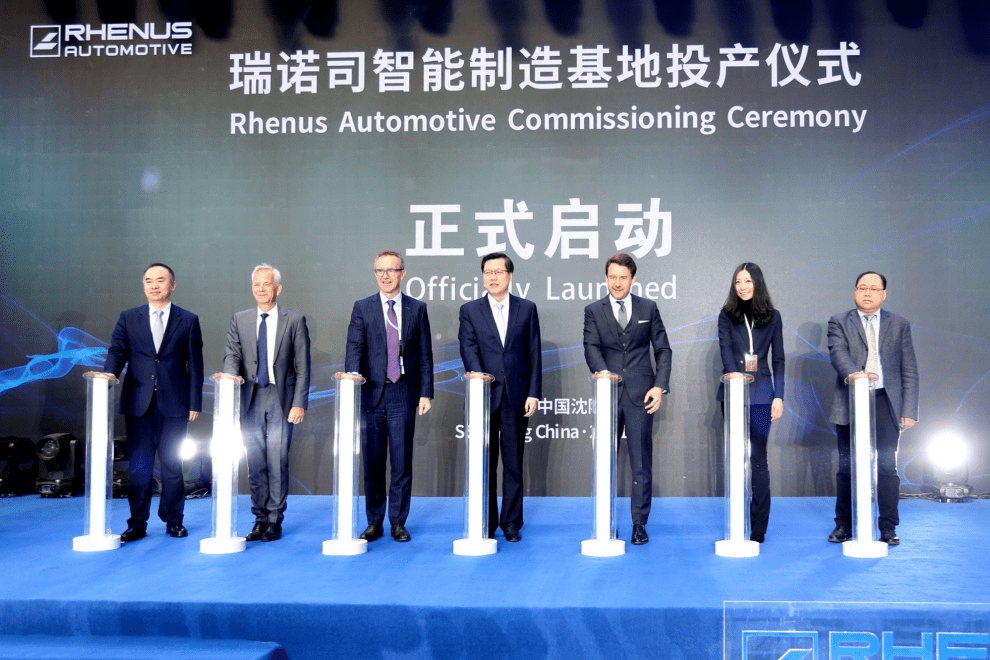
Ein bekanntes ausländisches Optik- und Elektronikunternehmen hat vor kurzem seine Investitionen in Kunshan in Höhe von 1,3 Milliarden US-Dollar aus dem Jahr 2013 auf 1,8 Milliarden US-Dollar erhöht.
Die ostchinesische Stadt Kunshan in der Provinz Jiangsu hat bereits im August sein Ziel für aufgenommenes ausländisches Kapital für das ganz Jahr erreicht. Es wird erwartet, dass die Im- und Exporte von Kunshan im laufenden Jahr erneut die Schwelle von 100 Milliarden US-Dollar überschreiten werden und es besteht die Hoffnung, landesweit auf die ersten 15 Plätze vorzurücken.
Zhou Wei, Sekretär der Kommission der Kommunistischen Partei Chinas in der Stadt Kunshan, ist ein teilnehmender Delegierter des 20. Parteitags der KP Chinas. Er sagt, die Vorteile der Industriekette seien die größte Stärke der Stadt. Der Grund, warum sie ein Drittel des globalen Notebook-Marktes halten könne, sei, dass sie eine vollständige Industriekette geschaffen habe. Heute baue sie aktiv eine neue Industriekette für intelligente Terminals auf, indem sie sich auf führende Unternehmen konzentriere, Ressourcen bereitstelle und dafür sorge, dass alle günstigen Bedingungen für die Ansiedlung von Unternehmen in Kunshan geschaffen würden.
Zhou zufolge haben sie vor kurzem einem bekannten führenden ausländischen Unternehmen geholfen, vier Zertifikate innerhalb von drei Tagen zu erhalten. Sie hätten garantiert, dass das Unternehmen zwei Monate früher als geplant die Abnahme seiner Fabrik vollendet habe, so der Sekretär der Kommission der KP Chinas in Kunshan weiter. Dem Unternehmen sei auch geholfen worden, einen Großauftrag in Höhe von über 20 Milliarden Yuan RMB für seine Produkte zu erhalten.
Kunshan will nun einen neuen Weg der digitalen Wirtschaft gehen und konzentriert sich auf die Stärkung der Industriekette. Die Stadt wolle mehr Unternehmen dazu anleiten, ein Innovationscluster der Smart-Wearable-Industrie mit einem Volumen von 100 Milliarden Yuan RMB aufzubauen, erklärte Zhou Wei. Trotz der schwierigen und komplizierten internationalen Lage hätten sie weiterhin Geschäftsleute aus dem In- und Ausland für Kunshan gewonnen. Immer mehr ausländische Unternehmen hätten ihre Investitionen in Kunshan erhöht und sähen die Zukunft der Provinz Jiangsu und Chinas weiterhin zuversichtlich.
Als Reaktion auf Äußerungen deutscher Nachrichtendienste, die deutsche Wissenschaftler vor Kontakten mit China warnten, forderte der Sprecher des chinesischen Außenministeriums, Wang Wenbin, die deutsche Seite auf, die chinesisch-deutschen Beziehungen objektiv und rational zu betrachten und damit aufzuhören, eine so genannte „chinesische Spionagebedrohung“ aufzubauschen.
Wang Wenbin sagte am Dienstag vor der Presse in Beijing, dass China bei der Entwicklung der chinesisch-deutschen Beziehungen stets an den Grundsätzen des gegenseitigen Respekts, der Win-Win-Zusammenarbeit, der Gleichbehandlung und der Nichteinmischung in die inneren Angelegenheiten der jeweils anderen Seite festhalte. Er forderte die deutsche Seite auf, China nicht mehr zu verleumden und die normale Wirtschafts- und Handelszusammenarbeit nicht zu politisieren.