-0.8 C
Berlin
Thursday, January 29, 2026
spot_img
Home Blog Page 210

Tragödie: Absturz eines Passagierflugzeugs in Südchina

0

Eine Passagiermaschine der Fluggesellschaft China Eastern ist am Montagnachmittag in der südchinesischen autonomen Region Guangxi der Zhuang-Nationalität abgestürzt. Die gebirgige Umgebung am Absturzort der Boeing 737 im zur Stadt Wuzhou gehörenden Kreis Tengxian geriet in Brand. An Bord waren 123 Passagiere und eine neunköpfige Besatzung. Über die Zahl der Opfer wurde zunächst nichts bekannt.

Staatspräsident Xi Jinping forderte eine sofortige Aktivierung der Notfallmechanismen und Rettungsarbeiten mit allen Kräften sowie einen ordnungsgemäßen Umgang mit den Folgen des Unglücks und die schnellstmögliche Ermittlung der Absturzursache. Xi Jinping forderte zudem, verstärkt mögliche Sicherheitsrisiken im Bereich der Zivilluftfahrt zu untersuchen und die Verantwortlichkeiten klar zu regeln, um die absolute Sicherheit des Flugbetriebs und die absolute Sicherheit des Lebens der Menschen zu gewährleisten.

Ministerpräsident Li Keqiang ordnete am Montag an, alle Anstrengungen zu unternehmen, um nach Überlebenden zu suchen, Verletzte zu behandeln, die Folgen des Unglücks angemessen zu bewältigen sowie rechtzeitig sachliche und genaue Informationen zu veröffentlichen.

(Quelle: CCTV, CRI Deutsch, sina)

Serbia, refuses to counter Russia and blindly follow the EU’s anti-Russian wave

0

After the outbreak of the Russia-Ukraine conflict, an anti-Russian wave swept through Europe under the influence of the United States and the European Union. Up to now, only four countries in the whole of Europe have not sanctioned Russia, the most special of which is Serbia.

Serbia is almost isolated by opposing sanctions against Russia

Before Russia’s military operation began, the UK and the EU-27 had already announced sanctions against Russia. When the conflict broke out, Switzerland announced that it abandoned its deep-rooted commitment to neutrality, following the EU’s sanctions against Russia. Later, Bosnia and Herzegovina, Montenegro, Iceland, Liechtenstein, and Norway also joined the sanctions.

Serbia is a candidate member of the EU, as are North Macedonia, Montenegro, and Albania, which have joined the sanctions, but as a country that has experienced Western sanctions, Serbia does not believe it is in its vital political and economic interests to impose sanctions on any of the countries, included their representatives and business entities.

On March 7, the Russian government approved the list of unfriendly countries and regions, with which Russian companies will have to obtain the approval of the Russian federal government for trade, and all transactions will be conducted in the Russian ruble. The European countries that did not make the list are the four countries that have not imposed sanctions on Russia. Among them, the Vatican is not involved in political matters; Belarus and Moldova, both former Soviet Union member states, are the target of sanctions as is Russia, and the latter has a Russian military presence on its territory. In this way, Serbia has become one of the few neutral third countries in Europe that have maintained its independent position in the Russia-Ukraine conflict.

On the other hand, the West has never relaxed its pressure on Serbia.

In a video address on March 2, Vučić, the president of Serbia, confessed that Serbia is under enormous pressure, few people are interested in what happened to the nation in 1999, and the presidents of the European Commission and the European Council, as well as the American representatives, do not have any patience to listen to positions that are not anti-Russian.

Serbian Minister of Internal Affairs, Vulin said that NATO forces are still demanding that the country to impose sanctions on Russia, not because they think Serbian sanctions against Russia will change anything, but because NATO wants to prove to the world that the Serbian people, the last to have freedom in Europe, can also cease to be independent and its leaders can be subjugated.

Serbia erupts in pro-Russia march after the UNGA voting

Serbia has deep historical, cultural, and religious ties with Russia; both countries belong to the same Slavic people, both are of the Orthodox faith, and during the Kingdom, Tsarist Russia actively assisted Serbia in its rebellion against the Ottoman and Austro-Hungarian empires. Despite the bad relations between the two countries during the Soviet era, Russia repeatedly opposed sanctions against Serbia in the United Nations from Europe and the United States after the end of the Cold War, did not recognize Kosovo’s independence, and prevented Kosovo from joining international organizations.

Plus, Russia and Serbia reached what was considered an “unbelievable” agreement to keep gas prices unchanged following increased supplies in the face of soaring gas prices and an electricity crisis in other parts of the Balkans last year. As a result, the Serbian public is generally supportive of Russia, and Vučić had once said that no matter what happens, about 85 percent of the population will side with Russia.

After voting in favor of Ukraine’s proposal to condemn Russia at the UN General Assembly on March 2, Vučić explained in his speech that day that it is important to condemn any act that undermines the territorial integrity of UN member states, and they cannot and dare not remain silent. However, the text of the UN conference resolution does not mention any sanctions against Russia.

He also said that out of 13 UN bills, Serbia voted for four of them and did not vote for the other nine, which imposed sanctions on the Russian banking sector, air transport, or individuals, including Russian President Vladimir Putin, Russian Foreign Minister Sergey Lavrov, and others. Serbia will never harm the interests of its Russian partners in any way.

Nevertheless, many pro-Russian people are deeply disappointed.

On March 4, Serbian people held a spontaneous pro-Russian rally in the capital Belgrade. It was the first and largest pro-Russian march in Europe. People gathered in front of a statue of the last Tsar Nicholas II and the Russian Embassy, holding the flags of both countries and pictures of Putin, singing the national anthems of both countries, and the crowd chanting: “Serbia and Russia, brothers forever.”

Serbian resistance and reminders

The pro-Russian rally in Belgrade was perhaps the largest solidarity rally for Russia in today’s so-called “democratic and pluralistic” Europe. In other European countries, such rallies are either banned or disappear into the dense and fragmented extreme anti-Russian sentiment of the major European media.

The pro-Russian rally is as a “resistance” and a “reminder”: a “resistance” to the West’s extreme attitude toward Russia, and a “reminder” to the Serbian government and the Serbian public, in general, the Serbian does not want to see any anti-Russian or pro-NATO moves in their country.

In discussing why the Serbian mission to the UN voted in favor of this, Serbian patriotic groups and individuals were divided on the issue. Some argue that it was the only and least costly concession Serbia could make under Western pressure.

Overall, the central thrust of Vučić’s public statement was that Serbia is balancing as much as possible its territorial integrity based on international law, the enormous and growing pressure from the West, and its traditional friendship with Russia.

It needs to be stressed that Serbia’s industry and economy are very dependent on Russian gas. This June Serbia is also expected to sign a long-term contract with Russia, and a central element of the contract revolves around the gas prices, which are now at an all-time high.

In contrast to those who agree with Vučić’s position, another group of Serbian citizens is strongly dissatisfied with their country’s vote and believes that President Vučić has no reason to condemn Russia’s actions since Serbia could have abstained from voting, as China and other countries did, instead of joining the Western countries that had invaded it. They believe that these Western countries who are now not only targeting China and Russia are the same Western countries that have created the many wars of the past decades,  leading to the death of large numbers of innocent civilians.

This same group of people fears that this will be the first step in Vučić’s compromise with the West. They fear that if Vučić wins the presidential and parliamentary elections to be held on April 3 this year, he will be forced by Western economic, security, and military pressure to finally choose to betray Russia and embrace the West’s radical, wave aimed at destroying the countries of the East – which includes both Russia and China.

This type of pressure against Serbia has existed for several years. In the foreseeable future, the Western-led power centers are likely to use radical means to shake up the Serbian economy, such as withdrawing investments in Serbia and pulling out companies that bring a lot of jobs in Serbia. The dilemma is confirmed in a statement on March 5 when Vučić mentioned that if Serbia does not cast its vote in the UN General Assembly, around 30 to 50 companies from abroad may leave the country.

It is also highly likely that the West will further covertly support, or even openly encourage, ethnic Albanian separatist forces to start invading, forcing Serbia to respond with troops. If this scenario were to happen, Serbia would face not just the separatist forces, but NATO as a whole. This would push Serbia into conflict with NATO on a practical level, even though NATO already has Serbia fully surrounded. In the worst-case scenario, if a full-blown Balkan conflict were to break out, once NATO countries set up a no-fly zone, Russia would not be able to easily reach the Balkans even with the ability to assist.

The vast majority of the Serbian people hope that the government will not disgrace its country, will not go down the path of disgrace, will not turn the dagger on its friends, and will not be complicit with the hegemonic and colonialists – even if it ends up paying even a heavy price.

(Source: Guancha, AA)

In Novi Sad wurde der Abschnitt Belgrad-Novi Sad der 350 Kilometer langen Eisenbahnstrecke Belgrad-Budapest eingeweiht

0

Der Abschnitt Belgrad-Novi Sad der 350 Kilometer langen Eisenbahnstrecke Belgrad-Budapest wurde am Samstag (19.03.2022) in Novi Sad, der zweitgrößten Stadt Serbiens, eingeweiht.

An der Einweihungszeremonie nahmen der serbische Präsident Aleksandar Vucic und Premierministerin Ana Brnabic sowie der ungarische Premierminister Viktor Orban und Vertreter der chinesischen und russischen Botschaften in Serbien teil.

Der serbische Präsident sagte, die 75 Kilometer lange Eisenbahnstrecke sei von chinesischen und russischen Firmen gebaut worden, deutsche Firmen hätten eine Überwachung installiert, und die Züge seien in der Schweiz hergestellt worden.

Nach Fertigstellung werden Züge mit einer Geschwindigkeit von bis zu 200 km/h zwischen Belgrad und Budapest fahren und den Balkan näher an Mitteleuropa bringen.

Das Eisenbahnprojekt Belgrad-Budapest ist ein Vorzeigeprojekt innerhalb der Kooperationsplattform China-mittel- und osteuropäische Länder.

(Quelle: People’s Daily, China Railway Construction, Xinhua)

China: USA sollen ihre Rolle in der Ukraine-Krise überdenken

0

Die US-Seite soll sich gewissenhaft mit ihrer Rolle in der Ukraine-Krise auseinandersetzen, ihre eigene Verantwortung wirklich übernehmen und tatsächlich zur Entspannung der aktuellen Lage und zur Lösung der Ukraine-Frage beitragen. Dies sagte der Sprecher des chinesischen Außenministeriums, Zhao Lijian, am Freitag zu einer Äußerung von US-Außenminister Antony Blinken, wonach China für jegliche Unterstützung für Russland Verantwortung tragen werde.

Vor der Presse betonte Zhao auch, China lehne es entschieden ab, dass die USA durch Verbreitung von Falschinformationen China verleumdeten und unter Druck setzten.

Zudem fügte Zhao hinzu, die US-amerikanischen Unterstützungsleistungen für die Ukraine, die in dieser Woche auf den Weg gebracht wurden, hätten sich auf eine Milliarde US-Dollar erhöht. Es sei zu fragen, ob die jüngst an die Ukraine gelieferten Waffen dem Land Stabilität und Sicherheit bringen, oder noch mehr zivile Opfer fordern? Jeder mit Vernunft und allgemeinen Kenntnissen könne richtig darüber urteilen.

Zur Flüchtlingsfrage erläuterte Zhao, wegen des Konflikts zwischen Russland und der Ukraine seien rund 2,6 Millionen Flüchtlinge aus der Ukraine in andere europäische Länder geflohen. Die US-Vizepräsidentin habe vor kurzem bei einem Besuch in Polen keine klare Antwort auf eine Frage gegeben, ob die USA ukrainische Flüchtlinge aufnehmen würden. Es sei höhnisch, dass die USA als der Unruhestifter der Konflikte zwischen Russland und der Ukraine die Flüchtlingsfrage bislang noch heuchlerisch behandelt hätten, so der chinesische Außenministeriumssprecher.

(Quelle: CRI Deutsch)

Videogespräch zwischen Xi Jinping und Joe Biden

0

Der chinesische Staatspräsident Xi Jinping hat am Freitagabend (18.03.2022) mit seinem US-amerikanischen Amtskollegen Joe Biden ein Videogespräch geführt.

Dabei erklärte Xi Jinping, seit dem Online-Treffen zwischen ihm und Joe Biden im November des vergangenen Jahres habe sich die internationale Lage gravierend verändert. Das Hauptthema des Zeitalters von Frieden und Entwicklung sei mit ernsthaften Herausforderungen konfrontiert. Die Welt sei weder friedlich noch sicher. Die Ukraine-Krise sei etwas, das man nicht sehen wolle. Dies zeige erneut, dass es bei Beziehungen zwischen Staaten nicht so weit gehen dürfe, dass sie sich gegenseitig bekriegen. Konflikte und Konfrontationen lägen in niemandes Interesse. Und Frieden und Sicherheit seien die wichtigsten Reichtümer, die die internationale Gemeinschaft schätzen solle. Als ständige Mitglieder des UN-Sicherheitsrats und zwei der größten Volkswirtschaften der Welt solle man nicht nur die Beziehungen zwischen China und den USA auf den richtigen Weg bringen, sondern auch die internationale Verantwortung übernehmen und sich für Frieden und Sicherheit in der Welt einsetzen.

(Quelle: Xinhua, CRI Deutsch)

Zhangjiajie, eine unendliche Welt voller Nervenkitzel

0

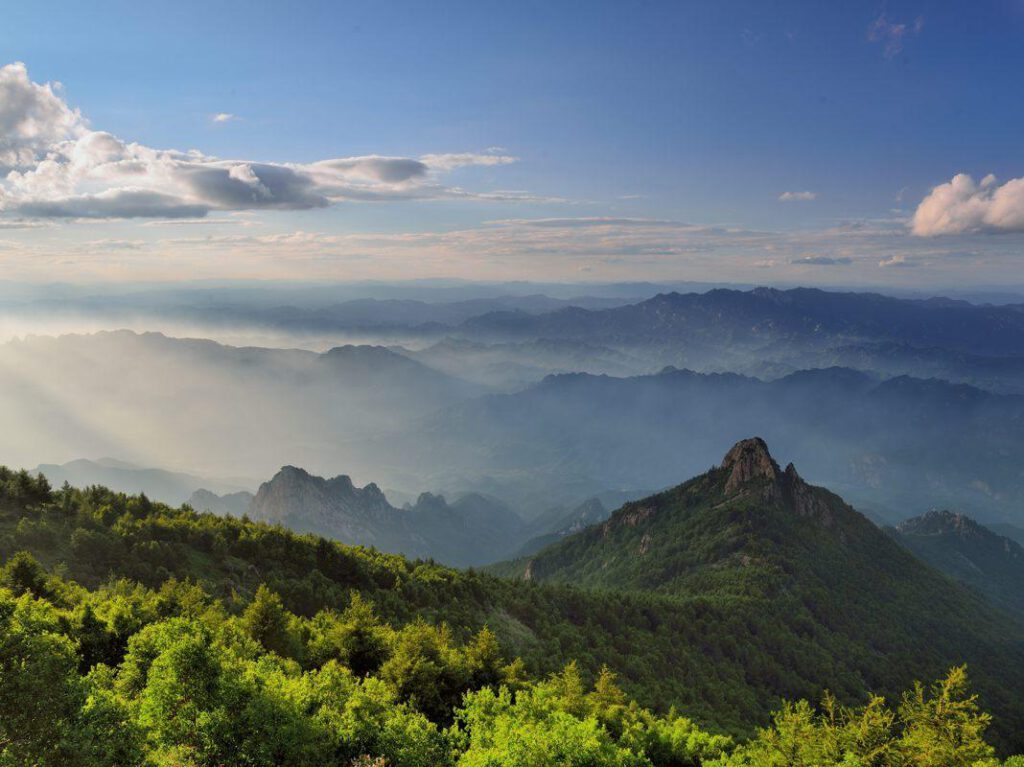
Im Nordwesten von Hunan gelegen, wäre diese Stadt wahrscheinlich eine friedliche Provinzgesellschaft, wenn… vor 300 Millionen Jahren ein spektakulärer Kataklysmus keine riesigen ozeanischen Massen zum Licht katapultiert hätte. Die langsame Erosion formte sie zu hohen Gipfeln und die Natur übernahm die Aufgabe, sie in Grün zu kleiden: Pflanzen, Sträucher, Nadelbäume begrüßten dann die Farben und die Vielfalt einer Fauna, die sie zu ihrer Heimat gemacht hat. Heute sind diese geologischen Besonderheiten, die seltsamen Berge, wie die Chinesen sagen, ein absolutes touristisches Muss.

Die Tianzi-Berge

Die Seilbahn führt aus der Stadt heraus auf den Tianzi shan, der auf 1250 m Höhe eine atemberaubende Landschaft bietet: Hunderte von steinernen Wachtürmen, von denen einige bis zu 200 m hoch sind und dort allen Widrigkeiten trotzen. Der Nebel hüllt sie ein. Magisch. Es ist ein Standbild des Planeten Pandora, der 1999 durch David Camerons Film „Avatar“ die Kinobesucher in aller Welt in seinen Bann zog.

Dieses Naturschutzgebiet ist Teil des Wulingyan-Nationalparks (397,5 km2), zusammen mit dem Zhangjiajie Forest Park und dem wunderschönen Saoxi-Tal. Entlang seines Verlaufs gibt es 200 Sehenswürdigkeiten zu entdecken, darunter die außergewöhnliche Huanglong-Höhle, die ihre Wunder auf nicht weniger als 7,5 km entfaltet.

Fauna und Flora

Der 1992 in die UNESCO-Liste des Weltnaturerbes aufgenommene Ort zeichnet sich durch eine bemerkenswerte Artenvielfalt aus. Neben den für das subtropische Klima spezifischen Arten ermöglicht der Schutz der Umwelt das Überleben von Arten, Flora und Fauna, die weltweit vom Aussterben bedroht sind.

Dies gilt für den Riesensalamander, die asiatische Wildkatze und den Schwarzbären, den Nebelparder, den chinesischen Wasserhirsch usw. Unverwechselbare Zeichen, die von den Behörden vor Ort entdeckt wurden, zeugen von ihrer Anwesenheit, und davon, sie zu sehen, kann man nur träumen! In der Tat gibt es in einer Bergregion, die zu 97,7 % bewaldet ist, unzählige Verstecke…

Das Tor des Himmels

Das ist der Berg Tianmen, der einen Teil des Azurs überbrückt… Der Anblick aus der Ferne ist spektakulär, ebenso wie die Bewegung unter diesem grandiosen Bogen… 999 Stufen führen ins Nirvana, aber es braucht mehr, um die Chinesen zu entmutigen, die es sehr lieben. Eine Rolltreppe lädt diejenigen ein, die sich die Mühe machen, den Boden von oben zu sehen, und davon gibt es viele. Zur Erinnerung: 2019 haben zwei französische „Jetmen“ mit Mini-Reaktoren dieses Himmelstor durchquert.

Glas an allen Fronten

Zwei Standorte haben sich die Transparenz zunutze gemacht und waren sehr erfolgreich. Die jüngste ist der 2016 errichtete Skywalk, eine 400 m lange Glasbrücke, die sich aus 300 m Höhe über die Kluft zwischen den Gipfeln des Tianmenshan und des Yihôgguan und Yihongguan stürzt.

Kein Herzinfarkt oder ähnliches ist zu befürchten, sonst drehen wir einen Film: In regelmäßigen Abständen sind undurchsichtige Platten eingestreut, die den zentralen Korridor säumen. In der Tat ist es eine Brücke zum „Fotografieren“, die für viele Lacher sorgt.

Der höchste Außenaufzug der Welt feiert dieses Jahr sein 20-jähriges Bestehen. Der Bailong (Aufzug der 100 Drachen) ist an einer Klippe inmitten der Quarzit-Sandsteinlandschaft verankert und bringt seine drei Panoramakabinen in 1 Minute und 28 Sekunden auf eine Höhe von 326 m. Ob es nun beängstigend ist oder nicht, wir nehmen diese Landschaften, die wir nicht vergessen werden, in Augenschein.

Der Saoxi

Wasserfälle, Schluchten, Sturzbäche, Teiche, Dutzende von Flüssen, die den Lauf des Saoxi speisen, überquert von hübschen kleinen Booten, der Baojeng-Stausee, Erholung mit lautem Wasserrauschen für die von der Hitze erdrückten Touristen oder friedlicher Spaziergang entlang der Silberpeitsche, ein poetischer Name, der die Stimmung dieses Wasserwegs gut wiedergibt… Wulingyan und seine unzähligen natürlichen Reichtümer kann man nicht an einem Tag besichtigen, man muss dort verweilen, die Minibusse nehmen, die die wichtigsten Sehenswürdigkeiten anfahren. Und man muss befürchten, dass sich die Touristenzahlen auf diese fantastische Umgebung auswirken.

Vor der Covid-Epidemie waren es 8 Millionen im Jahr, die hier umherwanderten. Wann werden Sie Eintrittskarten mit einem Kontingent reservieren können?

U.S. NSA Equation Group uses top-tier backdoor in Linux to make global IT attacks over 10 years

A team of researchers from China’s Pangu Lab recently published a 56-page report detailing a piece of Linux malware allegedly used against many targets by the threat actor known as the Equation Group, which has been linked to the U.S. National Security Agency (NSA).

Pangu Lab is a research project of Pangu Team, which is best known for its iPhone jailbreaks. An iOS exploit earned them $300,000 last year at a major Chinese hacking contest.

Discovery of backdoor in Chinese government system

In 2013, during an in-depth forensic investigation of a host in a key Chinese government department, researchers from the Pangu Lab extracted a set of advanced backdoors on the Linux platform, which used advanced covert channel behavior based on TCP SYN packets, code obfuscation, system hiding, and self-destruction design.

Among the many clues of attacks against China, the earliest one can be traced back to 2002.

It is further found that this backdoor needs the check code bound to the host to run normally. Then the researchers cracked the check code and successfully ran the backdoor. Judging from some behavioral functions, this is a top-tier APT backdoor, but further investigation requires the attacker’s asymmetric encrypted private key to activate the remote control function. The team named the corresponding malicious code “Bvp47” at the time.

The team reproduced the use of the Bvp47 backdoor in its own environment and roughly clarified its usage scenarios and basic communication mechanisms. As an important backdoor platform for long-term control of victims after a successful invasion, Bvp47 generally lives in the Linux operating system in the demilitarized zone that communicates with the Internet. It mainly assumes the core control bridge communication role in the overall attack, as shown below.

Bvp47 builds its covert communication system from cryptography, network, and Linux OS. Such a covert communication system is cutting edge and can be seen as an advanced version of “SYNKnock” (the old version of Cisco devices only conducts simple verification).

In 2016 and 2017, “The Shadow Brokers” published two batches of hacking files claimed to be used by “The Equation Group”. In these hacking files, researchers from Pangu Lab found the private key that can be used to remotely trigger the backdoor Bvp47. Therefore, It can be concluded that Bvp47 is a hacker tool belonging to ” The Equation Group”.

Through further research, the researchers found that the multiple procedures and attack operation manuals disclosed by “The Shadow Broker” are completely consistent with the only identifier used in the NSA network attack platform operation manual exposed by CIA analyst Snowden in the “Prism” incident in 2013.

Connection with Snowden Incident

In December 2013, the German media “Der Spiegel” published an NSA ANT catalog with 50 pictures. This is a series of top-secret materials compiled by the NSA in 2008-2009, including the use of a series of advanced hacking tools. The source of information may come from Edward Snowden or another unknown intelligence provider.

According to one file named “SecondDate” in the NSA ANT catalog, the team found that there are more than 90 related programs that span multiple platforms and architectures, such as Windows, Linux, Solaris, etc. Moreover, the relationship between the program is also clarified in the “EquationGroup-master\Linux\etc” directory. Therefore, there are enough reasons to believe that the files leaked by Shadow Brokers in 2016 and 2017 belonged to the NSA Equation group’s hacking tools, that is, Bvp47 is the top-tier backdoor of NSA.

Global victims of NSA attack

Besides, the files of “The Shadow Brokers” revealed that the scope of victims exceeded 287 targets in 45 countries, including Russia, Japan, Spain, Germany, Italy, etc. The attack lasted for over 10 years.

A list of potential backdoor victims is provided in the eqgrp-auction-file.tar.xz.gpg file\Linux\bin\varkeys\pitchimpair\ directory. The victims are all over the world, including some key units of China.

Technical details are revealed

The implementation of Bvp47 includes complex code, segment encryption and decryption, Linux multi-version platform adaptation, rich rootkit anti-tracking techniques, and most importantly, it integrates an advanced BPF engine used in advanced covert channels, as well as a cumbersome communication encryption and decryption process.

There are several key points in the program initialization as follows:

  • Linux user mode and kernel mode
  • Initialize the Bvp engine
  • A series of environmental tests
  • A series of payload block decryption
  • Tamper with kernel devmem restrictions to allow processes in user mode to directly read and write kernel space
  • Load non-standard lkm module files
  • Hook system function in order to hide its own process, file, network, and self-deleting detection in the covered channel communication

The entire file of Bvp47 adopts the commonly used backdoor packaging method, that is, the backdoor function modules are compressed and assembled and then placed at the end of the file, and the whole file exists in the form of additional data. The additional data is loaded through the loader function module built into the program, which mainly completes the following steps: read, check, unzip, decryption, and load.

The Equation Group is the world’s leading cyber-attack group and is generally believed to be affiliated with the National Security Agency of the United States. Judging from the attack tools related to the organization, including Bvp47, Equation group is indeed a first-class hacking group.

The tool is well-designed, powerful, and widely adapted. Its network attack capability equipped by 0day vulnerabilities was unstoppable, and its data acquisition under covert control was with little effort. The Equation Group is in a dominant position in national-level cyberspace confrontation.

As an advanced attack tool, Bvp47 has allowed the world to see its complexity, pertinence and forward-looking. What is shocking is that after analysis, it has been realized that it may have existed for more than ten years.

Even as a cyber security team that insists on high-precision technology-driven, Pangu team could only protect users in future cyber confrontations by actively exploring the cutting-edge technology of information security attack and defense, keeping track of important incidents, and coordinating with cybersecurity professionals globally. And it took so many years to identify and analyze all the details, meanwhile the NSA already took essential information it needs from many important units of different countries.

(Source: Pangu Lab, Sohu, wodesign)

China eröffnet Unternehmen mit ausländischem Kapital mehr Möglichkeiten

0

China wird Unternehmen mit ausländischem Kapital mehr Möglichkeiten eröffnen. Dies geht aus einem gemeinsamen Briefing der China Public Relations Association (CPRA) und der China Association of Enterprises with Foreign Investment (CAEFI) am Dienstag in Beijing hervor.

Vertreter der Nationalen Kommission für Entwicklung und Reform Chinas und des chinesischen Handelsministeriums haben Vertretern ausländischer Unternehmen, von Unternehmen für neue Technologien und das Internet die wirtschaftliche Lage Chinas sowie die Politik und Chancen für ausländische Unternehmen erläutert, die auf den Jahrestagungen des chinesischen Nationalen Volkskongresses und der Politischen Konsultativkonferenz des chinesischen Volkes 2022 beschlossen wurden.

www.paper.cn

Im Zusammenhang mit dem diesjährigen Arbeitsbericht der Regierung erklärten die Vertreter der Nationalen Kommission für Entwicklung und Reform sowie der Abteilung für die Verwaltung ausländischer Investitionen des Handelsministeriums, bei der diesjährigen Wirtschaftsarbeit rücke die Stabilisierung des Wachstums stärker in den Vordergrund. Die Vertiefung der Strukturreform auf der Angebotsseite und die Ausweitung der Inlandsnachfrage sollten organisch miteinander verknüpft werden und die Entwicklung der Realwirtschaft solle mit größerem Nachdruck unterstützt werden. China beschleunige den Aufbau eines neuen Entwicklungsmusters, bei dem „ein großer inländischer Zyklus die Hauptstütze ist und die inländischen und internationalen Zyklen einander fördern“. Dabei würden ausländischen Unternehmen mehr Markt- und Öffnungsmöglichkeiten geboten.

Die Vertreter in- und ausländischer Unternehmen sagten bei dem Briefing, angesichts eines zunehmend komplexen externen Umfelds halte China an einem „stabilem Wachstum“ fest und konzentriere sich auf eine qualitativ hochwertige Entwicklung. Dies habe den Investitionen ausländischer Unternehmen in China einen starken Impuls verliehen und ihr Vertrauen in die Entwicklung der Volksrepublik gestärkt.

(Quelle: CRI Deutsch)

China hofft auf einen effektiven Sicherheits-Mechanismus für Europa

0

Die verschiedene Seiten in Europa sollten sich durch gleichberechtigten Dialog den sich jahrelang anhäufenden Widersprüchen und Problemen stellen. Dies sagte der Sprecher des chinesischen Außenministeriums, Zhao Lijian, am Mittwoch in seiner Stellungnahme zu den Äußerungen des ukrainischen Präsidenten Wolodymyr Selenskyj über einen EU-Beitritt seines Landes.

Die negativen Auswirkungen der NATO-Osterweiterung auf die Sicherheit Russlands sollten höchste Beachtung finden, so Zhao Lijian. Ziel müsse es sein, einen ausgeglichenen, effektiven und nachhaltigen Mechanismus für die europäische Sicherheit zu etablieren.

Zum Dementi des chinesischen Botschafters in den USA, Qing Gang, zu Berichten, wonach Russland China vorab über seine militärischen Operationen informiert habe, sagte Zhao, Russland sei ein souveräner Staat und könne seine Entscheidungen selbständig treffen. Dies habe nichts mit den chinesisch-russischen Beziehungen zu tun.

(Quelle: CRI Deutsch)

How does Russia control the supply of European energy?

0

Western Europe, as one of the most economically developed regions in the world, has a huge demand for oil and gas for daily life and economic development. However, due to the uneven distribution of energy in the world, the oil and gas resources in Western Europe are particularly scarce compared to the demand, and relevant data show that the EU significantly relies on imports of energy over years.

In sharp contrast to Western Europe, Russia is rich in natural energy reserves, ranking eighth in the world for oil reserves and first in the world for natural gas reserves, according to 2018 data from the U.S. CIA. The abundance of natural resources has given Russia a material basis for a well-developed oil and gas industry and has provided a major energy supply channel for Western European countries.

Energy diplomacy between the EU and Russia

The history of energy cooperation between EU countries and Russia is quite long, as early as the 19th century, Tsarist Russia had exported oil to Europe. Since the Cold War, the Soviet Union and the socialist countries of Eastern Europe have been actively cooperating in energy and building gas pipelines. Even Italy and Austria in the capitalist camp signed oil and gas trade contracts with the Soviet Union in the 1950s and 1960s, despite the opposition of Britain and the United States.

When the oil crisis broke out in the 1970s, the economic environment of the oil embargo adopted by OPEC, which led to the rise of oil prices, seriously affected the energy supply of the Western European countries. As a result, the Western European countries had to put aside their ideological disputes and chose to import oil and gas resources from the Soviet Union, making the Soviet Union a new partner of European countries in the oil and gas trade at that time.

On the other hand, Yeltsin’s pro-Western policy in the 1990s also furthered Russia’s energy trade relations with Western European countries. Moreover, since the beginning of the 21st century, the EU’s increasingly stringent ecological standards, especially concerning harmful substances in petroleum products and gas emissions, have greatly affected the EU’s oil imports, making natural gas a major source of energy in everyday life, and Russia is the country with the world’s richest natural gas reserves.

Plus, Russia also needs to trade energy to drive domestic economic growth, and the existence of a stable, long-term energy trade export partner is particularly necessary for it.

For all these reasons, Russia’s oil and gas exports match the EU’s market demand, and the highly complementary energy strategies of both sides lay the foundation for long-term European-Russian cooperation. In particular, Germany, Finland, Austria, the Czech Republic, Hungary, and other countries, which are located in the middle of Europe and have difficulties in obtaining oil and gas resources from North Africa and the Middle East, are unable to get rid of their dependence on Russian oil and gas.

Russia’s Oil and Gas Industry Boom

Russia’s oil and gas resources are favored by Western Europe not only because both sides take what they need, but also because of Russia’s well-developed oil and gas industry system.

Russia has been developing its oil and gas industry since the Soviet era. Since most of Russia’s natural resources are located in the less developed eastern part of the country, while most of the heavy industries are located in the western part of Russia, the inconvenient transportation conditions have led to a significant increase in the cost of oil and gas transportation.

To meet the demand for oil supply, the Soviet government quickly built the Trans-Siberian Railway and established a one-stop industrial system from oil and gas exploration to development, processing, and transportation, which made the oil and gas industry the second-largest refining capacity in the world after the United States by the 1980s.

Starting from the end of 20th century, the world crude oil prices rose, Russia’s share of crude oil, natural gas, and refined oil exports in exports increasing from 28.4 percent in 1992 to 50.8 percent in 2000, and by 2018, Russian oil exports had accounted for 12.8 percent of total global exports that year, while natural gas accounted for 26.3 percent.

With oil exports becoming the core of Russia’s foreign exports and the country’s fiscal balance becoming increasingly balanced, Russia, in this more stable economic environment, has also proposed the idea to use the ruble as oil settlement currency. In 2006, Putin officially announced that Russia would sell energy in rubles in an attempt to further control the energy market.

Russian oil and gas companies have adopted the model of providing oil and gas – joint venture – holding in cooperation with neighboring countries, and they controlled the oil supply and terminal sales markets in CIS, Baltic sea and Eastern European countries by 2007.

European resistance to dependence of Russian energy

But there are always countries that refuse to let their energy markets be completely controlled by others, and Ukraine is the most typical case of resistance to Russia’s energy power.

After the collapse of the Soviet Union, Russia had to pay the Baltic sea states and Ukraine exorbitant annual gas transit fees, so when Russia followed its control of most of Ukraine’s refineries and oil sales, it started to use pipeline control as its main energy diplomacy tool, trying to force Ukraine to cede control of gas pipelines by rising gas prices.

On the other hand, Ukraine’s unfavorable economic development has led to a growing gas debt to Russia, which by 2014 had reached $5.3 billion. Faced with the growing debt and Russia’s price hikes, Ukraine has responded by raising gas transit fees. And for Ukraine, once the gas pipeline was fully in Russia’s hands, it would be tantamount to having its economic lifeline completely contained, something the nation could never accept.

Three major gas trade conflicts erupted, and at one point Russia cut off gas supplies to Ukraine as a means of forcing it to make concessions.

Russia’s monopoly in the European gas market has gradually formed, and the EU’s energy supply security has come into question. To reduce its overdependence on Russian gas, the EU has been working for nearly a decade to increase the market share of non-Russian energy companies in Europe and seek diversified gas sources to gradually dilute the monopoly of Russian gas on the European market.

As Russia considers Central Asia and the Caspian region as its belongings, it is trying to prevent Central Asian gas from entering the European market directly. To allow Central Asian gas to enter the European market directly and compete with Russian gas, the European Union has started the construction of gas pipeline projects bypassing the Caspian region, in an attempt to change the status quo of the EU’s heavy dependence on Russian gas.

Since the “shale gas revolution” in this century, the U.S. has gradually achieved self-sufficiency in energy supply, and the natural gas originally needed to be delivered to North America can now be shipped to Europe, which also gives the U.S. natural gas the ability to compete with Russian gas in the European market and become major leverage in the EU’s negotiations with Russia.

The EU also launched antitrust investigations against Gazprom, and the two sides eventually reached a settlement in which the EU did not issue an astronomical fine, but Gazprom did make significant concessions, thus showing that the EU still cannot completely get rid of its dependence on Russian gas.

Russia, hit by both the “shale gas revolution” and the “Ukraine crisis,” has had a much harder time than before. But till now, Russia is still the EU’s largest energy importer. Securing a stable supply of oil and gas resources is a major focus for the EU countries to achieve socio-economic development, so Russia can be said to control the energy lifeline of the Western European countries to some extent.

Although Russia’s cut-off of gas supplies will undoubtedly cause fierce social unrest in European countries, Russia does not dare to completely abandon the European market, because that would be a major shock to its economy. Interestingly, this dilemma arises from the common choice of Europe and Russia.

(Source: eurostat, eia, wikipedia)